Loading...
Done
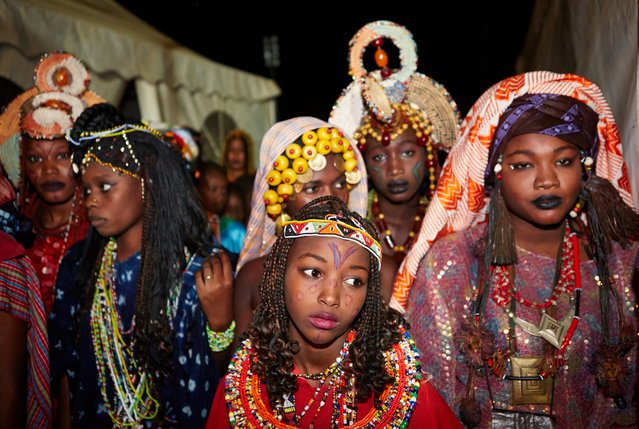
Dancers wait to perform on stage. (Photo by Andy Hall/The Observer)

Photographer Andy Hall joins the thousands of fans from west Africa who have gathered for Baaba Maal's annual Blues du Fleuve festival in Senegal. Here: Dancers wait to perform on stage. (Photo by Andy Hall/The Observer)
Details
04 Jan 2016 08:03:00
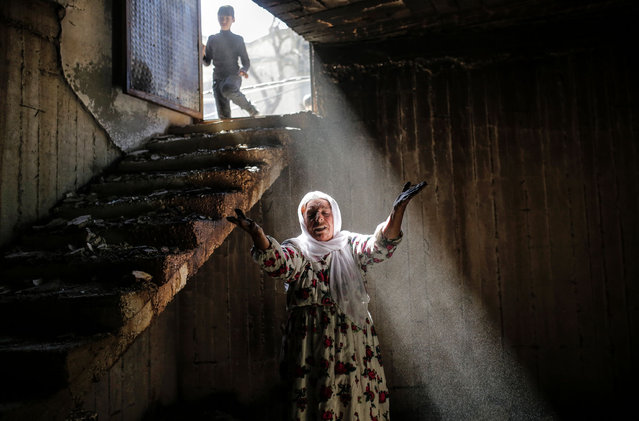
A woman reacts while walking among the ruins of damaged buildings following heavy fighting between government troops and Kurdish fighters, on March 2, 2016 in the southeastern Turkey Kurdish town of Cizre, near the border with Syria and Iraq. Thousands in Turkey's Kurdish-majority town of Cizre started returning to their homes today after authorities partially lifted a curfew in place since December for a controversial military operation to root out separatist rebels. (Photo by Yasin Akgül/AFP Photo)

A woman reacts while walking among the ruins of damaged buildings following heavy fighting between government troops and Kurdish fighters, on March 2, 2016 in the southeastern Turkey Kurdish town of Cizre, near the border with Syria and Iraq. Thousands in Turkey's Kurdish-majority town of Cizre started returning to their homes today after authorities partially lifted a curfew in place since December for a controversial military operation to root out separatist rebels. (Photo by Yasin Akgül/AFP Photo)
Details
03 Mar 2016 11:29:00
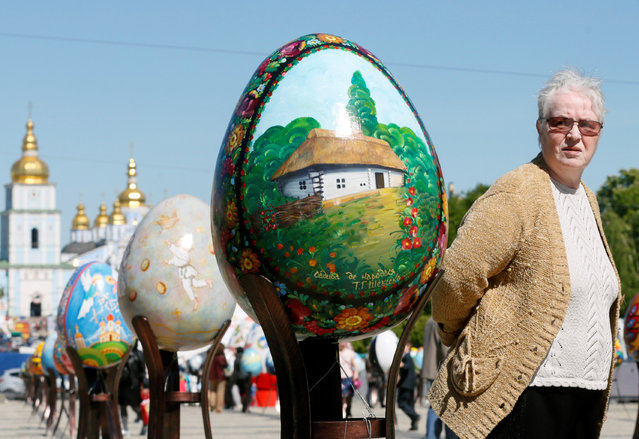
A woman looks at traditional Ukrainian Easter eggs “Pysanka”, installed as part of the upcoming celebrations of Easter, in central Kiev, Ukraine, April 29, 2016. A pysanka is a Ukrainian Easter egg, decorated with traditional Ukrainian folk designs using a wax-resist (batik) method. The word pysanka comes from the verb pysaty, “to write”, as the designs are not painted on, but written with beeswax. Many other eastern European ethnic groups decorate eggs using wax resist for Easter. These include the Belarusians, Bulgarians, Croats, Czechs, Hungarians, Lithuanians, Poles, Romanians, Serbs, Slovaks, Slovenes and Sorbs. (Photo by Valentyn Ogirenko/Reuters)

A woman looks at traditional Ukrainian Easter eggs “Pysanka”, installed as part of the upcoming celebrations of Easter, in central Kiev, Ukraine, April 29, 2016. A pysanka is a Ukrainian Easter egg, decorated with traditional Ukrainian folk designs using a wax-resist (batik) method. The word pysanka comes from the verb pysaty, “to write”, as the designs are not painted on, but written with beeswax. Many other eastern European ethnic groups decorate eggs using wax resist for Easter. These include the Belarusians, Bulgarians, Croats, Czechs, Hungarians, Lithuanians, Poles, Romanians, Serbs, Slovaks, Slovenes and Sorbs. (Photo by Valentyn Ogirenko/Reuters)
Details
30 Apr 2016 09:00:00
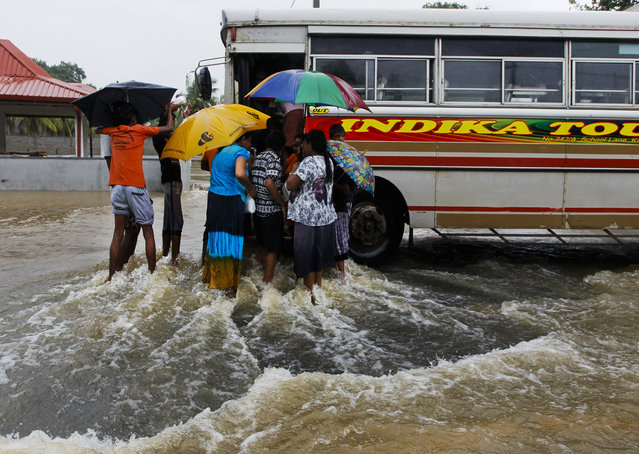
Sri Lankan flood victims flock around a bus to receive food parcels on a inundated road in Colombo, Sri Lanka, Tuesday, May 17, 2016. The Disaster Management Center said that 114 homes have been destroyed and more than 137,000 people have been evacuated to safe locations as heavy rains continue. (Photo by Eranga Jayawardena/AP Photo)

Sri Lankan flood victims flock around a bus to receive food parcels on a inundated road in Colombo, Sri Lanka, Tuesday, May 17, 2016. The Disaster Management Center said that 114 homes have been destroyed and more than 137,000 people have been evacuated to safe locations as heavy rains continue. (Photo by Eranga Jayawardena/AP Photo)
Details
18 May 2016 14:31:00
A baby giant panda plays at Chengdu Research Base of Giant Panda Breeding in Chengdu, Sichuan province, China, January 22, 2017. (Photo by Jason Lee/Reuters)

A baby giant panda plays at Chengdu Research Base of Giant Panda Breeding in Chengdu, Sichuan province, China, January 22, 2017. (Photo by Jason Lee/Reuters)
Details
23 Jan 2017 10:04:00
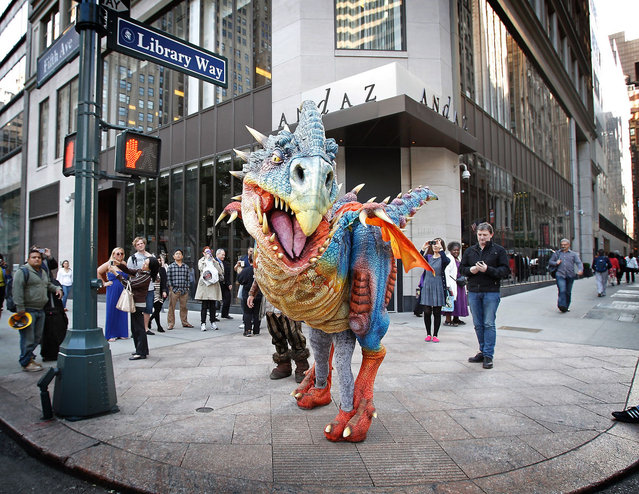
The Baby Nager dragon, from DreamWorks’ new “How to Train Your Dragon” Live Spectacular touring musical, shows off it’s colors outside of the New York Public Library

The Baby Nager dragon, from DreamWorks’ new “How to Train Your Dragon” Live Spectacular touring musical, shows off it’s colors outside of the New York Public Library. (Photo by Mark Von Holden)
Details
19 May 2012 13:05:00
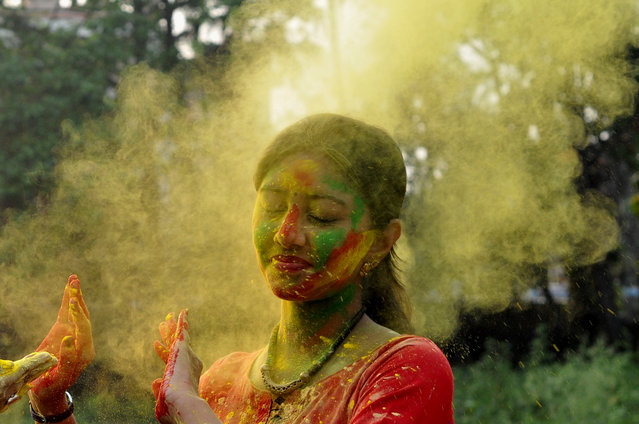
Indian Students of Rabindra Bharati University at the BT Road Campuses Celebrates the Holi, Color Festival on March 09, 2017 in Kolkata.Holi, the popular Hindu spring festival of colours is observed in India at the end of the winter season on the last full moon of the lunar month, and will be celebrated on March 13 this year. (Photo by Debajyoti Chakraborty/NurPhoto)

Indian Students of Rabindra Bharati University at the BT Road Campuses Celebrates the Holi, Color Festival on March 09, 2017 in Kolkata.Holi, the popular Hindu spring festival of colours is observed in India at the end of the winter season on the last full moon of the lunar month, and will be celebrated on March 13 this year. (Photo by Debajyoti Chakraborty/NurPhoto)
Details
13 Mar 2017 00:06:00
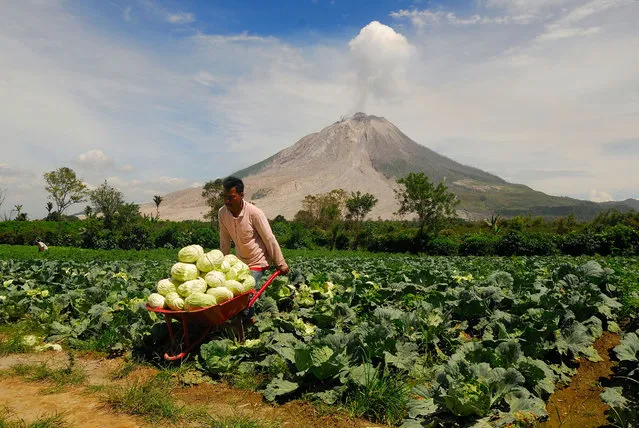
A farmer seen harvesting his crops while Mount Sinabung spewing out volcanic ash on July 4, 2017 in North Sumatera, Indonesia. The increased volume of lava dome that reaches one million eight hundred cubic meters, said volcanologist, through radio communications, do not dampen the activities of the people around sinabung, such as farming, harvesting their crops, picking up objects that are still left behind, or just take a picture while walking around near mount Sinabung. (Photo by Sabirin Manurung/Pacific Press/Barcroft Images)

A farmer seen harvesting his crops while Mount Sinabung spewing out volcanic ash on July 4, 2017 in North Sumatera, Indonesia. The increased volume of lava dome that reaches one million eight hundred cubic meters, said volcanologist, through radio communications, do not dampen the activities of the people around sinabung, such as farming, harvesting their crops, picking up objects that are still left behind, or just take a picture while walking around near mount Sinabung. (Photo by Sabirin Manurung/Pacific Press/Barcroft Images)
Details
06 Aug 2017 07:50:00