Loading...
Done
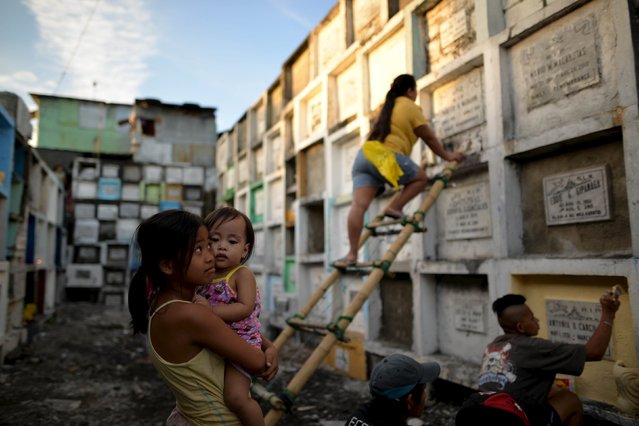
Cemetery workers repaint tombs inside the municipal cemetery in Navotas city, north of Manila October 29, 2015. (Photo by Ezra Acayan/Reuters)

Cemetery workers repaint tombs inside the municipal cemetery in Navotas city, north of Manila October 29, 2015. Filipinos are preparing to celebrate All Saints Day on November 1 by visiting the graves of their departed loved ones. (Photo by Ezra Acayan/Reuters)
Details
02 Nov 2015 08:04:00
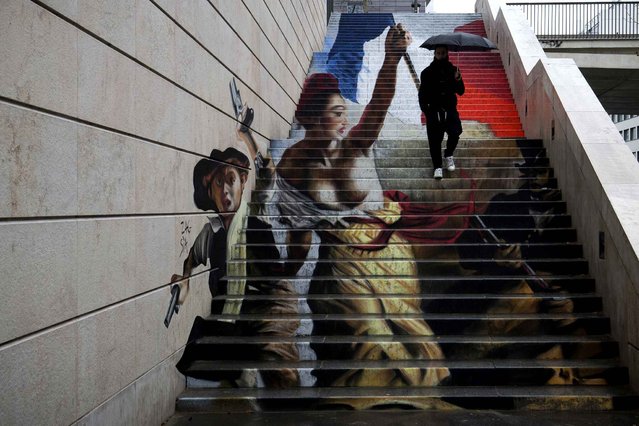
A man passes by an unfinished street art graffiti made in a stairway by French street artists Zag and Sia in Paris on March 1, 2016. The two artists drew inspiration from famous “Liberty Leading the People” (La Liberte guidant le peuple) painting by French Eugene Delacroix commemorating the July Revolution of 1830 and viewed as a symbol of the French Republic. (Photo by Joel Saget/AFP Photo)

A man passes by an unfinished street art graffiti made in a stairway by French street artists Zag and Sia in Paris on March 1, 2016. The two artists drew inspiration from famous “Liberty Leading the People” (La Liberte guidant le peuple) painting by French Eugene Delacroix commemorating the July Revolution of 1830 and viewed as a symbol of the French Republic. (Photo by Joel Saget/AFP Photo)
Details
04 Mar 2016 12:31:00
Afghanistan: Dogs of War Part 2

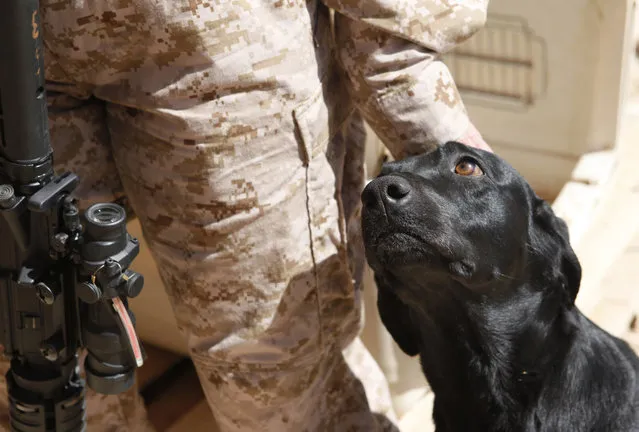
Throughout the course of the long war in Afghanistan, Coalition troops have relied on thousands of military working dogs to help keep them safe, and make their jobs easier. The dogs are trained to detect explosives, to find illegal drugs, to search for missing comrades, or target enemy combatants. Not only are they active on the front lines, but behind the lines they serve as therapy dogs, service dogs, and loyal companions. They also share the same risks as the ground troops, suffering injuries and sometimes death on the battlefields. Gathered here are images of these dogs and their handlers in Afghanistan and back home, from over the past several years, part of the ongoing series here on Afghanistan.
Details
05 Jun 2014 21:10:00
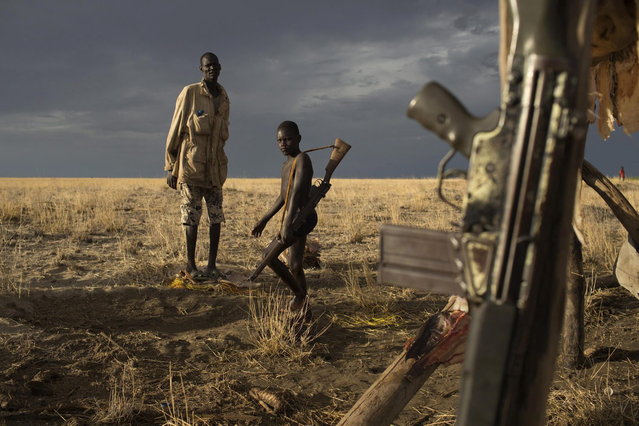
A Turkana man and a boy carrying a gun look on as a G3 battle rifle hangs from a structure used to dry fish at a fishing camp on the shores of Lake Turkana, some kilometres from Todonyang near the Kenya-Ethiopia border in northwestern Kenya October 12, 2013. (Photo by Siegfried Modola/Reuters)

A Turkana man and a boy carrying a gun look on as a G3 battle rifle hangs from a structure used to dry fish at a fishing camp on the shores of Lake Turkana, some kilometres from Todonyang near the Kenya-Ethiopia border in northwestern Kenya October 12, 2013The Turkana are traditionally nomadic pastoralists, but they have seen the pasture that they need to feed their herds suffer from recurring droughts and many have turned to fishing. However, Lake Turkana is overfished, and scarcity of food and pastureland is fuelling long-standing conflict with Ethiopian indigenous Dhaasanac, who have seen grazing grounds squeezed by large-scale government agricultural schemes in southern Ethiopia. The Dhaasanac now venture ever deeper into Kenyan territory in search of fish and grass, clashing with neighbours. Fighting between the communities has a long history, but the conflict has become ever more fatal as automatic weapons from other regional conflicts seep into the area. While the Turkana region is short of basics like grass and ground-water, it contains other resources including oil reserves and massive, newly discovered underground aquifers. (Photo by Siegfried Modola/Reuters)
Details
05 Dec 2013 12:08:00
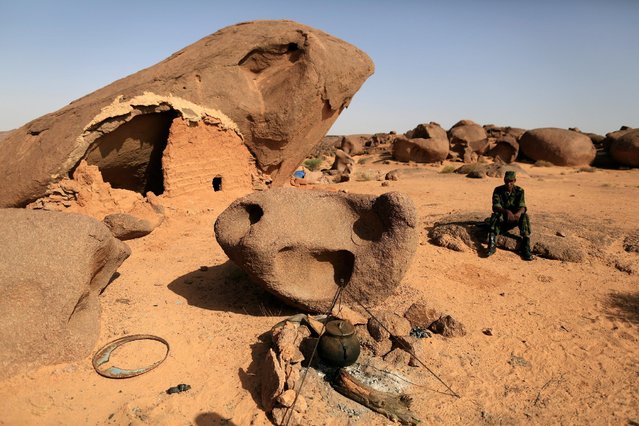
A Polisario fighter sits on a rock at a forward base on the outskirts of Tifariti, Western Sahara, September 9, 2016. At a rocky outpost in Western Sahara, a new generation of soldiers who have never known war are mobilising as tensions resurface in one of Africa's oldest disputes after a quarter century of uneasy peace. Young Sahrawi troops man new desert posts for the Polisario Front, which for more than 40 years has sought independence for the vast desert region - first in a guerrilla war against Morocco and then politically since a ceasefire deal in 1991. Now a standoff with Morocco, which controls the majority of Western Sahara, is renewing pressure for a diplomatic solution to ensure foot soldiers don't return to fighting as the last generation of commanders once did. The standoff since August has brought Moroccan and Polisario forces within 200 metres of each other in a narrow strip of land near the Mauritanian border. Rich in phosphate, Western Sahara has been contested since 1975 when Spanish colonial powers left. Morocco claimed the territory and fought the 16-year war with Polisario. (Photo by Zohra Bensemra/Reuters)

A Polisario fighter sits on a rock at a forward base on the outskirts of Tifariti, Western Sahara, September 9, 2016. At a rocky outpost in Western Sahara, a new generation of soldiers who have never known war are mobilising as tensions resurface in one of Africa's oldest disputes after a quarter century of uneasy peace. (Photo by Zohra Bensemra/Reuters)
Details
04 Nov 2016 12:09:00


“The ONE Campaign is a international, nonpartisan, non-profit organization which aims to increase government funding for and effectiveness of international aid programs. ONE was originally founded by a coalition of 11 non-profit humanitarian and advocacy organizations — including DATA, World Vision, Oxfam America, and Bread for the World — with funding from the Bill & Melinda Gates Foundation. In 2007, ONE announced that it would be merging with DATA. Currently, ONE is campaigning for resources to help developing countries adapt to climate change. During the 2008 U.S. presidential election the organization launched a campaign, called ONE Vote '08, which was co-chaired by former U.S. Senate majority leaders Tom Daschle (D-SD) and Bill Frist (R-TN). The campaign is named after the U2 song “One” which was a top ten hit single on the critically acclaimed 1991 Achtung Baby album”. – Wikipedia

Photo: Bill Gates, founder of Microsoft and now philanthropist, poses with One.org charity volunteers at Pariser Platz square during a brief stop at Brandenburg Gate on April 6, 2011 in Berlin, Germany. Gates is in Berlin to meet with German government officials, including Chancellor Angela Merkel and Development Minister Dirk Niebel, to discuss aid for developing countries and promote his One.org charity initiative, which is part of the Bill and Melinda Gates Foundation. (Photo by Sean Gallup/Getty Images)

Details
07 Apr 2011 08:31:00
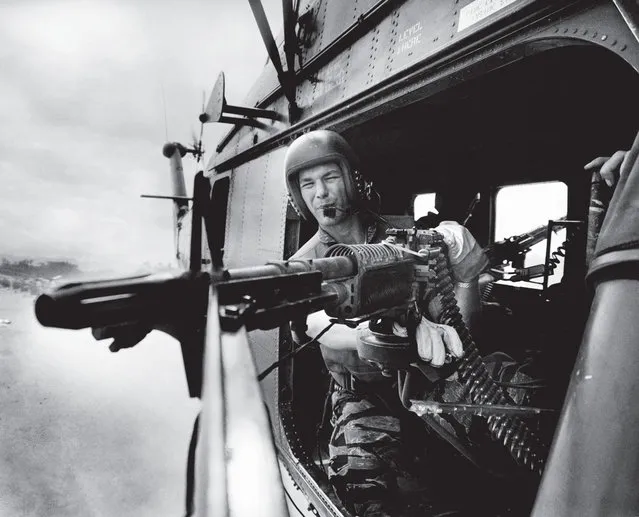
Man your battle stations: The crew chief of helicopter Yankee Papa 13, lance corporal James C. Farley, mans an M-60 machine gun during a mission near Da Nang, Vietnam on March 31, 1965. (Photo by Larry Burrows/Time & Life Pictures)

In the spring of 1965, within weeks of 3,500 American Marines arriving in Vietnam, a 39-year-old Briton named Larry Burrows began work on a feature for LIFE magazine, chronicling the day-to-day experience of U.S. troops on the ground – and in the air – in the midst of the rapidly widening war. The photographs in this gallery focus on a calamitous March 31, 1965, helicopter mission; Burrows’ “report from Da Nang”, featuring his pictures and his personal account of the harrowing operation, was published two weeks later as a now-famous cover story in the April 16, 1965, issue of LIFE.

Photo: Man your battle stations: The crew chief of helicopter Yankee Papa 13, lance corporal James C. Farley, mans an M-60 machine gun during a mission near Da Nang, Vietnam on March 31, 1965. (Photo by Larry Burrows/Time & Life Pictures)
Details
07 Apr 2013 07:08:00
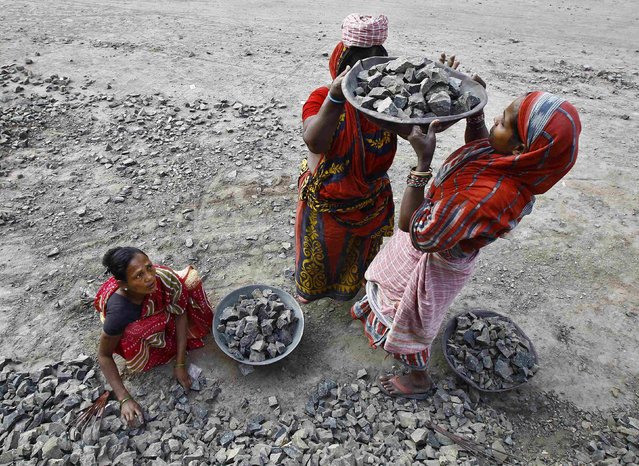
Women labourers work at the construction site of a road in Kolkata January 8, 2015. Across towns and cities in India, it is not uncommon to see women cleaning building sites, carrying bricks and or shoveling gravel - helping construct the infrastructure necessary for the country's economic and social development. (Photo by Rupak De Chowdhuri/Reuters)

Women labourers work at the construction site of a road in Kolkata January 8, 2015. Across towns and cities in India, it is not uncommon to see women cleaning building sites, carrying bricks and or shoveling gravel – helping construct the infrastructure necessary for the country's economic and social development. They help build roads, railway tracks, airports, and offices. They lay pipes for clean water supplies, cables for telecommunications, and dig the drains for sewage systems. But although women make up at least 20 percent of India's 40 million construction workers, they are less recognized than male workers with lower pay and often prone to safety hazards and sexual harassment. They are often unaware of their rights or scared to complain, say activists now trying to campaign for better treatment of women in the construction industry. (Photo by Rupak De Chowdhuri/Reuters)
Details
15 Jan 2015 13:47:00