Loading...
Done
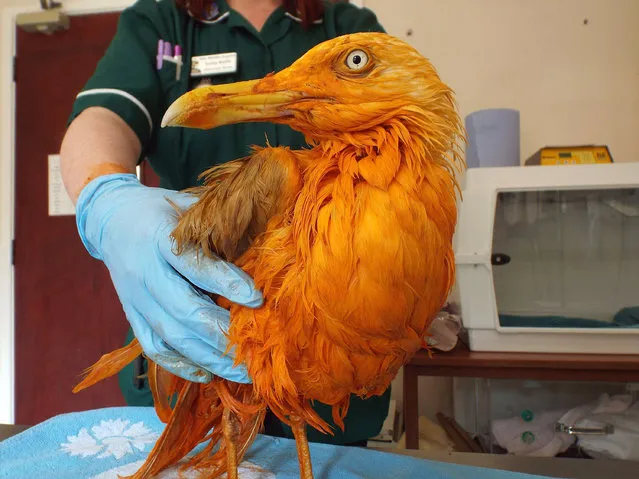
A seagull who turned bright orange after he plunged into a vat of chicken tikka masala in Beckford, England on June 9, 2016. The bird fell into a container of the food while trying to scavenge a piece of meat from a food factory bin in Wales. (Photo by Vale Wildlife Hospital/PA Wire)

A seagull who turned bright orange after he plunged into a vat of chicken tikka masala in Beckford, England on June 9, 2016. The bird fell into a container of the food while trying to scavenge a piece of meat from a food factory bin in Wales. (Photo by Vale Wildlife Hospital/PA Wire)
Details
12 Jun 2016 10:11:00
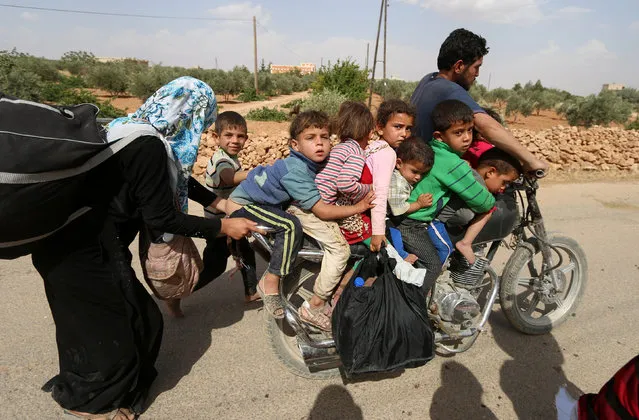
Civilians, who fled the violence in Manbij city, arrive to the southeastern rural area of Manbij, in Aleppo Governorate, Syria June 19, 2016. (Photo by Rodi Said/Reuters)

Civilians, who fled the violence in Manbij city, arrive to the southeastern rural area of Manbij, in Aleppo Governorate, Syria June 19, 2016. (Photo by Rodi Said/Reuters)
Details
20 Jun 2016 12:53:00
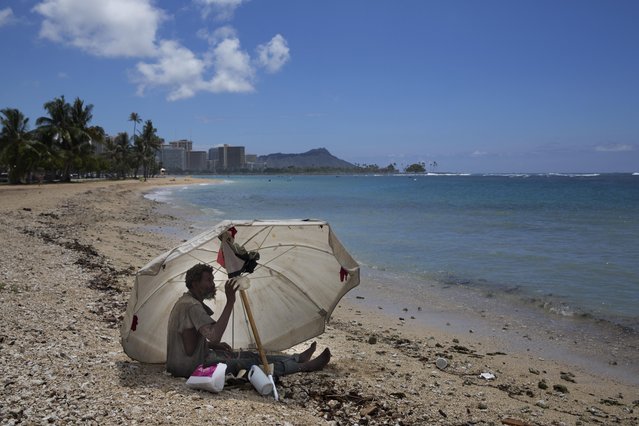
In this Thursday, August 27, 2015 photo, a homeless man drinks water while sitting on the beach at Ala Moana Beach Park located near Waikiki in Honolulu. Homelessness in Hawaii has grown steadily in recent years, leaving the state with the nation's highest rate of homeless people per capita. (Photo by Jae C. Hong/AP Photo)

Hawaii has long been known as a tropical paradise, but in recent years another image has intruded into the state's carefully crafted one of idyllic beaches and relaxing resorts: homelessness. The number of homeless people has grown in recent years, leaving the state with 487 homeless per 100,000 people, the nation's highest rate per capita, above New York and Nevada, according to federal statistics. Many of the homeless, however, defy the stereotype of the mentally ill or drug addicted. They are families, with men and women who work full-time jobs. They are struggling to get a foothold in a place with a high cost of living and low wages. Here: in this Thursday, August 27, 2015 photo, a homeless man drinks water while sitting on the beach at Ala Moana Beach Park located near Waikiki in Honolulu. (Photo by Jae C. Hong/AP Photo)

Details
11 Nov 2015 08:03:00
Eighty one-year-old Sakon Haba (L) wearing loin cloth walks past a police station after he bathed in ice-cold water at the Teppozu Inari shrine in Tokyo January 11, 2015. According to organizers, about 100 participants took part in the Shinto ceremony to purify their souls and wish for good health in the new year. (Photo by Toru Hanai/Reuters)

Eighty one-year-old Sakon Haba (L) wearing loin cloth walks past a police station after he bathed in ice-cold water at the Teppozu Inari shrine in Tokyo January 11, 2015. According to organizers, about 100 participants took part in the Shinto ceremony to purify their souls and wish for good health in the new year. (Photo by Toru Hanai/Reuters)
Details
17 Jan 2015 12:02:00
“Friends'n Roll”. (Théo Gosselin)

“Friends'n Roll”. (Photo and caption by Théo Gosselin)
Details
15 Nov 2013 12:11:00
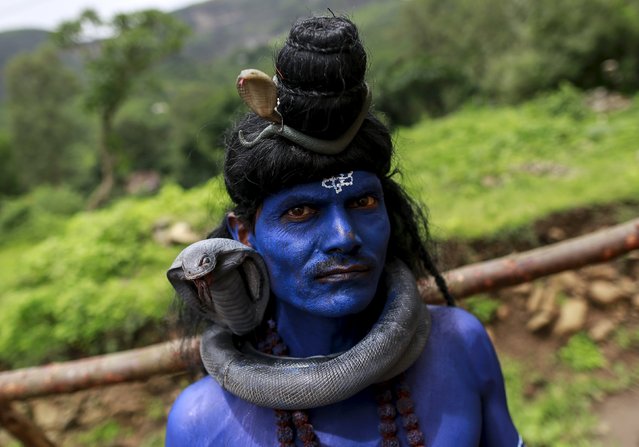
A devotee dressed as Hindu Lord Shiva waits to participate in a parade during “Kumbh Mela” or the Pitcher Festival in Trimbakeshwar, India, August 18, 2015. The Kumbh Mela takes place four times every 12 years at four different river bank locations in India. (Photo by Danish Siddiqui/Reuters)

A devotee dressed as Hindu Lord Shiva waits to participate in a parade during “Kumbh Mela” or the Pitcher Festival in Trimbakeshwar, India, August 18, 2015. The Kumbh Mela takes place four times every 12 years at four different river bank locations in India. (Photo by Danish Siddiqui/Reuters)
Details
19 Aug 2015 12:23:00
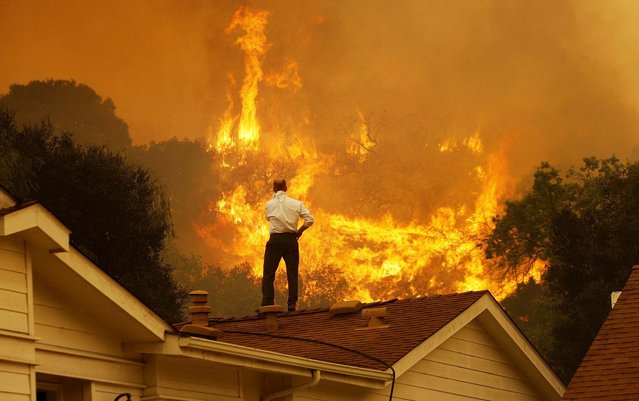
A man watches the approaching flames as the Springs fire continues to grow near Camarillo, California, on May 3, 2013. The wildfire has spread to more than 18,000 acres on day two and is 20 percent contained. (Photo by David McNew/Getty Images)

A man watches the approaching flames as the Springs fire continues to grow near Camarillo, California, on May 3, 2013. The wildfire has spread to more than 18,000 acres on day two and is 20 percent contained. (Photo by David McNew)
Details
05 May 2013 10:10:00
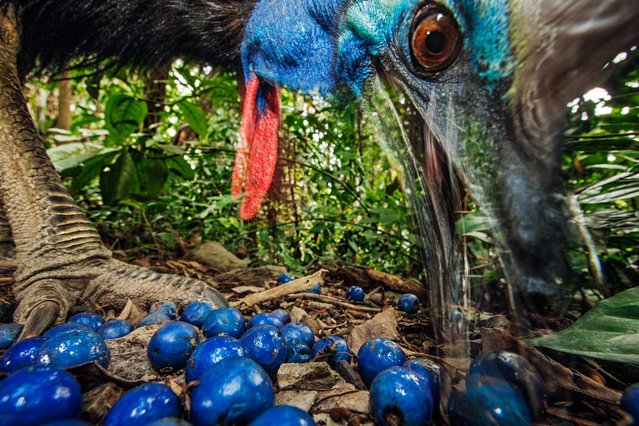
“Cassowaries are large, flightless birds related to emus and (more distantly) to ostriches, rheas, and kiwis”, writes Olivia Judson in the September issue of National Geographic magazine. (Photo by Christian Ziegler/National Geographic)

“Cassowaries are large, flightless birds related to emus and (more distantly) to ostriches, rheas, and kiwis”, writes Olivia Judson in the September issue of National Geographic magazine. How large? People-size: Adult males stand well over five foot five and top 110 pounds. Females are even taller, and can weigh more than 160 pounds. Dangerous when roused, they’re shy and peaceable when left alone. But even birds this big and tough are prey to habitat loss. The dense New Guinea and Australia rain forests where they live have dwindled. Today cassowaries might number 1,500 to 2,000. And because they help shape those same forests – by moving seeds from one place to another – “if they vanish”, Judson writes, “the structure of the forest would gradually change” too. (Photo by Christian Ziegler/National Geographic)
Details
06 Jan 2014 12:21:00