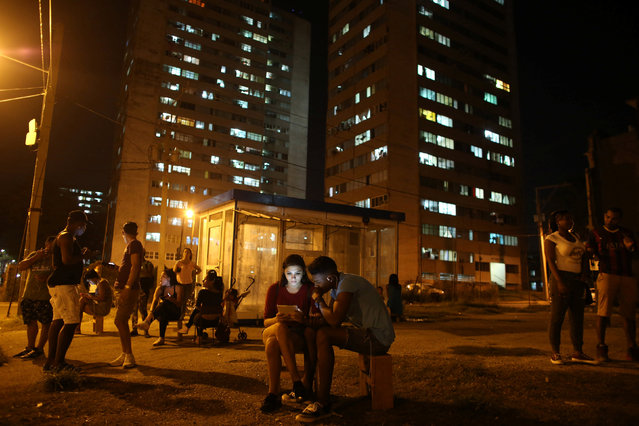
Carolina Gutierrez (center L), 17, and Neuil Valdez, 18, use mobile phones to connect to the internet at a hotspot in downtown Havana, Cuba, December 12, 2016. (Photo by Alexandre Meneghini/Reuters)
American swimmer Lydia Jacoby poses for a portrait during the Team USA media summit ahead of the Paris Olympics and Paralympics, at an event in New York, U.S., April 17, 2024. (Photo by Andrew Kelly/Reuters)
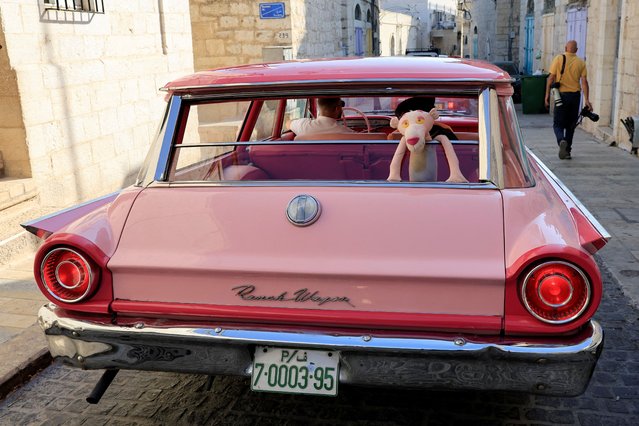
Palestinians drive classic cars during a gathering organized by the Bethlehem municipality near the Church of the Nativity in Manger Square in Bethlehem in the Israeli-occupied West Bank, on October 17, 2025. (Photo by Mussa Qawasma/Reuters)
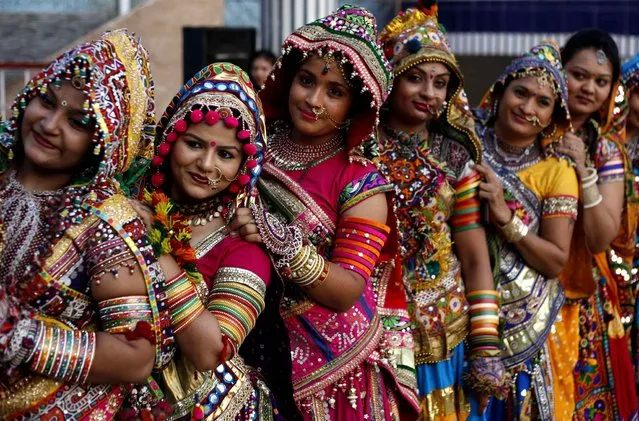
Indian girls in traditional attire pose for photographs as they practice the Garba, the traditional dance of Gujarat state, ahead of Navratri festival in Ahmadabad, India, Saturday, October 3, 2015. Navratri or nine night festival will begin on October 13. (Photo by Ajit Solanki/AP Photo)
Participants of the Sarenza High Heel Race 2015 warm up prior to the race during a party of the online shoe store, in Paris, Thursday, October 15, 2015. Competitors in teams of three girls race wearing shoes with more than 8 cm-high heels. (Photo by Francois Mori/AP Photo)
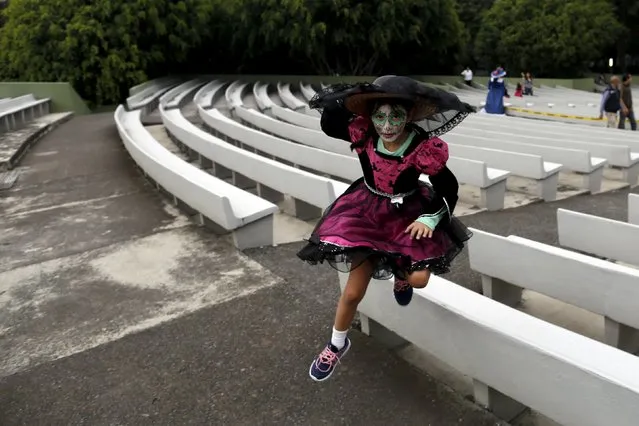
A girl with her face painted to look like the popular Mexican figure called "Catrina", jumps as she takes part in the annual Catrina Fest in Mexico City November 1, 2015. (Photo by Carlos Jasso/Reuters)
Beneath the Swedish capital lies an intricate web of underground train lines. More than 90 of the 100 stations in the 110km tunnel system, sometimes referred to as “the world’s longest art gallery”, have been decorated with paintings, installations, mosaics and sculptures by 150 artists since the 1950s. After spending a couple of weeks exploring arctic Norway and Sweden, London-based travel photographer Conor MacNeill headed underground to capture images of the metro stations. Here: A rainbow arcs over a girl on the platform of Stadion station. (Photo by Conor MacNeill/The Observer)
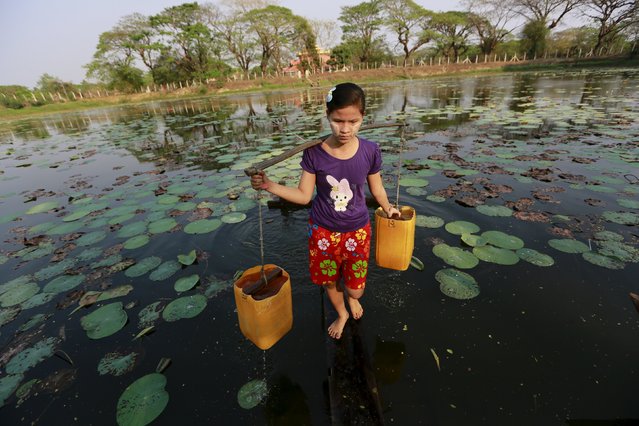
A girl collects drinking water at Dala river outside Yangon, Myanmar March 3, 2016. Some 650 million people, or one in 10 of the world's population, have no access to safe water, putting them at risk of infectious diseases and premature death. Dirty water and poor sanitation can cause severe diarrhoeal diseases in children, killing 900 under-five a day across the world, according to United Nations estimates. (Photo by Soe Zeya Tun/Reuters)