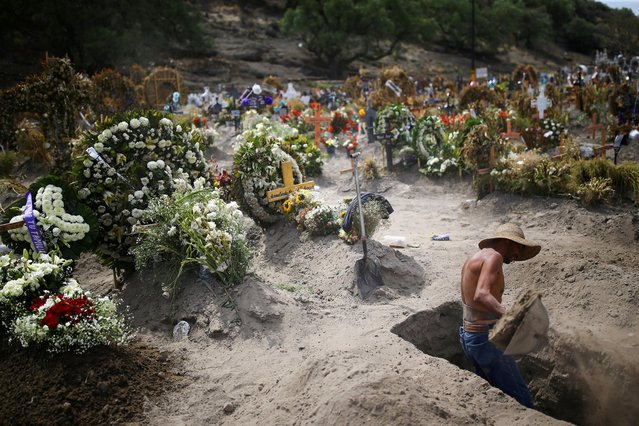
A cemetery worker dig new graves at the Xico cemetery on the outskirts of Mexico City, as the coronavirus disease (COVID-19) outbreak continues in Mexico, June 10, 2020. (Photo by Edgard Garrido/Reuters)
The “voodoo” wrestler known as Panthère utters incantations above the alter of his shrine in Kinshasa, Democratic Republic of Congo, on July 27, 2023. In the capital of DR Congo, dozens of men and women – including former wrestlers – practice “voodoo wrestling”, using traditional fetishes and animals. Fights are organised in some of the city's poorest and most densely populated districts. (Photo by Alexis Huguet/AFP Photo)
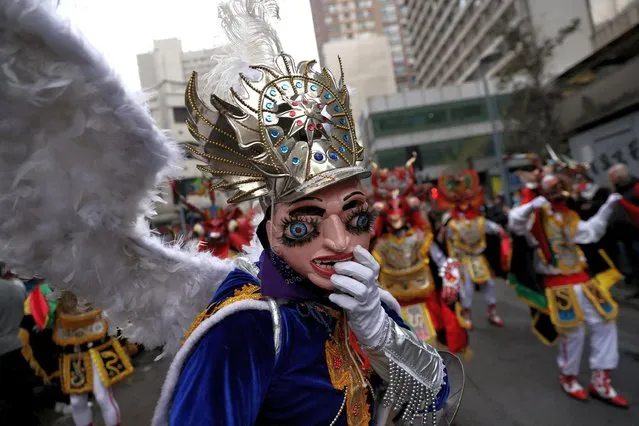
Members of a “Diablada” folk group dance during celebrations of the anniversary of Bolivia foundation, in Santiago, Chile on August 6, 2022. (Photo by Ivan Alvarado/Reuters)
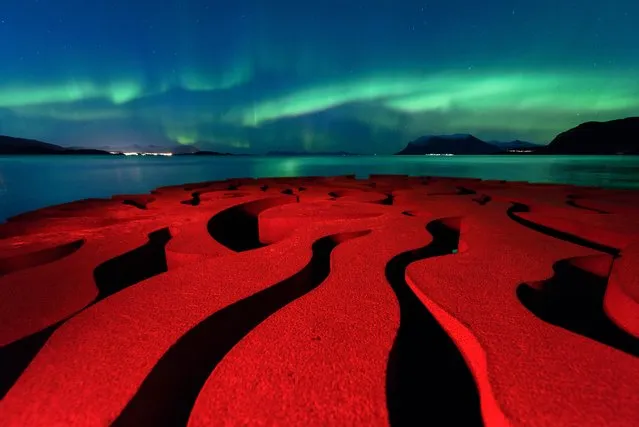
Gorgeous galaxies and stunning stars make up this selection of pictures from the shortlisted entries for this year’s Insight Astronomy Photographer of the Year award. The winners will be announced on 15 September, and an exhibition of the winning images will be will be displayed in a free exhibition at the Royal Observatory Greenwich’s Astronomy Centre from 17 September. Here: “Seven Magic Points”. The rusty red swirls of the circular, iron sculpture Seven Magic Points in Brattebergan, Norway mirror the rippling aurora above. (Photo by Rune Engebø/Royal Observatory Greenwich’s Astronomy Photographer of the Year 2016/National Maritime Museum)
An ice swimming enthusiast dressed as Neptune takes to the frigid waters of Orankesee lake during the 27th annual "Winter Swimming in Berlin" on January 8, 2011 in Berlin, Germany. A local swimmers' group called the “Berlin Seals” invite ice swimmers from across Germany and abroad to the annual event. Members claim ice swimming is good for the body's blood circulation. (Photo by Sean Gallup)
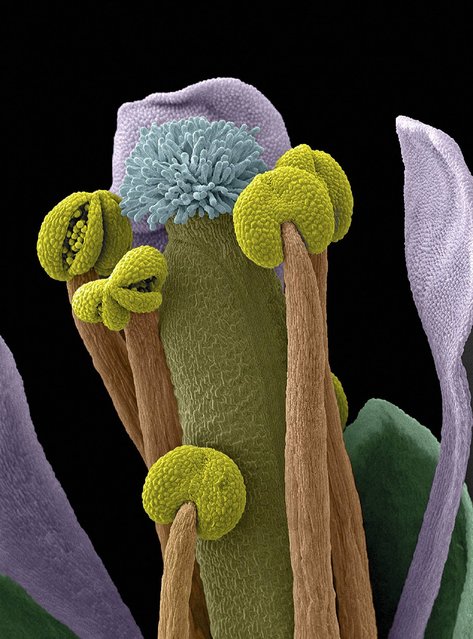
Beautiful, strange and occasionally alarming pictures from the shortlist for this year’s Wellcome image awards – which celebrate the very best in science photography and imaging – from an x-ray of a bat to a micrograph of a kidney stone. The exhibition opens on 12 March at three science centres and the Museum of Science and Industry in Manchester. Photo: Scanning electron micrograph (SEM) of an Arabidopsis thaliana flower, also commonly known as thale cress. Some of the anthers are open, revealing pollen grains ready for dispersal. Arabidopsis was the first plant to have its entire genome sequenced and is widely used as a model organism in molecular and plant biology. Horizontal width of image is 1200 microns. Magnification 100x. (Photo by Stefan Eberhard/Wellcome Images)
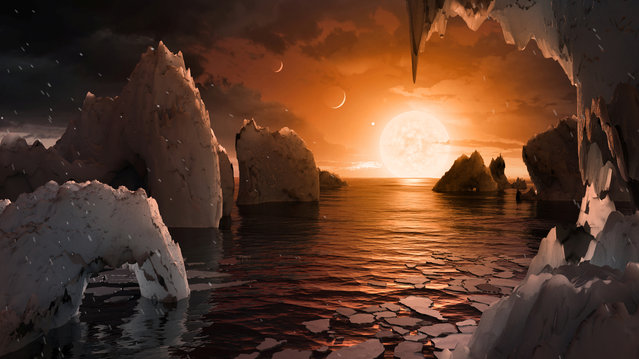
The possible surface of TRAPPIST-1f, one of seven newly discovered planets in the TRAPPIST-1 system that scientists using the Spitzer Space Telescope and ground based telescopes have discovered. (Photo by Reuters/NASA/JPL-Caltech)
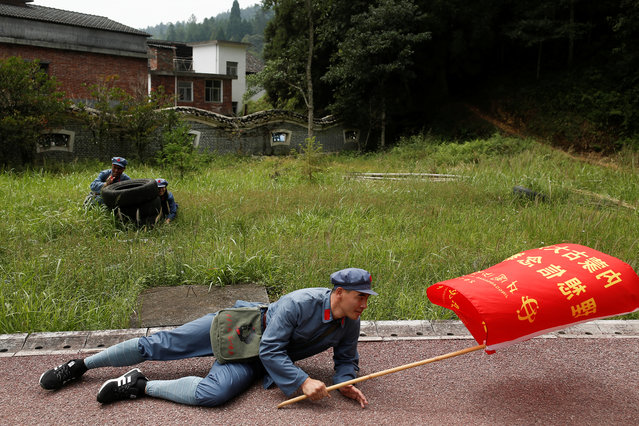
A man in “Red Army” garb hits the pavement during a simulated attack during a re-staging of part of the Long March in Jinggangshan September 14, 2017. The scene brings alive an extraordinary chapter in China's history that established the supremacy of Chairman Mao Zedong and the Communist Party. Deep in the mountains of Jinggangshan in the southeastern province of Jiangxi, a classroom of bank tellers participates in an ideological boot camp that plays into Chinese President Xi Jinping's drive to further consolidate his grip on power. (Photo by Thomas Peter/Reuters)