Loading...
Done
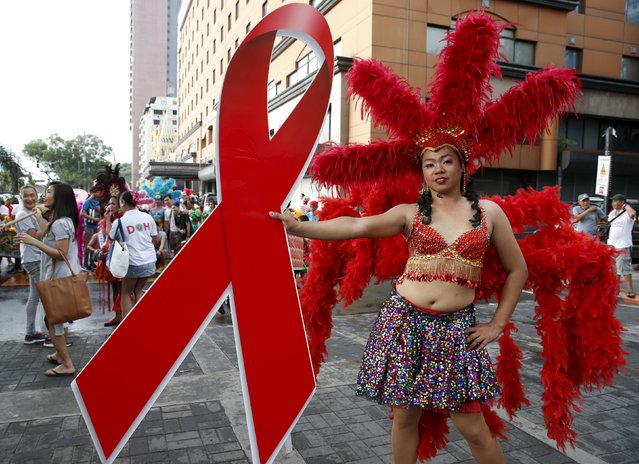
A Filipino transgender woman holds a huge red ribbon symbolizing fight against the HIV virus as she poses before photographers, during a World Aids Day celebration in Manila, Philippines, December 1, 2015. (Photo by Erik De Castro/Reuters)

A Filipino transgender woman holds a huge red ribbon symbolizing fight against the HIV virus as she poses before photographers, during a World Aids Day celebration in Manila, Philippines, December 1, 2015. (Photo by Erik De Castro/Reuters)
Details
03 Dec 2015 08:04:00
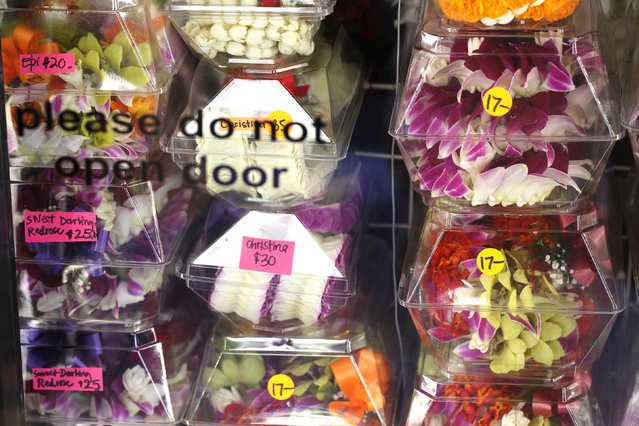
A selection of hand-made leis, traditional Hawaiian necklaces made of flowers and worn mostly on special occasions, fill a cooler at Lin's Lei Shop in the Chinatown district of Honolulu, Hawaii December 22, 2015. Hawaii, whose economy depends heavily on tourism, sees a brief lull in visitors each year in January and February. But in addition to the usual tourist destinations, the state shows a unique overlay of mainland U.S. culture atop tropical beauty year-round. (Photo by Jonathan Ernst/Reuters)

A selection of hand-made leis, traditional Hawaiian necklaces made of flowers and worn mostly on special occasions, fill a cooler at Lin's Lei Shop in the Chinatown district of Honolulu, Hawaii December 22, 2015. Hawaii, whose economy depends heavily on tourism, sees a brief lull in visitors each year in January and February. But in addition to the usual tourist destinations, the state shows a unique overlay of mainland U.S. culture atop tropical beauty year-round. (Photo by Jonathan Ernst/Reuters)
Details
16 Jan 2016 08:00:00
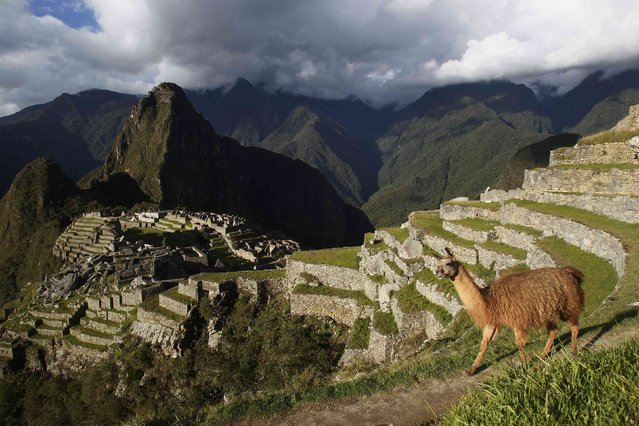
An alpaca is seen near the Inca citadel of Machu Picchu in Cusco December 2, 2014. Machu Picchu, a UNESCO World Heritage Site, is Peru's top tourist attraction, with the government limiting tourists to 2,500 per day due to safety reasons and concerns over the preservation of the ruins. (Photo by Enrique Castro-Mendivil/Reuters)

An alpaca is seen near the Inca citadel of Machu Picchu in Cusco December 2, 2014. Machu Picchu, a UNESCO World Heritage Site, is Peru's top tourist attraction, with the government limiting tourists to 2,500 per day due to safety reasons and concerns over the preservation of the ruins. (Photo by Enrique Castro-Mendivil/Reuters)
Details
04 Dec 2014 11:24:00
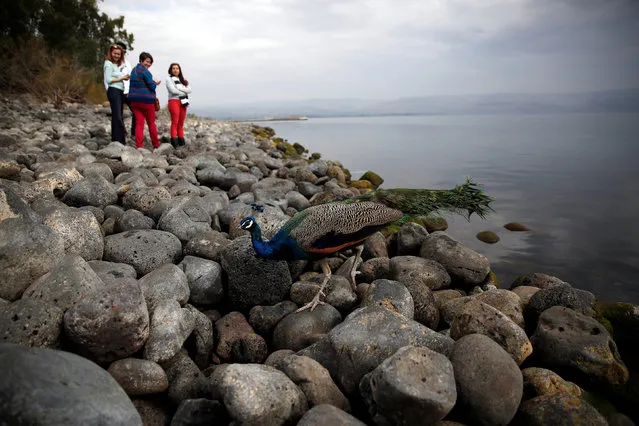
A peacock walks next to the Monastery of the Holy Apostles, on the shore of the Sea of Galilee, northern Israel November 30, 2016. (Photo by Ronen Zvulun/Reuters)

A peacock walks next to the Monastery of the Holy Apostles, on the shore of the Sea of Galilee, northern Israel November 30, 2016. About 1 million tourists from abroad visit the Sea of Galilee, also known as Lake Tiberias or Kinneret, each year, according to the Israeli Tourism Ministry. (Photo by Ronen Zvulun/Reuters)
Details
21 Dec 2016 09:57:00
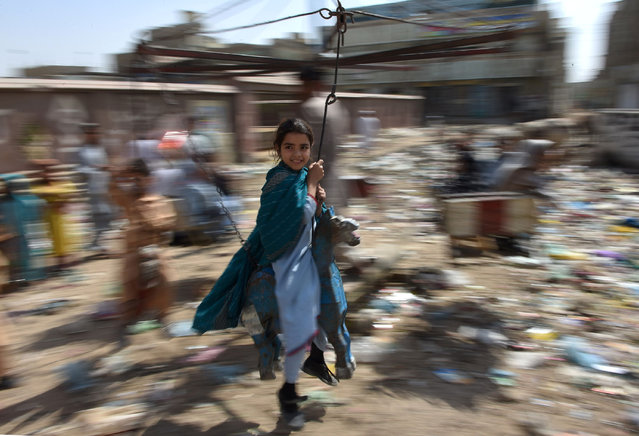
In this photograph taken on February 18, 2016, Pakistani children ride on swings in the predominantly Pashtun Korangi District of Karachi. In a rundown district of Karachi, Rabia balks at a neighbour's proposal to vaccinate her children, demonstrating one of the biggest hurdles to eradicating polio in Pakistan by the end of the year: confused and frightened parents. (Photo by Asif Hassan/AFP Photo)

In this photograph taken on February 18, 2016, Pakistani children ride on swings in the predominantly Pashtun Korangi District of Karachi. In a rundown district of Karachi, Rabia balks at a neighbour's proposal to vaccinate her children, demonstrating one of the biggest hurdles to eradicating polio in Pakistan by the end of the year: confused and frightened parents. (Photo by Asif Hassan/AFP Photo)
Details
04 Apr 2016 10:37:00
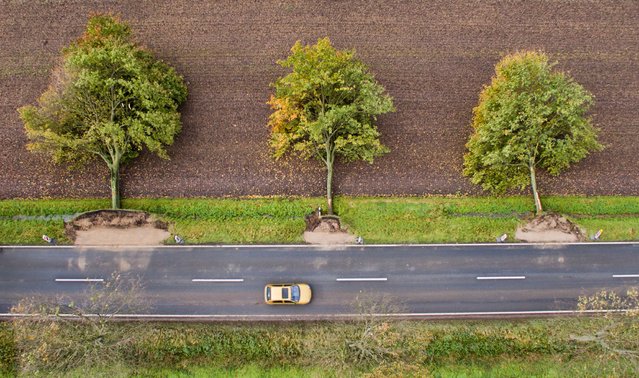
The aerial view shows three uprooted trees at a road near Hildesheim, Germany Friday, October 6, 2017. Seven people died Thursday as high winds knocked over trees and caused widespread travel chaos in northern Germany. (Photo by Julian Stratenschulte/DPA via AP Photo)

The aerial view shows three uprooted trees at a road near Hildesheim, Germany Friday, October 6, 2017. Seven people died Thursday as high winds knocked over trees and caused widespread travel chaos in northern Germany. (Photo by Julian Stratenschulte/DPA via AP Photo)
Details
19 Oct 2017 09:24:00
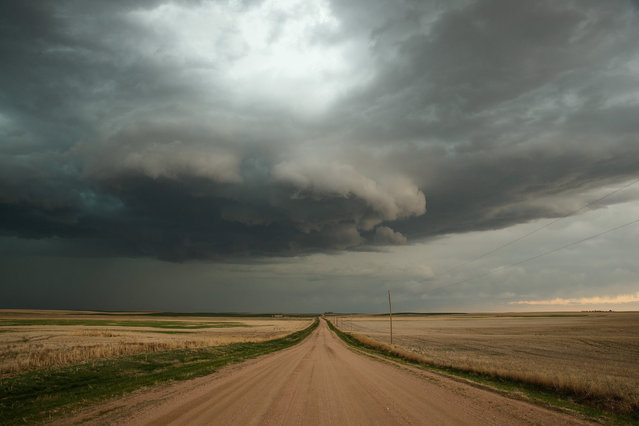
A supercell thunderstorm develops, May 8, 2017 in Elbert County outside of Limon, Colorado. With funding from the National Science Foundation and other government grants, scientists and meteorologists from the Center for Severe Weather Research try to get close to supercell storms and tornadoes trying to better understand tornado structure and strength, how low-level winds affect and damage buildings, and to learn more about tornado formation and prediction. (Photo by Drew Angerer/Getty Images)

A supercell thunderstorm develops, May 8, 2017 in Elbert County outside of Limon, Colorado. With funding from the National Science Foundation and other government grants, scientists and meteorologists from the Center for Severe Weather Research try to get close to supercell storms and tornadoes trying to better understand tornado structure and strength, how low-level winds affect and damage buildings, and to learn more about tornado formation and prediction. (Photo by Drew Angerer/Getty Images)
Details
16 Jun 2017 06:20:00
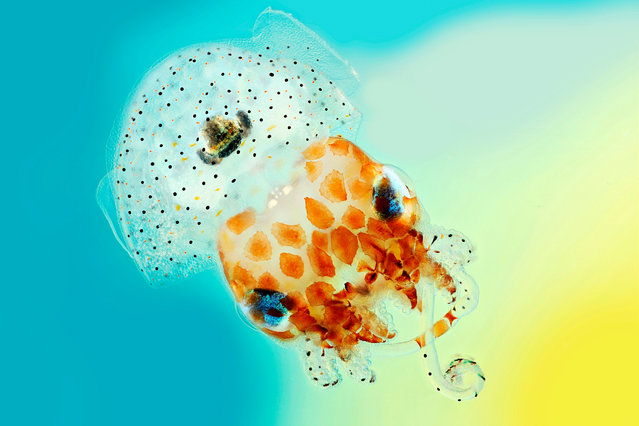
With its huge eyes, comical name and diminutive size, Mark R. Smith’s image of a baby Hawaiian bobtail squid can’t help but raise a smile. A curiously endearing creature, the cephalopod is just 1.5cm across, its mantle cavity bearing more than a passing resemblance to a rather natty shower cap. But it is also a beautiful example of symbiosis – nature’s version of “I’ll scratch your back if you scratch mine” – for on the underside of the squid is a light organ which houses bioluminescent bacteria. The squid offers the bacteria protection and food, while the bacteria emit a glow – a handy trait that the squid uses to offset its silhouette, helping it to evade predators in the depths below. Mark R. Smith’s entry combines several images of a Hawaiian bobtail squid with different focus lengths to create a final picture with greater depth of field than normal. (Photo by Mark R. Smith/Wellcome Images/Macroscopic Solutions)

With its huge eyes, comical name and diminutive size, Mark R. Smith’s image of a baby Hawaiian bobtail squid can’t help but raise a smile. A curiously endearing creature, the cephalopod is just 1.5cm across, its mantle cavity bearing more than a passing resemblance to a rather natty shower cap. But it is also a beautiful example of symbiosis – nature’s version of “I’ll scratch your back if you scratch mine” – for on the underside of the squid is a light organ which houses bioluminescent bacteria. The squid offers the bacteria protection and food, while the bacteria emit a glow – a handy trait that the squid uses to offset its silhouette, helping it to evade predators in the depths below. Mark R. Smith’s entry combines several images of a Hawaiian bobtail squid with different focus lengths to create a final picture with greater depth of field than normal. (Photo by Mark R. Smith/Wellcome Images/Macroscopic Solutions)
Details
08 Mar 2017 00:05:00