Loading...
Done
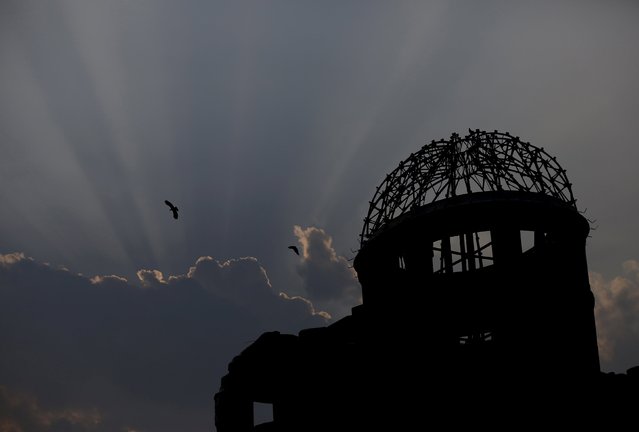
Birds fly over the Atomic Bomb Dome in Hiroshima, western Japan July 29, 2015. On August 6, 1945, the U.S. dropped the atomic bomb on Hiroshima, killing about 140,000 by the end of the year in a city of 350,000 residents, in the world's first nuclear attack. (Photo by Issei Kato/Reuters)

Birds fly over the Atomic Bomb Dome in Hiroshima, western Japan July 29, 2015. On August 6, 1945, the U.S. dropped the atomic bomb on Hiroshima, killing about 140,000 by the end of the year in a city of 350,000 residents, in the world's first nuclear attack. Three days later, a second atomic bomb was dropped on Nagasaki. Influenced by the shadows scorched into outdoor surfaces by the heat of the blasts 70 years ago, Reuters photographer Issei Kato pays homage to survivors, residents and historic buildings in both cities in a personal project that captures the shadows of today. (Photo by Issei Kato/Reuters)
Details
04 Aug 2015 12:01:00
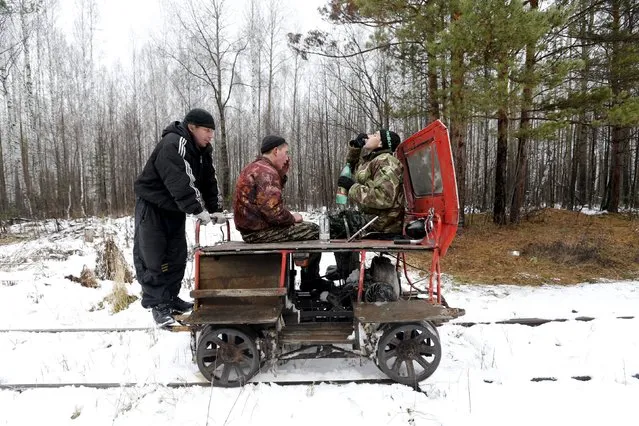
(L-R) A man nicknamed "Barcelona", Alexey Bolotov and Alexey Jakushin drink vodka as they travel by a pioneer motorised railcar on their way to Kalach, Sverdlovsk region, Russia October 18, 2015. The "pioneer," a light auxiliary rail vehicle, is a popular form of transport among people who live along the Alapayevsk railway. (Photo by Maxim Zmeyev/Reuters)

(L-R) A man nicknamed "Barcelona", Alexey Bolotov and Alexey Jakushin drink vodka as they travel by a pioneer motorised railcar on their way to Kalach, Sverdlovsk region, Russia October 18, 2015. The "pioneer," a light auxiliary rail vehicle, is a popular form of transport among people who live along the Alapayevsk railway. In a remote corner of the Urals region at the end of a narrow-gauge railway is Kalach, population about a dozen. Three decades ago 600 people called the village home, but the local forestry industry suffered as the former Soviet Union imploded and people moved away in search of work. In Kalach today there are no telephones, no mobile reception and only a few hours of electricity a day. (Photo by Maxim Zmeyev/Reuters)
Details
15 Nov 2015 08:06:00
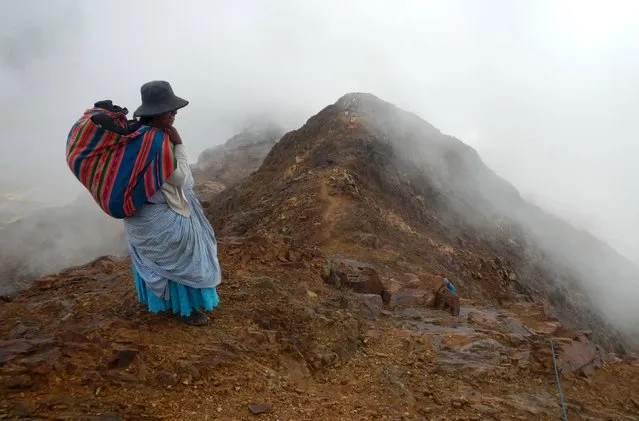
A porter stands at the bottom of the Illimani mountain, on the outskirts of La Paz, Bolivia, April 16, 2016. (Photo by David Mercado/Reuters)

A porter stands at the bottom of the Illimani mountain, on the outskirts of La Paz, Bolivia, April 16, 2016. For years, Lydia Huayllas, 48, has worked as a cook at base camps and mountain-climbing refuges on the steep, glacial slopes of Huayna Potosi, a 19,974-foot (6,088-meter) Andean peak outside of La Paz, Bolivia. But two years ago, she and 10 other Aymara indigenous women, ages 42 to 50, who also worked as porters and cooks for mountaineers, put on crampons – spikes fixed to a boot for climbing – under their wide traditional skirts and started to do their own climbing. (Photo by David Mercado/Reuters)
Details
22 Apr 2016 12:33:00
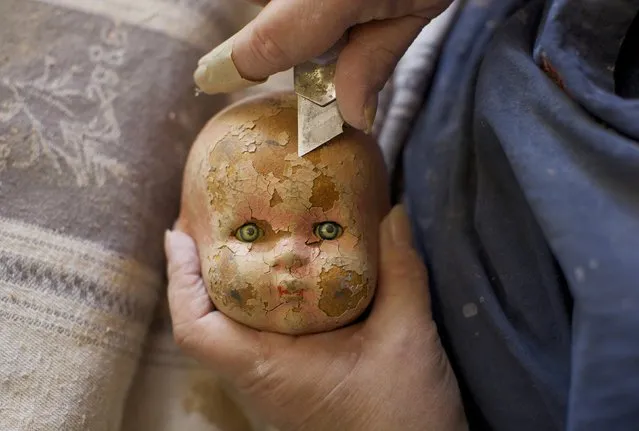
A badly-weathered composition doll, made from compressed wood chip, has its flakey paint cut off before being repaired and repainted by Gail Grainger, a 14-year veteran doll repairer at Sydney's Doll Hospital, August 19, 2014. (Photo by Jason Reed/Reuters)

A badly-weathered composition doll, made from compressed wood chip, has its flakey paint cut off before being repaired and repainted by Gail Grainger, a 14-year veteran doll repairer at Sydney's Doll Hospital, August 19, 2014. Opened in 1913, Sydney's Doll Hospital has worked on millions of dolls, teddy bears and other toys. Behind a toy shop on a busy suburban street in Sydney's south, “doll surgeons” transplant fingers, toes and heads, and repair broken eye sockets in dolls who were the victim of a childhood tantrum or sibling rivalry, sometimes decades ago. (Photo by Jason Reed/Reuters)
Details
26 Aug 2014 10:45:00
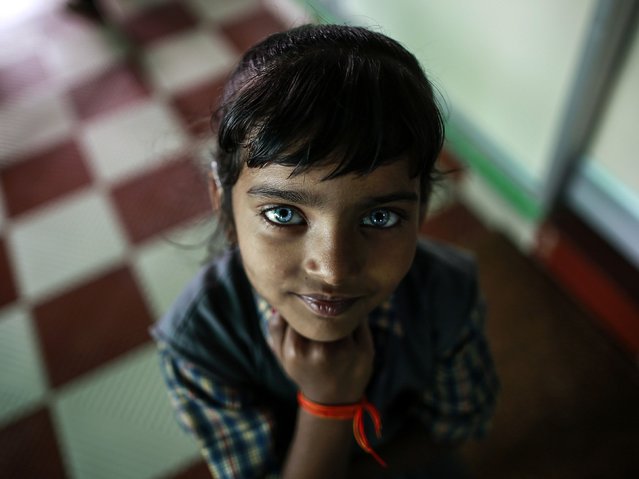
A girl who suffers from hearing and speech disorders reacts to the camera at a rehabilitation centre supported by Bhopal Medical Appeal, for children who were born with mental and physical disabilities, in Bhopal November 11, 2014.(Photo by Danish Siddiqui/Reuters)

A girl who suffers from hearing and speech disorders reacts to the camera at a rehabilitation centre supported by Bhopal Medical Appeal, for children who were born with mental and physical disabilities, in Bhopal November 11, 2014. The rehabilitation centre only treats families they believe have been affected by the Union Carbide gas leak 30 years ago. Human rights groups say that thousands of tonnes of hazardous waste remain buried underground, and the government has conceded it is contaminated. There has, however, been no long-term epidemiological research which conclusively proves that birth defects are directly related to the drinking of the contaminated water. (Photo by Danish Siddiqui/Reuters)
Details
30 Nov 2014 12:00:00
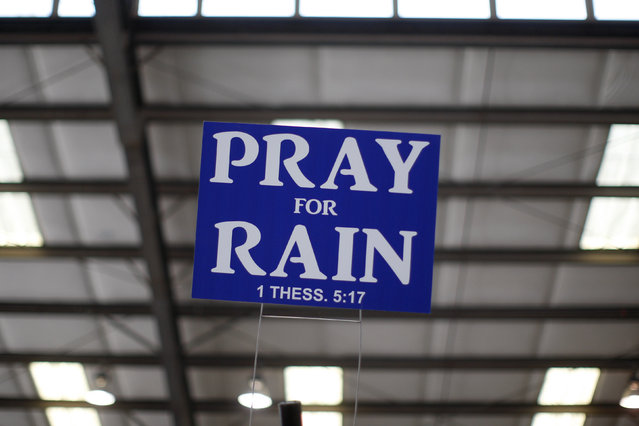
A sign advising to pray for rain hangs above an exhibit area at the 47th Annual World Ag Expo in Tulare, February 12, 2014. (Photo by David McNew/Reuters)

A sign advising to pray for rain hangs above an exhibit area at the 47th Annual World Ag Expo in Tulare, February 12, 2014. About a hundred years ago, when urban water systems were being developed throughout the state, the city of Sacramento wrote protections from metering into its charter, vowing that residents would always have the right to use as much water as they needed. But on Tuesday, the state's top water regulators released a framework for enforcing California's first statewide mandatory restrictions on urban water use – cuts of 25 percent for non-agricultural users ordered last week by Democratic Governor Jerry Brown as a devastating drought enters its fourth year. (Photo by David McNew/Reuters)
Details
09 Apr 2015 13:16:00
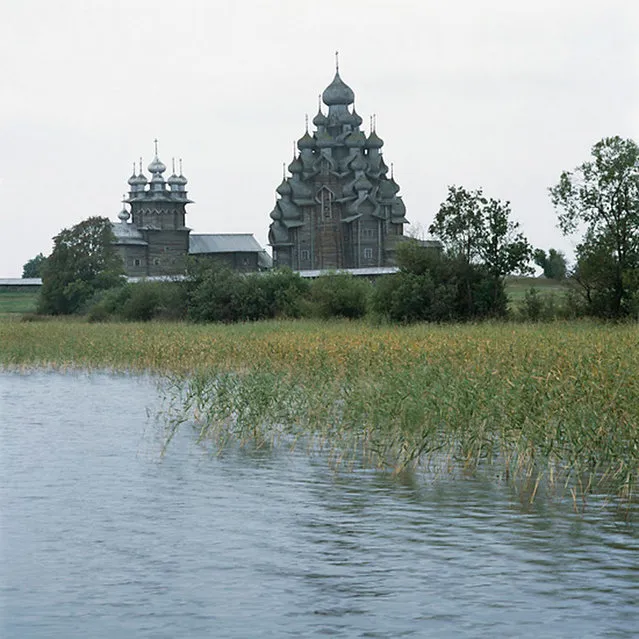
Wooden Churches - Travelling In The Russian North By Richard Davies Part 1

While communism, collectivism, worms, dry rot and casual looting failed to destroy the majestic wooden churches of Russia, it may be ordinary neglect that finally does them in. Dwindled now to several hundred remaining examples, these glories of vernacular architecture lie scattered amid the vastness of the world’s largest country. Just over a decade ago, Richard Davies, a British architectural photographer, struck out on a mission to record the fragile and poetic structures. Austerely beautiful and haunting, “Wooden Churches: Traveling in the Russian North” (White Sea Publishing; $132) is the result. Covering thousands of miles, Mr. Davies described how he and the writer Matilda Moreton tracked down the survivors from among the thousands of onion-domed structures built after Prince Vladimir converted to Christianity in 988.
Details
25 Nov 2013 12:47:00
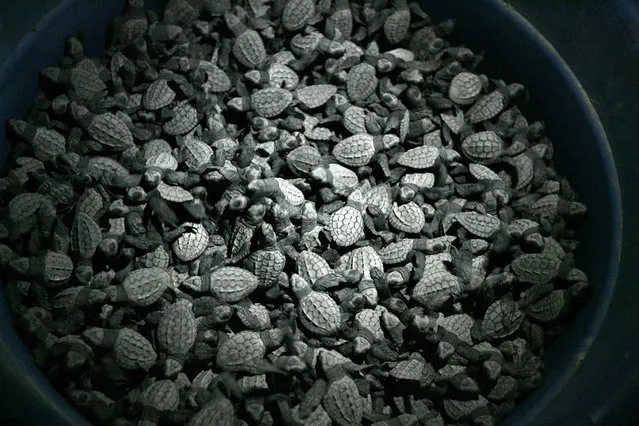
Olive Ridley turtle hatchlings (Lepidochelys olivacea) sit in baskets and trays at the turtle camp La Gloria, before their release into the ocean in Tomatlan November 15, 2013. (Photo by Alejandro Acosta/Reuters)

Olive Ridley turtle hatchlings (Lepidochelys olivacea) sit in baskets and trays at the turtle camp La Gloria, before their release into the ocean in Tomatlan November 15, 2013. Twenty years ago, Mexico's government implemented ecological plans to protect the sea turtles from being hunted for their leather and meat and established conservation areas and a pay system for local residents to protect turtle nests. Millions of baby turtles hatch on the shores in November and December, according to an environmental group. It is estimated that in 2012, there were 20 million newborns. Hatching season is still underway, but officials say they expect there will be even more turtles born this year. (Photo by Alejandro Acosta/Reuters)
Details
25 Nov 2013 08:54:00