Loading...
Done
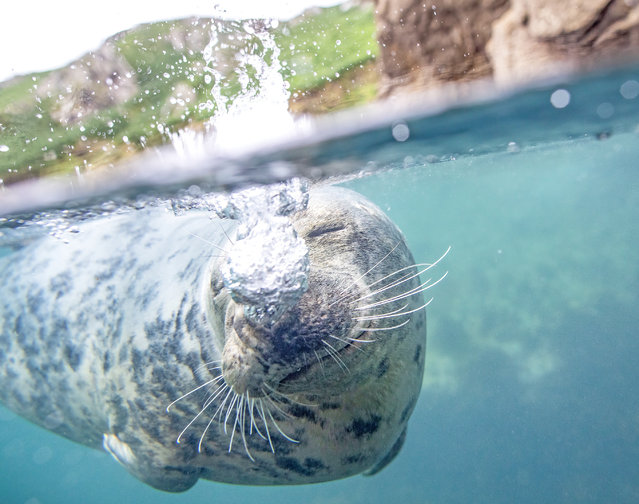
A curious grey seal investigates photographer Brian Matthews at Lundy Island off the north Devon coast, July 2024. *Photo by Brian Matthews/Solent News)

A curious grey seal investigates photographer Brian Matthews at Lundy Island off the north Devon coast, July 2024. *Photo by Brian Matthews/Solent News)
Details
23 Dec 2024 03:00:00
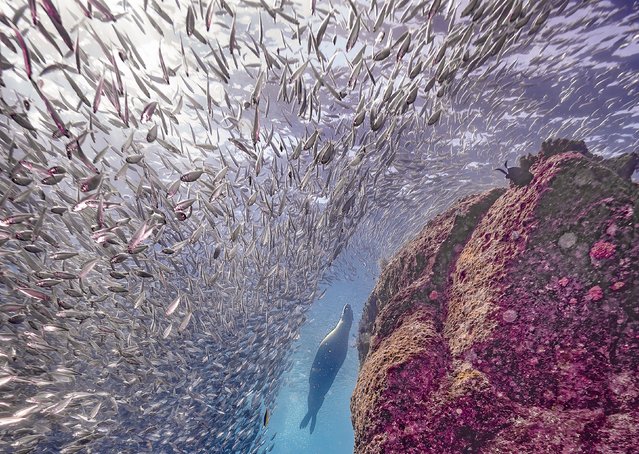
Sea lions make dinner plans in the Gulf of California early July 2024. The gulf is a primary source of sardines and anchovies, two of Mexico’s top marine resources. (Photo by Glenn Ostle/Solent News)

Sea lions make dinner plans in the Gulf of California early July 2024. The gulf is a primary source of sardines and anchovies, two of Mexico’s top marine resources. (Photo by Glenn Ostle/Solent News)
Details
04 Oct 2024 04:04:00
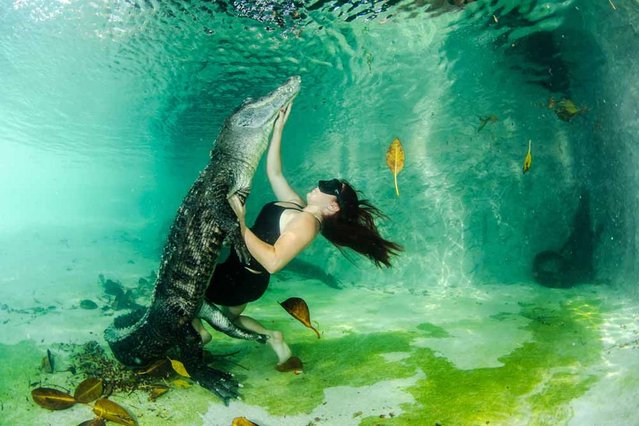
Assistant photographer Adriana Canargo dives with a wild alligator. (Photo by John Chapa/Barcroft Media)

Daredevil Christopher Gillette writhes around with a huge alligator he has saved from death. He works at a Florida sanctuary that rescues the wild beasts if they stroll into neighbourhoods where residents can legally kill them. To raise cash for the centre at Homestead, staff put on shows to feed and wrestle the alligators. Photographer John Chapa, 41, and girlfriend Adriana Canargo, 30, took these shots. Photo: Assistant photographer Adriana Canargo dives with a wild alligator. (Photo by John Chapa/Barcroft Media)
Details
22 Jun 2014 10:35:00


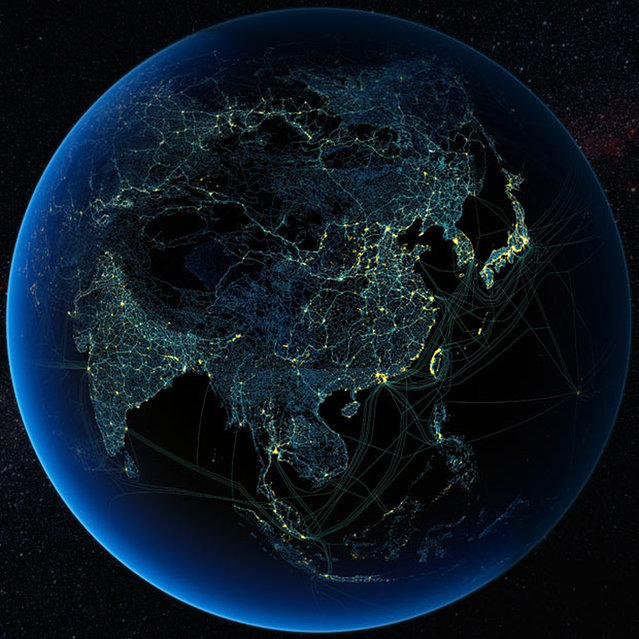
Defined according to wikipedia it is “a recent and informal geologic chronological term that serves to mark the evidence and extent of human activities that have had a significant global impact on the Earth’s ecosystems. The term was coined by ecologist Eugene Stoermer but has been widely popularized by the Nobel Prize-winning atmospheric chemist Paul Crutzen.”

The images here where created by Felix Pharand-Deschenes depicting how various human influences, from road and rail, to internet cables and airlines create significant patterns covering the Earth. What can we learn from these patterns in how they are influencing the environment
Details
19 Aug 2012 10:40:00
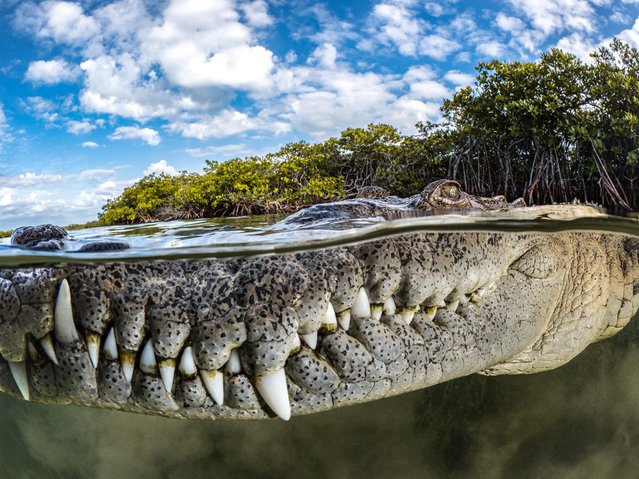
Guardian of the Mangroves – Overall Winner. Tanya Houppermans, Cuba. A curious American crocodile (Crocodylus acutus) swims right up to Tanya, at Gardens of the Queen (Jardines De La Reina), an archipelago off the coast of Cuba. It has been strictly protected since 1996, and is one of the most untouched marine ecosystems in the world. ‍ “The healthy population of American crocodiles is down to the pristine condition of the mangroves and I wanted to capture close ups of this gentle giant in its natural habitat. I hope this image can illustrate that protecting areas like this is so critical”. (Photo by Tanya Griffin Houppermans/Mangrove Photographer of the Year)

Guardian of the Mangroves – Overall Winner. Tanya Houppermans, Cuba. A curious American crocodile (Crocodylus acutus) swims right up to Tanya, at Gardens of the Queen (Jardines De La Reina), an archipelago off the coast of Cuba. It has been strictly protected since 1996, and is one of the most untouched marine ecosystems in the world. ‍ “The healthy population of American crocodiles is down to the pristine condition of the mangroves and I wanted to capture close ups of this gentle giant in its natural habitat. I hope this image can illustrate that protecting areas like this is so critical”. (Photo by Tanya Griffin Houppermans/Mangrove Photographer of the Year)
Details
05 Nov 2022 04:24:00
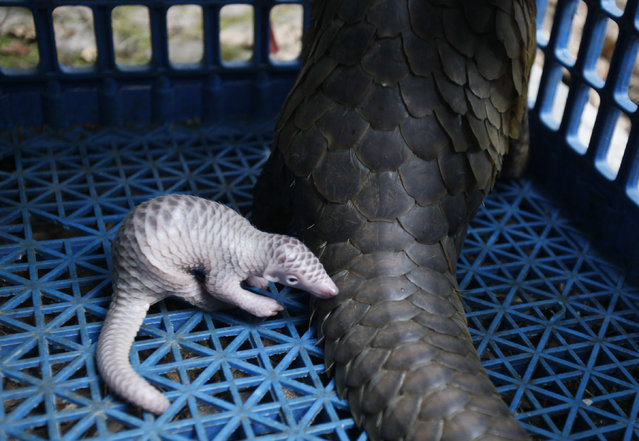
A baby pangolin sits with its mother inside a cage prior to their release into the wild in Sibolangit, North Sumatra, Indonesia, Monday, April 27, 2015. (Photo by Binsar Bakkara/AP Photo)

A baby pangolin sits with its mother inside a cage prior to their release into the wild in Sibolangit, North Sumatra, Indonesia, Monday, April 27, 2015. The anteaters are part of dozens of live pangolins and around five tons (11,000 lbs) of pangolin meat ready to be shipped abroad confiscated in a police a raid last week. (Photo by Binsar Bakkara/AP Photo)
Details
29 Apr 2015 06:16:00
1st Place in Wildlife: A male orangutan peers from behind a tree while crossing a river in Borneo, Indonesia. (Photo by Jayaprakash Joghee Bojan/National Geographic Nature Photographer of the Year contest 2017)

1st Place in Wildlife: A male orangutan peers from behind a tree while crossing a river in Borneo, Indonesia. (Photo by Jayaprakash Joghee Bojan/National Geographic Nature Photographer of the Year contest 2017)
Details
15 Dec 2017 06:34:00
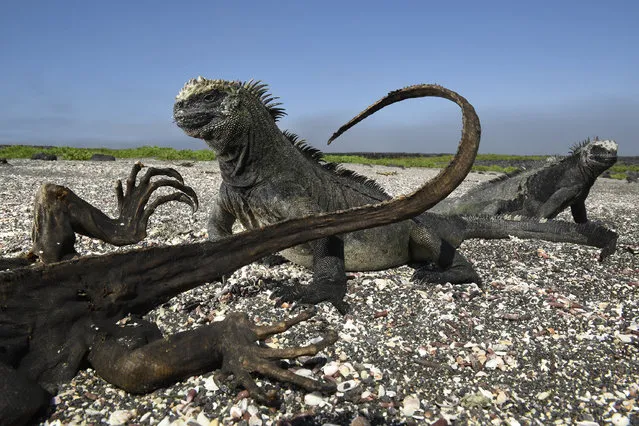
Galapagos – Rocking the Cradle: Four major ocean currents converge along the Galapagos archipelago, creating the conditions for an extraordinary diversity of animal life, April 25, 2016. The islands are home to at least 7,000 flora and fauna species, of which 97 percent of the reptiles, 80 percent of the land birds, 50 percent of the insects and 30 percent of the plants are endemic. The local ecosystem is highly sensitive to the changes in temperature, rainfall and ocean currents that characterize the climatic events known as El Niño and La Niña. These changes cause marked fluctuations in weather and food availability. Many scientists expect the frequency of El Niño and La Niña to increase as a result of climate change, making the Galapagos a possible early-warning location for its effects. (Photo by Thomas P. Peschak for National Geographic/World Press Photo)

Galapagos – Rocking the Cradle: Four major ocean currents converge along the Galapagos archipelago, creating the conditions for an extraordinary diversity of animal life, April 25, 2016. The islands are home to at least 7,000 flora and fauna species, of which 97 percent of the reptiles, 80 percent of the land birds, 50 percent of the insects and 30 percent of the plants are endemic. (Photo by Thomas P. Peschak for National Geographic/World Press Photo)
Details
16 Apr 2018 00:01:00