Loading...
Done
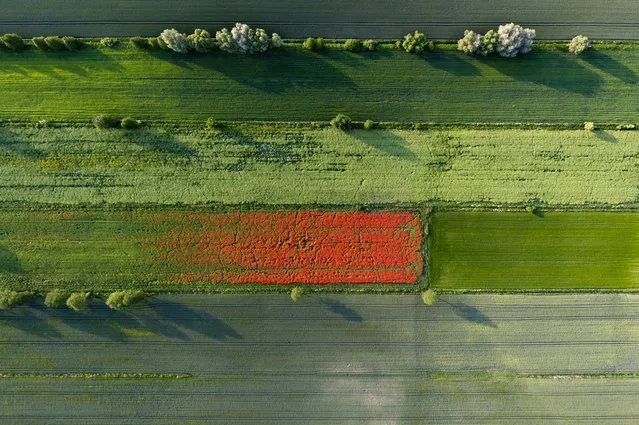
A view over fields of grain in Spring white chamomile, blue cornflower and other weeds growing amongst the grain sprouts. (Photo by Kacper Kowalski/Panos Pictures)

In his book “Side Effects”, aerial photographer Kacper Kowalski took to the skies to paint a portrait of the complex relationship between humans and nature. From the sky, he captured where nature and civilization collide into aesthetic, abstract colors and shapes. Photo: A view over fields of grain in Spring chamomile, cornflower and other weeds growing amongst the grain sprouts. (Photo by Kacper Kowalski/Panos Pictures)
Details
04 Sep 2014 08:19:00
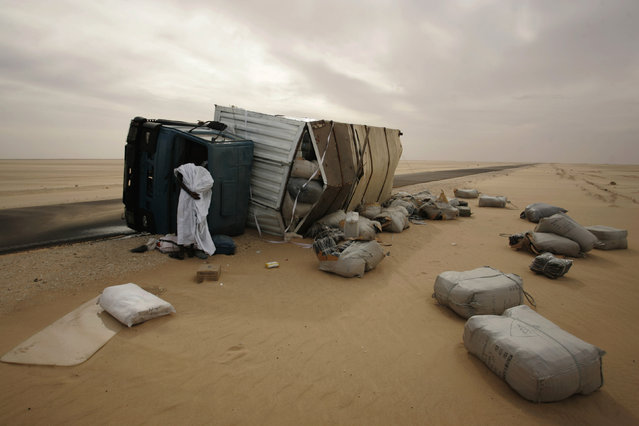
A man looks inside an overturned truck after an accident along the road between Nouahibou and Nouakchott, Mauritania December 3, 2009. (Photo by Rafael Marchante/Reuters)

A man looks inside an overturned truck after an accident along the road between Nouahibou and Nouakchott, Mauritania December 3, 2009. (Photo by Rafael Marchante/Reuters)
Details
22 Dec 2015 08:05:00
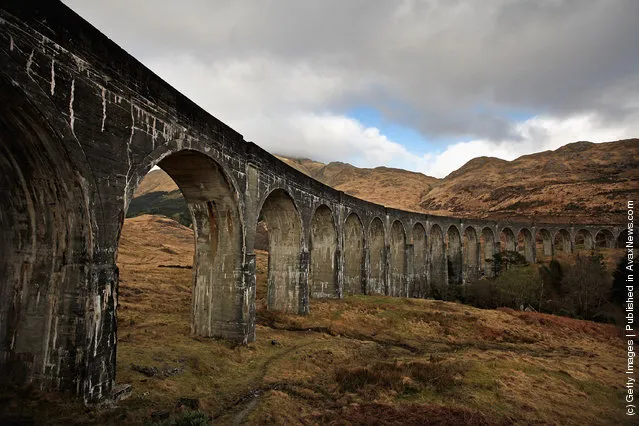
A view of the Glenfinnan Viaduct

“Glenfinnan Viaduct is a railway viaduct on the West Highland Line in Glenfinnan, Lochaber, Highland, Scotland. It was built between 1897 and 1901. Located at the top of Loch Shiel in the West Highlands of Scotland, the viaduct overlooks the Glenfinnan Monument and the waters of Loch Shiel”. – Wikipedia

Photo: A view of the Glenfinnan Viaduct on March 30, 2012 in Glenfinnan, Scotland. Built by Sir Robert McAlpine, the single track viaduct that is made up of 21 arches is considered to have been one of the largest engineering projects of its time. Today, it is still used by ScotRail and was recently used for scenes in three of the Harry Potter films. (Photo by Jeff J. Mitchell/Getty Images)
Details
31 Mar 2012 09:21:00
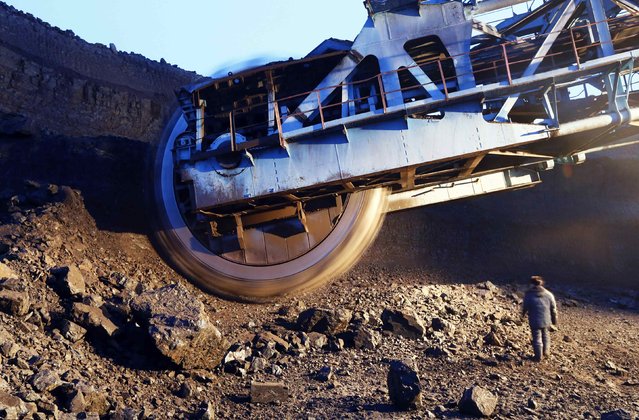
An employee walks near a rotary dredge which works on the coal face of the Borodinsky opencast colliery, near the Siberian town of Borodino, east of Krasnoyarsk, December 9, 2014. The Borodinsky colliery, 9 km (5.6 miles) long and more than 100 meters (328 feet) deep, annually produces more than 20 million tons of coal and is considered to be the biggest opencast coal mine in Russia, according to official representatives. (Photo by Ilya Naymushin/Reuters)

An employee walks near a rotary dredge which works on the coal face of the Borodinsky opencast colliery, near the Siberian town of Borodino, east of Krasnoyarsk, December 9, 2014. The Borodinsky colliery, 9 km (5.6 miles) long and more than 100 meters (328 feet) deep, annually produces more than 20 million tons of coal and is considered to be the biggest opencast coal mine in Russia, according to official representatives. (Photo by Ilya Naymushin/Reuters)
Details
11 Dec 2014 13:29:00
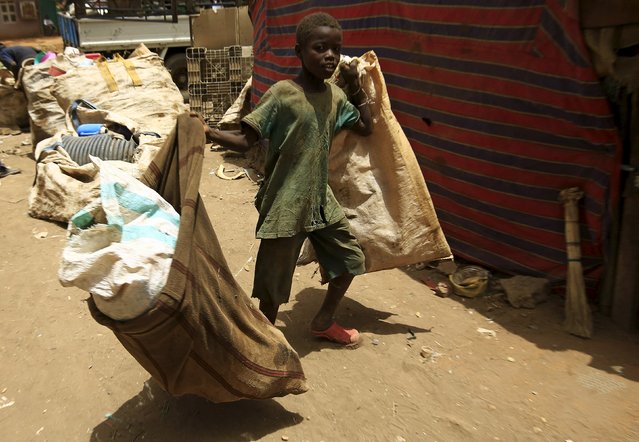
A boy carries empty sacks after bringing different types of plastic materials to a recycling station in Khartoum North April 16, 2015. People bring bottles and other plastic materials to the station for recycling, and get paid in return. (Photo by Mohamed Nureldin Abdallah/Reuters)

A boy carries empty sacks after bringing different types of plastic materials to a recycling station in Khartoum North April 16, 2015. People bring bottles and other plastic materials to the station for recycling, and get paid in return. (Photo by Mohamed Nureldin Abdallah/Reuters)
Details
20 Apr 2015 12:39:00
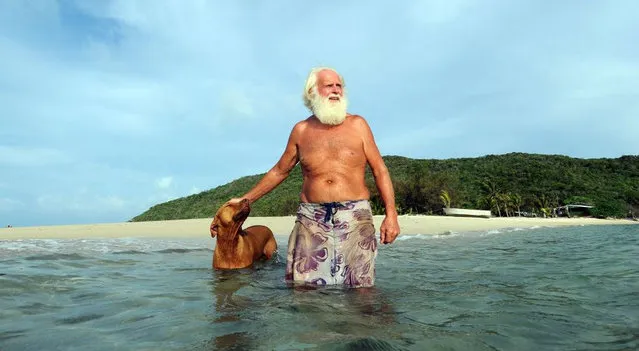
A real life Robinson Crusoe – David Glasheen

David Glasheen faces eviction from his remote tropical paradise after losing a Supreme Court legal case.
Details
08 Nov 2012 17:42:00
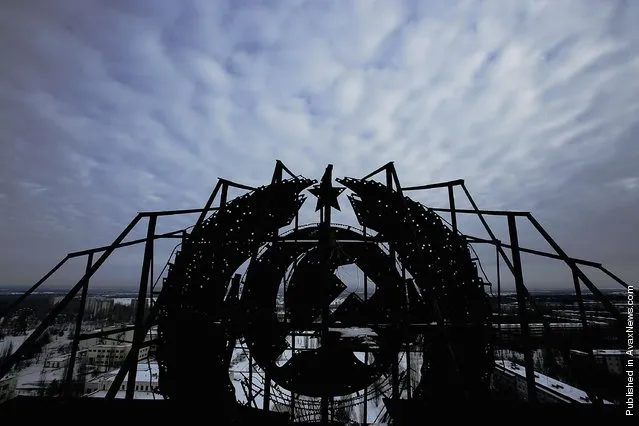
Chernobyl

Scaffolding holding a remnant of the Soviet Union, the hammer and sickle, is seen on a rooftop of an abandoned building in the town of Pripyat on January 25, 2006 near Chernobyl, Ukraine. The town of Pripyat, deserted since the 1986 catastrophe, once housed 30,000 people, the majority of being workers from the Chernobyl Nuclear Power Plant. Days after the catastrophe the inhabitants were relocated to other locations in the Soviet Union. The town of Pripyat has remained uninhabited since. Prypyat and the surrounding area will not be safe for human habitation for several centuries. Scientists estimate that the most dangerous radioactive elements will take up to 900 years to decay sufficiently to render the area safe.
Details
14 Mar 2011 10:20:00
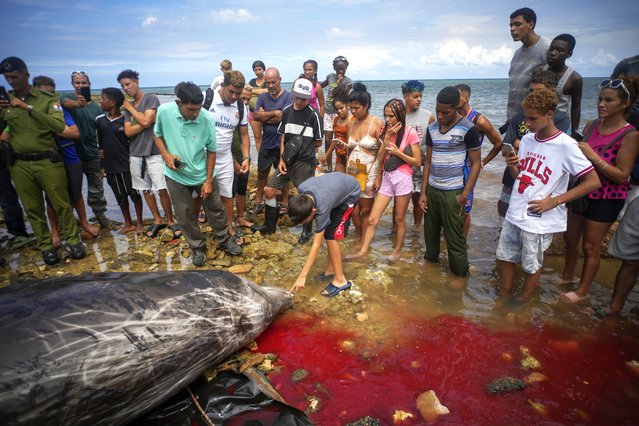
People inspect a dead whale on the coast of Baracoa, Artemisa province, Cuba, Thursday, October 3, 2024. (Photo by Ramon Espinosa/AP Photo)

People inspect a dead whale on the coast of Baracoa, Artemisa province, Cuba, Thursday, October 3, 2024. (Photo by Ramon Espinosa/AP Photo)
Details
28 Oct 2024 03:33:00