Loading...
Done
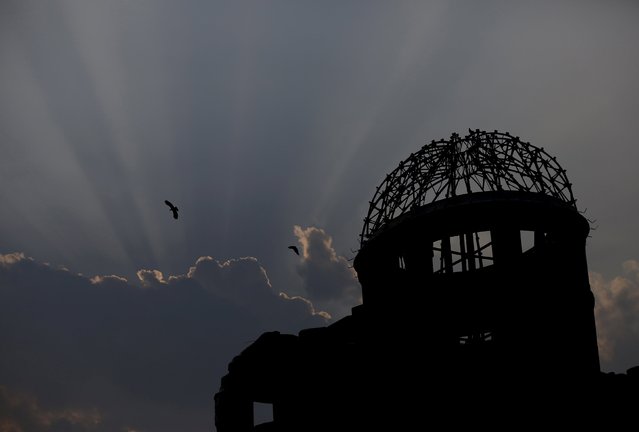
Birds fly over the Atomic Bomb Dome in Hiroshima, western Japan July 29, 2015. On August 6, 1945, the U.S. dropped the atomic bomb on Hiroshima, killing about 140,000 by the end of the year in a city of 350,000 residents, in the world's first nuclear attack. (Photo by Issei Kato/Reuters)

Birds fly over the Atomic Bomb Dome in Hiroshima, western Japan July 29, 2015. On August 6, 1945, the U.S. dropped the atomic bomb on Hiroshima, killing about 140,000 by the end of the year in a city of 350,000 residents, in the world's first nuclear attack. Three days later, a second atomic bomb was dropped on Nagasaki. Influenced by the shadows scorched into outdoor surfaces by the heat of the blasts 70 years ago, Reuters photographer Issei Kato pays homage to survivors, residents and historic buildings in both cities in a personal project that captures the shadows of today. (Photo by Issei Kato/Reuters)
Details
04 Aug 2015 12:01:00
A clown performs next to the Monument to the Revolution as he takes part in the Latin American Clown Convention in Mexico City, Mexico, October 21, 2015. (Photo by Henry Romero/Reuters)

A clown performs next to the Monument to the Revolution as he takes part in the Latin American Clown Convention in Mexico City, Mexico, October 21, 2015. The convention will be held from October 19 to 22 in Mexico City. (Photo by Henry Romero/Reuters)
Details
25 Oct 2015 08:03:00
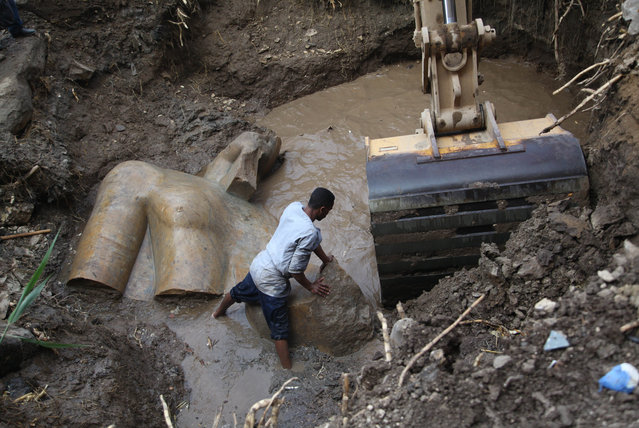
An Egyptian worker prepares to lift parts of a statue at the site of a new archeological discovery at Souq Al-Khamis district in Al-Matareya area, Cairo, Egypt on March 9 2017. According to the Ministry of Antiquities, two 19th dynasty royal statues were found in parts in the vicinity of King Ramses II temple in ancient Heliopolis (Oun) Sun Temples by a German-Egyptian archeological mission. (Photo by Xinhua News Agency/Rex Features/Shutterstock)

An Egyptian worker prepares to lift parts of a statue at the site of a new archeological discovery at Souq Al-Khamis district in Al-Matareya area, Cairo, Egypt on March 9 2017. According to the Ministry of Antiquities, two 19th dynasty royal statues were found in parts in the vicinity of King Ramses II temple in ancient Heliopolis (Oun) Sun Temples by a German-Egyptian archeological mission. (Photo by Xinhua News Agency/Rex Features/Shutterstock)
Details
15 Mar 2017 00:06:00
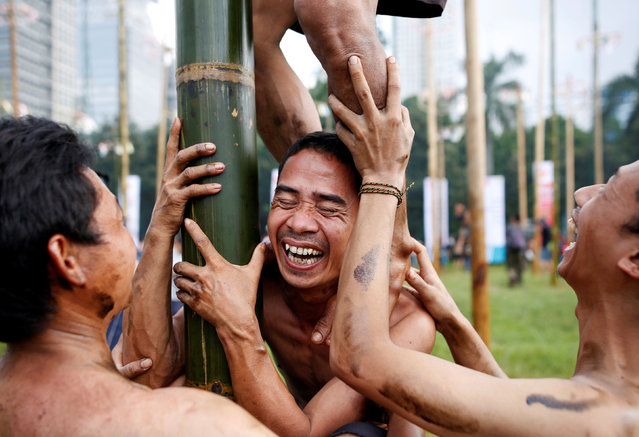
Participants react as they climb a greased pole to collect vouchers for gifts during a “Panjat Pinang” event organised in celebration of Indonesia's 71st Independence day in Jakarta, Indonesia August 17, 2016. (Photo by Darren Whiteside/Reuters)

Participants react as they climb a greased pole to collect vouchers for gifts during a “Panjat Pinang” event organised in celebration of Indonesia's 71st Independence day in Jakarta, Indonesia August 17, 2016. (Photo by Darren Whiteside/Reuters)
Details
18 Aug 2016 11:35:00
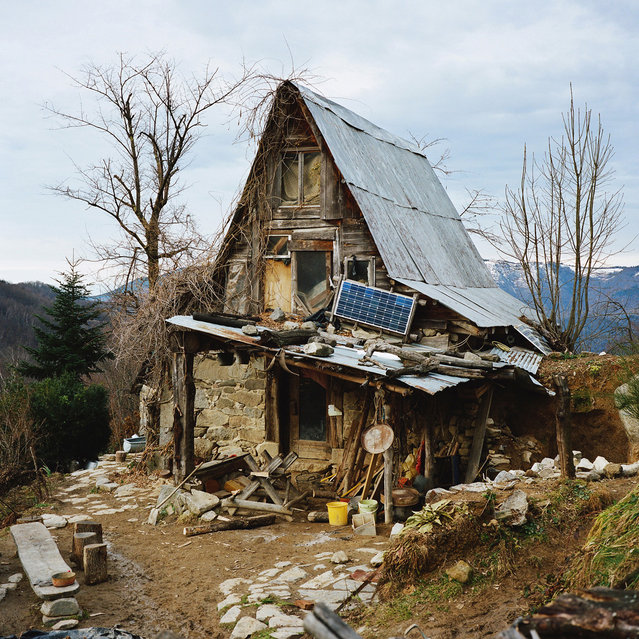
This property in the French Pyrenees is owned by a German man, who moved with his family here 25 years ago. He has since renovated the shack to be a completely self-sufficient house. There are no electrical appliances, but the solar panel powers small lights in the house. (Photo by Antoine Bruy)

Back in 2010, French photographer Antoine Bruy began hitchhiking around Europe without any fixed route. Along his travels, he met people who had entirely abandoned city life in favour of an isolated country existence they found more fulfilling. Bruy began seeking out people who lived off-the-grid. After three years on the road, staying in makeshift houses and on community farms, he has released Scrublands, a documentation of the lifestyle. While each living situation is different, Bruy found that all the people he met shared a common desire to escape the rat race and achieve a quieter life in harmony with nature. (Photo by Antoine Bruy)
Details
13 Aug 2014 09:45:00
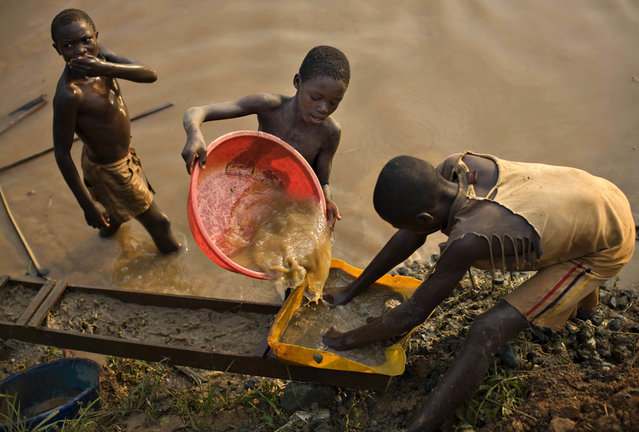
Boys pan for gold on a riverside at Iga Barriere, 25 km (15 miles) from Bunia, in the resource-rich Ituri region of eastern Congo February 16, 2009. Ituri is one of many areas of the country to have experienced bitter ethnic conflict between rival tribes in recent years. Massacres have left tens of thousands dead. It is this fighting that led U.S. authorities to take the unprecedented step of naming Congo in section 1502 of the Dodd-Frank financial regulation act, which says U.S.-listed companies that source gold, tungsten, tantalum and tin from Congo or its neighbours must assure the U.S. stock exchange regulator that their business is not helping fund conflict. (Photo by Finbarr O'Reilly/Reuters)

Boys pan for gold on a riverside at Iga Barriere, 25 km (15 miles) from Bunia, in the resource-rich Ituri region of eastern Congo February 16, 2009. Ituri is one of many areas of the country to have experienced bitter ethnic conflict between rival tribes in recent years. Massacres have left tens of thousands dead. It is this fighting that led U.S. authorities to take the unprecedented step of naming Congo in section 1502 of the Dodd-Frank financial regulation act, which says U.S.-listed companies that source gold, tungsten, tantalum and tin from Congo or its neighbours must assure the U.S. stock exchange regulator that their business is not helping fund conflict. (Photo by Finbarr O'Reilly/Reuters)
Details
12 Nov 2016 10:24:00
A Free Syrian Army (FSA) fighter reacts as he mourns near the body of his brother, who was an FSA fighter and died during an offensive against Islamic State fighters to take control of Qabasin town, on the outskirts of the northern Syrian town of al-Bab, Syria January 10, 2017. (Photo by Khalil Ashawi/Reuters)

A Free Syrian Army (FSA) fighter reacts as he mourns near the body of his brother, who was an FSA fighter and died during an offensive against Islamic State fighters to take control of Qabasin town, on the outskirts of the northern Syrian town of al-Bab, Syria January 10, 2017. (Photo by Khalil Ashawi/Reuters)
Details
11 Jan 2017 14:24:00
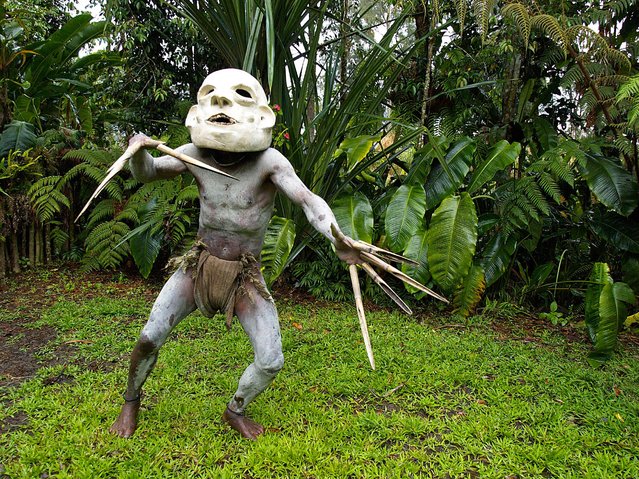
The mudmen come from the country’s western highlands, where there are virtually no roads, cars, electricity or shops. (Photo by Jeremy Hunter/Exclusivepix Media)

For centuries the Highlands peoples of Papua New Guinea fought over land, women and pigs. Sorcery and battle skills could elevate a clan to Bigmanship, where the bigger the “presentation”, the bigger the man. Clans therefore would paint their bodies and create fearsome masks as part of their psy. Here: These are the terrifying tribe of “mudmen” from a remote part of Papua New Guinea. (Photo by Jeremy Hunter/Exclusivepix Media)
Details
08 May 2017 08:12:00