Loading...
Done
Villa Del Priorato Di Malta - Secrets In Rome

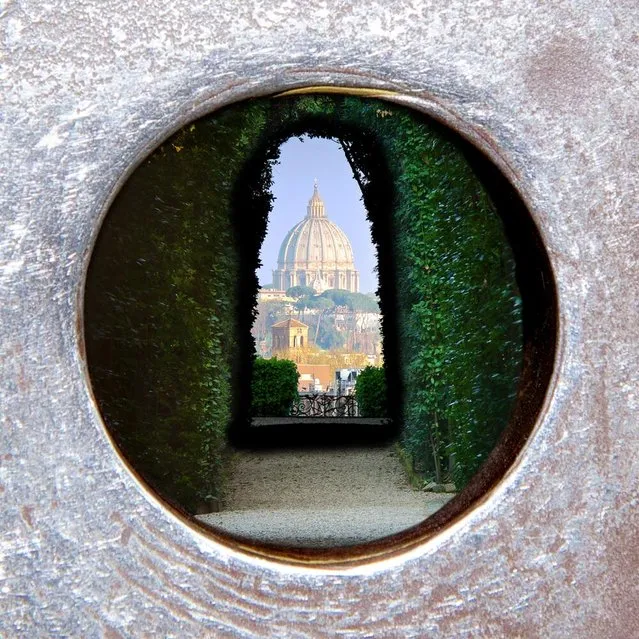
What do you imagine when you look through a key hole? Do you imagine seeing a Wonderland with a sinister Queen of Heart ruling over a magical kingdom? Or you might imagine an eye staring back at you, if you’re a fan of horror movies. Least of all do you expect seeing a picturesque view of St. Peter’s Dome, perfectly framed by green hedges. Is it a lucky coincidence, or was it intended by the maker? We might never know. However, this became a curious sightseeing spot for many tourists who visit Rome. Thus, if you’re ever in the area of Priorato dei Cavalieri di Malta, be sure to peep into this key hole.
Details
27 Oct 2014 11:40:00
Greater Sage-Grouse

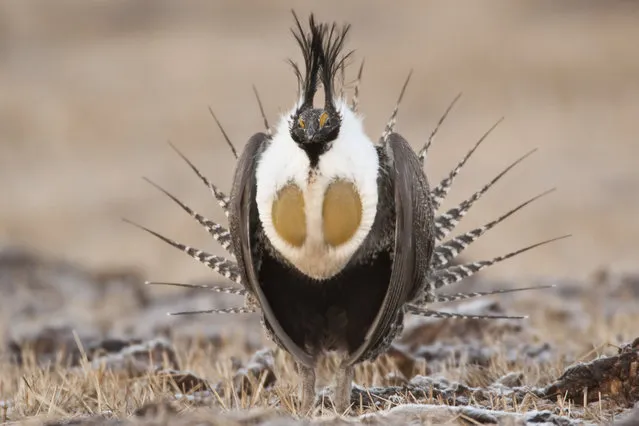
The Greater Sage-Grouse is certainly a formidable-looking bird. Being the largest grouse in North America and having tail feathers, which look like giant spikes, make for a ferocious sight. These birds are well known for their complicated courtship rituals, in which the males perform a special “strutting display” to attract the females. Another distinct feature of the Greater Sage-Grouse is two large yellow throat sacs (gular sacs), which are inflated by the males during the courtship display. Unlike pelicans, whose gular sacs are used to store fish while hunting, the throat sacks of the Greater Sage-Grouse are merely for display.
Details
21 Nov 2014 12:25:00
Allure Of The Seas Cruise Ship

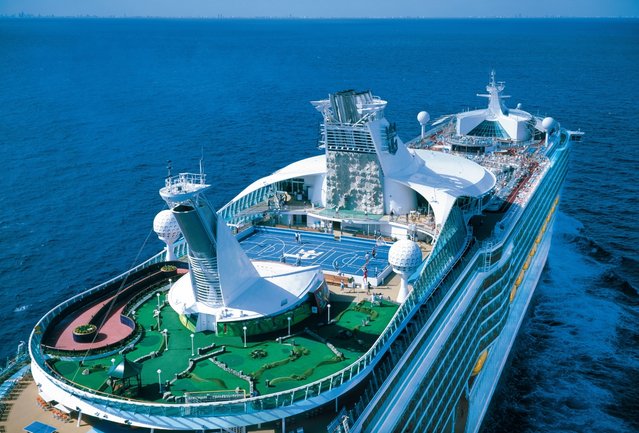
MS Allure of the Seas is an Oasis-class cruise ship owned and operated by Royal Caribbean International. The Oasis class are the largest passenger ships ever constructed, and Allure is 50 millimetres (2.0 in) longer than her sister ship Oasis of the Seas, though both were built to the same specifications. Designed under the name “Project Genesis”, she was ordered from Aker Finnyards in February 2006 and her construction began at the Perno shipyard, Turku, Finland, in February 2008. She was named in May 2008 after a contest was held to name her and her sister. The keel of Allure of the Seas was laid on 2 December 2008, shortly after the shipyard had been acquired by STX Europe.
Details
19 Mar 2015 10:24:00
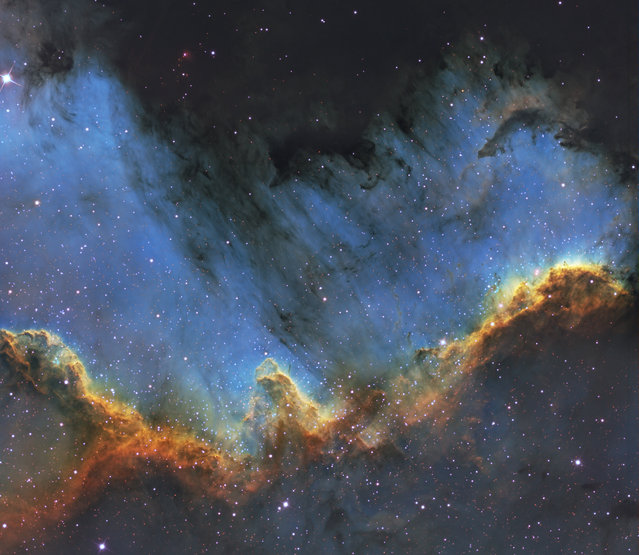
The Cygnus Wall is in the southern  area of NGC7000 also known as the North America Nebula. It is approximately 1800 light years from Earth, and is in the constellation Cygnus. The Wall is an energized shock front and contains the most concentrated star formations in the nebula. The size of the North America Nebula is about 4 full moons. (Bill Snyder)

Amateur astronomer Bill Snyder has been involved with astrophotography since 2007. Photo: The Cygnus Wall is in the southern area of NGC7000 also known as the North America Nebula. It is approximately 1800 light years from Earth, and is in the constellation Cygnus. The Wall is an energized shock front and contains the most concentrated star formations in the nebula. The size of the North America Nebula is about 4 full moons. (Photo and caption by Bill Snyder)
Details
30 Oct 2013 09:15:00
Amazing Bismuth Crystal

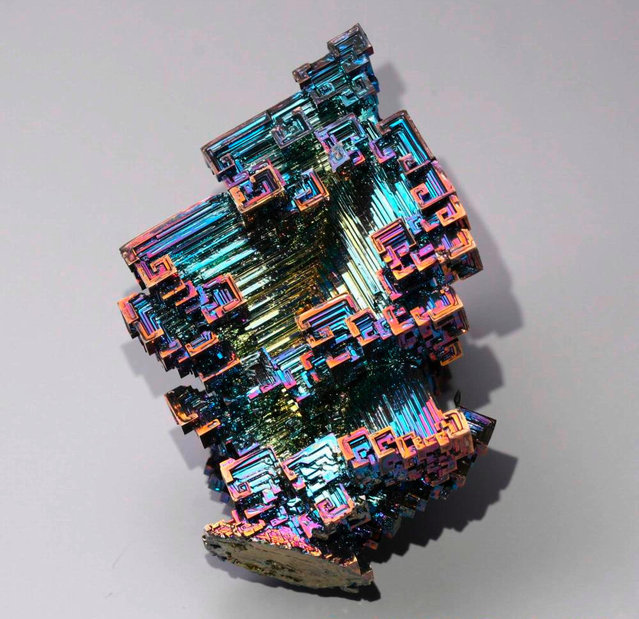
Bismuth is a chemical element with symbol Bi and atomic number 83. Bismuth, a pentavalent poor metal, chemically resembles arsenic and antimony. Elemental bismuth may occur naturally, although its sulfide and oxide form important commercial ores. The free element is 86% as dense as lead. It is a brittle metal with a silvery white color when freshly produced, but is often seen in air with a pink tinge owing to surface oxidation. Bismuth is the most naturally diamagnetic and has one of the lowest values of thermal conductivity among metals.
Details
16 Feb 2013 16:56:00
Rare Metal Gallium

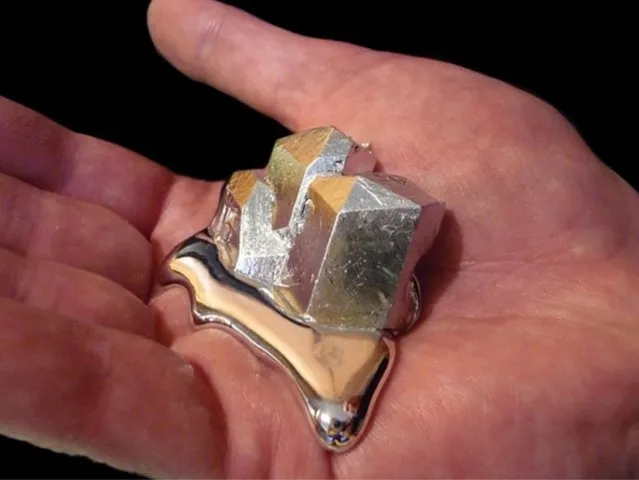
Gallium is a chemical element with symbol Ga and atomic number 31. Elemental gallium does not occur in nature, but as the gallium(III) compounds in trace amounts in bauxite and zinc ores. A soft silvery metallic poor metal, elemental gallium is a brittle solid at low temperatures.
Details
25 Feb 2013 15:15:00
Glowing Bioluminescent Plankton

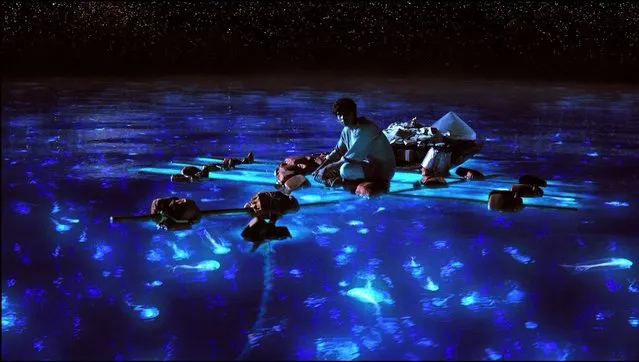
If you’ve had the unique privilege of witnessing bioluminescent plankton while diving at night, you know firsthand how beautiful the underwater light show can be. For those of us who haven’t experienced it, this unique phenomenon. So what makes this beautiful show possible? In a recent post at online scuba site AquaViews they share some insight we thought you all would find interesting.
Details
04 Jun 2013 10:55:00


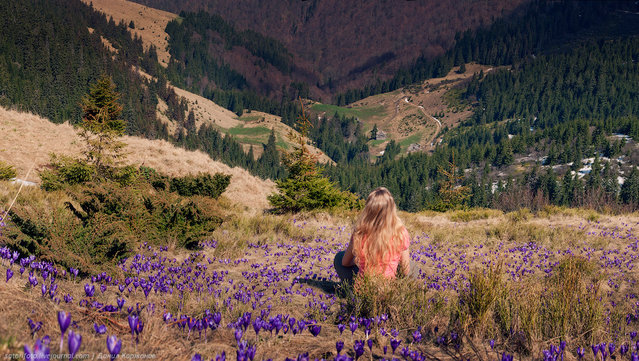
Photos by Daniel Korjonov
Details
30 May 2012 03:43:00