Loading...
Done
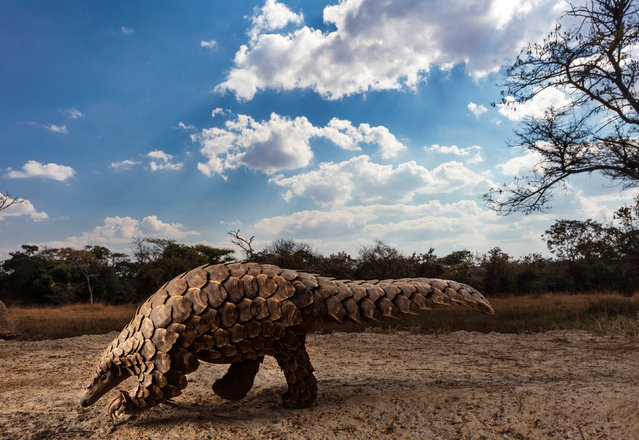
Pangolins in Crisis: Brent Stirton, South Africa; 1st place, Natural world and wildlife. “Pangolins are the world’s most illegally trafficked mammals, with an estimated one million trafficked to Asia in the last 10 years. Their scales are used in traditional Chinese and Vietnamese medicine, and their meat is sold as a high-priced delicacy. As a result, pangolins are listed as critically endangered and anyone who trades or consumes them is breaking the law. This body of work exposes the trade, while exploring aspects of illegality and celebrating the people who are trying to save these animals”. (Photo by Brent Stirton/Sony World Photography Awards 2020)

Pangolins in Crisis: Brent Stirton, South Africa; 1st place, Natural world and wildlife. “Pangolins are the world’s most illegally trafficked mammals, with an estimated one million trafficked to Asia in the last 10 years. Their scales are used in traditional Chinese and Vietnamese medicine, and their meat is sold as a high-priced delicacy. As a result, pangolins are listed as critically endangered and anyone who trades or consumes them is breaking the law. This body of work exposes the trade, while exploring aspects of illegality and celebrating the people who are trying to save these animals”. (Photo by Brent Stirton/Sony World Photography Awards 2020)
Details
11 Jun 2020 00:05:00
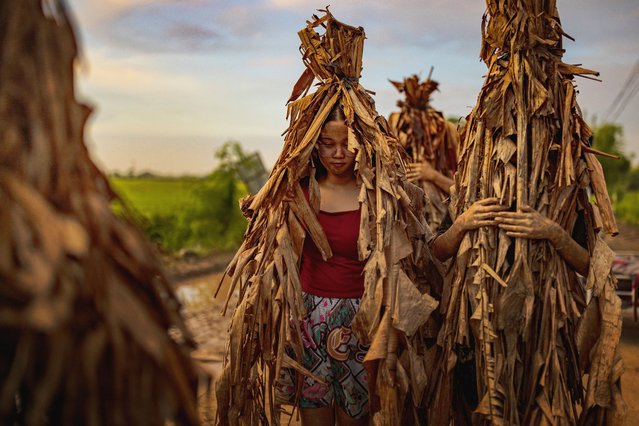
Devotees of the small farming village of Bibiclat celebrate the Feast of Saint John the Baptist while covered in banana leaves and mud on June 24, 2025 in Aliaga, Philippines. Known as the “Taong Putik” (mud people), the ritual happens yearly in this small farming village as their own version of expressing their faith and celebrating the feast of Saint John the Baptist whom the survivors of the Japanese occupation in 1944 in their area prayed to for rain to save their fellow villagers. A marker near the church entrance of the village tells a story of a heavy torrential rain that happened that day that forced the Japanese military to call off the execution of 14 villagers. The Philippines is the only predominantly Catholic country in Southeast Asia after more than 300 years of Spanish rule. (Photo by Ezra Acayan/Getty Images)

Devotees of the small farming village of Bibiclat celebrate the Feast of Saint John the Baptist while covered in banana leaves and mud on June 24, 2025 in Aliaga, Philippines. Known as the “Taong Putik” (mud people), the ritual happens yearly in this small farming village as their own version of expressing their faith and celebrating the feast of Saint John the Baptist whom the survivors of the Japanese occupation in 1944 in their area prayed to for rain to save their fellow villagers. (Photo by Ezra Acayan/Getty Images)
Details
29 Aug 2025 03:18:00
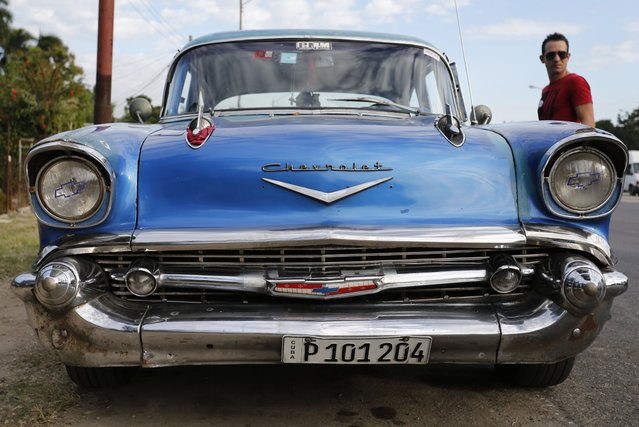
In this December 19, 2014 photo, a man stands beside his 1957 Chevrolet Bel-Air car in Havana, Cuba.  U.S. car sales have been banned in Cuba since 1959. Cubans have been have been forced to patch together Fords, Chevrolets and Chryslers that date back to before Fidel Castro's revolution which can make it appear like the country is stuck in a 1950s time warp. (Photo by Desmond Boylan/AP Photo)

In this December 19, 2014 photo, a man stands beside his 1957 Chevrolet Bel-Air car in Havana, Cuba. U.S. car sales have been banned in Cuba since 1959. Cubans have been have been forced to patch together Fords, Chevrolets and Chryslers that date back to before Fidel Castro's revolution which can make it appear like the country is stuck in a 1950s time warp. Since the Communist economic system isn't likely to change soon, many of those cars will have to stay on the road for years. (Photo by Desmond Boylan/AP Photo)
Details
26 Dec 2014 15:35:00
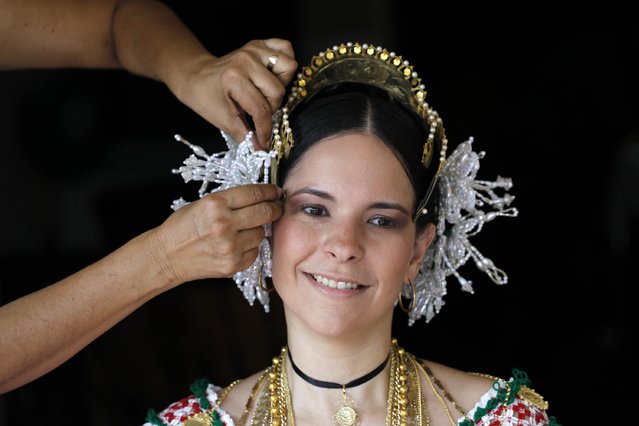
A woman is helped with adorning her hair with jewelry, part of the traditional clothing known as “Pollera”, before the annual Thousand Polleras parade in Las Tablas, in the province of Los Santos January 10, 2015. According to local residents, the Pollera dates back to the 18th century and was worn by the Spanish lower classes. (Photo by Carlos Jasso/Reuters)

A woman is helped with adorning her hair with jewelry, part of the traditional clothing known as “Pollera”, before the annual Thousand Polleras parade in Las Tablas, in the province of Los Santos January 10, 2015. According to local residents, the Pollera dates back to the 18th century and was worn by the Spanish lower classes. Today, it has become the Panamanian national costume. The dress is made entirely by hand and the jewellery worn is pure gold and worth thousands of dollars. (Photo by Carlos Jasso/Reuters)
Details
12 Jan 2015 15:46:00
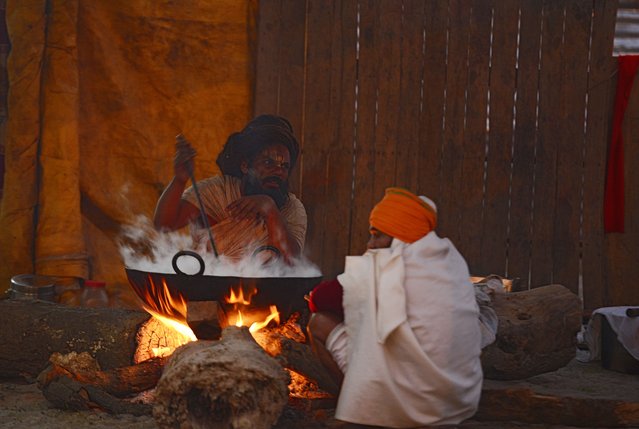
This picture taken on December 31, 2017 shows an Indian sadhu preparing food at a camp at Sangam, ahead of the Magh Mela festival, in Allahabad. The Magh Mela, which is known as a mini-Kumbh Mela, is scheduled to start January 2 and continue until February 13 with auspicious bathing dates throughout the 45 day period. (Photo by Sanjay Kanojia/AFP Photo)

This picture taken on December 31, 2017 shows an Indian sadhu preparing food at a camp at Sangam, ahead of the Magh Mela festival, in Allahabad. The Magh Mela, which is known as a mini-Kumbh Mela, is scheduled to start January 2 and continue until February 13 with auspicious bathing dates throughout the 45 day period. (Photo by Sanjay Kanojia/AFP Photo)
Details
02 Jan 2018 08:38:00
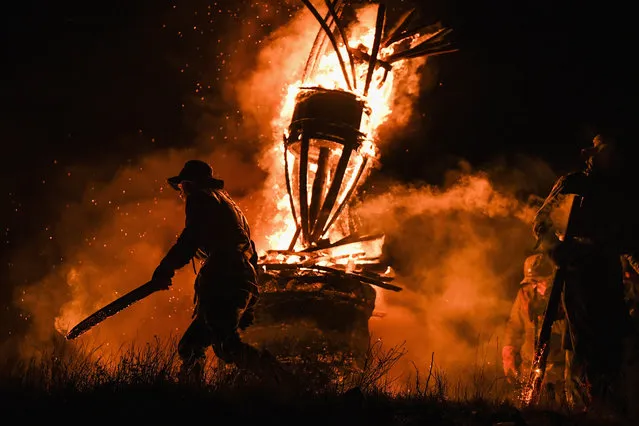
The Clavie, a burning barrel packed with tar soaked sticks fixed on the top of a pole, is surrounded by people at the Doorie Hill on January 11, 2018 in Burghead, Scotland. People welcome in the New Year with the fire ceremony which has ancient roots dating back to the 1750s, when the Julian calendar was reformed in Britain. It is believed to bring good luck for the coming year. (Photo by Jeff J. Mitchell/Getty Images)

The Clavie, a burning barrel packed with tar soaked sticks fixed on the top of a pole, is surrounded by people at the Doorie Hill on January 11, 2018 in Burghead, Scotland. People welcome in the New Year with the fire ceremony which has ancient roots dating back to the 1750s, when the Julian calendar was reformed in Britain. It is believed to bring good luck for the coming year. (Photo by Jeff J. Mitchell/Getty Images)
Details
12 Jan 2018 08:34:00
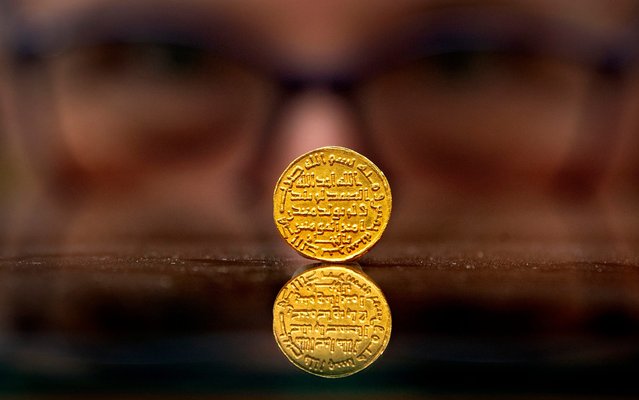
A member of staff at Morton & Eden holds an extremely rare early Islamic gold coin on Thursday September 12, 2019, which is expected to fetch £1.4m at auction in London. Measuring a 20mm across, about the size of a modern £1 piece, it is one of the world's rarest and most treasured Islamic gold coins from the first dynasty of Islam, the Umayyad gold dinar dated 105h (723AD). (Photo by Victoria Jones/PA Images via Getty Images)

A member of staff at Morton & Eden holds an extremely rare early Islamic gold coin on Thursday September 12, 2019, which is expected to fetch £1.4m at auction in London. Measuring a 20mm across, about the size of a modern £1 piece, it is one of the world's rarest and most treasured Islamic gold coins from the first dynasty of Islam, the Umayyad gold dinar dated 105h (723AD). (Photo by Victoria Jones/PA Images via Getty Images)
Details
14 Sep 2019 00:01:00
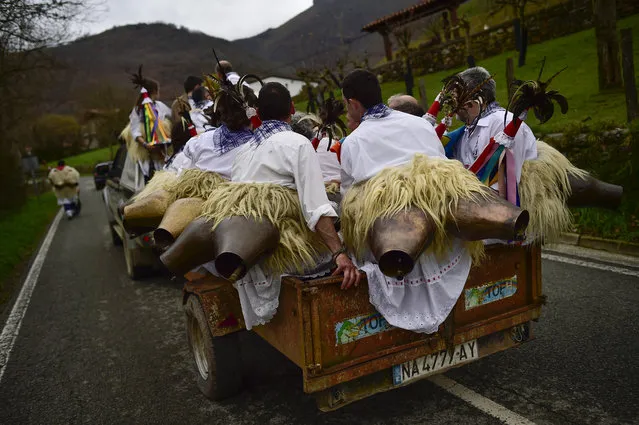
Joaldunaks return in a trailer to their town at the end of Carnival between of the Pyrenees villages of Ituren and Zubieta, northern Spain, Monday, February 1, 2016. In one of the most ancient carnivals in Europe, dating from before the Roman empire, companies of Joaldunak (cowbells) made up of residents of two towns, Ituren and Zubieta, parade the streets costumed in sandals, lace petticoats, sheepskins around the waist and shoulders, coloured neckerchiefs, conical caps with ribbons and a hyssop of horsehair in their right hands and cowbells hung across their lower back. (Photo by Alvaro Barrientos/AP Photo)

Joaldunaks return in a trailer to their town at the end of Carnival between of the Pyrenees villages of Ituren and Zubieta, northern Spain, Monday, February 1, 2016. In one of the most ancient carnivals in Europe, dating from before the Roman empire, companies of Joaldunak (cowbells) made up of residents of two towns, Ituren and Zubieta, parade the streets costumed in sandals, lace petticoats, sheepskins around the waist and shoulders, coloured neckerchiefs, conical caps with ribbons and a hyssop of horsehair in their right hands and cowbells hung across their lower back. (Photo by Alvaro Barrientos/AP Photo)
Details
02 Feb 2016 13:07:00