Loading...
Done
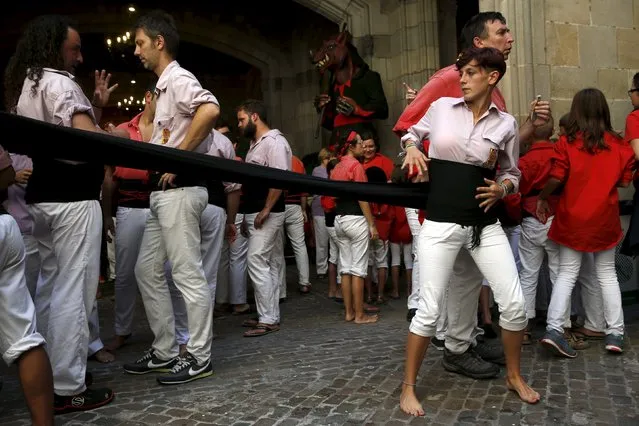
A member of the “Castellers Minyons de Terrassa” adjusts her belt before forming a human tower or ÒcastellÓ during the festival of the patron saint of Barcelona “The Virgin of Mercy” at Sant Jaume square in Barcelona, Spain, September 20, 2015. The formation of human towers is a tradition in Catalonia dating back to the 18th century. (Photo by Susana Vera/Reuters)

A member of the “Castellers Minyons de Terrassa” adjusts her belt before forming a human tower or ÒcastellÓ during the festival of the patron saint of Barcelona “The Virgin of Mercy” at Sant Jaume square in Barcelona, Spain, September 20, 2015. The formation of human towers is a tradition in Catalonia dating back to the 18th century. (Photo by Susana Vera/Reuters)
Details
21 Sep 2015 12:35:00
In this August 28, 1963 file photo, the top of the Washington Monument and part of a U.S. flag are reflected in the sunglasses of Austin Clinton Brown, 9, of Gainesville, Ga., as he poses at the Capitol where he joins others in the March on Washington. (Photo by AFP Photo)

In this August 28, 1963 file photo, the top of the Washington Monument and part of a U.S. flag are reflected in the sunglasses of Austin Clinton Brown, 9, of Gainesville, Ga., as he poses at the Capitol where he joins others in the March on Washington. (Photo by AFP Photo)
Details
18 Feb 2013 13:26:00
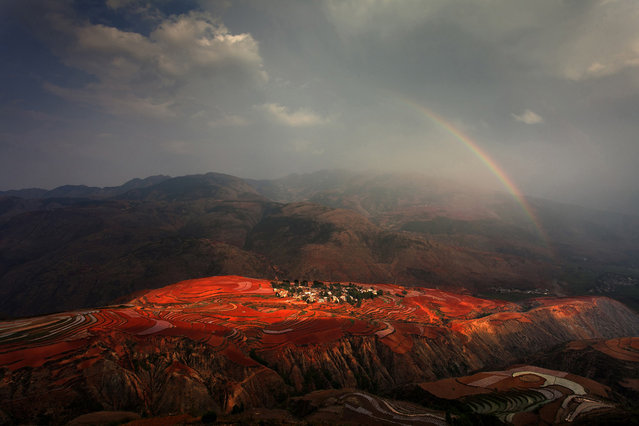
“Red Land: Sunset Cloud Village is one of the most picturesque places in Red Land, China. As its name indicates, it's best to see before sunset. The reddish brown soil turns redder after rainfall and after farmers plow the land”. (Photo and comment by Peng Jiang/National Geographic Photo Contest via The Atlantic)

“Red Land: Sunset Cloud Village is one of the most picturesque places in Red Land, China. As its name indicates, it's best to see before sunset. The reddish brown soil turns redder after rainfall and after farmers plow the land”. (Photo and comment by Peng Jiang/National Geographic Photo Contest via The Atlantic)


Details
05 Dec 2012 11:07:00
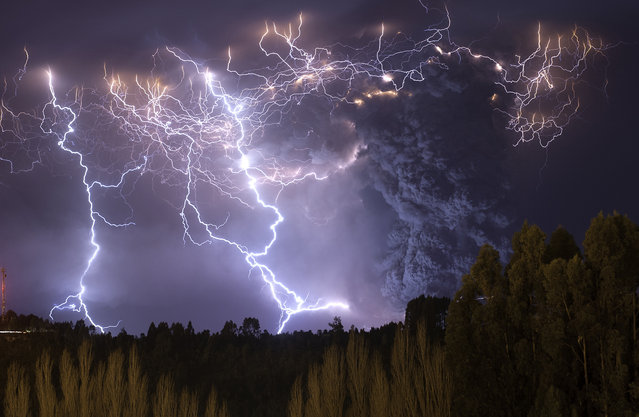
The eruption of Cordon Caulle began on June 4, 2011, located in the Region of Los Rios in Chile. For about 12 months, people and animals became accustomed to living with the daily fall of ash, which also caused problems in the air traffic in South America. The explosions and lightning during first days of the eruption could be seen from hundreds of miles around. This photograph was taken on the second night of eruption from the town of Lago Ranco. (Photo and caption by Francisco Negroni/National Geographic Traveler Photo Contest)

The eruption of Cordon Caulle began on June 4, 2011, located in the Region of Los Rios in Chile. For about 12 months, people and animals became accustomed to living with the daily fall of ash, which also caused problems in the air traffic in South America. The explosions and lightning during first days of the eruption could be seen from hundreds of miles around. This photograph was taken on the second night of eruption from the town of Lago Ranco. (Photo and caption by Francisco Negroni/National Geographic Traveler Photo Contest)

ATTENTION! All pictures are presented in high resolution. To see Hi-Res images – just TWICE click on any picture. In other words, click small picture – opens the BIG picture. Click BIG picture – opens VERY BIG picture.
Details
23 Jun 2013 11:24:00
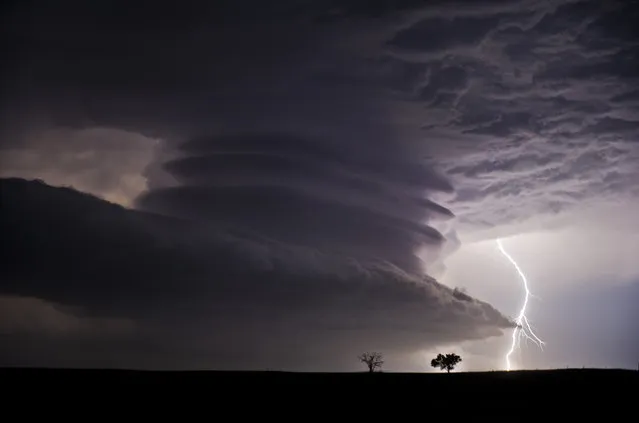
“Stacked Supercell with Lightning”. This huge mesocyclone supercell was near the Nebraska / Kansas border on the night of June 22nd, 2012. What a stunning structure! (Photo and caption by Jennifer Brindley/National Geographic Traveler Photo Contest)

“Stacked Supercell with Lightning”. This huge mesocyclone supercell was near the Nebraska / Kansas border on the night of June 22nd, 2012. What a stunning structure! (Photo and caption by Jennifer Brindley/National Geographic Traveler Photo Contest)

ATTENTION! All pictures are presented in high resolution. To see Hi-Res images – just TWICE click on any picture. In other words, click small picture – opens the BIG picture. Click BIG picture – opens VERY BIG picture.
Details
25 Jun 2013 13:12:00
Two Chinese farmers got more than they bargained for when they pulled up the root of a fleece flower – and came face-to-face with the doppelganger of Homer Simpson, on May 17, 2013. The large root appears to have two bulging eyes and a prominent nose – giving it an uncanny resemblance to the famous cartoon character. With two offshoot roots shaped like arms, it even looks like it is pondering or confused – just what you would expect from the real Homer. (Photo by ImagineChina)

Two Chinese farmers got more than they bargained for when they pulled up the root of a fleece flower – and came face-to-face with the doppelganger of Homer Simpson, on May 17, 2013. The large root appears to have two bulging eyes and a prominent nose – giving it an uncanny resemblance to the famous cartoon character. With two offshoot roots shaped like arms, it even looks like it is pondering or confused – just what you would expect from the real Homer. (Photo by ImagineChina)
Details
18 May 2013 11:52:00
Ethnic Miao men wearing traditional masks smear dust on a woman's face to wish her good luck during local celebration event for Lunar New Year in Liuzhou, Guangxi Zhuang Autonomous Region, China, February 16, 2016. (Photo by Reuters/Stringer)

Ethnic Miao men wearing traditional masks smear dust on a woman's face to wish her good luck during local celebration event for Lunar New Year in Liuzhou, Guangxi Zhuang Autonomous Region, China, February 16, 2016. (Photo by Reuters/Stringer)
Details
19 Feb 2016 13:25:00