Loading...
Done
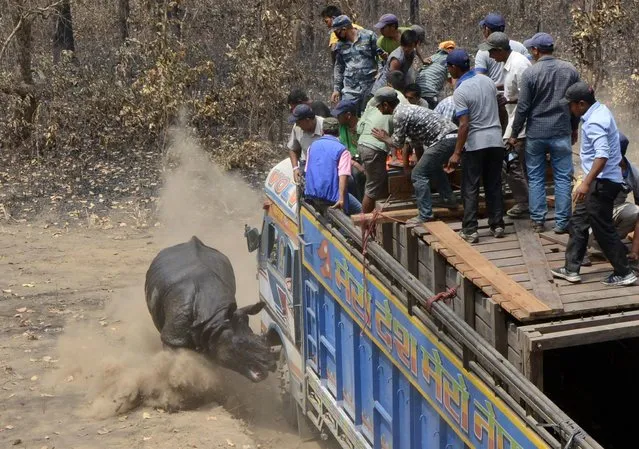
A Nepalese vetinary and technical team release a rhino after it is relocated in Chitwan National Park some of 250 Kilometer South of Kathmandu on April 4, 2017. Conservationists on April 3 captured a rare one-horned rhinoceros in Nepal as part of an attempt to increase the number of the vulnerable animals, which are prized by wildlife poachers. Five rhinos – one male and four female – will be released into a national park in Nepal's far west over the coming week in the hope of establishing a new breeding group. (Photo by Prakash Mathema/AFP Photo)

A Nepalese vetinary and technical team release a rhino after it is relocated in Chitwan National Park some of 250 Kilometer South of Kathmandu on April 4, 2017. Conservationists on April 3 captured a rare one-horned rhinoceros in Nepal as part of an attempt to increase the number of the vulnerable animals, which are prized by wildlife poachers. Five rhinos – one male and four female – will be released into a national park in Nepal's far west over the coming week in the hope of establishing a new breeding group. (Photo by Prakash Mathema/AFP Photo)
Details
05 Apr 2017 09:19:00
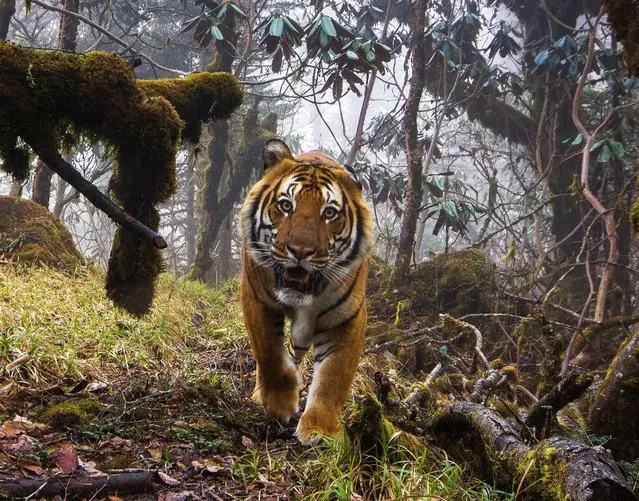
Rare images of wild tigers in Bhutan, captured by camera traps, show tigers and other animals using high-altitude wildlife corridors which are lifelines to isolated tiger populations and critical to genetic diversity, conservation and growth. Here: A wild Bengal tiger (Panthera tigris tigris) captured on a camera trap in corridor eight at an altitude of 3,540 metres in Trongsa, Bhutan. (Photo by Emmanuel Rondeau/WWF UK/The Guardian)

Rare images of wild tigers in Bhutan, captured by camera traps, show tigers and other animals using high-altitude wildlife corridors which are lifelines to isolated tiger populations and critical to genetic diversity, conservation and growth. Here: A wild Bengal tiger (Panthera tigris tigris) captured on a camera trap in corridor eight at an altitude of 3,540 metres in Trongsa, Bhutan. (Photo by Emmanuel Rondeau/WWF UK/The Guardian)


Details
02 Aug 2017 06:49:00
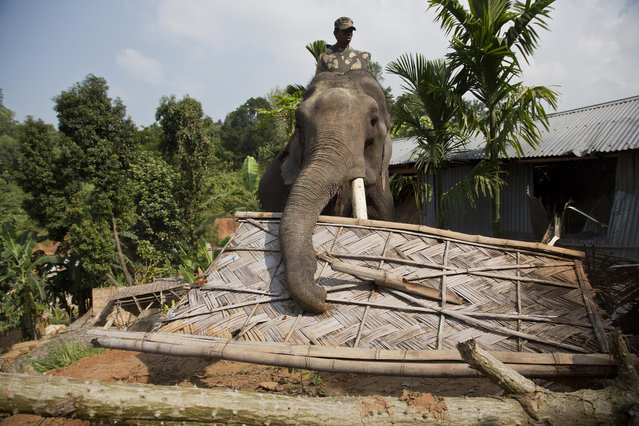
An elephant is used to demolish a house during an eviction drive inside Amchang Wildlife Sanctuary on the outskirts of Gauhati, Assam, India, Monday, November 27, 2017. Indian police on Monday took the unusual step of using elephants in an attempt to evict hundreds of people living illegally in the protected forest area in the country's remote northeast. Police used bulldozers and the elephants in a show of force, and the forest dwellers responded by hurling rocks. (Photo by Anupam Nath/AP Photo)

An elephant is used to demolish a house during an eviction drive inside Amchang Wildlife Sanctuary on the outskirts of Gauhati, Assam, India, Monday, November 27, 2017. Indian police on Monday took the unusual step of using elephants in an attempt to evict hundreds of people living illegally in the protected forest area in the country's remote northeast. Police used bulldozers and the elephants in a show of force, and the forest dwellers responded by hurling rocks. (Photo by Anupam Nath/AP Photo)
Details
29 Nov 2017 09:13:00
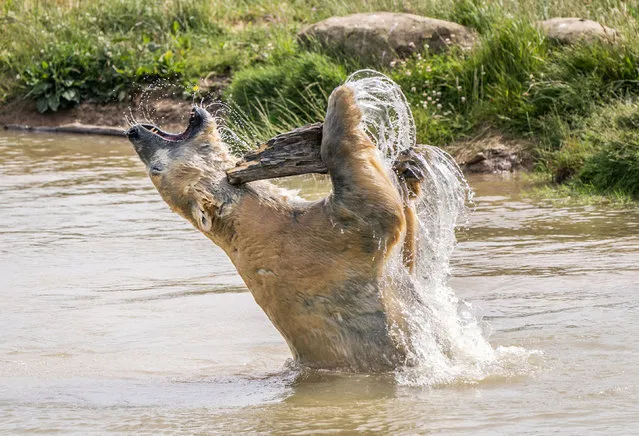
Nobby the polar bear cools down as he plays in a lake at the Yorkshire Wildlife Park in Doncaster, England, Friday June 17, 2022. A blanket of hot air stretching from the Mediterranean to the North Sea is giving much of western Europe its first heat wave of the summer, with temperatures forecast to top 30 degrees Celsius (86 degrees Fahrenheit) from Malaga to London on Friday. (Photo by Danny Lawson/PA Wire via AP Photo)

Nobby the polar bear cools down as he plays in a lake at the Yorkshire Wildlife Park in Doncaster, England, Friday June 17, 2022. A blanket of hot air stretching from the Mediterranean to the North Sea is giving much of western Europe its first heat wave of the summer, with temperatures forecast to top 30 degrees Celsius (86 degrees Fahrenheit) from Malaga to London on Friday. (Photo by Danny Lawson/PA Wire via AP Photo)
Details
26 Jun 2022 04:06:00
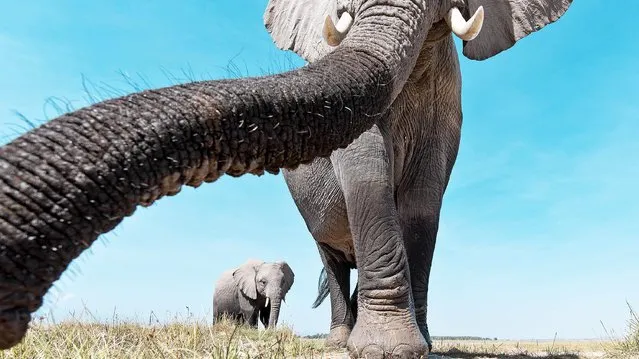
An elephant in Amboseli National Park in Kenya, June 2021. Gurcharan Roopra, 42, a Nairobi-born engineer-turned-wildlife photographer, has dedicated the past four years of his career to photographing these animals. He spends hours in his workshop camouflaging and encasing his equipment with protective gear before laying his camera in the path of lions, elephants, rhino, zebra and buffalo. (Photo by Gurcharan Roopra/Mercury Press)

An elephant in Amboseli National Park in Kenya, June 2021. Gurcharan Roopra, 42, a Nairobi-born engineer-turned-wildlife photographer, has dedicated the past four years of his career to photographing these animals. He spends hours in his workshop camouflaging and encasing his equipment with protective gear before laying his camera in the path of lions, elephants, rhino, zebra and buffalo. (Photo by Gurcharan Roopra/Mercury Press)
Details
24 Feb 2024 08:48:00
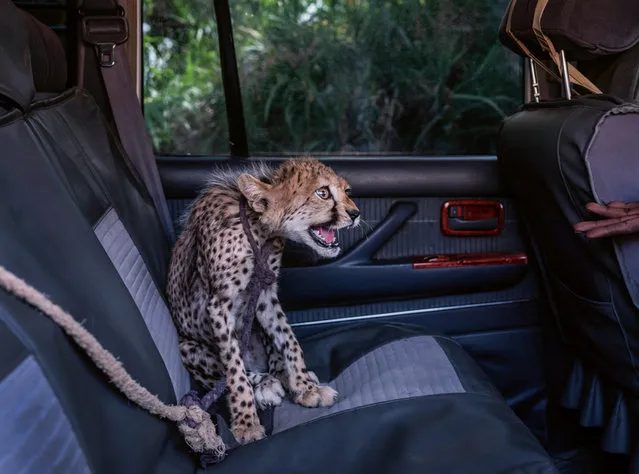
A five-month-old cheetah seated in the back of a Land Cruiser growls at an outstretched hand after being taken from traffickers in Ethiopia and driven to Harirad, Somaliland, in 2020. This photo is part of the work of more than 100 artists in Why We Photograph Animals, a new collection of wildlife photography that aims to help understand why people have photographed animals at different points in history and what it means in the present. (Photo by Nichole Sobecki/Thames & Hudson)

A five-month-old cheetah seated in the back of a Land Cruiser growls at an outstretched hand after being taken from traffickers in Ethiopia and driven to Harirad, Somaliland, in 2020. This photo is part of the work of more than 100 artists in Why We Photograph Animals, a new collection of wildlife photography that aims to help understand why people have photographed animals at different points in history and what it means in the present. (Photo by Nichole Sobecki/Thames & Hudson)
Details
28 Apr 2024 03:15:00
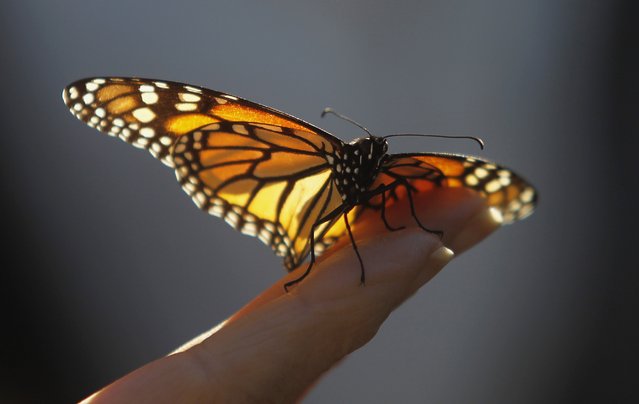
A monarch butterfly rests on a visitor's hand at the Monarch Grove Sanctuary in Pacific Grove, California December 30, 2014. Monarch butterflies may warrant U.S. Endangered Species Act protection because of farm-related habitat loss blamed for sharp declines in cross-country migrations of the orange-and-black insects, the U.S. Fish and Wildlife Service said. (Photo by Michael Fiala/Reuters)

A monarch butterfly rests on a visitor's hand at the Monarch Grove Sanctuary in Pacific Grove, California December 30, 2014. Monarch butterflies may warrant U.S. Endangered Species Act protection because of farm-related habitat loss blamed for sharp declines in cross-country migrations of the orange-and-black insects, the U.S. Fish and Wildlife Service said. (Photo by Michael Fiala/Reuters)
Details
01 Jan 2015 14:08:00
A close-up shot of dews of a soldier fly on August 2014, in Banten, Indonesia. Wildlife photographer takes incredible close-up images of tiny bugs. Yudy Sauw has captured close-up images of creepy crawlies – revealing their disturbing faces. The insects have an assortment bulging eyes and sharp pincers and look grotesque in the face-to-face shots. The miniature-models include a soldier fly, a red ant and a longhorn beetle. (Photo by Yudy Sauw/Barcroft Media)

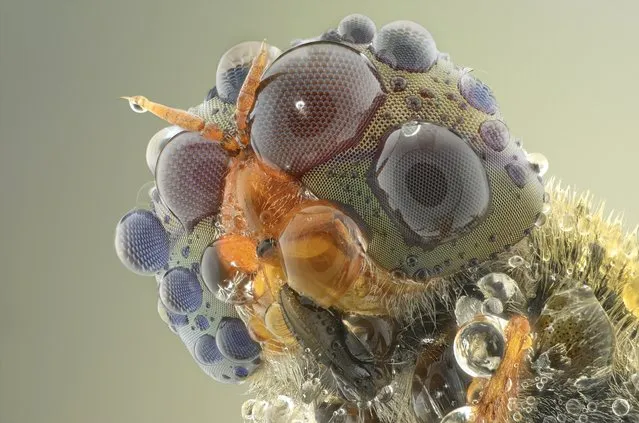
A close-up shot of dews of a soldier fly on August 2014, in Banten, Indonesia. Wildlife photographer takes incredible close-up images of tiny bugs. Yudy Sauw has captured close-up images of creepy crawlies – revealing their disturbing faces. The insects have an assortment bulging eyes and sharp pincers and look grotesque in the face-to-face shots. The miniature-models include a soldier fly, a red ant and a longhorn beetle. The 33-year-old photographed the bugs at his home studio in Banten, Indonesia, placing them 2-10 centimeters away from the camera. (Photo by Yudy Sauw/Barcroft Media)
Details
22 Aug 2014 12:42:00