Loading...
Done
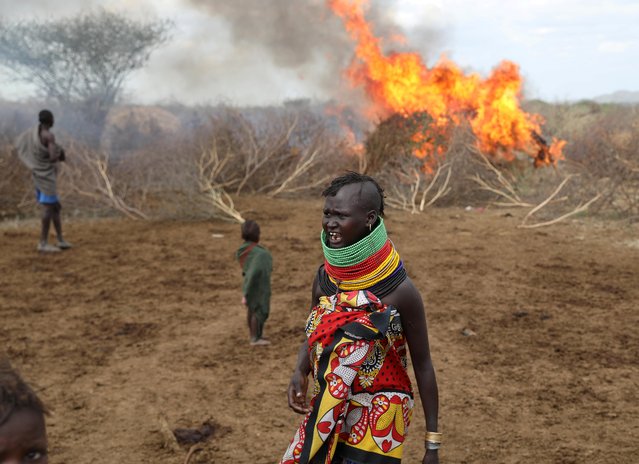
A Turkana tribeswoman reacts after an accidental fire of a shelter in Turkana settlement in Ilemi Triangle, Kenya, July 15, 2019. (Photo by Goran Tomasevic/Reuters)

A Turkana tribeswoman reacts after an accidental fire of a shelter in Turkana settlement in Ilemi Triangle, Kenya, July 15, 2019. The Ilemi Triangle, a disputed sliver of land along the border with Ethiopia and South Sudan, is the northernmost tip of Turkana, Kenya's poorest county. A series of deadly clashes between the Turkana community and other ethnic groups that they said had crossed from South Sudan have put people on edge, to the point of posting lookouts. (Photo by Goran Tomasevic/Reuters)
Details
25 Sep 2019 00:05:00


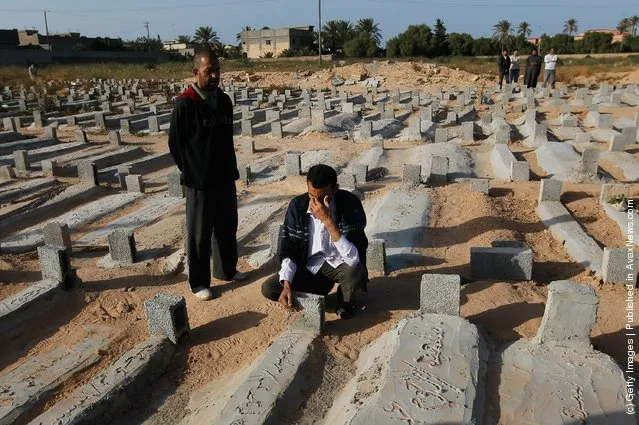
A man cries in a graveyard during the funeral of Nasser Ali Afglio, a young Libyan rebel killed during battle with government troops loyal to Libyan ruler Moammar Gaddafi April 19, 2011 in Misrata, Libya. The graveyard where Nasser was buried has hundreds of simple concrete graves; many dozens are those that have been killed during the last two months of fighting in the besieged town. Thousands of civilians are trapped in Misrata as fighting continues between Libyan government forces that have surrounded the city and anti-government rebels there. (Photo by Chris Hondros/Getty Images)
Details
22 Apr 2011 08:22:00


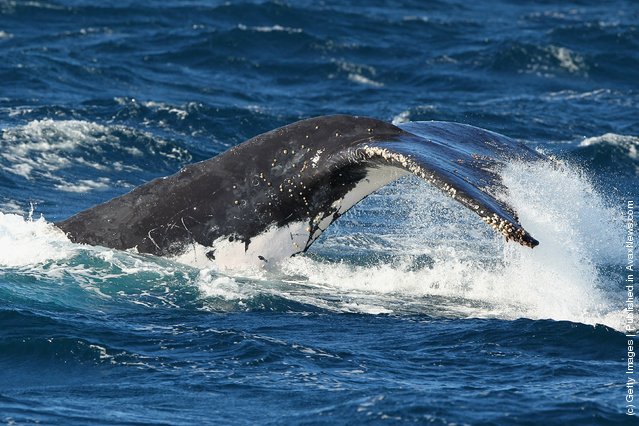
A humpback whale is seen at the beginning of whale watching season during a Manly Whale Watching tour on June 8, 2011 in Sydney, Australia. The first day of winter in New South Wales, June 1st, marks the start of the Humback and southern right whales migration from southern regions to the north to warmer waters. Whale watchers should expect tohave plenty to see with the whale population increasing each year. The migration north continues through July and with the whales returning between September and November. (Photo by Cameron Spencer/Getty Images)
Details
08 Jun 2011 09:49:00
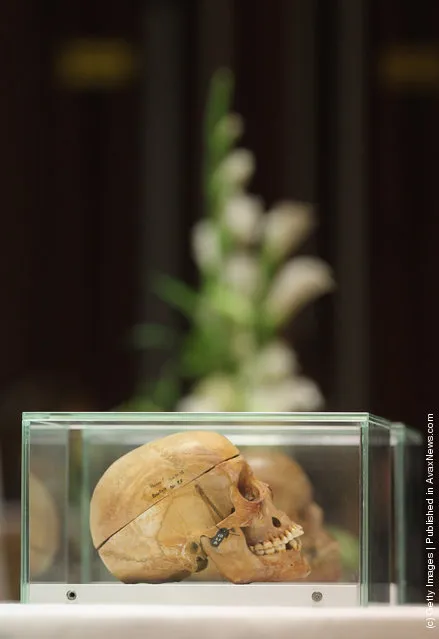
Charite Hospital Returns Herero Skulls To Namibia

Two of 20 skulls to be taken possession of by a delegation from Namibia stand on display at a ceremony at Charite hospital on September 30, 2011 in Berlin, Germany. The skulls are from Herero and Nama tribespeople taken by German colonial forces between 1904 and 1908, when the Germans violently suppressed an uprising in what was then German Southwest Africa, which is today's Namibia, and in the process killed tens of thousand of Herero and Nama. German scientists at the time took the skulls back to Berlin to demonstrate the racial superiority of Europeans over black Africans. Many Namibians demand a formal apology from the German government. (Photo by Sean Gallup/Getty Images)
Details
02 Oct 2011 11:42:00
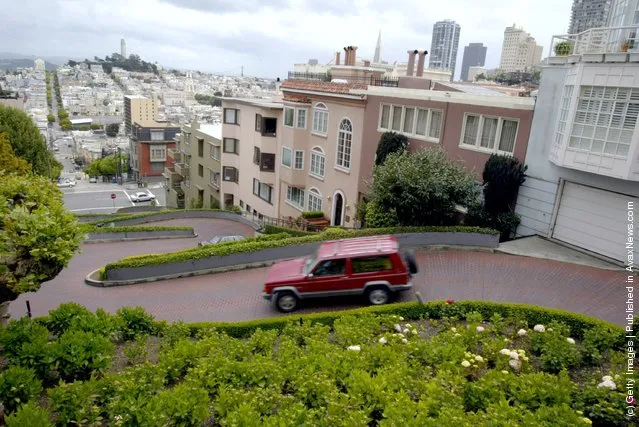
Lombard Street: The Crookedest Street In The World

“Lombard Street is an east-west street in San Francisco, California. Lombard Street is best known for the one-way section on Russian Hill between Hyde and Leavenworth Streets, in which the roadway has eight sharp turns (or switchbacks) that have earned the street the distinction of being the crookedest street in the world”. – Wikipedia

Photo: A single car drives down a typically crowded Lombard Street, San Francisco's crooked street, April 29, 2003 in San Francisco. (Photo by Justin Sullivan/Getty Images)
Details
07 Oct 2011 09:58:00
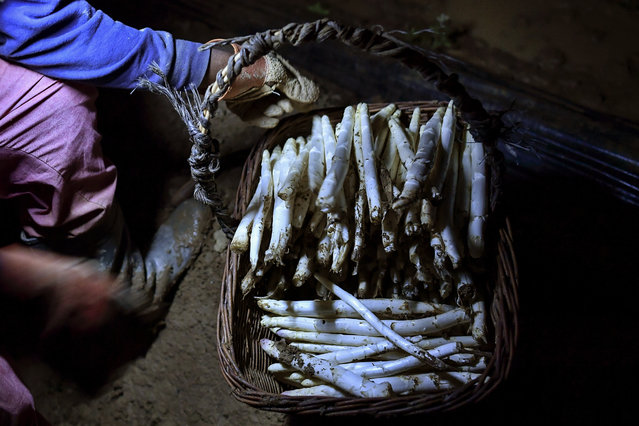
In this Thursday, May 31, 2018 photo, a temporary worker using a lantern collects white asparagus from a field in Caparroso, around 85 km (52 miles) from Pamplona, northern Spain. (Photo by Alvaro Barrientos/AP Photo)

In this Thursday, May 31, 2018 photo, a temporary worker using a lantern collects white asparagus from a field in Caparroso, around 85 km (52 miles) from Pamplona, northern Spain. Dubbed the “white gold” of these northern Spanish farms because of their color and the high price they fetch in markets and restaurants around the world, the stringy delicacy is planted every fall and picked each year between April and June, at the height of the spring. (Photo by Alvaro Barrientos/AP Photo)
Details
09 Jun 2018 00:03:00
Rascal, and her brother Petey, were abandoned as pups near the railroad tracks in Union County, Arkansas. She is a pit bull cross and approximately 6 months old, in Arkansas, United States. These canine portraits will make any dog lover's day – and they're helping to get sheltered pups adopted at the same time. Kind-hearted photographer Tammy Swarek came up with the idea of dressing up rescue dogs to draw attention to their stories and help potential owners personally connect with them. Tammy, from Arkansas, drew her inspiration from Facebook after spotting another portrait project for sheltered animals. So she contacted her local dog shelter, the Union County Animal Protection Society (UCAPS) and has worked closely with shelter manager Tanja Jackson ever since. (Photo by Tammy Swarek/Barcroft Images)

Rascal, and her brother Petey, were abandoned as pups near the railroad tracks in Union County, Arkansas. She is a pit bull cross and approximately 6 months old, in Arkansas, United States. These canine portraits will make any dog lover's day – and they're helping to get sheltered pups adopted at the same time. Kind-hearted photographer Tammy Swarek came up with the idea of dressing up rescue dogs to draw attention to their stories and help potential owners personally connect with them. (Photo by Tammy Swarek/Barcroft Images)
Details
01 Sep 2016 10:35:00
Galapagos – Rocking the Cradle: Four major ocean currents converge along the Galapagos archipelago, creating the conditions for an extraordinary diversity of animal life, April 25, 2016. The islands are home to at least 7,000 flora and fauna species, of which 97 percent of the reptiles, 80 percent of the land birds, 50 percent of the insects and 30 percent of the plants are endemic. The local ecosystem is highly sensitive to the changes in temperature, rainfall and ocean currents that characterize the climatic events known as El Niño and La Niña. These changes cause marked fluctuations in weather and food availability. Many scientists expect the frequency of El Niño and La Niña to increase as a result of climate change, making the Galapagos a possible early-warning location for its effects. (Photo by Thomas P. Peschak for National Geographic/World Press Photo)

Galapagos – Rocking the Cradle: Four major ocean currents converge along the Galapagos archipelago, creating the conditions for an extraordinary diversity of animal life, April 25, 2016. The islands are home to at least 7,000 flora and fauna species, of which 97 percent of the reptiles, 80 percent of the land birds, 50 percent of the insects and 30 percent of the plants are endemic. (Photo by Thomas P. Peschak for National Geographic/World Press Photo)
Details
16 Apr 2018 00:01:00