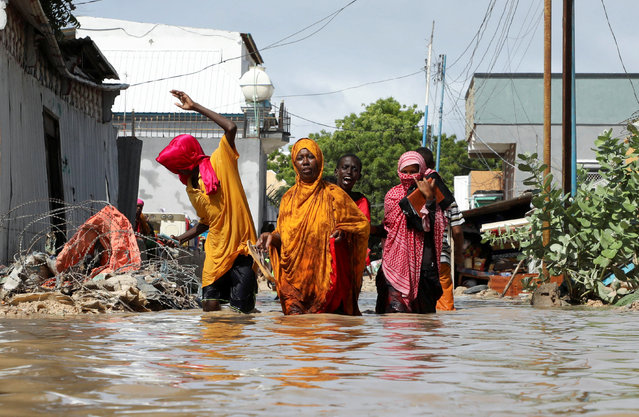
A Somali family wades through flood waters, as they flee after overnight rains destroyed their home, in Wadajir district of Mogadishu, Somalia on May 10, 2025. (Photo by Feisal Omar/Reuters)
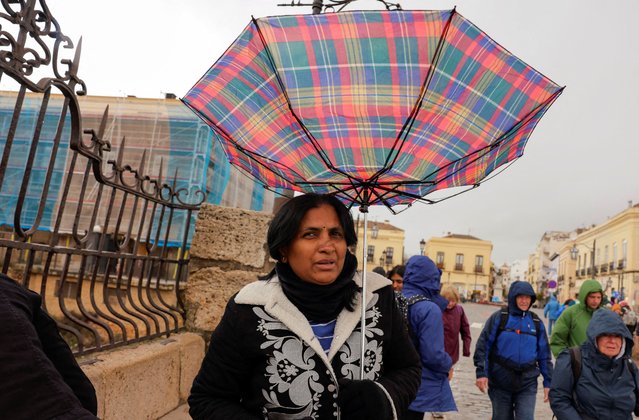
A tourist's umbrella blows upside down as she covers from the heavy rain and high winds, while she tours the city centre, as storm Konrad hits Spain, Portugal and France, in Ronda, Spain, on March 13, 2025. (Photo by Jon Nazca/Reuters)
Emily Ratajkowski sizzled in a plunging black swimsuit. The model is holidaying in the Adriatic near the Mediterranean Sea in the second decade of July 2025. (Photo by Instagram)
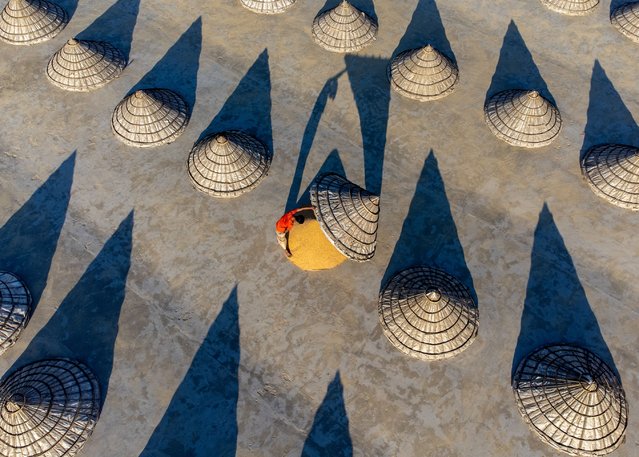
Giant bamboo cones, used to protect rice from overnight moisture during its drying process, in the Brahmanbaria district of Bangladesh in the second decade of April 2025. (Photo by Bipul Ahmed/Solent News & Photo Agency)
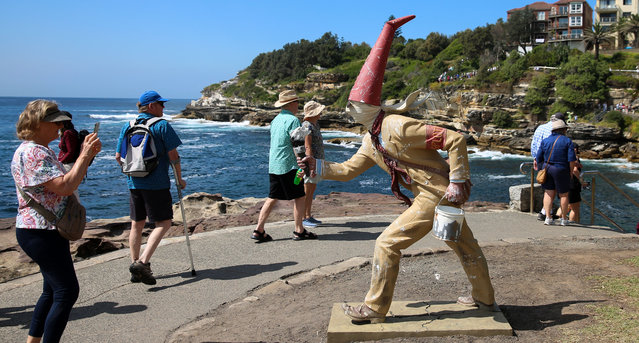
Visitors pass an exhibit for Sculpture by the Sea, along the coastal walk from Bondi to Tamarama in Sydney, Australia on October 24, 2025. The annual event is Australia’s largest annual outdoor sculpture exhibition. (Photo by Xinhua News Agency/Rex Features/Shutterstock)
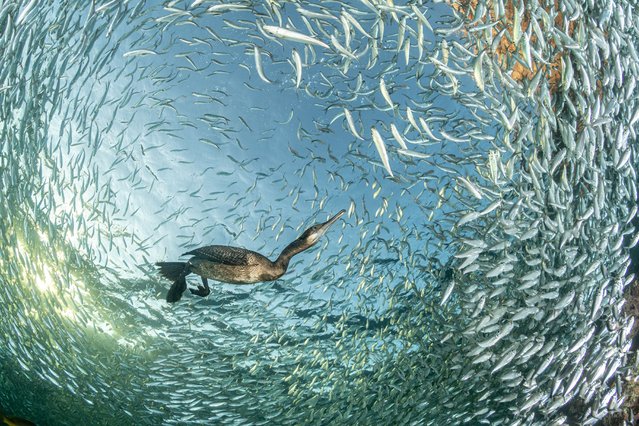
Entitled Feasting at Sunset, this photo of a Brandt’s cormorant among pilchards was the winner of the Birds in the Environment category in the 2025 Bird Photographer of the Year competition. (Photo by Franco Banfi/The Guardian)
Attnedees dressed in Zombie outfits walk down the Gaslamp Quarter outside of the 2015 Comic-Con International in San Diego, California July 8, 2015. (Photo by Sandy Huffaker/Reuters)
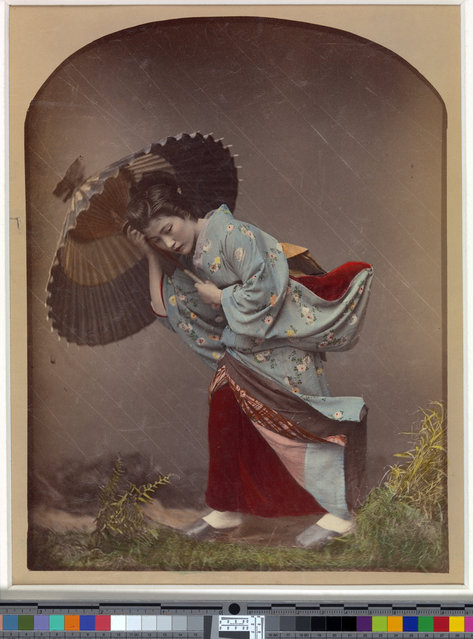
“Woman with Umbrella in Rain” by Raimund von Stillfried. Artist: Kusakabe Kimbei (Japanese, 1841–1934), 1870s. Commercial photography studios in Meiji-era Japan were renowned for the subtlety and refinement of their coloring techniques. This hand-tinted image of a young woman caught in a heavy rainstorm achieved its naturalistic effect by knitting together multiple strands of artifice: the greenery in the foreground was a studio prop; the flaps of the kimono were suspended by thin wires to create the impression of a strong wind; and long, diagonal marks were made on the negative to suggest streaks of rain. (Photo courtesy of The Metropolitan Museum of Art)