Loading...
Done
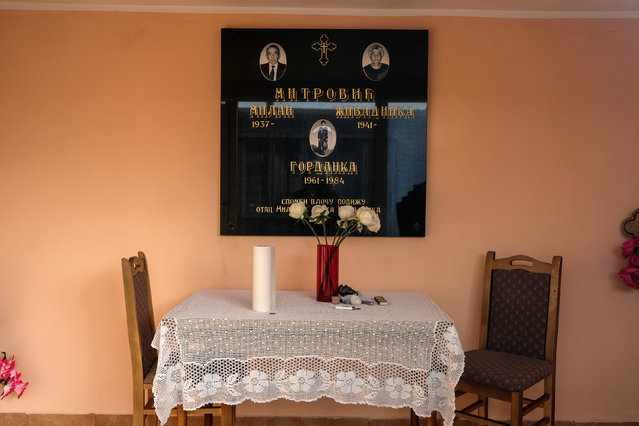
Pictures of deceased people are seen inside a chapel at a cemetery in the village of Smoljinac, Serbia, October 25, 2016. (Photo by Marko Djurica/Reuters)

Pictures of deceased people are seen inside a chapel at a cemetery in the village of Smoljinac, Serbia, October 25, 2016. From a distance, the cemetery in the eastern Serbian village of Smoljinac looks like a residential neighbourhood eerily placed among graves. But once inside the grounds, after passing a section with the usual stone slabs, visitors find rows of small bungalows painted in pastel colours. They have one or two rooms, large windows and ornate plaques – some inside, some outside – memorialising the deceased. These are the burial chapels of Smoljinac, cosy cabins with a furnished room inside, a storage place for wreaths and funeral paraphernalia, and the family crypt below. Some even have electric power inside. (Photo by Marko Djurica/Reuters)
Details
12 Nov 2016 10:37:00
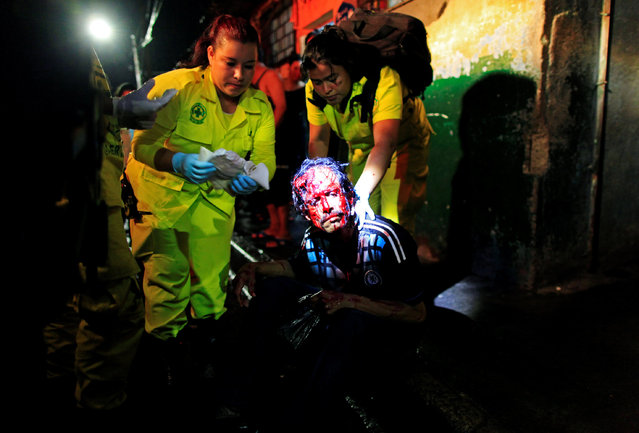
Comandos de Salvamento rescuers Maria Martinez (L) and Ana Chichilla attend to a wounded homeless man in San Salvador, El Salvador July 16, 2016. The man was attacked with a machete by suspected gang members. (Photo by Jose Cabezas/Reuters)

Comandos de Salvamento rescuers Maria Martinez (L) and Ana Chichilla attend to a wounded homeless man in San Salvador, El Salvador July 16, 2016. The man was attacked with a machete by suspected gang members. In 2015, El Salvador registered a record 103 homicides per 100,000 habitants, making it one of the most dangerous countries in the world outside a war zone. But for many young people who have few chances to distance themselves from rivalries between so-called maras in their schools and neighbourhoods, a civil-society organisation called the Comandos de Salvamento, or Rescue Corps, has been a refuge. (Photo by Jose Cabezas/Reuters)
Details
16 Nov 2016 11:10:00
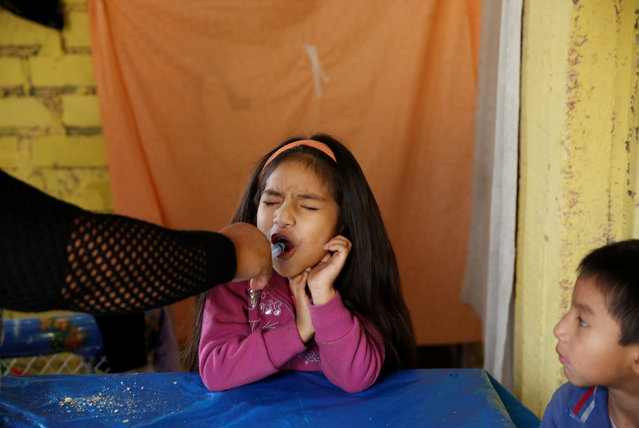
Jazmin, 6, sister of Jose Luis, receives Isoniazid Preventive Therapy in Carabayllo in Lima, Peru July 14, 2016. (Photo by Mariana Bazo/Reuters)

Jazmin, 6, sister of Jose Luis, receives Isoniazid Preventive Therapy in Carabayllo in Lima, Peru July 14, 2016. At least 30,000 Peruvians are infected with tuberculosis, an ancient disease that killed 1.8 million globally last year, more than AIDS-related and malaria deaths combined. Partners in Health, a Boston-based non-profit that works with Peru's health ministry, offers a simple solution. It trains community volunteers to tend to tuberculosis sufferers in their homes – ensuring patients take medicine daily and helping them navigate the public health bureaucracy. (Photo by Mariana Bazo/Reuters)
Details
23 Nov 2016 11:25:00
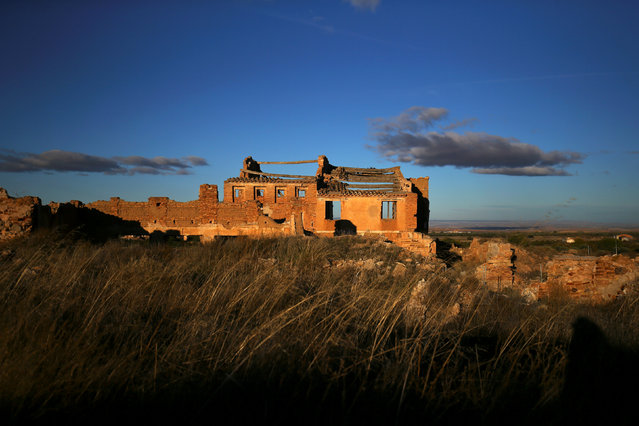
Ruins of a building are seen in the old village of Belchite, in northern Spain, November 13, 2016. (Photo by Andrea Comas/Reuters)

Ruins of a building are seen in the old village of Belchite, in northern Spain, November 13, 2016. Almost 80 years ago Tomas Ortin fled under the cover of night from his home in the small town of Belchite on Spain's northern plains to escape with hundreds of others from one of the bloodiest battles of the country's civil war. At 94 years old, Ortin now lives just across the road from Belchite, which has lain in ruins since Republican forces attacked it, a symbol of the destruction caused by the 1936-1939 war in which an estimated 500,000 people died. (Photo by Andrea Comas/Reuters)
Details
30 Nov 2016 12:31:00
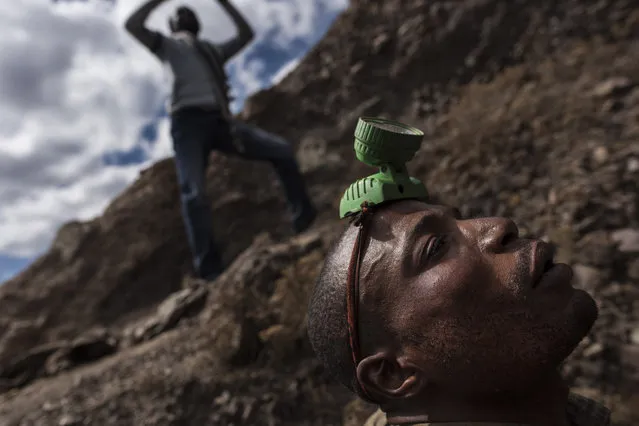
A “creuseur”, or digger, a plastic lantern on his head, readies to enter a copper and cobalt mine in Kawama, Democratic Republic of Congo on June 8, 2016. Cobalt is used in the batteries for electric cars and mobile phones. Working conditions are dangerous, often with no safety equipment or structural support for the tunnels. The diggers say they are paid on average US$2-3/day. (Photo by Michael Robinson Chavez/The Washington Post)

A “creuseur”, or digger, a plastic lantern on his head, readies to enter a copper and cobalt mine in Kawama, Democratic Republic of Congo on June 8, 2016. Cobalt is used in the batteries for electric cars and mobile phones. Working conditions are dangerous, often with no safety equipment or structural support for the tunnels. The diggers say they are paid on average US$2-3/day. (Photo by Michael Robinson Chavez/The Washington Post)
Details
30 Dec 2016 10:29:00
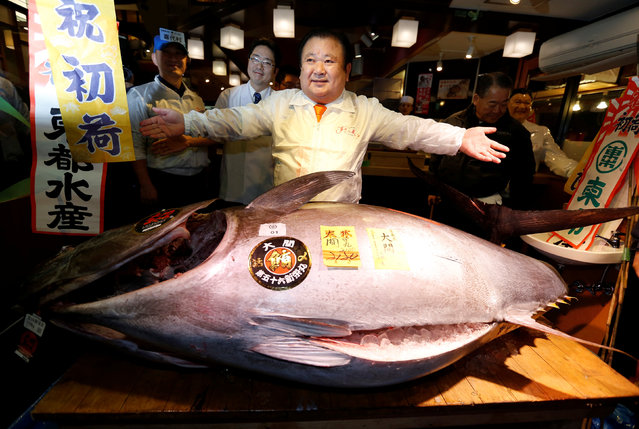
Kiyomura Co's President Kiyoshi Kimura (C), who runs a chain of sushi restaurants Sushi Zanmai, poses with a 212 kg (467 lbs) bluefin tuna at his sushi restaurant outside Tsukiji fish market in Tokyo, Japan, January 5, 2017. Kimura won the bid for the tuna caught off Oma, Aomori prefecture, northern Japan, with a 74 million yen (633,000 USD) at the fish market's first tuna auction this year. (Photo by Issei Kato/Reuters)

Kiyomura Co's President Kiyoshi Kimura (C), who runs a chain of sushi restaurants Sushi Zanmai, poses with a 212 kg (467 lbs) bluefin tuna at his sushi restaurant outside Tsukiji fish market in Tokyo, Japan, January 5, 2017. Kimura won the bid for the tuna caught off Oma, Aomori prefecture, northern Japan, with a 74 million yen (633,000 USD) at the fish market's first tuna auction this year. (Photo by Issei Kato/Reuters)
Details
06 Jan 2017 13:49:00
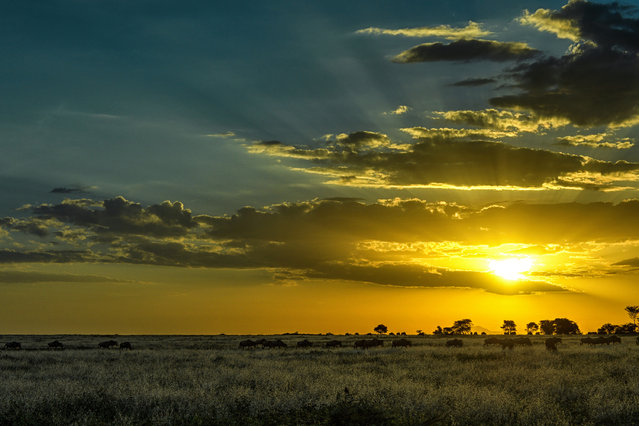
Using his camera skills, Marc meters the background sky in order to achieve the beautiful black silhouettes of the wildlife, Africa, 2010-2016. A photographer has travelled around Africa for six years to capture striking silhouettes of lions, giraffes and birds. Australian wildlife photographer, Marc Mol took the series of pictures in various areas of Africa; including Botswana and Kenya to Tanzania and Zambia. Whether grazing, hunting or resting, the animals' daily activities are transformed into something majestic when cast against golden evenings and pink dawns. (Photo by Marc Mol/Barcroft Images)

Using his camera skills, Marc meters the background sky in order to achieve the beautiful black silhouettes of the wildlife, Africa, 2010-2016. (Photo by Marc Mol/Barcroft Images)
Details
10 Jan 2017 13:36:00
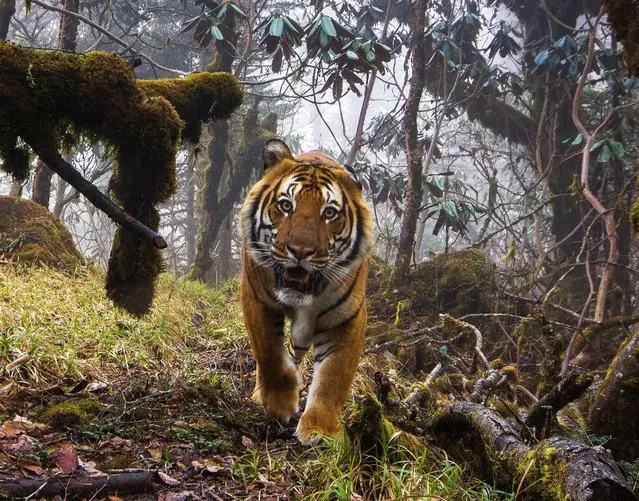
Rare images of wild tigers in Bhutan, captured by camera traps, show tigers and other animals using high-altitude wildlife corridors which are lifelines to isolated tiger populations and critical to genetic diversity, conservation and growth. Here: A wild Bengal tiger (Panthera tigris tigris) captured on a camera trap in corridor eight at an altitude of 3,540 metres in Trongsa, Bhutan. (Photo by Emmanuel Rondeau/WWF UK/The Guardian)

Rare images of wild tigers in Bhutan, captured by camera traps, show tigers and other animals using high-altitude wildlife corridors which are lifelines to isolated tiger populations and critical to genetic diversity, conservation and growth. Here: A wild Bengal tiger (Panthera tigris tigris) captured on a camera trap in corridor eight at an altitude of 3,540 metres in Trongsa, Bhutan. (Photo by Emmanuel Rondeau/WWF UK/The Guardian)


Details
02 Aug 2017 06:49:00