Loading...
Done
August 19, 2012 – Alpamarca, Peru – Amazon Express white water members Juan Antonio De Ugarte, of Peru, Rafael Ortiz, of Mexico, West Hansen, of the U.S., and Tino Specht, of the U.S., paddle down the Rio Gashan after leaving Lago Acucocha. Lago Acucocha is possibly the dry season source of the Amazon River. (Photo by Erich Schlegel/zReportage via ZUMA Press)

“The Amazon river has a newly discovered source. Completed last year and led by West Hansen and documented by award-winning freelance photographer Erich Schlegel, this is the first expedition to paddle from the furthest source of the earth's largest river to the ocean”. – zReportage. Photo: August 19, 2012 – Alpamarca, Peru – Amazon Express white water members Juan Antonio De Ugarte, of Peru, Rafael Ortiz, of Mexico, West Hansen, of the U.S., and Tino Specht, of the U.S., paddle down the Rio Gashan after leaving Lago Acucocha. Lago Acucocha is possibly the dry season source of the Amazon River. (Photo by Erich Schlegel/zReportage via ZUMA Press)
Details
29 Jul 2013 10:47:00
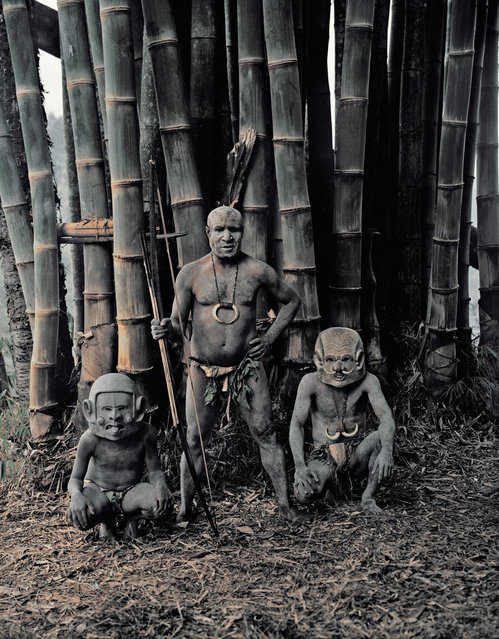
“Asaro from the Eastern Highlands”. The mudmen could not cover their faces with mud because the people of Papua New Guinea thought that the mud from the Asaro river was poisonous. So instead of covering their faces with this alleged poison, they made masks from pebbles that they heated and water from the waterfall, with unusual designs such as long or very short ears either going down to the chin or sticking up at the top, long joined eyebrows attached to the top of the ears, horns and sideways mouths. (Jimmy Nelson)

“Asaro from the Eastern Highlands”. The mudmen could not cover their faces with mud because the people of Papua New Guinea thought that the mud from the Asaro river was poisonous. So instead of covering their faces with this alleged poison, they made masks from pebbles that they heated and water from the waterfall, with unusual designs such as long or very short ears either going down to the chin or sticking up at the top, long joined eyebrows attached to the top of the ears, horns and sideways mouths. (Photo and caption by Jimmy Nelson)
Details
20 Oct 2013 08:54:00
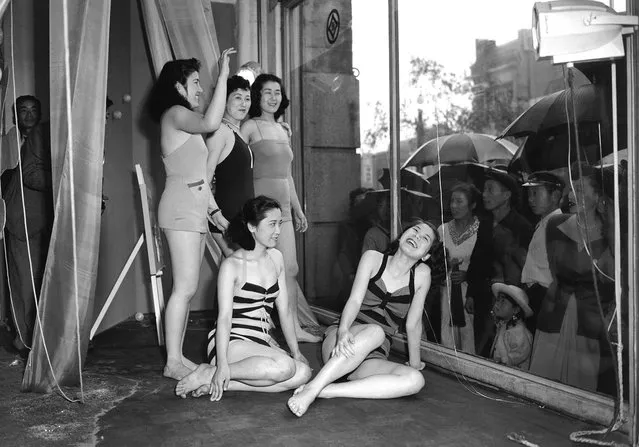
To draw the public's attention to a new line of bathing suits, a Tokyo department store used live models to show off the suits on June 5, 1950. The rain didn't bother the curious, and both the girls and the crowd seemed to like the idea of staring at each other through the glass. (Photo by AP Photo via The Atlantic)

To draw the public's attention to a new line of bathing suits, a Tokyo department store used live models to show off the suits on June 5, 1950. The rain didn't bother the curious, and both the girls and the crowd seemed to like the idea of staring at each other through the glass. (Photo by AP Photo via The Atlantic)
Details
14 Mar 2014 09:20:00
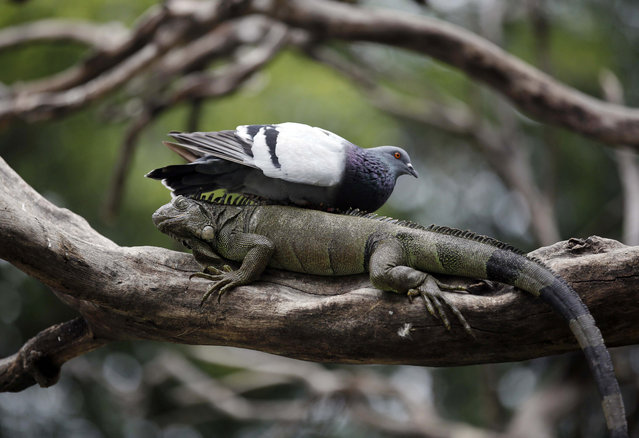
A pigeon rests on a wild iguana in a tree inside Seminario Park in Guayaquil, Ecuador, Thursday, April 3, 2014. Pigeons coexist with the wild iguanas at this park in the middle of the city surrounded by savannah. (Photo by Dolores Ochoa/AP Photo)

A pigeon rests on a wild iguana in a tree inside Seminario Park in Guayaquil, Ecuador, Thursday, April 3, 2014. Pigeons coexist with the wild iguanas at this park in the middle of the city surrounded by savannah. (Photo by Dolores Ochoa/AP Photo)
Details
05 Apr 2014 14:04:00
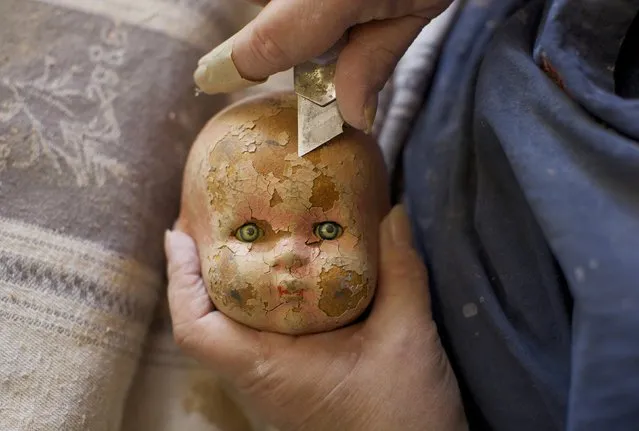
A badly-weathered composition doll, made from compressed wood chip, has its flakey paint cut off before being repaired and repainted by Gail Grainger, a 14-year veteran doll repairer at Sydney's Doll Hospital, August 19, 2014. (Photo by Jason Reed/Reuters)

A badly-weathered composition doll, made from compressed wood chip, has its flakey paint cut off before being repaired and repainted by Gail Grainger, a 14-year veteran doll repairer at Sydney's Doll Hospital, August 19, 2014. Opened in 1913, Sydney's Doll Hospital has worked on millions of dolls, teddy bears and other toys. Behind a toy shop on a busy suburban street in Sydney's south, “doll surgeons” transplant fingers, toes and heads, and repair broken eye sockets in dolls who were the victim of a childhood tantrum or sibling rivalry, sometimes decades ago. (Photo by Jason Reed/Reuters)
Details
26 Aug 2014 10:45:00
Shoppers wrestle over a television as they compete to purchase retail items on “Black Friday” at an Asda superstore in Wembley, north London November 28, 2014. Britain's high streets, malls and online sites were awash with discounts on Friday as more retailers than ever embraced U.S.-style “Black Friday” promotions, seeking to kickstart trading in the key Christmas period. (Photo by Luke MacGregor/Reuters)

Shoppers wrestle over a television as they compete to purchase retail items on “Black Friday” at an Asda superstore in Wembley, north London November 28, 2014. Britain's high streets, malls and online sites were awash with discounts on Friday as more retailers than ever embraced U.S.-style “Black Friday” promotions, seeking to kickstart trading in the key Christmas period. In the United States the Friday following the Thanksgiving Day holiday is called Black Friday because spending usually surges and indicates the point at which American retailers begin to turn a profit for the year, or go “into the black”. (Photo by Luke MacGregor/Reuters)
Details
29 Nov 2014 12:48:00
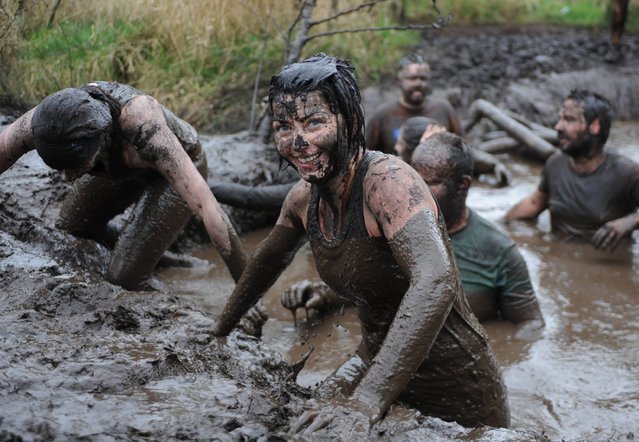
Mud Madness at the annual Jaffa Cakes charity three-mile run at Foymore Lodge near Portadown this afternoon, on April 13, 2014. A total of a thousand competitors and fun-runners took part in the two races held over the mudstrewn endurance course. (Photo by Alan Lewis/Photopress Belfast)

Mud Madness at the annual Jaffa Cakes charity three-mile run at Foymore Lodge near Portadown this afternoon, on April 13, 2014. A total of a thousand competitors and fun-runners took part in the two races held over the mudstrewn endurance course. (Photo by Alan Lewis/Photopress Belfast)
Details
19 Apr 2014 12:17:00
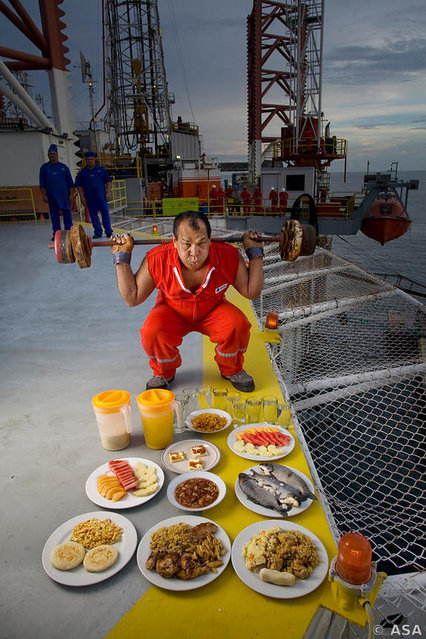
What the World Eats By Peter Menzel And Faith D'Aluisio Part 1

A stunning photographic collection featuring portraits of people from 30 countries and the food they eat in one day. In this fascinating study of people and their diets, 80 profiles are organized by the total number of calories each person puts away in a day. Featuring a Japanese sumo wrestler, a Massai herdswoman, world-renowned Spanish chef Ferran Adria, an American competitive eater, and more, these compulsively readable personal stories also include demographic particulars, including age, activity level, height, and weight. Essays from Harvard primatologist Richard Wrangham, journalist Michael Pollan, and others discuss the implications of our modern diets for our health and for the planet. This compelling blend of photography and investigative reportage expands our understanding of the complex relationships among individuals, culture, and food.
Details
23 Apr 2014 14:34:00