Loading...
Done
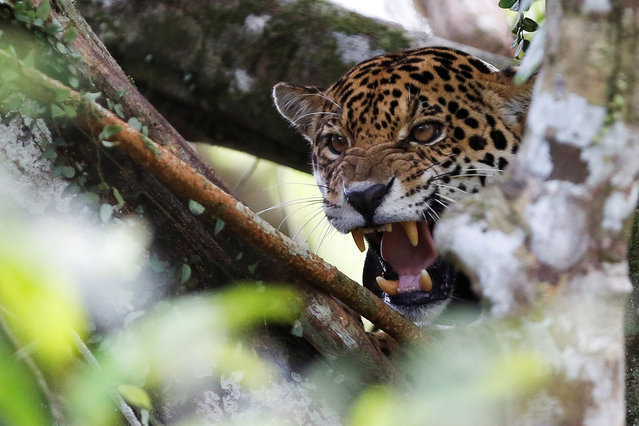
A female adult jaguar, which has a cub, growls at the Mamiraua Sustainable Development Reserve in Uarini, Amazonas state, Brazil, June 5, 2017. (Photo by Bruno Kelly/Reuters)

Brazilian jaguars, imperilled by hunters, ranchers and destruction of their habitat, have learned to survive at least one menace – flooding in the Amazon. They take to the trees. Although they can be six feet long and 200 pounds, the largest South American cats nimbly navigate treetops where they stay from April to July when the rainforest floor is under meters-deep water. Here: A female adult jaguar, which has a cub, growls at the Mamiraua Sustainable Development Reserve in Uarini, Amazonas state, Brazil, June 5, 2017. (Photo by Bruno Kelly/Reuters)
Details
07 Apr 2018 00:03:00
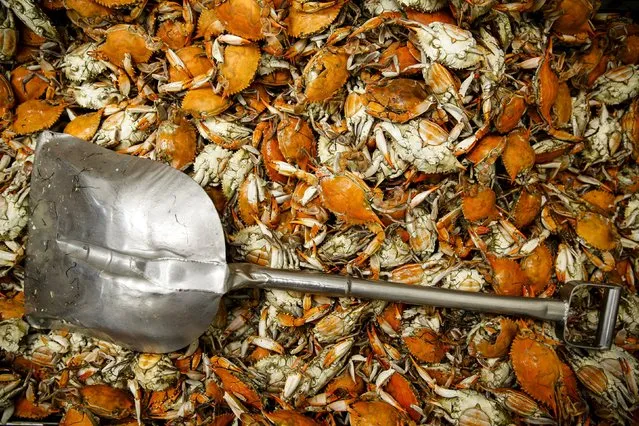
A large stainless steel shovel lies on top of steamed crabs at the A.E. Phillips & Son Inc. crab picking house on Hooper's Island in Fishing Creek, Maryland August 26, 2015. Workers speed through the lump and back fin meat inside the crabs while leaving the more tedious task of picking the claws to others. (Photo by Jonathan Ernst/Reuters)

A large stainless steel shovel lies on top of steamed crabs at the A.E. Phillips & Son Inc. crab picking house on Hooper's Island in Fishing Creek, Maryland August 26, 2015. Workers speed through the lump and back fin meat inside the crabs while leaving the more tedious task of picking the claws to others. (Photo by Jonathan Ernst/Reuters)
Details
16 Oct 2015 08:03:00
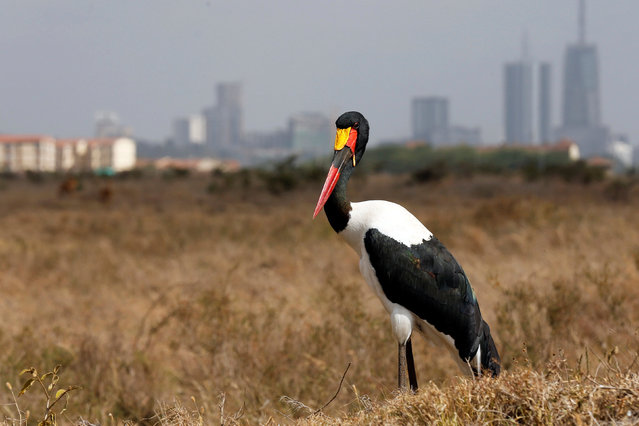
A saddle-billed stork stands in the grassland at the Nairobi National Park near Nairobi, Kenya January 23, 2017. (Photo by Thomas Mukoya/Reuters)

A saddle-billed stork stands in the grassland at the Nairobi National Park near Nairobi, Kenya January 23, 2017. (Photo by Thomas Mukoya/Reuters)
Details
29 Jan 2017 11:32:00
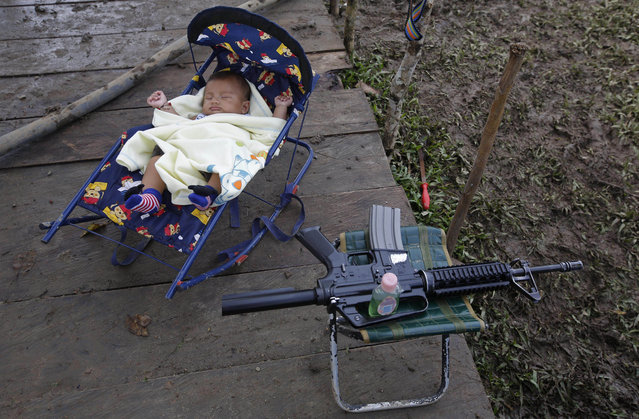
In this Tuesday, February 28, 2017 photo, 3-month-old Junior Alexis Patino, son of FARC rebel Deisy Garcia, sleeps next to his mother's weapon at a rebel camp in a demobilization zone in La Carmelita, in Colombia's southwestern Putumayo state. Amid the makeshift tents and communal kitchens where Colombia's largest rebel army is preparing to lay down its weapons, a new sound is emerging: the cries of babies. (Photo by Fernando Vergara/AP Photo)

In this Tuesday, February 28, 2017 photo, 3-month-old Junior Alexis Patino, son of FARC rebel Deisy Garcia, sleeps next to his mother's weapon at a rebel camp in a demobilization zone in La Carmelita, in Colombia's southwestern Putumayo state. Amid the makeshift tents and communal kitchens where Colombia's largest rebel army is preparing to lay down its weapons, a new sound is emerging: the cries of babies. (Photo by Fernando Vergara/AP Photo)
Details
09 Mar 2017 00:04:00
Members of the staff wait for the start of the maiden press conference for China's all-girl “boyband” FFC-Acrush in Beijing, China April 28, 2017. Picture taken April, 28, 2017. (Photo by Damir Sagolj/Reuters)

Members of the staff wait for the start of the maiden press conference for China's all-girl “boyband” FFC-Acrush in Beijing, China April 28, 2017. Picture taken April, 28, 2017. (Photo by Damir Sagolj/Reuters)
Details
03 May 2017 08:36:00
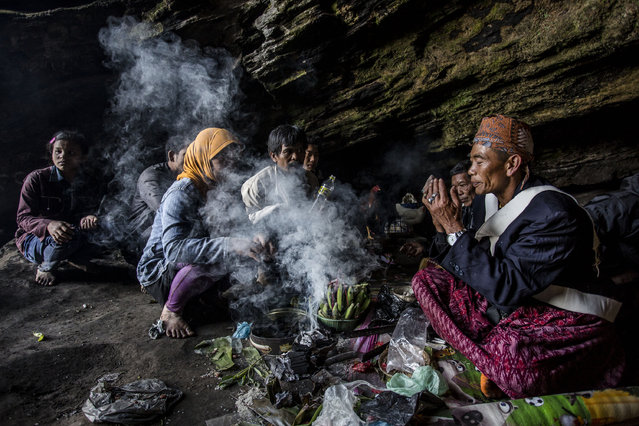
A Tenggerese shaman praying for worshippers at Widodaren cave during the Tenggerese Hindu Yadnya Kasada festival on July 31, 2015 in Probolinggo, East Java, Indonesia. The festival is the main festival of the Tenggerese people and lasts about a month. On the fourteenth day, the Tenggerese make the journey to Mount Bromo to make offerings of rice, fruits, vegetables, flowers and livestock to the mountain gods by throwing them into the volcano's caldera. (Photo by Ulet Ifansasti/Getty Images)

A Tenggerese shaman praying for worshippers at Widodaren cave during the Tenggerese Hindu Yadnya Kasada festival on July 31, 2015 in Probolinggo, East Java, Indonesia. The festival is the main festival of the Tenggerese people and lasts about a month. On the fourteenth day, the Tenggerese make the journey to Mount Bromo to make offerings of rice, fruits, vegetables, flowers and livestock to the mountain gods by throwing them into the volcano's caldera. The origin of the festival lies in the 15th century when a princess named Roro Anteng started the principality of Tengger with her husband Joko Seger, and the childless couple asked the mountain Gods for help in bearing children. The legend says the Gods granted them 24 children but on the provision that the 25th must be tossed into the volcano in sacrifice. The 25th child, Kesuma, was finally sacrificed in this way after initial refusal, and the tradition of throwing sacrifices into the caldera to appease the mountain Gods continues today. (Photo by Ulet Ifansasti/Getty Images)
Details
01 Aug 2015 12:07:00
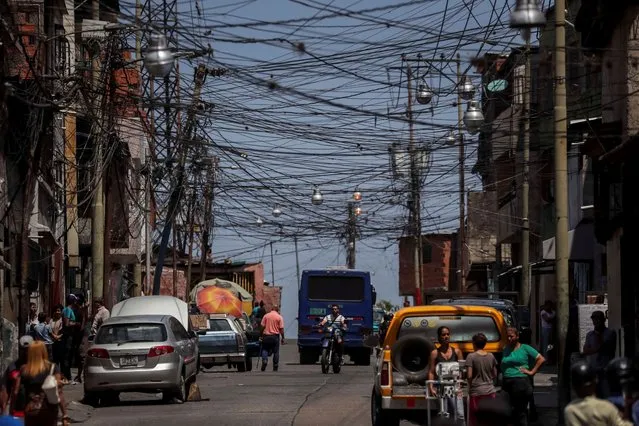
A view of electricity wires, in Caracas, Venezuela, 03 April 2019. West Venezuela started receiving electricity intermittently in the states of Zulia, Falcon, Merida and Trujillo after 100 hours without power. (Photo by Miguel Gutierrez/EPA/EFE/Rex Features/Shutterstock)

A view of electricity wires, in Caracas, Venezuela, 03 April 2019. West Venezuela started receiving electricity intermittently in the states of Zulia, Falcon, Merida and Trujillo after 100 hours without power. (Photo by Miguel Gutierrez/EPA/EFE/Rex Features/Shutterstock)
Details
02 May 2019 00:03:00
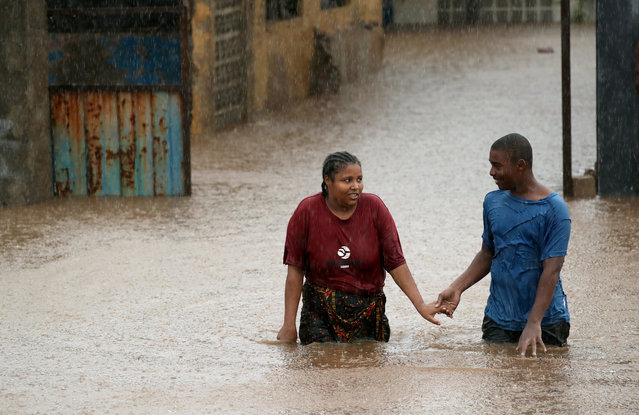
A man helps a woman through a flooded neighbourhood in the aftermath of Cyclone Kenneth, in Pemba, Mozambique, April 28, 2019. (Photo by Mike Hutchings/Reuters)

A man helps a woman through a flooded neighbourhood in the aftermath of Cyclone Kenneth, in Pemba, Mozambique, April 28, 2019. (Photo by Mike Hutchings/Reuters)
Details
10 May 2019 00:01:00