Loading...
Done
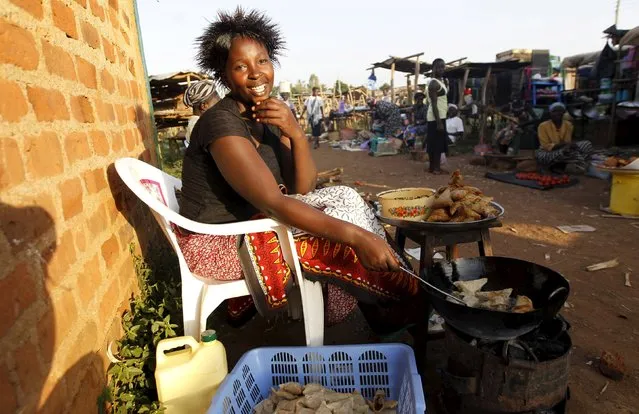
Vivian Odhiambo, 24, frys samosas in the trading centre of Kogelo, west of Kenya's capital Nairobi, July 14, 2015. Odhiambo said, “Obama is our hero and we wait to welcome him back home again. We in Kogelo have witnessed general growth and we are proud of being associated with the Obamas”, she added. (Photo by Thomas Mukoya/Reuters)

Vivian Odhiambo, 24, frys samosas in the trading centre of Kogelo, west of Kenya's capital Nairobi, July 14, 2015. Odhiambo said, “Obama is our hero and we wait to welcome him back home again. We in Kogelo have witnessed general growth and we are proud of being associated with the Obamas”, she added. As U.S. President Barack Obama visits Kenya, a personal connection to his father's birthplace of Kogelo dominates a trip that Kenyans view as a native son returning home. Residents from a herdsman to a housewife share their views on what Obama has achieved and what they would like to see next. (Photo by Thomas Mukoya/Reuters)
Details
26 Jul 2015 10:52:00
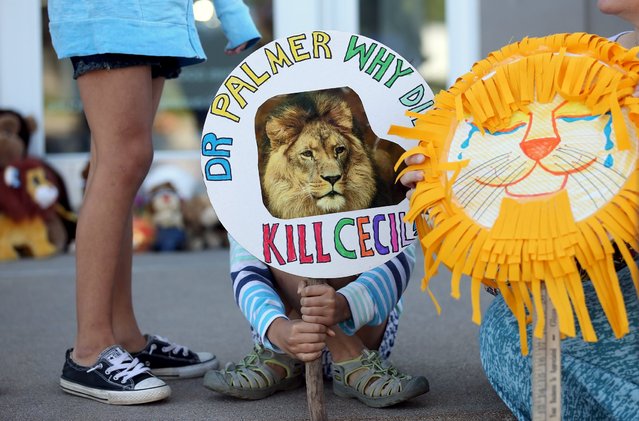
Piper Hoppe, 10, from Minnetonka, Minnesota, holds a sign at the doorway of River Bluff Dental clinic in protest against the killing of a famous lion in Zimbabwe, in Bloomington, Minnesota July 29, 2015. (Photo by Eric Miller/Reuters)

Piper Hoppe, 10, from Minnetonka, Minnesota, holds a sign at the doorway of River Bluff Dental clinic in protest against the killing of a famous lion in Zimbabwe, in Bloomington, Minnesota July 29, 2015. A Zimbabwean court on Wednesday charged a professional local hunter Theo Bronkhorst with failing to prevent an American from unlawfully killing “Cecil”, the southern African country's best-known lion. The American, Walter James Palmer, a Minnesota dentist who paid $50,000 to kill the lion, has left Zimbabwe. He says he did kill the animal but believed the hunt was legal and that the necessary permits had been issued. (Photo by Eric Miller/Reuters)
Details
30 Jul 2015 12:01:00
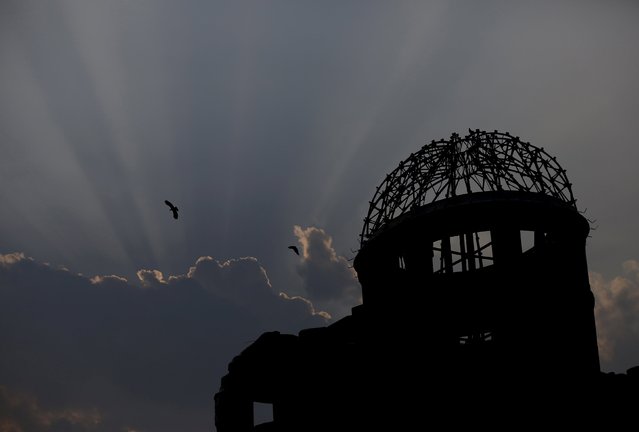
Birds fly over the Atomic Bomb Dome in Hiroshima, western Japan July 29, 2015. On August 6, 1945, the U.S. dropped the atomic bomb on Hiroshima, killing about 140,000 by the end of the year in a city of 350,000 residents, in the world's first nuclear attack. (Photo by Issei Kato/Reuters)

Birds fly over the Atomic Bomb Dome in Hiroshima, western Japan July 29, 2015. On August 6, 1945, the U.S. dropped the atomic bomb on Hiroshima, killing about 140,000 by the end of the year in a city of 350,000 residents, in the world's first nuclear attack. Three days later, a second atomic bomb was dropped on Nagasaki. Influenced by the shadows scorched into outdoor surfaces by the heat of the blasts 70 years ago, Reuters photographer Issei Kato pays homage to survivors, residents and historic buildings in both cities in a personal project that captures the shadows of today. (Photo by Issei Kato/Reuters)
Details
04 Aug 2015 12:01:00
Young girls take ballet lessons at the New Dreams dance studio in the Luz neighborhood known to locals as Cracolandia (Crackland) in Sao Paulo, Brazil, August 14, 2015. (Photo by Nacho Doce/Reuters)

Young girls take ballet lessons at the New Dreams dance studio in the Luz neighborhood known to locals as Cracolandia (Crackland) in Sao Paulo, Brazil, August 14, 2015. For the young girls learning to jump and plie, the dance studio provides a way forward and out of the difficult environment they have grown up in. Brazil is one of the world's highest consuming countries of crack cocaine, and Cracolandia, or “Crack Land”, located in the outskirts of Sao Paulo, is one of the most intense and brutal hubs. (Photo by Nacho Doce/Reuters)
Details
18 Aug 2015 13:59:00
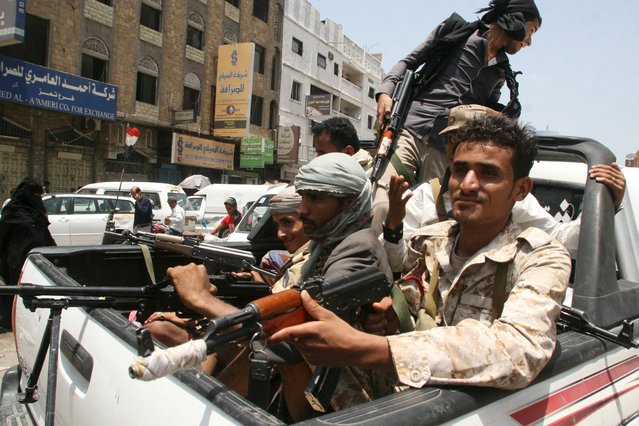
Militants loyal to Yemen's exiled government ride on the back of a pick-up truck in the country's central city of Taiz August 19, 2015. Militia forces loyal to Yemen's exiled government fought their way deep into the central city of Taiz this week, local officials said, largely pushing out Houthi militiamen from the country's third largest city. (Photo by Reuters/Stringer)

Militants loyal to Yemen's exiled government ride on the back of a pick-up truck in the country's central city of Taiz August 19, 2015. Militia forces loyal to Yemen's exiled government fought their way deep into the central city of Taiz this week, local officials said, largely pushing out Houthi militiamen from the country's third largest city. (Photo by Reuters/Stringer)
Details
21 Aug 2015 12:12:00
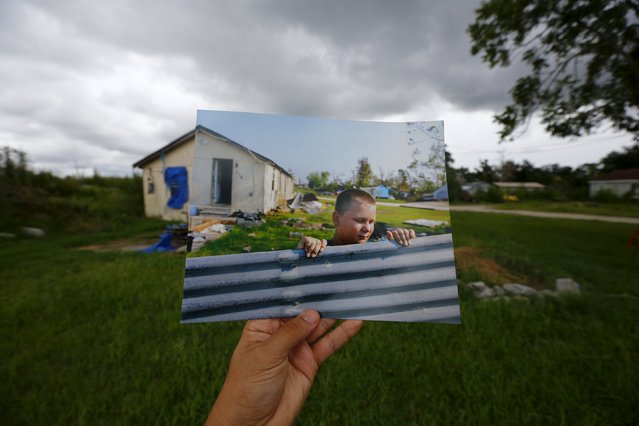
Photographer Carlos Barria holds a print of a photograph he took in 2005, as he matches it up at the same location 10 years on, in Lafitte, south of New Orleans, United States, August 16, 2015. The print shows Tyler Teal cleaning up his home, September 14, 2005, after Hurricane Katrina struck. (Photo by Carlos Barria/Reuters)

Photographer Carlos Barria holds a print of a photograph he took in 2005, as he matches it up at the same location 10 years on, in Lafitte, south of New Orleans, United States, August 16, 2015. The print shows Tyler Teal cleaning up his home, September 14, 2005, after Hurricane Katrina struck. In 2005, Hurricane Katrina triggered floods that inundated New Orleans and killed more than 1,500 people as storm waters overwhelmed levees and broke through floodwalls. (Photo by Carlos Barria/Reuters)
Details
23 Aug 2015 10:00:00
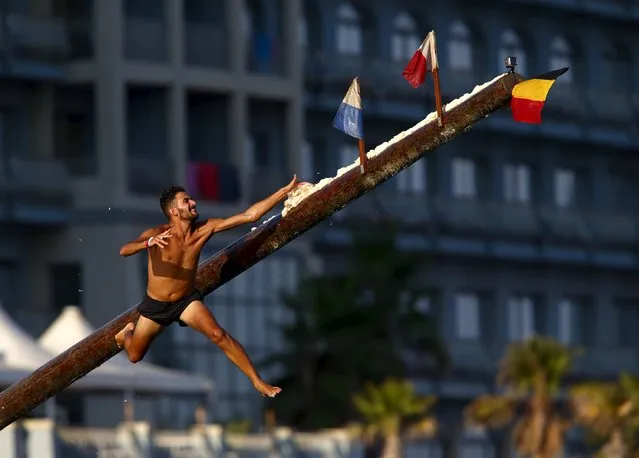
A competitor tries to swipe away some grease as he slips off the “gostra”, a pole covered in grease, during the celebrations for the religious feast of St Julian, patron of the town of St Julian's, outside Valletta August 30, 2015. (Photo by Darrin Zammit Lupi/Reuters)

A competitor tries to swipe away some grease as he slips off the “gostra”, a pole covered in grease, during the celebrations for the religious feast of St Julian, patron of the town of St Julian's, outside Valletta August 30, 2015. In the traditional “gostra”, a game stretching back to the Middle Ages, young men, women and children have to make their way to the top of a pole and try to uproot one of the flags to win prizes. Photo by Darrin Zammit Lupi/Reuters)
Details
31 Aug 2015 12:16:00
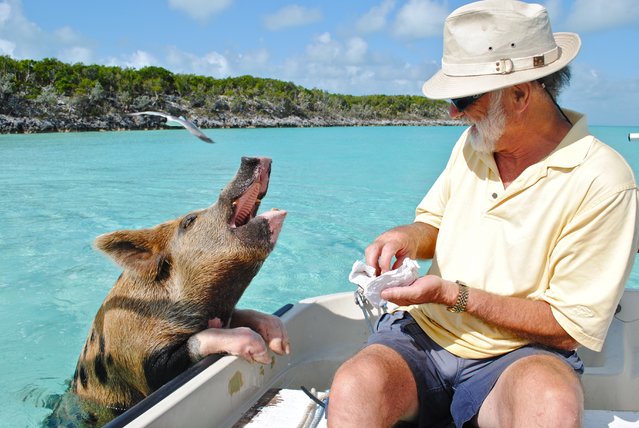
“So you're on a boat in Bahamas and then this pig swims by begging for food”. (Photo and caption by Lisa Larsen/Public Domain)

The Bahamas, the Commonwealth nation of hundreds of islands roughly the size of Connecticut and with population of just a bit over Anaheim, is known for its crystal waters and pristine beaches. This is possibly one of the world’s most beautiful havens of nature, yet people are coming here to see pigs. It is unclear when the pigs first appeared on Exuma Island or where they come from. There’s talk about a daring escape from a shipwreck, or sailors releasing the swine on purpose. In all probability, there were no pigs on this tropical paradise before European settlers came, so their mere presence is the work of human. The intriguing feat of nature, however, is that this population of pigs developed a fine aptitude for swimming. Here: “So you're on a boat in Bahamas and then this pig swims by begging for food”. (Photo and caption by Lisa Larsen/Public Domain)
Details
03 Sep 2015 11:53:00