Loading...
Done
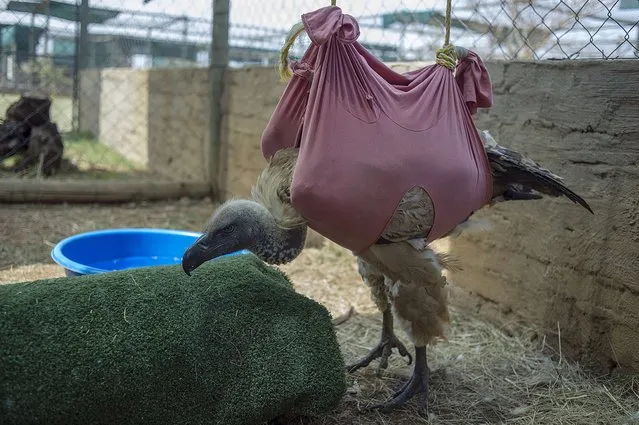
An injured vulture is treated at the VulPro Vulture Rehabilitation Centre in Hartebeepoortdam in the Magalisburg region on September 15, 2015. Confined to southern Africa, just under 4,000 breeding pairs of Cape Vultures remain in the wild, mostly in South Africa, Lesotho and Botswana. Unless conservation efforts are successful, Africa's largest vulture species may be facing eventual extinction. (Photo by Mujahid Safodien/AFP Photo)

An injured vulture is treated at the VulPro Vulture Rehabilitation Centre in Hartebeepoortdam in the Magalisburg region on September 15, 2015. Confined to southern Africa, just under 4,000 breeding pairs of Cape Vultures remain in the wild, mostly in South Africa, Lesotho and Botswana. Unless conservation efforts are successful, Africa's largest vulture species may be facing eventual extinction. (Photo by Mujahid Safodien/AFP Photo)
Details
19 Sep 2015 12:27:00
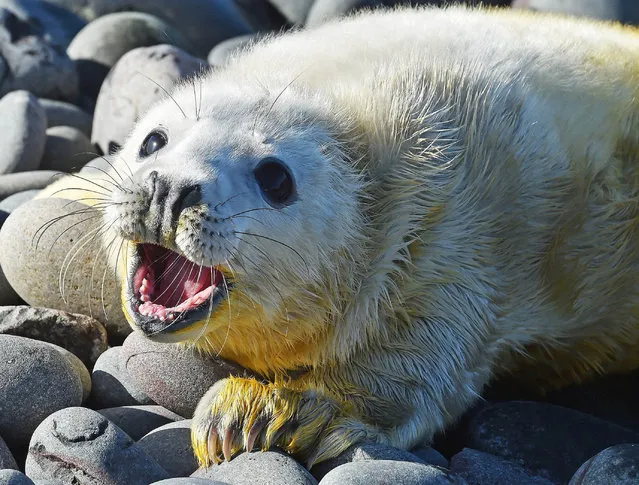
The first seal pup to be born this season at a major colony of grey seals on the Farne Islands sits beside its mother on Brownsman Island, England on September 30, 2015. (Photo by Owen Humphreys/PA Images)

The first seal pup to be born this season at a major colony of grey seals on the Farne Islands sits beside its mother on Brownsman Island, England on September 30, 2015. (Photo by Owen Humphreys/PA Images)
Details
05 Oct 2015 08:03:00
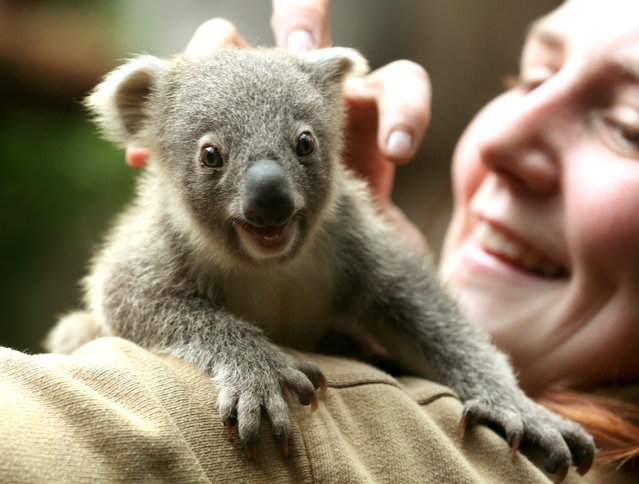
The six-months-old female koala cub holds on to the back of zoo keeper Lena at the zoo in Duisburg, Germany, 23 October 2015. The yet unnamed baby weighs 580 grams. (Photo by Roland Weihrauch/EPA)

The six-months-old female koala cub holds on to the back of zoo keeper Lena at the zoo in Duisburg, Germany, 23 October 2015. The yet unnamed baby weighs 580 grams. (Photo by Roland Weihrauch/EPA)
Details
26 Oct 2015 08:03:00
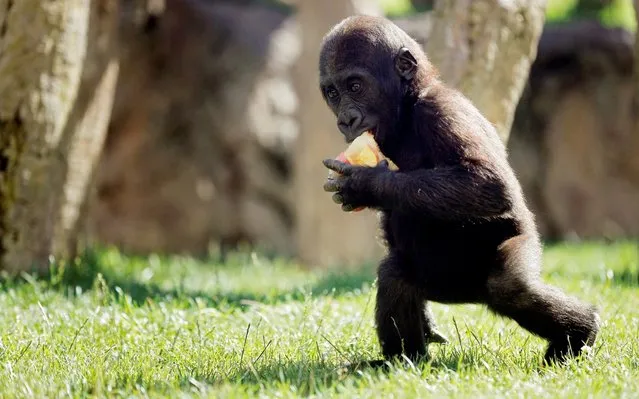
A gorilla cube named Pepe eats frozen fruit to fight high temperatures at the Bioparc zoo in Valencia, eastern Spain, 28 June 2019. Spanish peninsula is suffering a heat wave with temperatures reaching up to 45 degrees. (Photo by Kai Foersterling/EPA/EFE/Rex Features/Shutterstock)

A gorilla cube named Pepe eats frozen fruit to fight high temperatures at the Bioparc zoo in Valencia, eastern Spain, 28 June 2019. Spanish peninsula is suffering a heat wave with temperatures reaching up to 45 degrees. (Photo by Kai Foersterling/EPA/EFE/Rex Features/Shutterstock)
Details
30 Jun 2019 00:03:00
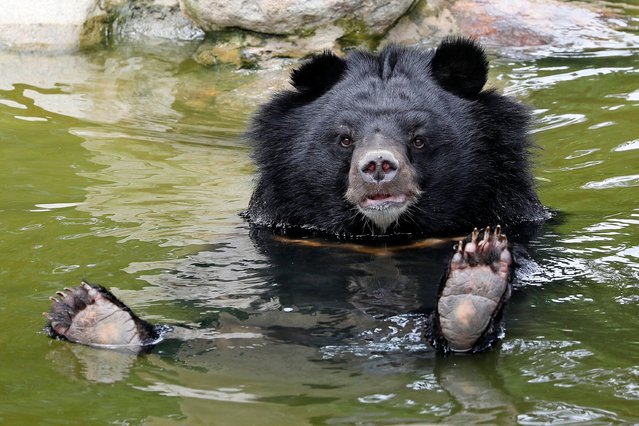
A moon bear rests in a pool inside an enclosure at the Vietnam bear rescue centre, in Tam Dao national park, Vinh Phuc, Vietnam, 09 July 2019. The center is operated by international organization Animals Asia. There are currently 184 bears living at the the Vietnam Bear Rescue Centre. It is estimated that there are less than a few hundred bears left in the wild in Vietnam. According to the latest data from the Ministry of Agriculture and Rural development, around 600 bears are still being kept on farms. In Vietnam, Animals Asia has rescued a total of 209 sun bears and moon bears. (Photo by Minh Hoang/EPA/EFE/Rex Features/Shutterstock)

A moon bear rests in a pool inside an enclosure at the Vietnam bear rescue centre, in Tam Dao national park, Vinh Phuc, Vietnam, 09 July 2019. The center is operated by international organization Animals Asia. There are currently 184 bears living at the the Vietnam Bear Rescue Centre. It is estimated that there are less than a few hundred bears left in the wild in Vietnam. According to the latest data from the Ministry of Agriculture and Rural development, around 600 bears are still being kept on farms. In Vietnam, Animals Asia has rescued a total of 209 sun bears and moon bears. (Photo by Minh Hoang/EPA/EFE/Rex Features/Shutterstock)
Details
14 Jul 2019 00:05:00
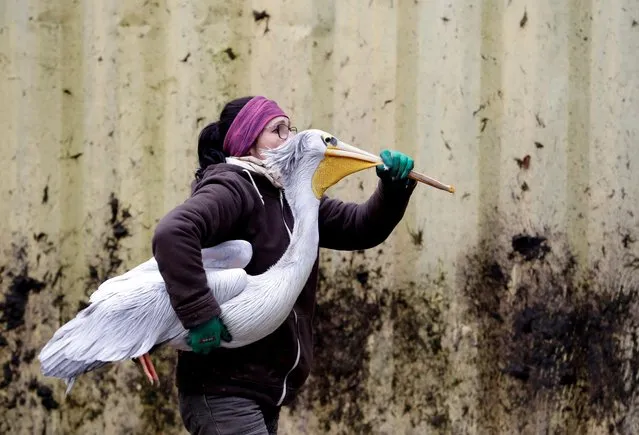
A zoo keeper carries a pelican to move it to its winter enclosure at Dvur Kralove Zoo in Dvur Kralove nad Labem, Czech Republic November 5, 2019. (Photo by David W. Cerny/Reuters)

A zoo keeper carries a pelican to move it to its winter enclosure at Dvur Kralove Zoo in Dvur Kralove nad Labem, Czech Republic on November 5, 2019. (Photo by David W. Cerny/Reuters)
Details
10 Nov 2019 00:03:00
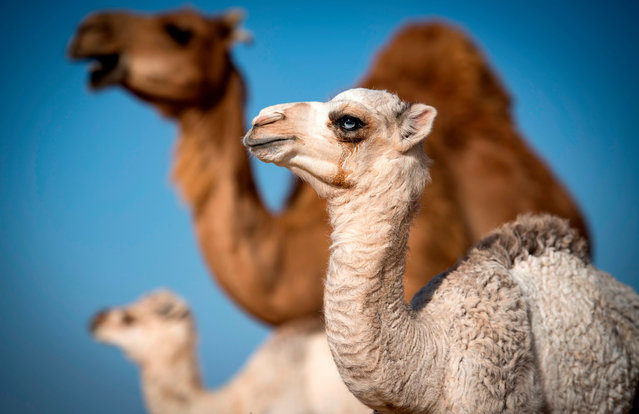
A camel calf is seen among a herd in the desert near Dakhla in Morocco-administered Western Sahara, on October 13, 2019. In the Oued Eddahab desert in Western Sahara, Habiboullah Dlimi raises dairy and racing camels just like his ancestors used to, but with a little help from modern technology. While his animals roam free and are milked traditionally, by hand, at dawn and dusk, they are watched over by hired herders and Dlimi follows GPS coordinates across the desert in a 4X4 vehicle to reach them. (Photo by Fadel Senna/AFP Photo)

A camel calf is seen among a herd in the desert near Dakhla in Morocco-administered Western Sahara, on October 13, 2019. In the Oued Eddahab desert in Western Sahara, Habiboullah Dlimi raises dairy and racing camels just like his ancestors used to, but with a little help from modern technology. While his animals roam free and are milked traditionally, by hand, at dawn and dusk, they are watched over by hired herders and Dlimi follows GPS coordinates across the desert in a 4X4 vehicle to reach them. (Photo by Fadel Senna/AFP Photo)
Details
24 Nov 2019 00:03:00
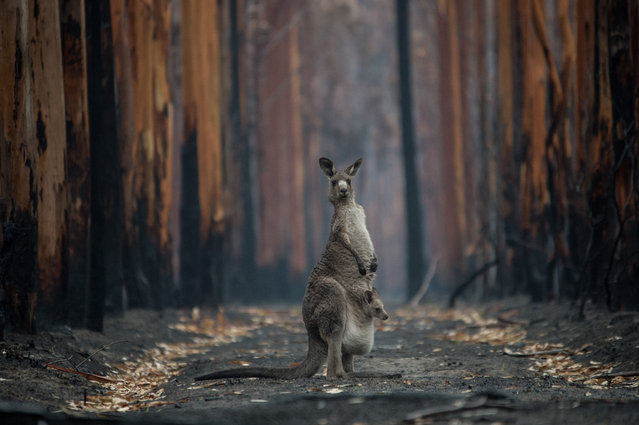
A kangaroo and joey are seen in a burnt forest on Kangaroo Island, south west of Adelaide on January 16, 2020. Australia’s continuing bushfire crisis has taken an enormous toll on wildlife, with huge numbers of mammals, birds, reptiles, insects and other species killed. (Photo by Jo-Anne McArthur/Weanimals)

A kangaroo and joey are seen in a burnt forest on Kangaroo Island, south west of Adelaide on January 16, 2020. Australia’s continuing bushfire crisis has taken an enormous toll on wildlife, with huge numbers of mammals, birds, reptiles, insects and other species killed. (Photo by Jo-Anne McArthur/Weanimals)
Details
26 Jan 2020 00:03:00