Loading...
Done
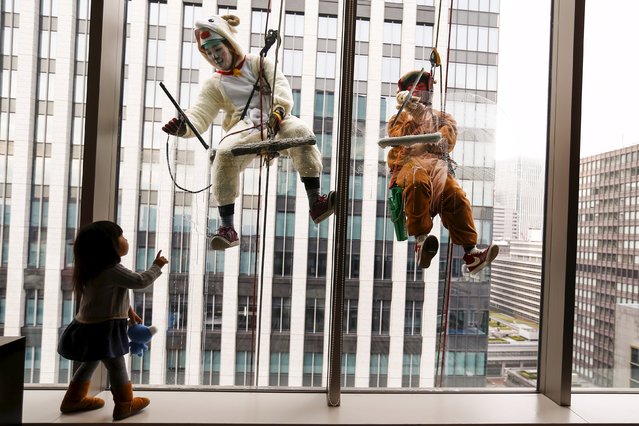
A child looks at window cleaners work while dressed in sheep (C) and monkey costumes, denoting animal signs of the Chinese zodiac calendar, during an event marking the upcoming end of the year at a hotel in Tokyo, Japan, December 21, 2015. According to the zodiac calendar, 2015 is the year of the sheep and 2016 is the year of the monkey. (Photo by Thomas Peter/Reuters)

A child looks at window cleaners work while dressed in sheep (C) and monkey costumes, denoting animal signs of the Chinese zodiac calendar, during an event marking the upcoming end of the year at a hotel in Tokyo, Japan, December 21, 2015. According to the zodiac calendar, 2015 is the year of the sheep and 2016 is the year of the monkey. (Photo by Thomas Peter/Reuters)
Details
22 Dec 2015 14:12:00
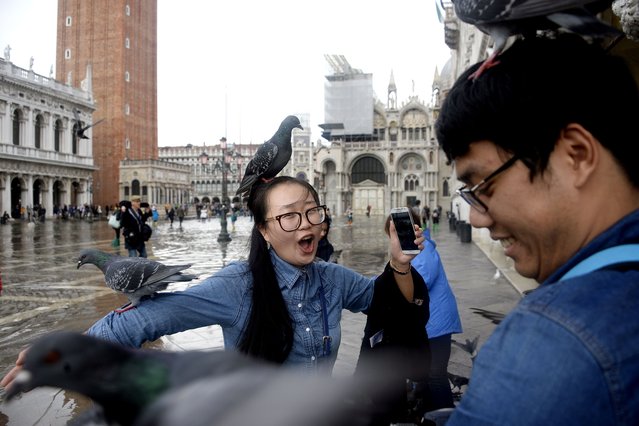
Tourists pose with pigeons in the flooded St. Mark's Square in Venice, on November 7, 2014. The high water, a combination of high tides and a strong Scirocco wind in the Adriatic Sea, stood at 110 centimeters early on November 7. The city has for years been wrestling with the problems posed by the threat of rising sea levels. (Photo by Olivier Morin/AFP Photo)

Tourists pose with pigeons in the flooded St. Mark's Square in Venice, on November 7, 2014. The high water, a combination of high tides and a strong Scirocco wind in the Adriatic Sea, stood at 110 centimeters early on November 7. The city has for years been wrestling with the problems posed by the threat of rising sea levels. (Photo by Olivier Morin/AFP Photo)
Details
08 Nov 2014 13:06:00
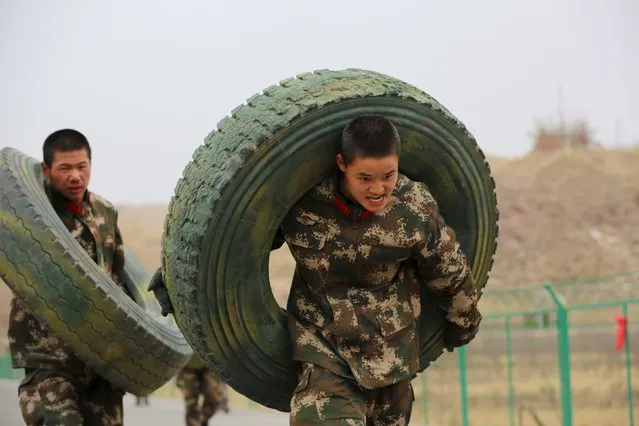
Paramilitary policemen carry tyres as they take part in a training session in Zhangye, Gansu Province, China, March 1, 2016. (Photo by Reuters/Stringer)

Paramilitary policemen carry tyres as they take part in a training session in Zhangye, Gansu Province, China, March 1, 2016. (Photo by Reuters/Stringer)
Details
09 Mar 2016 12:16:00
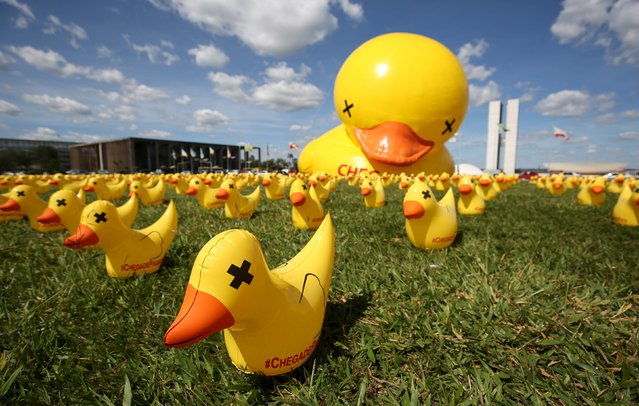
Inflatable dolls in the shape of ducks are seen in front of the National Congress during a protest against tax increases in Brasilia, Brazil, March 29, 2016. The campaign “I will not pay the Duck” is organized by the Federation of Industries of Sao Paulo (FIESP) and uses the duck symbol in reference to industries that pay high taxes. (Photo by Gregg Newton/Reuters)

Inflatable dolls in the shape of ducks are seen in front of the National Congress during a protest against tax increases in Brasilia, Brazil, March 29, 2016. The campaign “I will not pay the Duck” is organized by the Federation of Industries of Sao Paulo (FIESP) and uses the duck symbol in reference to industries that pay high taxes. (Photo by Gregg Newton/Reuters)
Details
30 Mar 2016 11:27:00
Visitors hold ice blocks to cool themselves in hot weather at a water park on June 23, 2016 in Chongqing, China. Citizens and visitors escaped high temperature at a water park in Yangren Jie (also known as Foreigner Street), Nan'an District of south China's Chongqing. (Photo by VCG/VCG via Getty Images)

Visitors hold ice blocks to cool themselves in hot weather at a water park on June 23, 2016 in Chongqing, China. Citizens and visitors escaped high temperature at a water park in Yangren Jie (also known as Foreigner Street), Nan'an District of south China's Chongqing. (Photo by VCG/VCG via Getty Images)
Details
29 Jun 2016 10:56:00
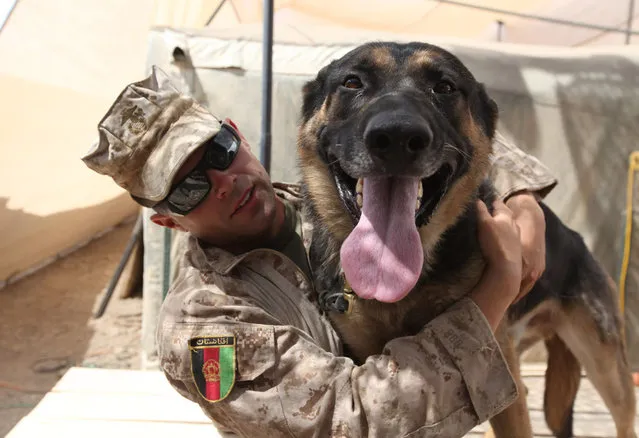
Afghanistan: Dogs of War Part 1

Throughout the course of the long war in Afghanistan, Coalition troops have relied on thousands of military working dogs to help keep them safe, and make their jobs easier. The dogs are trained to detect explosives, to find illegal drugs, to search for missing comrades, or target enemy combatants. Not only are they active on the front lines, but behind the lines they serve as therapy dogs, service dogs, and loyal companions. They also share the same risks as the ground troops, suffering injuries and sometimes death on the battlefields. Gathered here are images of these dogs and their handlers in Afghanistan and back home, from over the past several years, part of the ongoing series here on Afghanistan.
Details
03 Jun 2014 21:02:00
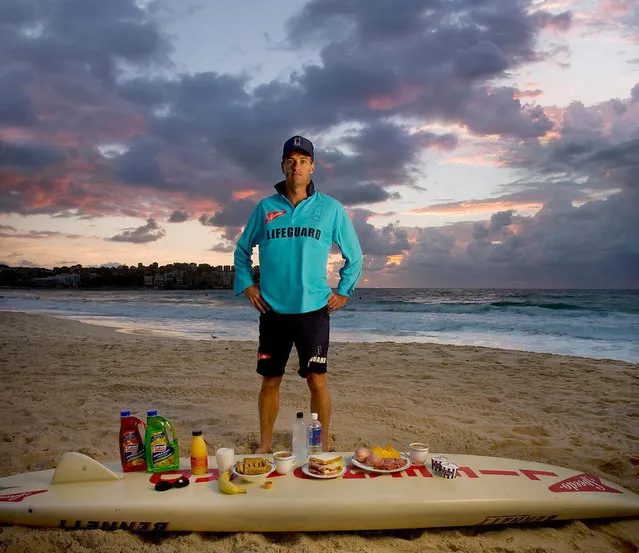
What the World Eats By Peter Menzel And Faith D'Aluisio Part 2

A stunning photographic collection featuring portraits of people from 30 countries and the food they eat in one day. In this fascinating study of people and their diets, 80 profiles are organized by the total number of calories each person puts away in a day. Featuring a Japanese sumo wrestler, a Massai herdswoman, world-renowned Spanish chef Ferran Adria, an American competitive eater, and more, these compulsively readable personal stories also include demographic particulars, including age, activity level, height, and weight. Essays from Harvard primatologist Richard Wrangham, journalist Michael Pollan, and others discuss the implications of our modern diets for our health and for the planet. This compelling blend of photography and investigative reportage expands our understanding of the complex relationships among individuals, culture, and food.
Details
02 May 2014 09:20:00
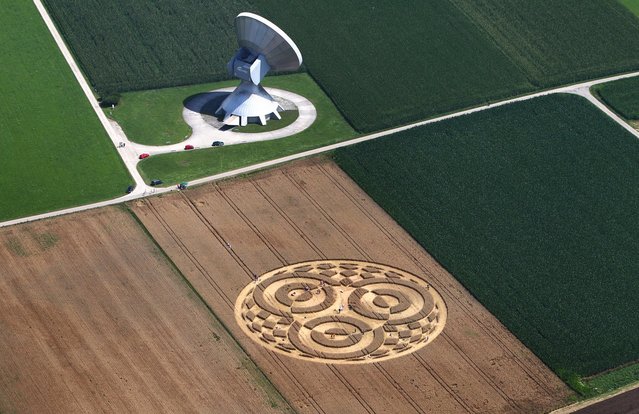
People walk through crop circles in a cornfield near Raisting, Germany, on July 28, 2014. (Photo by Karl-Josef Hildenbrand/DPA)

People walk through crop circles in a cornfield near Raisting, Germany, on July 28, 2014. According to media reports, a balloonist had discovered the circle some days ago. Since then, hundreds of people came to the field to watch it, however it is unclear who did create the pattern. (Photo by Karl-Josef Hildenbrand/DPA)
Details
02 Aug 2014 14:29:00