Loading...
Done
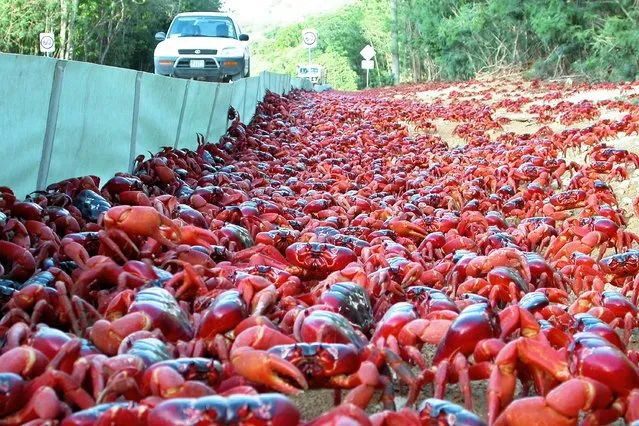
Tens of millions of red crabs make their way across Christmas Island, Australia on November 13, 2021 during their annual migration from the forest to the ocean, swamping roads and bridges. (Photo by Parks Australia/Animal News Agency)

Tens of millions of red crabs make their way across Christmas Island, Australia on November 13, 2021 during their annual migration from the forest to the ocean, swamping roads and bridges. (Photo by Parks Australia/Animal News Agency)
Details
21 Nov 2021 03:52:00
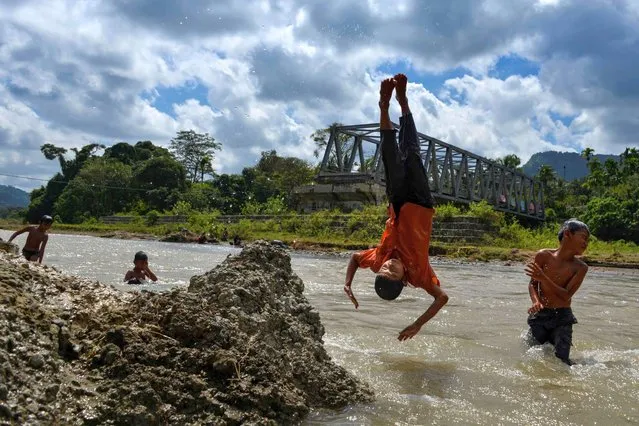
Students on their way home from school play in a river which has risen due to recent seasonal rains, in a remote village in Panca, Aceh province on January 22, 2021. (Photo by Chaideer Mahyuddin/AFP Photo)

Students on their way home from school play in a river which has risen due to recent seasonal rains, in a remote village in Panca, Aceh province on January 22, 2021. (Photo by Chaideer Mahyuddin/AFP Photo)
Details
11 Feb 2021 09:49:00
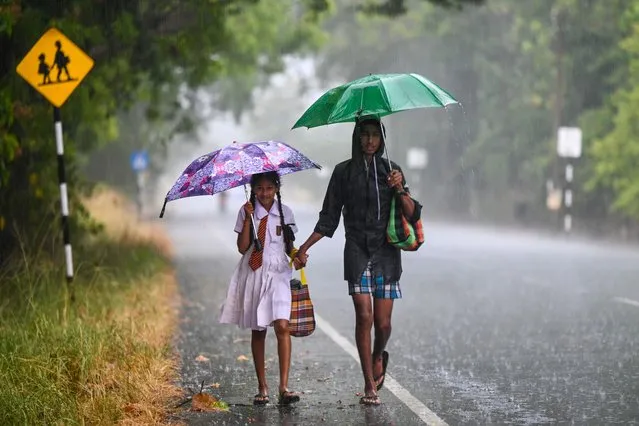
In this photograph taken on August 9, 2023, children make their way along a street during heavy downpour in Kilinochchi. (Photo by Ishara S. Kodikara/AFP Photo)

In this photograph taken on August 9, 2023, children make their way along a street during heavy downpour in Kilinochchi. (Photo by Ishara S. Kodikara/AFP Photo)
Details
15 Nov 2023 04:26:00
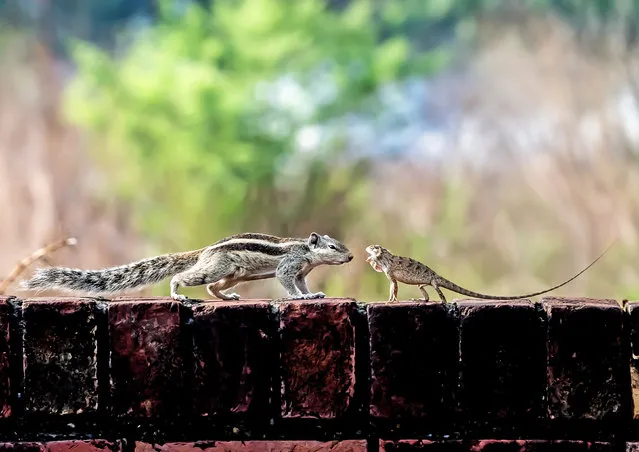
A squirrel and lizard both refuse to give way in an unlikely standoff on a wall in Mohali, India in the first decade of February 2024. (Photo by Anuj Jain/Solent news)

A squirrel and lizard both refuse to give way in an unlikely standoff on a wall in Mohali, India in the first decade of February 2024. (Photo by Anuj Jain/Solent news)
Details
03 Mar 2024 06:31:00
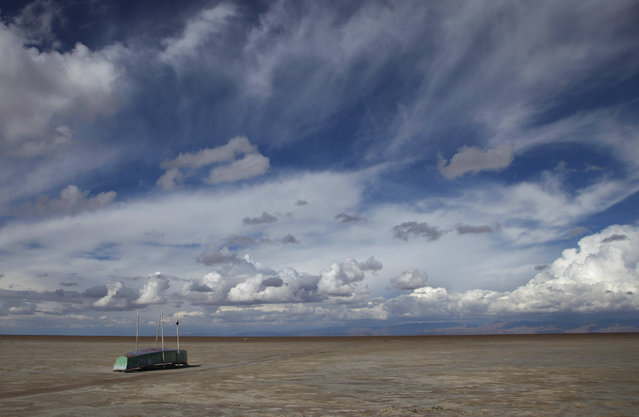
In this January 12, 2016 photo, an abandoned boat lies on the dried up lake bed of Lake Poopo, on the outskirts of Untavi, Bolivia. Drought caused by the recurrent El Nino meteorological phenomenon is considered the main driver of the lake's demise. Along with glacial melting, authorities say another factor is the diversion of water from Poopo's tributaries, mostly for mining but also for agriculture. (Photo by Juan Karita/AP Photo)

In this January 12, 2016 photo, an abandoned boat lies on the dried up lake bed of Lake Poopo, on the outskirts of Untavi, Bolivia. Drought caused by the recurrent El Nino meteorological phenomenon is considered the main driver of the lake's demise. Along with glacial melting, authorities say another factor is the diversion of water from Poopo's tributaries, mostly for mining but also for agriculture. (Photo by Juan Karita/AP Photo)
Details
21 Jan 2016 12:33:00
Black Nazarene devotees clamber on top of one another to to touch the cross on January 9, 2015 in Manila, Philippines. The Feast of the Black Nazarene culminates in a day long procession on January 9 as barefoot devotees march to see and touch the image of the Black Nazarene. (Photo by Dondi Tawatao/Getty Images)

Black Nazarene devotees clamber on top of one another to to touch the cross on January 9, 2015 in Manila, Philippines. The Feast of the Black Nazarene culminates in a day long procession on January 9 as barefoot devotees march to see and touch the image of the Black Nazarene. The Black Nazarene is a dark wood sculpture of Jesus brought to the Philippines in 1606 from Spain and considered miraculous by Filipino devotees. The event falls a week ahead of the visit of Pope Francis who will travel to Leyte and Manila during his visit to the Philippines from January 15–19. The visit is expected to attract crowds in the millions as Filipino Catholics flock to catch a glimpse of the leader of the Catholic Church. The Philippines is the only Catholic majority nation in Asia with around 90 percent of the population professing the faith. (Photo by Dondi Tawatao/Getty Images)
Details
11 Jan 2015 13:46:00
These may look like alien creatures from another planet, but the odd organisms are, in fact, colorful, microscopic life forms found in our forests. The bizarre slime molds, known as mycetozoa or fungus animals, were captured by geologist Valeriya Zvereva. (Photo by Valeriya Zvereva/Caters News)

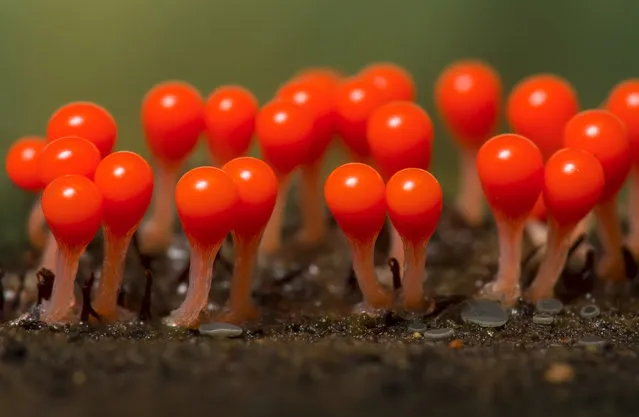
These may look like alien creatures from another planet, but the odd organisms are, in fact, colorful, microscopic life forms found in our forests. The bizarre slime molds, known as mycetozoa or fungus animals, were captured by geologist Valeriya Zvereva. She spent months documenting the common life forms that are found beneath our feet – but are rarely seen. Incredibly, the organisms can move and hunt for other microscopic life forms on which to feed. Zvereva, who is from Moscow, used a special macro lens to capture the vibrant and up-close shots, which show off the organisms’ unlikely beauty. (Photo by Valeriya Zvereva/Caters News)

Details
20 Apr 2015 13:27:00
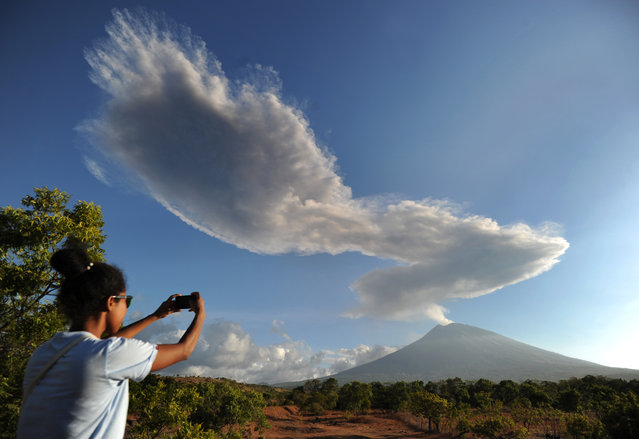
A woman takes photos as Mount Agung volcano sends up another plume of smoke, seen from the Kubu subdistrict in Karangasem Regency on Indonesia's resort island of Bali on July 5, 2018. Mount Agung roared to life again on July 2, belching a plume of ash 2,000 metres (6,500 feet) high, as well as temporarily shuttering the airport and grounding hundreds of flights after erupting the week before. (Photo by Sonny Tumbelaka/AFP Photo)

A woman takes photos as Mount Agung volcano sends up another plume of smoke, seen from the Kubu subdistrict in Karangasem Regency on Indonesia's resort island of Bali on July 5, 2018. Mount Agung roared to life again on July 2, belching a plume of ash 2,000 metres (6,500 feet) high, as well as temporarily shuttering the airport and grounding hundreds of flights after erupting the week before. (Photo by Sonny Tumbelaka/AFP Photo)
Details
07 Jul 2018 00:01:00