Loading...
Done
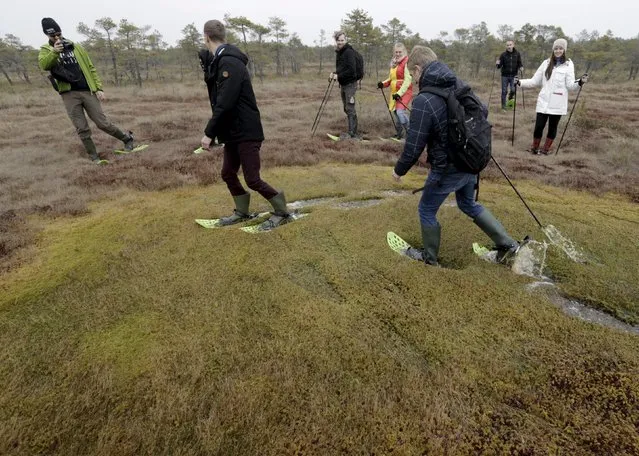
People use snowshoes during a tour of the Great Kemeri Bog, Latvia, October 17, 2015. (Photo by Ints Kalnins/Reuters)

People use snowshoes during a tour of the Great Kemeri Bog, Latvia, October 17, 2015. The Kemeri bog is more than 8,000 years old and is one of the largest dry moss swamps in the Baltics. A more than decade-long joint restoration of the bog by the European Union and the Latvian government helped the bog recover its high moss marshes, damp black alder forests, floodplain meadows and seaside lakes – features now considered rare in Europe due to industrialisation. (Photo by Ints Kalnins/Reuters)
Details
20 Oct 2015 08:03:00
Pop Pop Bang By Thomas Brown & Anna Burns

A collaboration between creative director Anna Burns and the photographer Thomas Brown. Through the use of various mediums the pair have curated an exhibition that explores the masculine world of B-Movies and juxtaposed it with the traditional British landscape. Using the themes of said movies – girls, guns and explosives – and twisting it against a very British backdrop these two challenge not only the premise of each subject but also the use of their chosen medias. The duo created a wall of umbrellas displaying elements of the classic B-Movie and located them within three landscapes – one being the forest, then London’s docklands and finally the grounds of Suffolk Manor house.
Details
13 Mar 2015 12:13:00
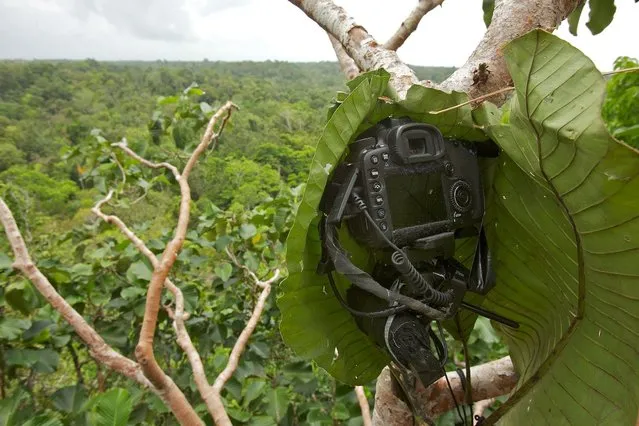
Tim Laman - Wildlife Photojournalist

Tim Laman is a field biologist and wildlife photojournalist. His pioneering research in the rain forest canopy in Borneo led to a PhD from Harvard and his first National Geographic article in 1997. Since then, he has pursued his passion for exploring wild places and documenting little-known and endangered wildlife by becoming a regular contributor to National Geographic. He has eighteen articles to his credit to date, all of which have had a conservation message. Some have focused on endangered species such as Orangutans or Hornbills, while others, such as a series of articles on Conservation International’s Biodiversity Hotspots, have highlighted regions under intense pressure.
Details
14 Sep 2013 10:13:00
Photographers: Joel Robison Part2

“Hi! I'm Joel, I live in a valley in British Columbia's Rocky Mountains, as close to the forest as I could possibly be! I love to run, bike, jump, eat and create and I hope that you enjoy my work as much as I enjoy creating it!” – Joel Robison. (Photo by: Joel Robison; Source: Flickr)


See Also:Photographers: Joel Robison Part1
Details
01 Nov 2013 10:40:00
Photographers: Joel Robison

“Hi! I'm Joel, I live in a valley in British Columbia's Rocky Mountains, as close to the forest as I could possibly be! I love to run, bike, jump, eat and create and I hope that you enjoy my work as much as I enjoy creating it!” – Joel Robison.

Photo: “Under Peaceful Skies”, 2011. (Photo by: Joel Robison; Source: Flickr)
Details
24 May 2012 10:44:00


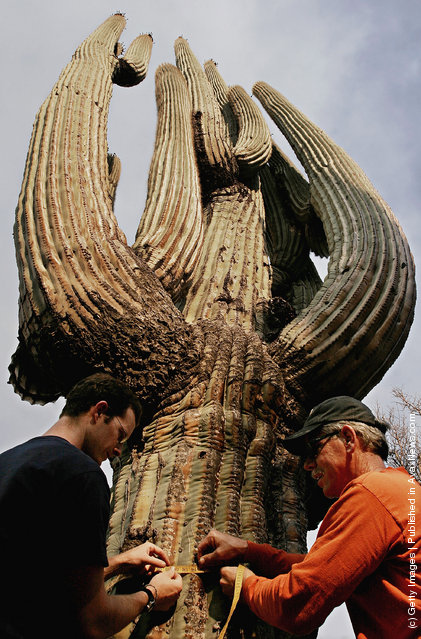
“The saguaro (scientific name Carnegiea gigantea) is a large, tree-sized cactus species in the monotypic genus Carnegiea. It is native to the Sonoran Desert in the U.S. state of Arizona, the Mexican state of Sonora, a small part of Baja California in the San Felipe Desert and an extremely small area of California, U.S. The saguaro blossom is the State Wildflower of Arizona”. – Wikipedia

Photo: Daniel Appel (L), a firefighter with Engine 84 from the Lassen National Forest in California and Mike Hallen, (R), Arizona representative of the National Register of Big Trees, measure the circumference of this Saguaro cactus called the "Grand One," in the Tonto National Forest on July 1, 2005 35 miles north of Phoenix, near Carefree, Arizona. The cactus, estimated to be more than 200 years old, measures a circumference of 7 feet, 10 inches (2.4 meters) and stands 46 feet high (14 meters). The cactus was burned in the Cave Creek Complex fire and may not survive. It was once the largest Saguaro in the world, two others have been found recently that have tied it's measurements. The fire has burned more than 214,000 acres of the Sonoran desert. (Photo by Jeff Topping/Getty Images)

Details
26 Jul 2011 12:27:00


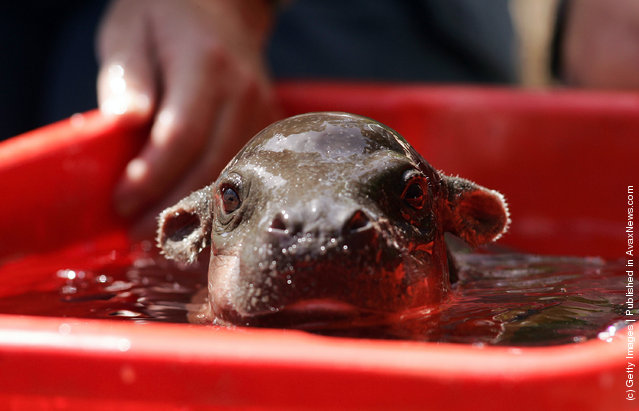
“The pygmy hippopotamus (Choeropsis liberiensis or Hexaprotodon liberiensis) is a large mammal native to the forests and swamps of western Africa (the specific name liberiensis means “of Liberia”, as this is where the vast majority live). The pygmy hippo is reclusive and nocturnal. It is one of only two extant species in the Hippopotamidae family, the other being its much larger cousin the common hippopotamus”. – Wikipedia

Photo: Monifa, a one month old baby Pygmy Hippopotamus takes a morning bath at Taronga Zoo on November 7, 2008 in Sydney, Australia. Monifa is the first Pygmy Hippopotamus to be born at Taronga Zoo in the past twenty three years. (Photo by Sergio Dionisio/Getty Images)
Details
11 Apr 2011 08:11:00
People take a selfie at the abandoned former Soviet R12 nuclear missile launch site in Zeltini, Latvia, July 22, 2016. (Photo by Ints Kalnins/Reuters)

People take a selfie at the abandoned former Soviet R12 nuclear missile launch site in Zeltini, Latvia, July 22, 2016. Hidden in the forests of Aluksne, near Latvia's north-eastern border with Russia, the remains of a former Soviet nuclear missile base are a magnet for tourists now rather than a top-secret site manned by soldiers. (Photo by Ints Kalnins/Reuters)
Details
26 Jul 2016 10:34:00