Loading...
Done


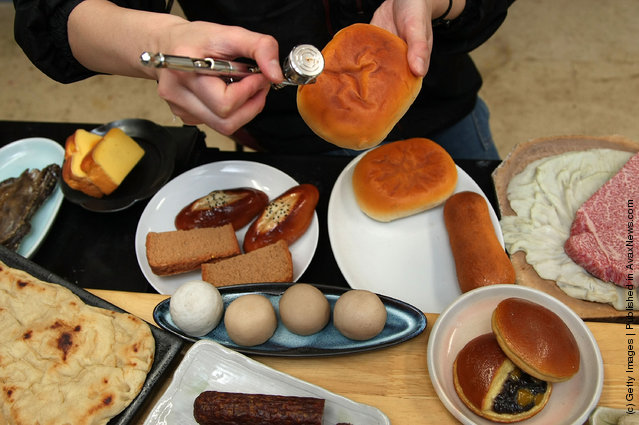
A craftsman makes imitation bread samples at The Sample Factory on February 25, 2008 in Gujo, Gifu, Japan. Gujo City has more than a 50 percent share of the imitation vinyl chloride samples industry. Replica foods are used in most restaurant window displays in Japan, and are popular as souvenirs for tourists. (Photo by Koichi Kamoshida/Getty Images)
Details
08 Apr 2011 09:07:00
Abbas (1944 – 25 April 2018) was an Iranian photographer known for his photojournalism in Biafra, Vietnam and South Africa in the 1970s, and for his extensive essays on religions in later years. He was a member of Sipa from 1971 to 1973, a member of Gamma from 1974 to 1980, and joined Magnum Photos in 1981. Here: Kuwait, 1991. (Photo by Abbas Attar/Magnum Photos)

Abbas (1944 – 25 April 2018) was an Iranian photographer known for his photojournalism in Biafra, Vietnam and South Africa in the 1970s, and for his extensive essays on religions in later years. He was a member of Sipa from 1971 to 1973, a member of Gamma from 1974 to 1980, and joined Magnum Photos in 1981. Here: Kuwait, 1991. (Photo by Abbas Attar/Magnum Photos)
Details
28 Apr 2018 00:03:00
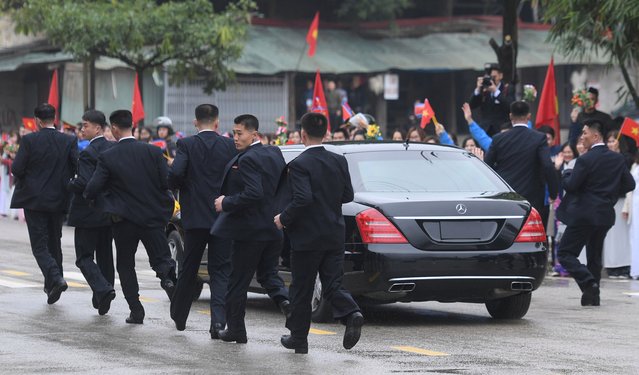
North Korean bodyguards run along a limousine transporting Kim Jong Un upon his arrival in Dong Dang, Vietnam, February 26, 2019. The second meeting of the US President and the North Korean leader, running from 27 to 28 February 2019, focuses on furthering steps towards achieving peace and complete denuclearization of the Korean peninsula. (Photo by Reuters/Stringer)

North Korean bodyguards run along a limousine transporting Kim Jong Un upon his arrival in Dong Dang, Vietnam, February 26, 2019. The second meeting of the US President and the North Korean leader, running from 27 to 28 February 2019, focuses on furthering steps towards achieving peace and complete denuclearization of the Korean peninsula. (Photo by Reuters/Stringer)


Details
27 Feb 2019 00:05:00
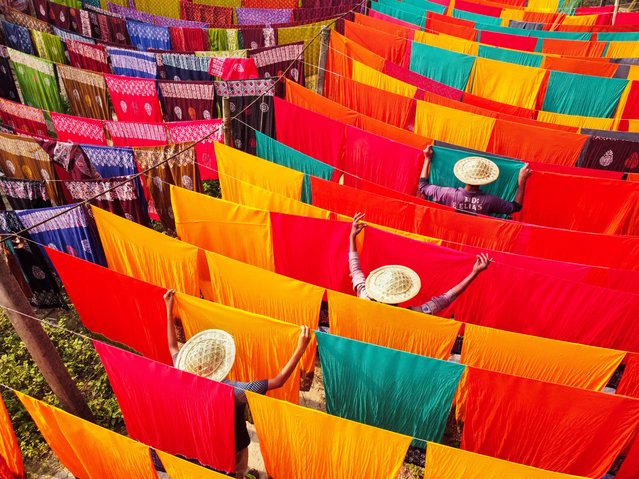
Workers hang hundreds of color-dyed sheets of cloth on a bamboo framework to dry in a dyeing factory in Narayanganj, Bangladesh on May 23, 2023. The drying process usually takes 4 hours, with each set of 200 pieces at a time to dry in temperatures over 42 degrees Celsius. Workers use hats for protection from the scorching heat because they have to constantly turn the colorful fabrics so that they dry perfectly in the sunlight. (Photo by Joy Saha/ZUMA Press Wire/Rex Features/Shutterstock)

Workers hang hundreds of color-dyed sheets of cloth on a bamboo framework to dry in a dyeing factory in Narayanganj, Bangladesh on May 23, 2023. The drying process usually takes 4 hours, with each set of 200 pieces at a time to dry in temperatures over 42 degrees Celsius. Workers use hats for protection from the scorching heat because they have to constantly turn the colorful fabrics so that they dry perfectly in the sunlight. (Photo by Joy Saha/ZUMA Press Wire/Rex Features/Shutterstock)
Details
14 Jun 2023 02:39:00
Takeoka Chisaka, Hiroshima, Japan. “One morning in August 1945, I was walking home from the night shift at a factory in Hiroshima. As I reached my door, there was a huge explosion. When I came to, my head was bleeding and I had been blasted 30m away”. (Photo and caption by Sasha Maslov)

Takeoka Chisaka, Hiroshima, Japan. “One morning in August 1945, I was walking home from the night shift at a factory in Hiroshima. As I reached my door, there was a huge explosion. When I came to, my head was bleeding and I had been blasted 30m away. The atomic bomb had detonated. When I found my mother, her eyes were badly burned. A doctor said they had to come out, but he didn’t have the proper tools so used a knife instead. It was hellish. I became a peace-worker after the war. In the 1960s, at a meeting at the UN, I met one of the people who created the atomic bomb. He apologised”. (Photo and caption by Sasha Maslov)
Details
11 May 2015 11:56:00
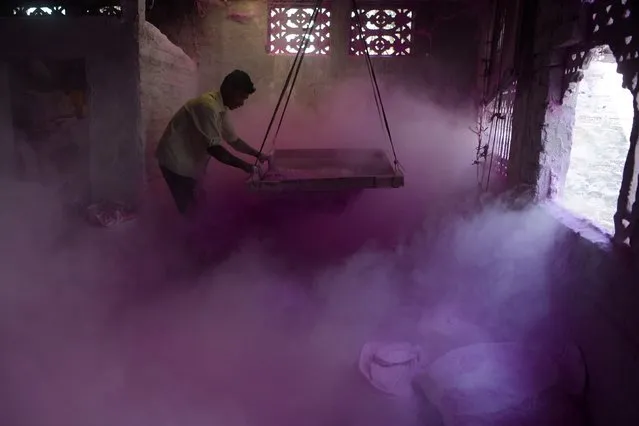
An Indian labourer sifts coloured powder, known as “gulal”, to be used during the forthcoming spring festival of Holi, inside a factory at Fulbari village on the outskirts of Siliguri on March 6, 2017. Holi, the popular Hindu spring festival of colours is observed in India at the end of the winter season on the last full moon of the lunar month, and will be celebrated on March 13 this year. (Photo by Diptendu Dutta/AFP Photo)

An Indian labourer sifts coloured powder, known as “gulal”, to be used during the forthcoming spring festival of Holi, inside a factory at Fulbari village on the outskirts of Siliguri on March 6, 2017. Holi, the popular Hindu spring festival of colours is observed in India at the end of the winter season on the last full moon of the lunar month, and will be celebrated on March 13 this year. (Photo by Diptendu Dutta/AFP Photo)
Details
08 Mar 2017 00:04:00
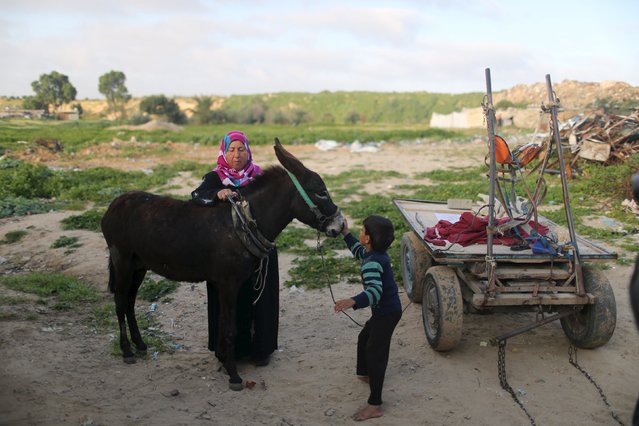
Palestinian woman Jihan Abu Muhsen prepares her donkey with her son Kareem before going work collecting bricks for sale from sites of demolished buildings, at her dwelling in Khan Younis in the southern Gaza Strip March 8, 2016. Abu Muhsen gathers bricks from the sites of demolished buildings and sells them to recycling factories. She earns around 20 shekels ($5) a day and her 10-year-old son Mohammad helps her when he is not at school. (Photo by Ibraheem Abu Mustafa/Reuters)

Palestinian woman Jihan Abu Muhsen prepares her donkey with her son Kareem before going work collecting bricks for sale from sites of demolished buildings, at her dwelling in Khan Younis in the southern Gaza Strip March 8, 2016. Abu Muhsen gathers bricks from the sites of demolished buildings and sells them to recycling factories. She earns around 20 shekels ($5) a day and her 10-year-old son Mohammad helps her when he is not at school. (Photo by Ibraheem Abu Mustafa/Reuters)
Details
19 Apr 2016 13:32:00
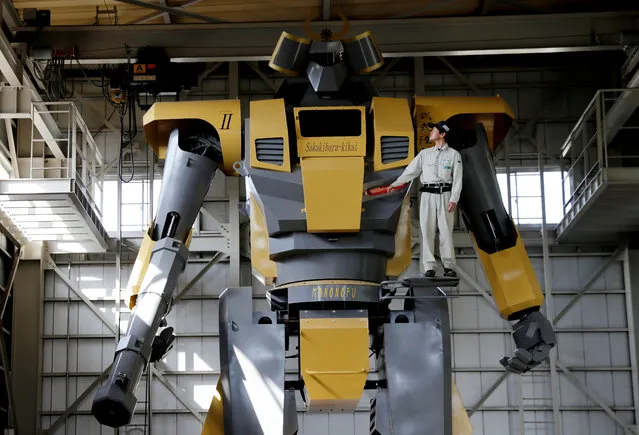
Sakakibara Kikai's engineer Go Sakakibara poses with the bipedal robot Mononofu during its demonstration at its factory in Shinto Village, Gunma Prefecture, Japan on April 12, 2018. Developed at Sakakibara Kikai, a maker of farming machinery, LW-Mononofu is a 28-feet tall, two-legged robot weighing in at more than 7 tonnes. It contains a cockpit with monitors and levers for the pilot to control the robot's arms and legs. (Photo by Kim Kyung-Hoon/Reuters)

Sakakibara Kikai's engineer Go Sakakibara poses with the bipedal robot Mononofu during its demonstration at its factory in Shinto Village, Gunma Prefecture, Japan on April 12, 2018. Developed at Sakakibara Kikai, a maker of farming machinery, LW-Mononofu is a 28-feet tall, two-legged robot weighing in at more than 7 tonnes. It contains a cockpit with monitors and levers for the pilot to control the robot's arms and legs. (Photo by Kim Kyung-Hoon/Reuters)
Details
17 Apr 2018 00:01:00