Loading...
Done
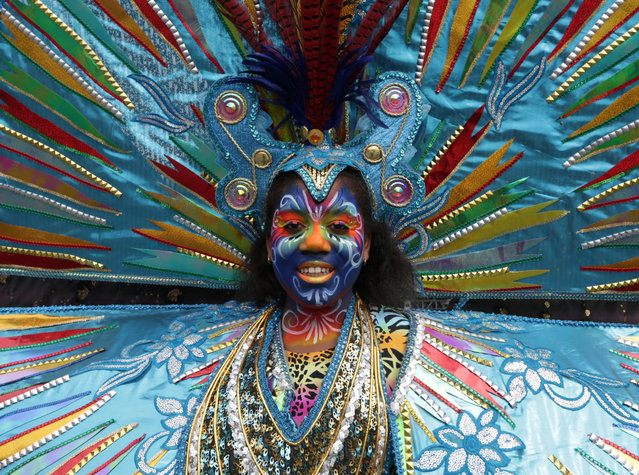
A young reveller participates in the annual Trinidad and Tobago Red Cross Society's Children's Carnival Competition at the Queen's Park Savannah in Port-Of-Spain, Trinidad and Tobago February 18, 2017. (Photo by Andrea De Silva/Reuters)

A young reveller participates in the annual Trinidad and Tobago Red Cross Society's Children's Carnival Competition at the Queen's Park Savannah in Port-Of-Spain, Trinidad and Tobago February 18, 2017. (Photo by Andrea De Silva/Reuters)
Details
21 Feb 2017 00:05:00
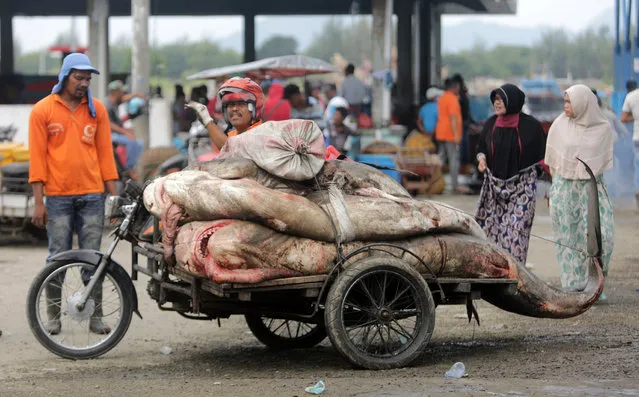
Fisherman transport sharks to the fish market in the traditional fishing port in Banda Aceh, Indonesia, 26 August 2020. According to media reports, the marine and fisheries sector is considered as one of the affected by the coronavirus pandemic, affecting more than 3.5 million fishermen and all sectors working throughout the supply chain. (Photo by Hotli Simanjuntak/EPA/EFE)

Fisherman transport sharks to the fish market in the traditional fishing port in Banda Aceh, Indonesia, 26 August 2020. According to media reports, the marine and fisheries sector is considered as one of the affected by the coronavirus pandemic, affecting more than 3.5 million fishermen and all sectors working throughout the supply chain. (Photo by Hotli Simanjuntak/EPA/EFE)
Details
11 Sep 2020 00:05:00
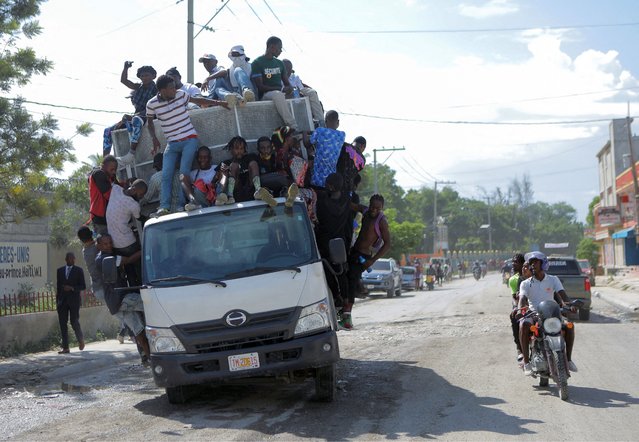
Supporters of Haiti's former President Jean-Bertrand Aristide march to his home to congratulate him at his 69th birthday, in Port-au-Prince, Haiti on July 15, 2022. (Photo by Ralph Tedy Erol/Reuters)

Supporters of Haiti's former President Jean-Bertrand Aristide march to his home to congratulate him at his 69th birthday, in Port-au-Prince, Haiti on July 15, 2022. (Photo by Ralph Tedy Erol/Reuters)
Details
28 Jul 2022 04:32:00
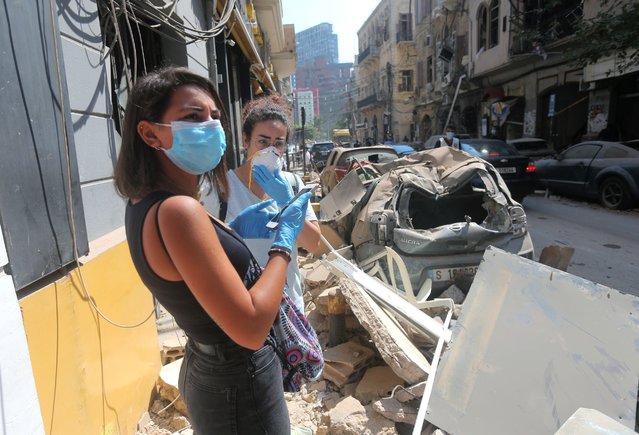
Young Lebanese women wearing protective masks and gloves against the coronavirus pandemic, stand on August 5, 2020 amid the rubble in Beirut's Gimmayzeh commercial district which was heavily damaged by the previous day's powerful explosion that tore through Lebanon's capital, resulting from the ignition of a huge depot of ammonium nitrate at the city's main port. Rescuers searched for survivors in Beirut after a cataclysmic explosion at the port sowed devastation across entire neighbourhoods, killing more than 100 people, wounding thousands and plunging Lebanon deeper into crisis. The blast, which appeared to have been caused by a fire igniting 2,750 tonnes of ammonium nitrate left unsecured in a warehouse, was felt as far away as Cyprus, some 150 miles (240 kilometres) to the northwest. (Photo by AFP Photo/Stringer)

Young Lebanese women wearing protective masks and gloves against the coronavirus pandemic, stand on August 5, 2020 amid the rubble in Beirut's Gimmayzeh commercial district which was heavily damaged by the previous day's powerful explosion that tore through Lebanon's capital, resulting from the ignition of a huge depot of ammonium nitrate at the city's main port. Rescuers searched for survivors in Beirut after a cataclysmic explosion at the port sowed devastation across entire neighbourhoods, killing more than 100 people, wounding thousands and plunging Lebanon deeper into crisis. The blast, which appeared to have been caused by a fire igniting 2,750 tonnes of ammonium nitrate left unsecured in a warehouse, was felt as far away as Cyprus, some 150 miles (240 kilometres) to the northwest. (Photo by AFP Photo/Stringer)
Details
10 Aug 2020 00:05:00


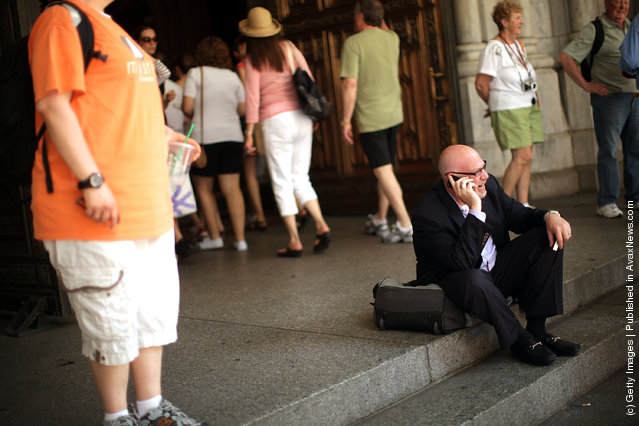
A man speaks on his mobile phone on May 31, 2011 in New York City. In a new report by 31 scientists meeting at the World Health Organization's International Agency for Research on Cancer (WHO/IARC) it was found that using a mobile phone may increase your risk for certain kinds of brain cancers. While further scientific work will be conducted, the group of scientists from 14 countries classified cell phones in the carcinogenic category 2B, which is similar to the pesticide DDT and gasoline engine exhaust. (Photo by Spencer Platt/Getty Images)
Details
01 Jun 2011 06:40:00
Afghanistan: Dogs of War Part 1

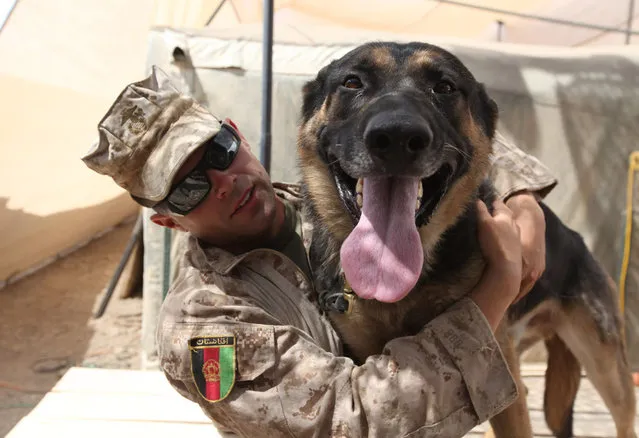
Throughout the course of the long war in Afghanistan, Coalition troops have relied on thousands of military working dogs to help keep them safe, and make their jobs easier. The dogs are trained to detect explosives, to find illegal drugs, to search for missing comrades, or target enemy combatants. Not only are they active on the front lines, but behind the lines they serve as therapy dogs, service dogs, and loyal companions. They also share the same risks as the ground troops, suffering injuries and sometimes death on the battlefields. Gathered here are images of these dogs and their handlers in Afghanistan and back home, from over the past several years, part of the ongoing series here on Afghanistan.
Details
03 Jun 2014 21:02:00
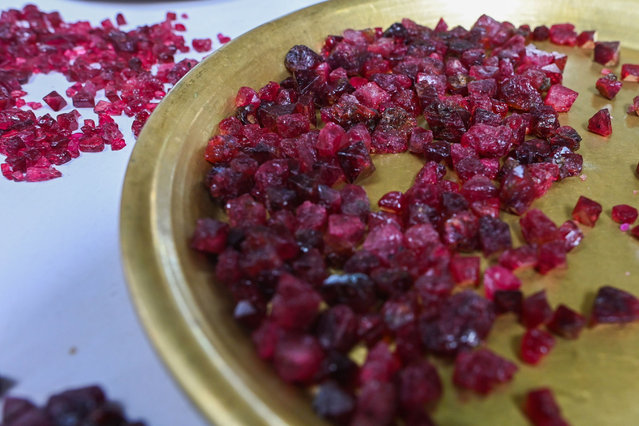
This photo taken on May 17, 2019 shows rough rubies displayed at the gems market in Mogok town, north of Mandalay. (Photo by Ye Aung Thu/AFP Photo)

This photo taken on May 17, 2019 shows rough rubies displayed at the gems market in Mogok town, north of Mandalay. Burrowing deep underground, thousands of informal miners risk their lives to find gleaming red gems as a law change spurs opportunity in Myanmar's “land of rubies”. (Photo by Ye Aung Thu/AFP Photo)
Details
29 May 2019 00:01:00
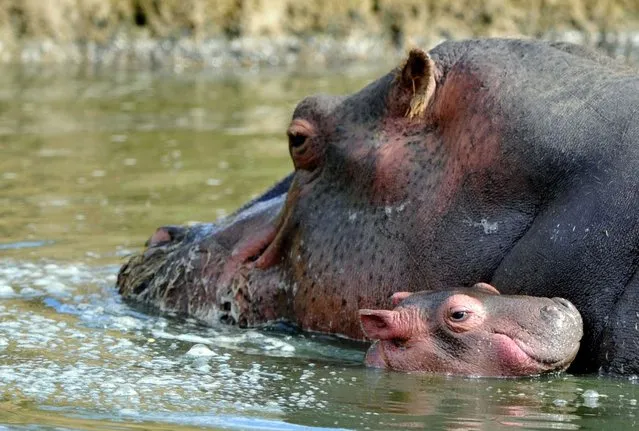
A six-day-old hippopotamus is pictured next to his mother, Kara, aged 21, on September 12, 2012 at “Planet sauvage” (“Wild planet”) Zoo in Port-Saint-Pere, western France. The birth, a rare event for this species in captivity, occured on September 7, 2012 in the Zoo. (Photo by Frank Perry/AFP Photo)

A six-day-old hippopotamus is pictured next to his mother, Kara, aged 21, on September 12, 2012 at “Planet sauvage” (“Wild planet”) Zoo in Port-Saint-Pere, western France. The birth, a rare event for this species in captivity, occured on September 7, 2012 in the Zoo. (Photo by Frank Perry/AFP Photo)
Details
13 Sep 2012 08:57:00