Loading...
Done
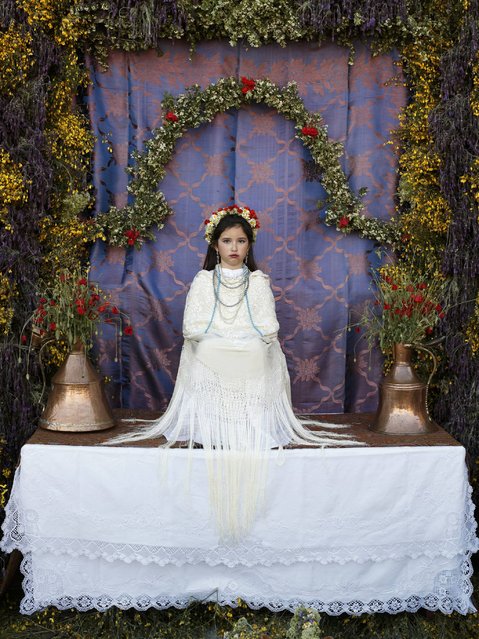
A “Maya” girl sits in an altar during the traditional celebration of “Las Mayas” on the streets in Colmenar Viejo, near Madrid, Spain, Friday, May 2, 2014. (Photo by Daniel Ochoa de Olza/AP Photo)

A “Maya” girl sits in an altar during the traditional celebration of “Las Mayas” on the streets in Colmenar Viejo, near Madrid, Spain, Friday, May 2, 2014. The festivity of the Maya comes from pagan rites and dates from the medieval age, appearing in ancient documents, it takes place every year in the beginning of May and celebrates the beginning off the spring. A girl between 7 and 11years is chosen as “Maya” and should sit still, serious, and quiet for a couple of hours in an altar on the street decorated with flowers and plants, afterwards they walk to the church with their family where they attend a ceremony. (Photo by Daniel Ochoa de Olza/AP Photo)
Details
13 May 2014 10:17:00
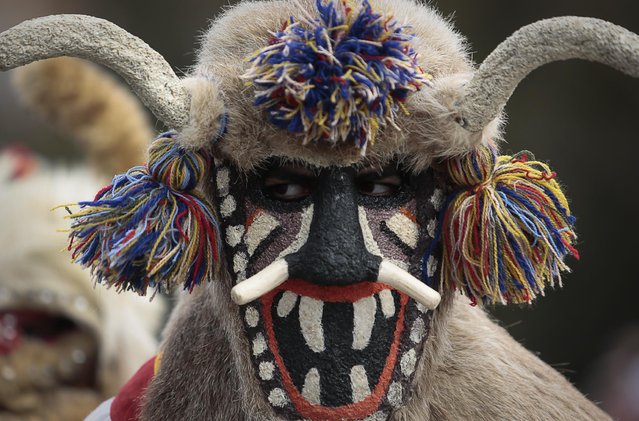
A masked Bulgarian dancer takes part in the second competition day of the 24th International Festival of Masquerade Games “Surva” in the town of Pernik, Bulgaria Saturday, January 31, 2015. (Photo by Valentina Petrova/AP Photo)

A masked Bulgarian dancer takes part in the second competition day of the 24th International Festival of Masquerade Games “Surva” in the town of Pernik, Bulgaria Saturday, January 31, 2015. Some 5,000 people are expected to take part in the three-day festival devoted to an ancient Bulgarian pagan rite. Surva is performed by costumed men, some in sheepskin, or other colorful garments, bells and masks, who walk around and dance to scare away the evil spirits, in hope to provide a good harvest, health, fertility, and happiness. (Photo by Valentina Petrova/AP Photo)
Details
01 Feb 2015 11:14:00
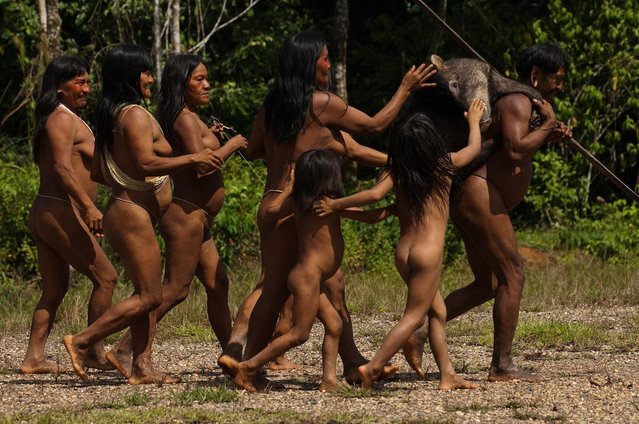
Spectacular images offering insight into the lives of the Huaorani people in the Ecuadorian Amazon have been revealed showing how they use traditional methods to hunt monkeys for food. The stunning pictures were taken by conservation photographer Pete Oxford from Torquay, Devon in the Ecuadorian Amazon. “The Huaorani Indians are a forest people highly in tune with their environment. Many are now totally acculturated since the 1950s by missionaries”, said Pete. “Today they face radical change to their culture to the proximity of oil exploration within their territory and the Yasuni National Park and Biosphere Reserve, they are vastly changed. Some still live very traditionally and for this shoot, through my Huaorani friend, a direct relative of those photographed he wanted to depict them as close to their original culture as possible. They still largely hunt with blow pipes and spears eating a lot of monkeys and peccaries”. The Huaorani are also known as the Waorani, Waodani or the Waos and are native Amerindians. Their lands are located between the Curaray and Napo rivers and speak the Huaorani language. Pete says that during his visit he was welcomed into the group and hopes that ancient cultures can be saved. Here: The tribe were seen celebrating after a hunter returned to camp with a wild pig. (Photo by Pete Oxford/Mediadrumworld.com)

Spectacular images offering insight into the lives of the Huaorani people in the Ecuadorian Amazon have been revealed showing how they use traditional methods to hunt monkeys for food. The stunning pictures were taken by conservation photographer Pete Oxford from Torquay, Devon in the Ecuadorian Amazon. Here: The tribe were seen celebrating after a hunter returned to camp with a wild pig. (Photo by Pete Oxford/Mediadrumworld.com)
Details
20 Jan 2017 07:58:00
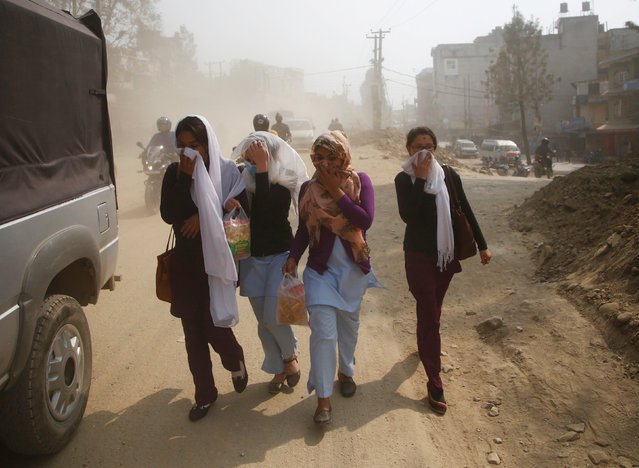
Pedestrians cover their face as they walk along the dusty road in Kathmandu, Nepal February 27, 2017. Nepal has forced 2,500 old vehicles off roads in its capital city of Kathmandu, part of a fight against alarming air pollution levels that have hit nine times World Health Organisation (WHO) limits. Air pollution has been a chronic problem in rapidly growing Kathmandu, which sits in a Himalayan valley and is home to more than 3mn people. Rising public anger with the smog is turning into a headache for a beleaguered government headed by former Maoist rebels. Dust from road works, exhaust from old, poorly maintained vehicles and smoke from coal-burning brick kilns blend in a murky haze that hangs over the ancient city, raising the risk of cancer, stroke, asthma and high blood pressure, experts say. Officials hope the ban on vehicles more than 20 years old will be a step towards a cleaner future. (Photo by Navesh Chitrakar/Reuters)

Pedestrians cover their face as they walk along the dusty road in Kathmandu, Nepal February 27, 2017. Nepal has forced 2,500 old vehicles off roads in its capital city of Kathmandu, part of a fight against alarming air pollution levels that have hit nine times World Health Organisation (WHO) limits. Air pollution has been a chronic problem in rapidly growing Kathmandu, which sits in a Himalayan valley and is home to more than 3mn people. (Photo by Navesh Chitrakar/Reuters)
Details
04 Mar 2017 00:04:00
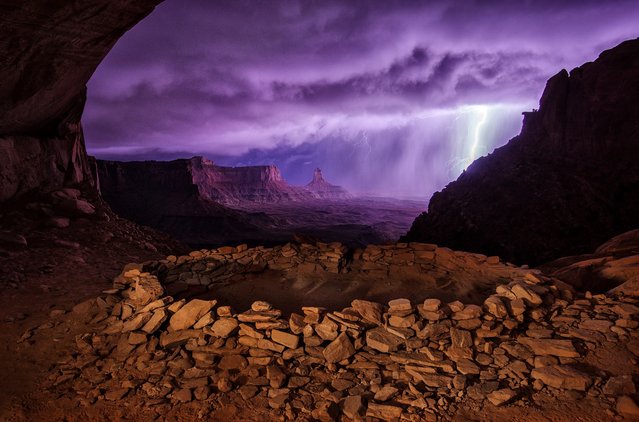
Second Place Winner: “Thunderstorm at False Kiva”. I hiked out to these ruins at night hoping to photograph them with the Milky Way, but instead a thunderstorm rolled through, creating this dramatic image. – Max Seigal. (Photo and caption by Max Seigal/National Geographic Traveler Photo Contest)

Second Place Winner: “Thunderstorm at False Kiva”. I hiked out to these ruins at night hoping to photograph them with the Milky Way, but instead a thunderstorm rolled through, creating this dramatic image. – Max Seigal. National Geographic Traveler Director of Photography Dan Westergren, one of this year's judges, shares his thoughts on the second place winner: “This photo combines two different scenes into one: the small kiva in a cliff dwelling and the grand vista of Canyonlands National Park across the valley. I really like the two different color palettes – warm inside and purple outside. This two-for-one scene was caused by the lightning storm outside the dwelling, which lit up the landscape like it was a huge electronic flash. Looking at this picture I can imagine what a wonderful sight it must have been for the ancient people who lived here. It doesn't seem too amazing now in our modern world, but might have been mind-blowing for the prehistoric residents”. Location: Utah. (Photo and caption by Max Seigal/National Geographic Traveler Photo Contest)
Details
02 Aug 2013 06:16:00
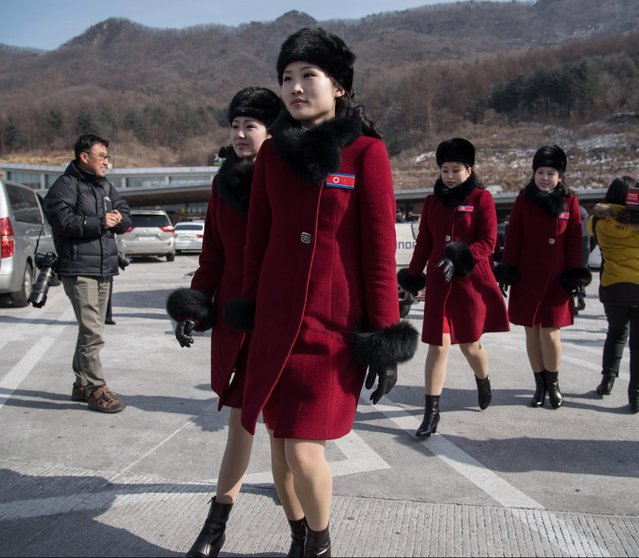
North Korean cheerleaders arrive at a rest stop, or service station, as their bus convoy carrying a 280- member delegation on its way to the 2018 Pyeongchang winter Olympic games, makes its way past Gapyeong on February 7, 2018 More than 200 young North Korean women arrived in South Korea to root for athletes from both sides of the peninsula at the Winter Olympics. (Photo by Ed Jones/AFP Photo)

North Korean cheerleaders arrive at a rest stop, or service station, as their bus convoy carrying a 280- member delegation on its way to the 2018 Pyeongchang winter Olympic games, makes its way past Gapyeong on February 7, 2018 More than 200 young North Korean women arrived in South Korea to root for athletes from both sides of the peninsula at the Winter Olympics. (Photo by Ed Jones/AFP Photo)
Details
08 Feb 2018 09:41:00
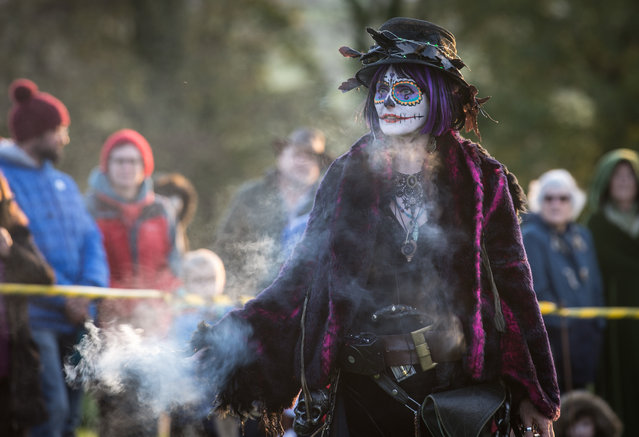
People take part in a sunset ceremony on the lower slopes of Glastonbury Tor as they celebrate Samhain at the Glastonbury Dragons Samhain Wild Hunt 2017 in Glastonbury on November 4, 2017 in Somerset, England. To celebrate Samhain, the Glastonbury Dragons, alongside Gwythyr Ap Greidal, the Summer King and the Winter King, Gwyn Ap Nudd, were paraded through the town to the lower slopes of Glastonbury Tor where the event was marked with ritual theatre, dancing and a fire to honour the dead. The Celtic festival of Samhain, which was later adopted by Christians and became Halloween, is a very important date in the Pagan calendar as it marks the division of the year between the lighter half (summer) and the darker half (winter). Pagans believe at Samhain, the division between this world and the otherworld was at its thinnest, allowing spirits to pass through. Many of the traditions of this ancient Celtic feast of the dead were later incorporated into the Christian calendar and Irish immigrants to America in the 19th century carried their customs, such as the wearing of costumes and masks to ward of harmful spirits and the harvest tradition of carving pumpkins, which have now blended into modern day Hallowee. (Photo by Matt Cardy/Getty Images)

People take part in a sunset ceremony on the lower slopes of Glastonbury Tor as they celebrate Samhain at the Glastonbury Dragons Samhain Wild Hunt 2017 in Glastonbury on November 4, 2017 in Somerset, England. To celebrate Samhain, the Glastonbury Dragons, alongside Gwythyr Ap Greidal, the Summer King and the Winter King, (Photo by Matt Cardy/Getty Images)
Details
07 Nov 2017 07:50:00
Animal rights activists covered with fake blood sit on the floor during a protest against the use of animals in research to mark World Day for Animals in Laboratories in central Madrid April 24, 2014. The sign reads, “How many rabbits do your shampoo kill?”. (Photo by Andrea Comas/Reuters)

Animal rights activists covered with fake blood sit on the floor during a protest against the use of animals in research to mark World Day for Animals in Laboratories in central Madrid April 24, 2014. The sign reads, “How many rabbits do your shampoo kill?”. (Photo by Andrea Comas/Reuters)
Details
26 Apr 2014 11:44:00