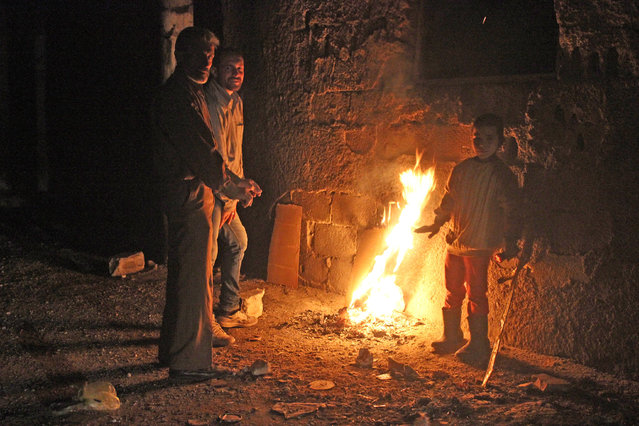
One of the poor families collecting firewood from the street and the burn to feel some warmth in Aleppo, Syria on August 19, 2016. (Photo by Basem Ayoubi/Imageslive/ZUMA Press/Splash News)
A boy fires blanks from a Kalashnikov rifle, during Maslenitsa celebrations, or Shrovetide, to say farewell to winter in Minsk, Belarus, Sunday, March 1, 2020. Maslenitsa is a traditional Russian and Belarusian holiday marking the end of winter that dates back to pagan times. (Photo by Sergei Grits/AP Photo)
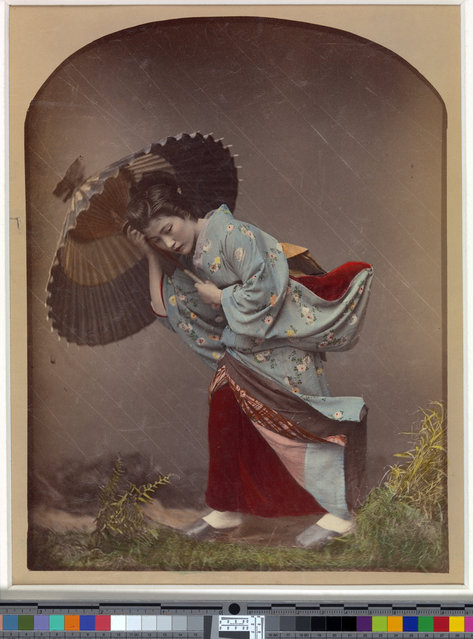
“Woman with Umbrella in Rain” by Raimund von Stillfried. Artist: Kusakabe Kimbei (Japanese, 1841–1934), 1870s. Commercial photography studios in Meiji-era Japan were renowned for the subtlety and refinement of their coloring techniques. This hand-tinted image of a young woman caught in a heavy rainstorm achieved its naturalistic effect by knitting together multiple strands of artifice: the greenery in the foreground was a studio prop; the flaps of the kimono were suspended by thin wires to create the impression of a strong wind; and long, diagonal marks were made on the negative to suggest streaks of rain. (Photo courtesy of The Metropolitan Museum of Art)
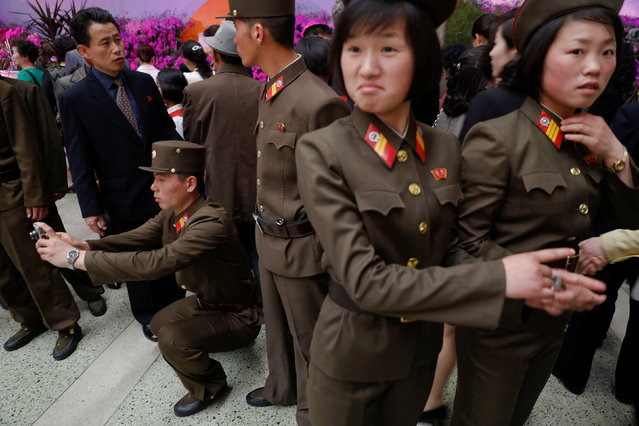
Soldiers pose for a photo during the flower exhibition marking the 105th birth anniversary of the country's founding father, Kim Il Sung in Pyongyang, North Korea April 16, 2017. (Photo by Damir Sagolj/Reuters)
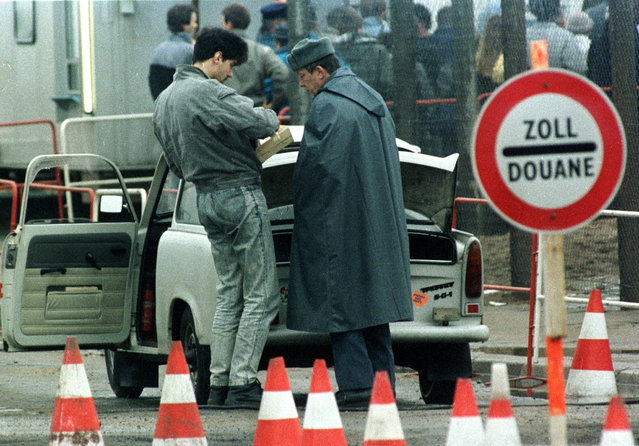
An East German civilian (L) shows an East German customs officer the contents of his Trabant (auto) at checkpoint Potsdamer Platz in East Berlin in this November 24, 1989 file picture, as East Germany enforcing stringent customs controls to avoid smuggling. (Photo by Reuters)
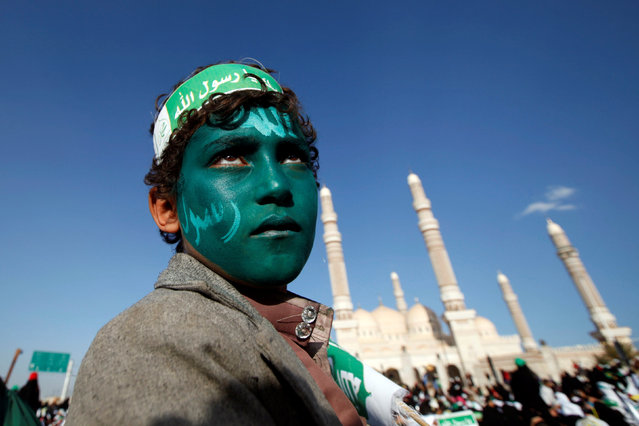
A supporter of the Houthi movement attends a rally marking the birth anniversary of Prophet Mohammed, in Sanaa, Yemen December 11, 2016. (Photo by Khaled Abdullah/Reuters)
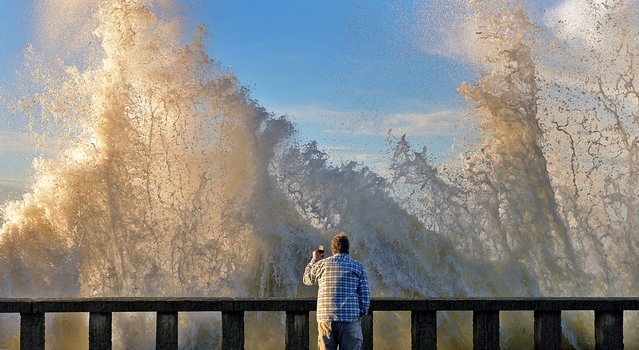
A man watches as high surf crashes into the wall and spills onto Channel Drive in Montecito, Calif., January 7, 2016. Bacteria levels can increase significantly during and after rainstorms as contaminants in the runoff enter the ocean via storm drains, creeks and rivers. (Photo by Mike Eliason/AP Photo)
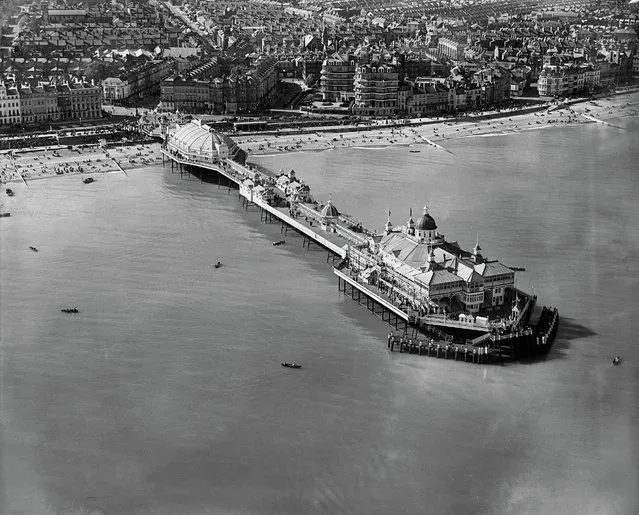
While the lido was described as bringing “modernism to the masses” on the British coast it was just the latest example of a trend that had been developing since Victorian times – transforming seaside towns into resorts for leisure and entertainment. In the latter half of the nineteenth century, the fashion was for local authorities to build great piers stretching from the promenade out into the sea. The Eastbourne Pier, pictured here in May 1931, was erected between 1866 and 1870 to an ingenious design by Eugenius Birch, which saw the structure sitting on special cups allowing the supporting struts to “move” in bad weather. Arranged on the pier's 1,000-foot length were kiosks, a theatre, a ballroom and a camera obscura. 1931. (Photo by Aerofilms Collection via “A History of Britain From Above”)