A woman wearing a sweet girl cosplay mask strikes a pose during a flower watching or Hanami event, in the Japanese Garden of Bucharest, Romania, April 13, 2024. (Photo by Andreea Alexandru/AP Photo)
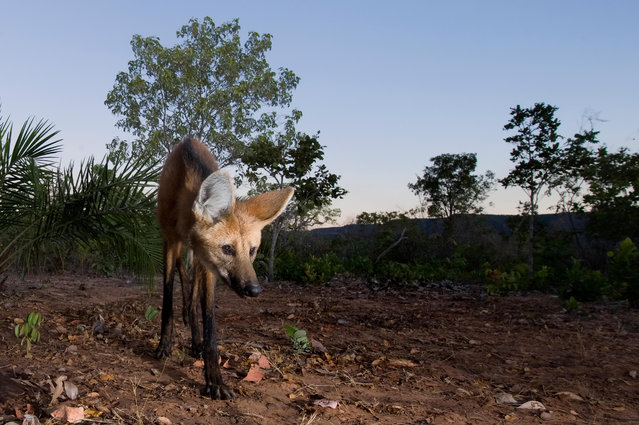
Global wildlife populations will decline by 67% by 2020 unless urgent action is taken to reduce human impact on species and ecosystems, warns the biennial Living Planet Index report from WWF (World Wide Fund for Nature) and ZSL (Zoological Society of London). From elephants to eels, here are some of the wildlife populations most affected by human activity. Here: The maned wolf is among the large mammals in the Brazilian Cerrado that are threatened by the increasing conversion of grasslands into farmland for grazing and growing crops. (Photo by Ben Cranke/Nature Picture Library/Alamy Stock Photo)
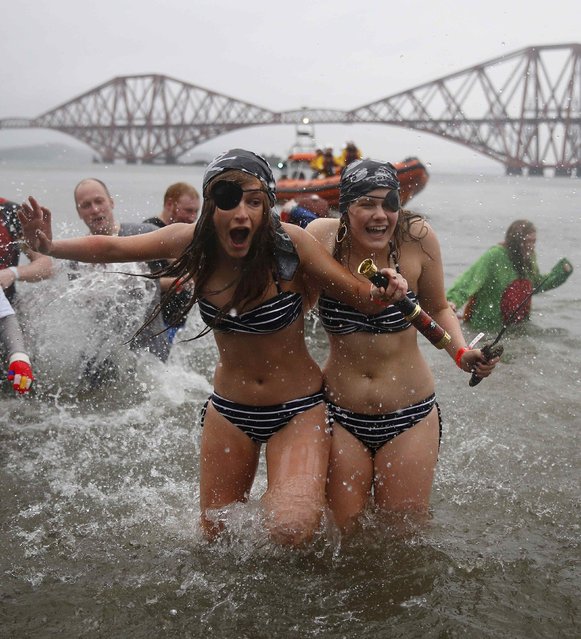
Swimmers in fancy dress splash as they participate in the New Year's Day Loony Dook swim at South Queensferry, Scotland January 1, 2015. (Photo by Russell Cheyne/Reuters)
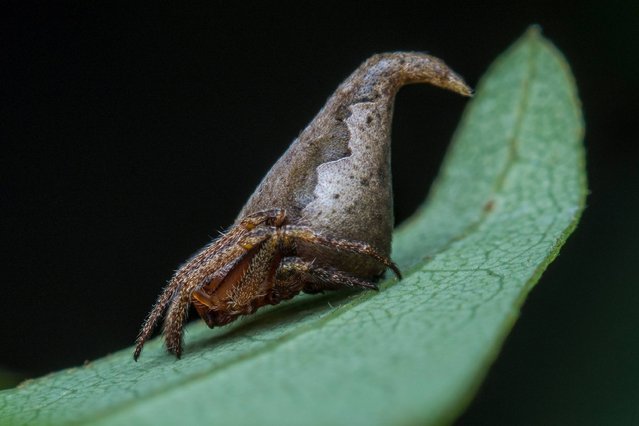
In this handout photograph received from Sumukha J.N on December 15, 2016, the newly-discovered spider Eriovixia Gryffindori sits on a leaf in the Kans in India's Western Ghats. (Photo by Sumukha J.N./AFP Photo)
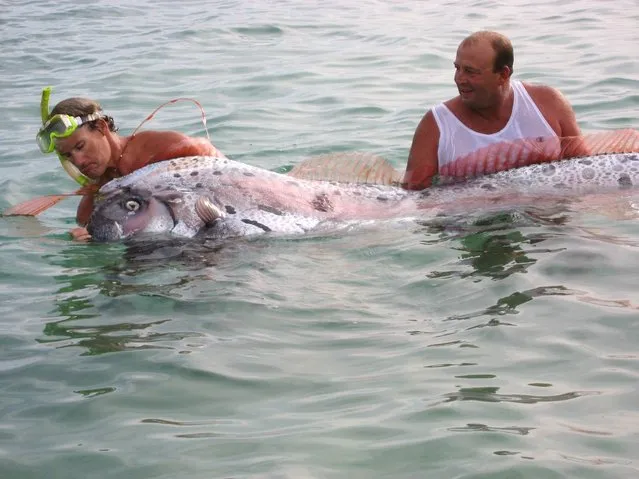
“The king of herrings or giant oarfish, an oarfish of the family Regalecidae, is the world's longest bony fish. Its total length has been documented to reach 17 m (56 ft), and it can weigh up to 300 kg (661 lb)”. – Wikipedia
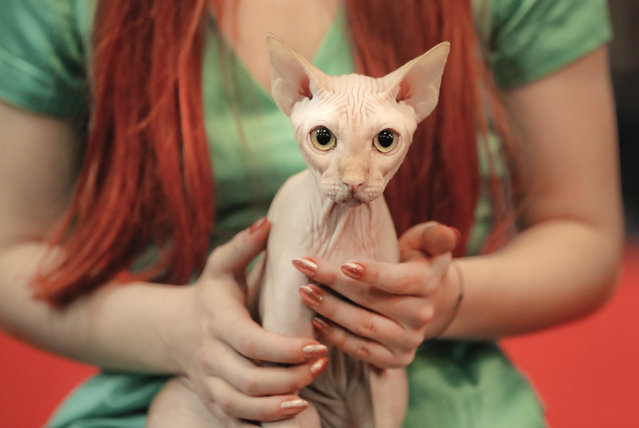
A Sphynx cat stares sitting on its owner's lap during an international feline beauty competition in Bucharest, Romania, Saturday, April 14, 2018. More than 250 cats take part in the two-day competition in the Romanian capital. (Photo by Vadim Ghirda/AP Photo)