Loading...
Done
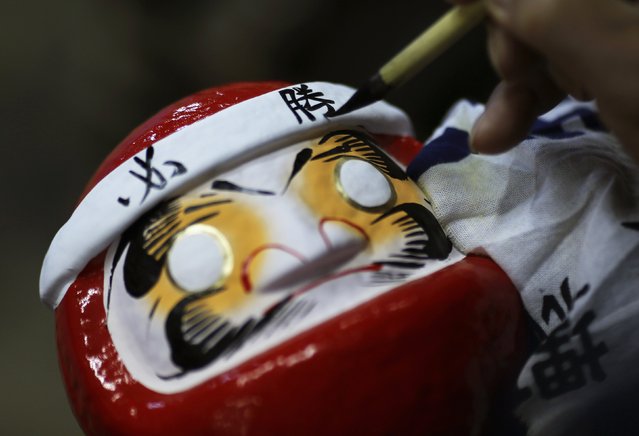
Japanese craftsman Sumikazu Nakata writes the Chinese character of “victory”, which is a part of the phrase “Certain victory”, as he adds the final touches on a Daruma doll, which is believed to bring good luck, at his studio “Daimonya” in Takasaki, northwest of Tokyo November 23, 2014. (Photo by Yuya Shino/Reuters)

Japanese craftsman Sumikazu Nakata writes the Chinese character of “victory”, which is a part of the phrase “Certain victory”, as he adds the final touches on a Daruma doll, which is believed to bring good luck, at his studio “Daimonya” in Takasaki, northwest of Tokyo November 23, 2014. Daruma dolls, representing the Indian priest Bodhidharma, the founder of Zen Buddhism in China, is used to bring luck. It is also a favorite item of election candidates where they traditionally paint only one eye on the doll when they start their campaign and paint the other eye if they win in the election. (Photo by Yuya Shino/Reuters)
Details
24 Nov 2014 13:39:00
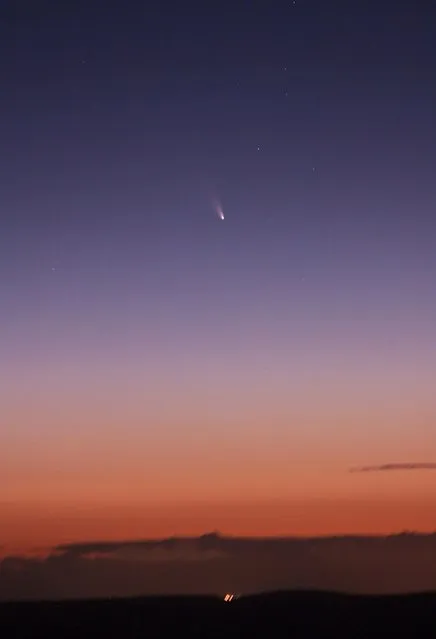
This image provided by NASA shoaws the comet PANSTARRS as seen from Mount Dale, Western Australia on March 5, 2013. According to NASA on March 10, it will make its closest approach to the sun about 28 million miles (45 million kilometers) away. As it continues its nightly trek across the sky, the comet may get lost in the sun's glare but should return and be visible to the naked eye by March 12. (Photo by AP Photo/NASA)

It’s time to start watching for Comet PANSTARRS, one of two comets to get excited about in 2013. Photo: This image provided by NASA shoaws the comet PANSTARRS as seen from Mount Dale, Western Australia on March 5, 2013. According to NASA on March 10, it will make its closest approach to the sun about 28 million miles (45 million kilometers) away. As it continues its nightly trek across the sky, the comet may get lost in the sun's glare but should return and be visible to the naked eye by March 12. (Photo by AP Photo/NASA)
Details
13 Mar 2013 08:03:00
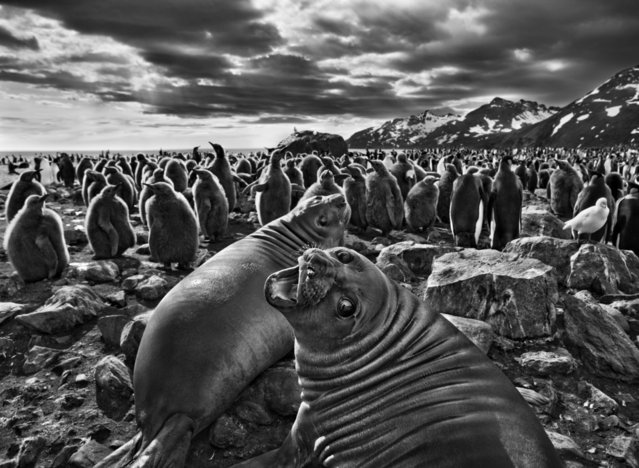
On South Georgia, a barren island in the far South Atlantic, a pair of southern elephant seal calves beckon before a colony of king penguins. “The male seals can grow to almost five tons,” says Salgado, “but these are just babies. This one looked at me with beautiful eyes”. (Photo by Sebastião Salgado/Amazonas/Contact Press Images)

Sebastião Salgado is a Brazilian documentary photographer living in Paris. He has produced several books, and his work has been exhibited extensively around the world. His latest work, «Genesis», premieres at The Natural History Museum in London on April 11, on view through September 8, 2013. Photo: On South Georgia, a barren island in the far South Atlantic, a pair of southern elephant seal calves beckon before a colony of king penguins. “The male seals can grow to almost five tons,” says Salgado, “but these are just babies. This one looked at me with beautiful eyes”. (Photo by Sebastião Salgado/Amazonas/Contact Press Images)
Details
30 Apr 2013 12:17:00
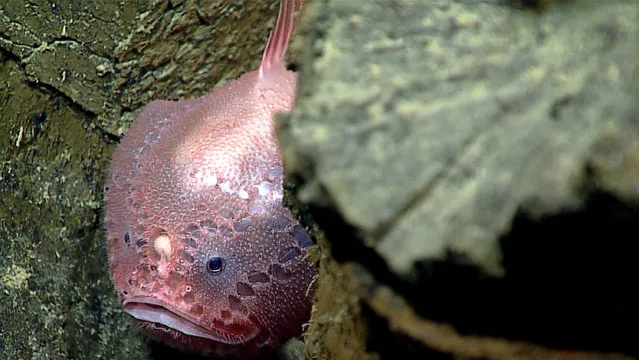
This April 30, 2016 image made available by NOAA shows a deep sea anglerfish living between pillow basalt rock formations, during a deepwater exploration of the Marianas Trench Marine National Monument area in the Pacific Ocean near Guam and Saipan. The ambush predator waits for prey to be attracted by its lure, located between its eyes, and gulps it with its large mouth. (Photo by NOAA Office of Ocean Exploration and Research via AP Photo)

This April 30, 2016 image made available by NOAA shows a deep sea anglerfish living between pillow basalt rock formations, during a deepwater exploration of the Marianas Trench Marine National Monument area in the Pacific Ocean near Guam and Saipan. The ambush predator waits for prey to be attracted by its lure, located between its eyes, and gulps it with its large mouth. (Photo by NOAA Office of Ocean Exploration and Research via AP Photo)
Details
21 Oct 2016 12:30:00
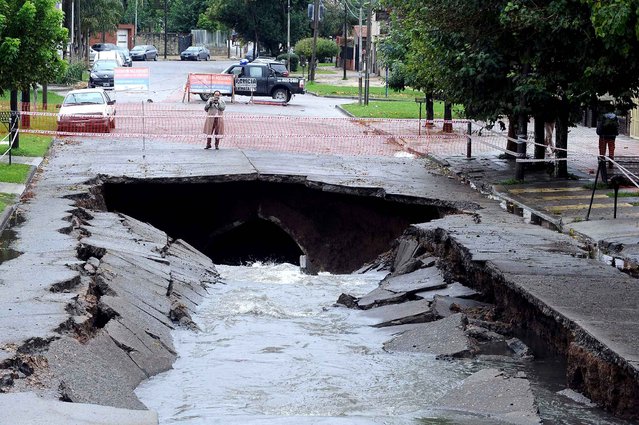
Handout picture released by Telam showing the tarmac of the Pedro Palacios Avenue in Ramos Mejia, province of Buenos Aires, Argentina, under which the channeled waters of the Maldonado stream flow, after it collapsed on April 8, 2014 leaving a 40-metre-long, 1.4-metre-deep hole. About 3000 people had to be evacuated in the Argentine provinces of Neuquen (soutwest), Catamarca (northwest), Santiago del estero (center) and Cordoba (center)due to the foods caused by heavy rain, official sources said. (Photo by Daniel Dabove/AFP Photo)

Handout picture released by Telam showing the tarmac of the Pedro Palacios Avenue in Ramos Mejia, province of Buenos Aires, Argentina, under which the channeled waters of the Maldonado stream flow, after it collapsed on April 8, 2014 leaving a 40-metre-long, 1.4-metre-deep hole. About 3000 people had to be evacuated in the Argentine provinces of Neuquen (soutwest), Catamarca (northwest), Santiago del estero (center) and Cordoba (center)due to the foods caused by heavy rain, official sources said. (Photo by Daniel Dabove/AFP Photo)
Details
12 Apr 2014 12:40:00
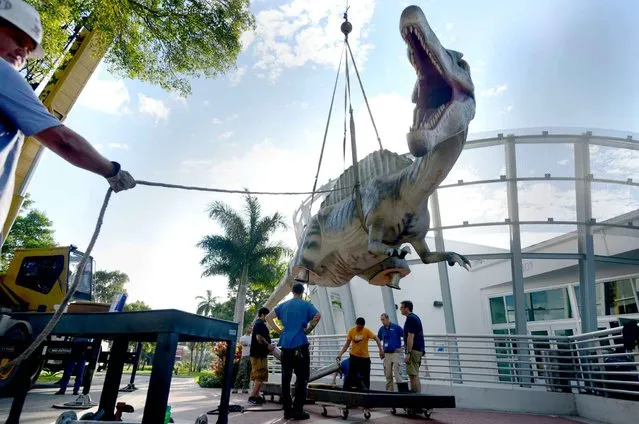
Workers from the South Florida Science Center and Aquarium and Imagine Exhibitions put together an animatronic spinosaurus outside the science center in West Palm Beach, Fla., Tuesday, October 27, 2015. The giant spinosaurus is part of the Dinosaurs Around the World exhibit, set to open on Nov. 1. (Photo by Maria Lorenzino/South Florida Sun-Sentinel via AP Photo)

Workers from the South Florida Science Center and Aquarium and Imagine Exhibitions put together an animatronic spinosaurus outside the science center in West Palm Beach, Fla., Tuesday, October 27, 2015. The giant spinosaurus is part of the Dinosaurs Around the World exhibit, set to open on November 1. (Photo by Maria Lorenzino/South Florida Sun-Sentinel via AP Photo)
Details
29 Oct 2015 08:07:00
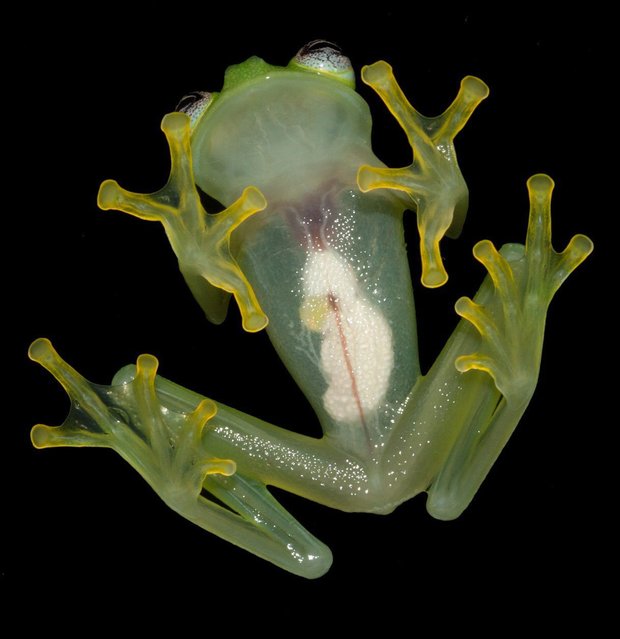
A handout photograph provided by Brian Kubicki of Costa Rican Amphibian Research Center on 26 April 2016 shows a “Crystal frog”, Hyalinobatrachium dianae (H. diane). This frog was discovered by US biologist Brian Kubicki and Costa Ricans Stanley Salazar and Robert Puschendorf in a rainy forest of Costa Rican caribbean after 40 years without notice of any new example of this kind. (Photo by Brian Kubicki/EPA/Costa Rican Amphibian Research Center)

A handout photograph provided by Brian Kubicki of Costa Rican Amphibian Research Center on 26 April 2016 shows a “Crystal frog”, Hyalinobatrachium dianae (H. diane). This frog was discovered by US biologist Brian Kubicki and Costa Ricans Stanley Salazar and Robert Puschendorf in a rainy forest of Costa Rican caribbean after 40 years without notice of any new example of this kind. (Photo by Brian Kubicki/EPA/Costa Rican Amphibian Research Center)
Details
02 May 2015 15:23:00
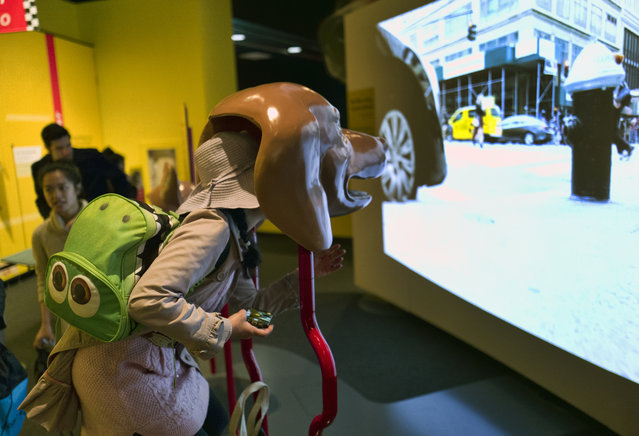
In this Tuesday, March 12, 2019 photo, a visitor takes part in an immersive experience showing visitors how dogs see from inside the head of a dog at the California Science Center in Los Angeles. A new exhibit at a Los Angeles museum examines the relationship between dogs and humans and explores why the two species seem to think so much alike and get along so well. “Dogs! A Science Tail” opens Saturday, March 16, 2019, at the California Science Center. (Photo by Richard Vogel/AP Photo)

In this Tuesday, March 12, 2019 photo, a visitor takes part in an immersive experience showing visitors how dogs see from inside the head of a dog at the California Science Center in Los Angeles. A new exhibit at a Los Angeles museum examines the relationship between dogs and humans and explores why the two species seem to think so much alike and get along so well. “Dogs! A Science Tail” opens Saturday, March 16, 2019, at the California Science Center. (Photo by Richard Vogel/AP Photo)
Details
15 Mar 2019 08:49:00