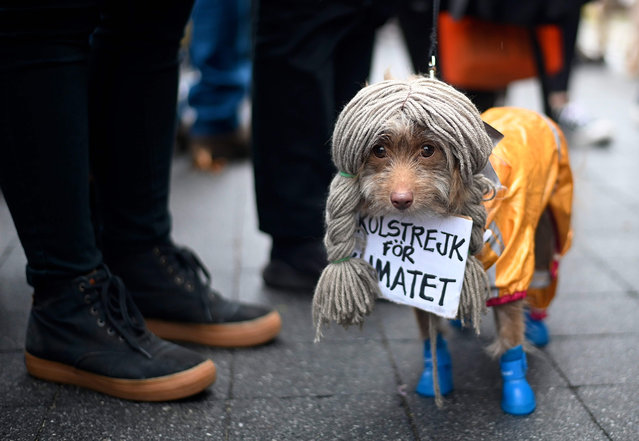
A dog dressed in a costume as Greta Thunberg attends the Tompkins Square Halloween Dog Parade in Manhattan in New York City on October 20, 2019. (Photo by Johannes Eisele/AFP Photo)
Two visitors take pictures of autumn leaves at Rikugien Garden Tuesday, December 10, 2019, in the Bunkyo district of Tokyo. (Photo by Jae C. Hong/AP Photo)
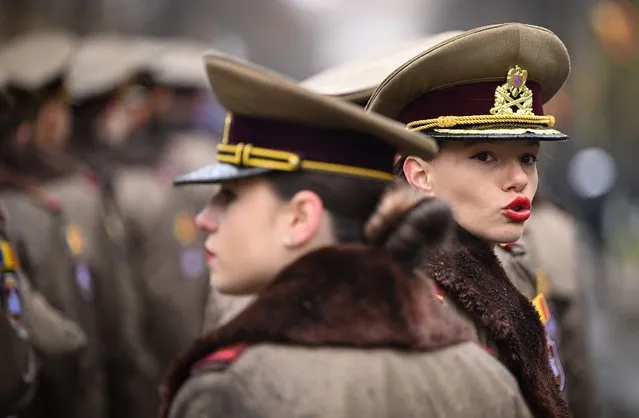
Romanian female soldiers stand prior to the military parade on Romania's National Day in Bucharest, on December 1, 2022. (Photo by Daniel Mihailescu/AFP Photo)
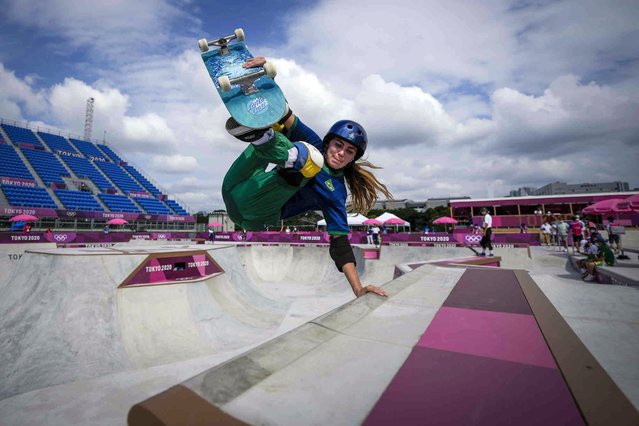
Yndiara Asp of Brazil takes part in a women's Park Skateboarding training session at the 2020 Summer Olympics, Saturday, July 31, 2021, in Tokyo, Japan. (Photo by Ben Curtis/AP Photo)
A girl looks on at a diver dressed as Santa Claus performing during a promotional event for Christmas in Seoul, South Korea on December 3, 2021. (Photo by Kim Hong-Ji/Reuters)
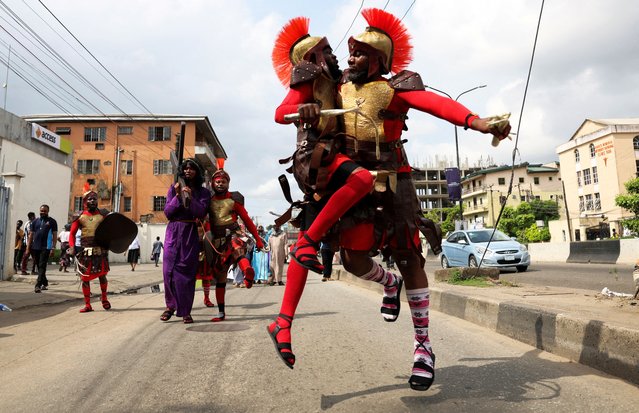
Members of St. Dominic Catholic Church take part in a re-enactment of the crucifixion of Jesus Christ, on Good Friday in Yaba, Lagos, Nigeria, on April 18, 2025. (Photo by Sodiq Adelakun/Reuters)
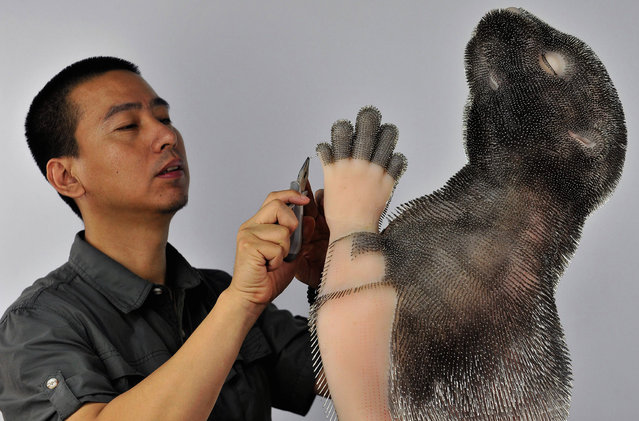
Professor Xie Yong works on an art installation of a beaver, which is made out of plastic and around 300,000 needles, in Shenyang, Liaoning province, July 23, 2013. The needles, according to Xie, represent the pain felt by animals when their fur is taken off to produce clothing. (Photo by Reuters/Stringer)
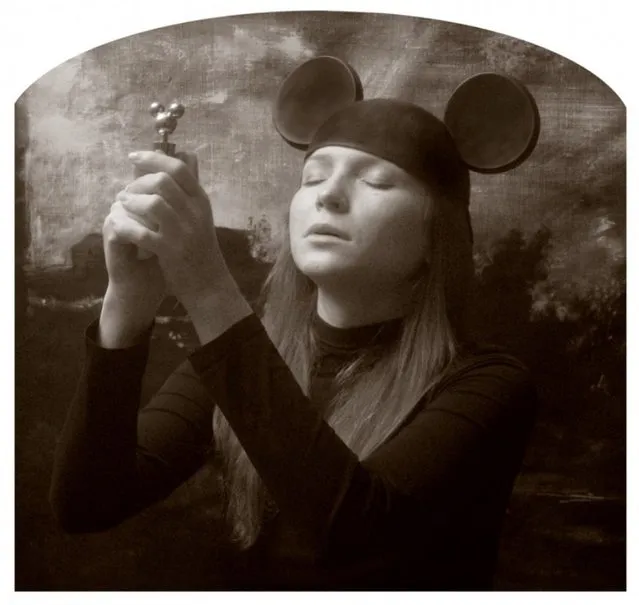
To produce the images that convey his fatalistic and ironic approach to life, tinged with hope, he needed the environment and knowledge of Mother Russia, oiled with a bit of bribery to certain circus trainers. Enter the Great Russian Bear, the personification of Russia for the last several centuries, onto center stage and into his studio. The bear is recognized as both brutish and cute – Misha was the mascot for the 1980 Olympic Games – and has remained a symbol of Russia since Tsarist times. In 2009 it is the symbol of the United Russia Party.