Loading...
Done
Chasseuse d'Oiseaux, 2011

Chasseuse d'Oiseaux, 2011

Artist Richard Stipl was born in Czechoslovakia in 1968 and now lives and works both in Canada and the Czech Republic.
Working initially as a painter, Richard Stipl has recently turned to making sculpture. Considered an exceptional talent in technical terms, Richard stands apart from his contemporaries through his uncanny ability to breathe a vital and invigorating “life force” into his art works, regardless of media.
Stipl is included in many important public and private collections worldwide.


Details
08 Jun 2012 11:38:00
Giant pandas enjoy food around a table at Chongqing Zoo, Chongqing, China on May 21, 2023. (Photo by Rex Features/Shutterstock)

Giant pandas enjoy food around a table at Chongqing Zoo, Chongqing, China on May 21, 2023. (Photo by Rex Features/Shutterstock)
Details
01 Jun 2023 03:08:00
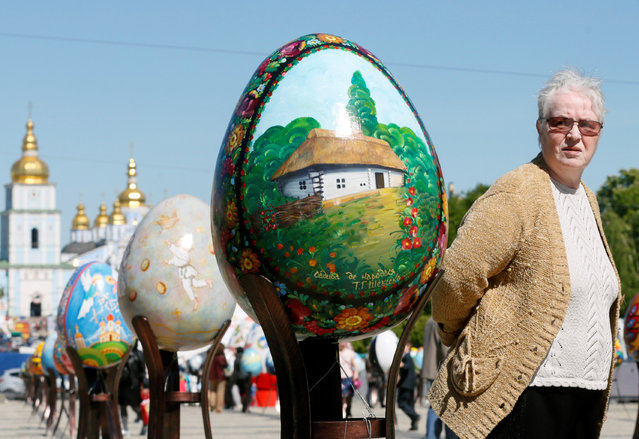
A woman looks at traditional Ukrainian Easter eggs “Pysanka”, installed as part of the upcoming celebrations of Easter, in central Kiev, Ukraine, April 29, 2016. A pysanka is a Ukrainian Easter egg, decorated with traditional Ukrainian folk designs using a wax-resist (batik) method. The word pysanka comes from the verb pysaty, “to write”, as the designs are not painted on, but written with beeswax. Many other eastern European ethnic groups decorate eggs using wax resist for Easter. These include the Belarusians, Bulgarians, Croats, Czechs, Hungarians, Lithuanians, Poles, Romanians, Serbs, Slovaks, Slovenes and Sorbs. (Photo by Valentyn Ogirenko/Reuters)

A woman looks at traditional Ukrainian Easter eggs “Pysanka”, installed as part of the upcoming celebrations of Easter, in central Kiev, Ukraine, April 29, 2016. A pysanka is a Ukrainian Easter egg, decorated with traditional Ukrainian folk designs using a wax-resist (batik) method. The word pysanka comes from the verb pysaty, “to write”, as the designs are not painted on, but written with beeswax. Many other eastern European ethnic groups decorate eggs using wax resist for Easter. These include the Belarusians, Bulgarians, Croats, Czechs, Hungarians, Lithuanians, Poles, Romanians, Serbs, Slovaks, Slovenes and Sorbs. (Photo by Valentyn Ogirenko/Reuters)
Details
30 Apr 2016 09:00:00
Skoda Fabia vRS Mean Green

Skoda is promoting the Fabia vRS with “Mean Green”, a television commercial filmed at the factory in the Czech Republic, showing a meaner side to the 180hp 1.4L TSI turbo and supercharged Fabia hatchback. The commercial begins with the brutal destruction of the Fabia cake commercial from 2007, with the Sound of Music “Favourite Things” track providing an ongoing sense of irony. The online campaign in the UK invites visitors to decide between lovely and mean, choosing between gingerbread and venom.
Details
15 Feb 2014 13:36:00
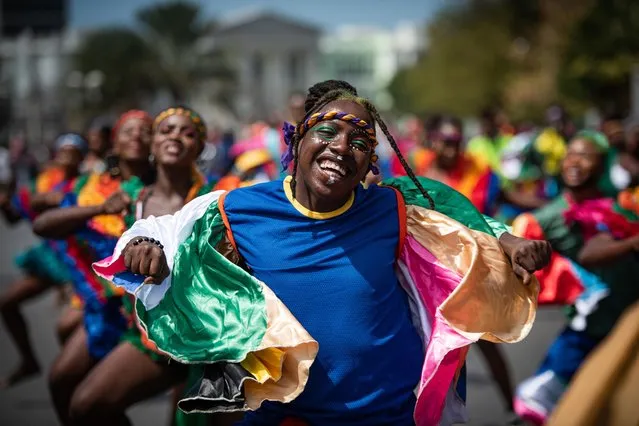
People participate during the Carnival parades in Port-au-Prince, Haiti, 21 February 2023. Haiti tries to forget the crisis and violence for a few days and has taken to the streets to dance to the rhythm of carnival, a party that comes to an end on 21 February in Port-au-Prince.  (Photo by Johnson Sabin/EPA)

People participate during the Carnival parades in Port-au-Prince, Haiti, 21 February 2023. Haiti tries to forget the crisis and violence for a few days and has taken to the streets to dance to the rhythm of carnival, a party that comes to an end on 21 February in Port-au-Prince. (Photo by Johnson Sabin/EPA)
Details
26 Apr 2023 02:53:00
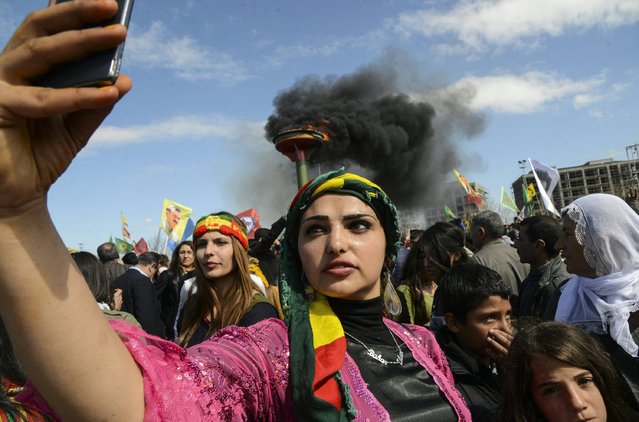
A woman takes a selfie picture as Turkish Kurds gather as part of Newroz celebrations in Diyarbakir, on March 21, 2016. Nowruz, the Farsi-language word for “New Year”, is an ancient Persian festival, celebrated on the first day of spring, on March 21, in Central Asian republics, Iraq, Turkey, Afghanistan and Iran. (Photo by Ilyas Akengin/AFP Photo)

A woman takes a selfie picture as Turkish Kurds gather as part of Newroz celebrations in Diyarbakir, on March 21, 2016. Nowruz, the Farsi-language word for “New Year”, is an ancient Persian festival, celebrated on the first day of spring, on March 21, in Central Asian republics, Iraq, Turkey, Afghanistan and Iran. (Photo by Ilyas Akengin/AFP Photo)
Details
10 Apr 2016 11:58:00
In this Friday, November 6, 2015 photo dancers Alba Ibanez, right, and Luis Chavez, both from Spain, dress up backstage before taking part in the World Salsa Master dance competition in Madrid. (Photo by Francisco Seco/AP Photo)

In this Friday, November 6, 2015 photo dancers Alba Ibanez, right, and Luis Chavez, both from Spain, dress up backstage before taking part in the World Salsa Master dance competition in Madrid. Ten dance couples from different countries around the world performed in front of an audience of around 2,000 people. Participants – who wore bright, colorful outfits – came from the United States, Italy, Spain, Portugal, Mexico, Chile, Uruguay, Czech Republic and Venezuela. (Photo by Francisco Seco/AP Photo)
Details
14 Nov 2015 08:01:00
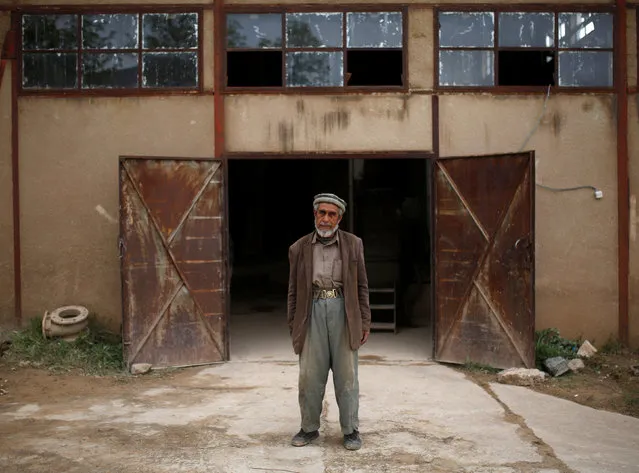
A worker at the Jabal Saraj cement factory poses for a photograph in Jabal Saraj, north of Kabul, Afghanistan April 19, 2016. (Photo by Ahmad Masood/Reuters)

A worker at the Jabal Saraj cement factory poses for a photograph in Jabal Saraj, north of Kabul, Afghanistan April 19, 2016. In an area desperately short of industry and jobs, local workers hope that the relaunch of the plant in Jabal Saraj, built by Czech engineers in 1957 and closed down by the Taliban in 1995, can show that Afghanistan's shattered industry can climb back to its feet after decades of war and destruction. But the outdated state-owned plant some 75 kilometres outside Kabul also shows how far it has to go before that promise can be achieved and there are serious questions over whether it has a viable future unless a new, modern facility is built to replace it. (Photo by Ahmad Masood/Reuters)
Details
31 May 2016 11:29:00