Loading...
Done
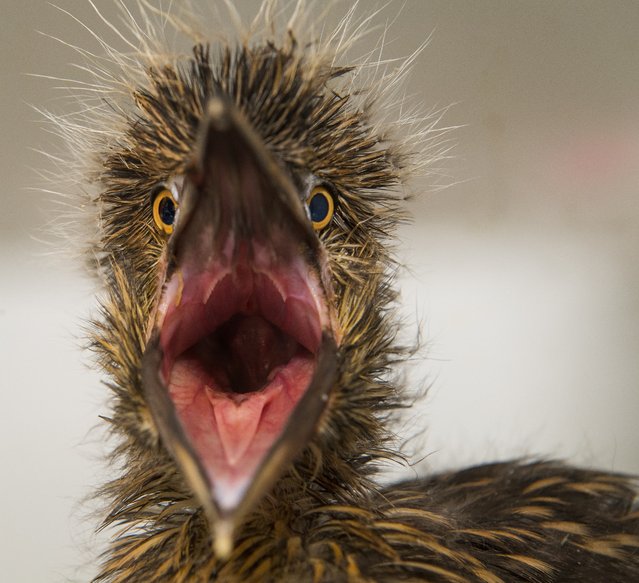
A baby Black-crowned Night Heron squawks in its incubator while being cared for at City Wildlife rescue and rehabilitation center in Washington, DC on May 31, 2017. The heron is one of several that have been brought to CW by the staff at The National Zoo over the past few years. The heron is a native bird and has made an established rookery inside the zoo grounds over a hundred years ago.  Every year at this time, some of the chicks get pushed or fall out of the nest and require human care.  Because the birds are native and not part of the Smithsonian collection, they partnered with CW to rehabilitate the herons for re-release back to the flock inside Zoo. They're reintroduced back to their flock so that they can migrate together in the Fall. The Black-crowned heron usually migrates from the DC area down to southeast North Carolina, some going as far as Jacksonville, FL in winter. The Black-crowned heron is the species of greatest conservation need in the District of Columbia because their numbers are in such rapid decline due to habitat loss. (Photo Linda Davidson/The Washington Post)

A baby Black-crowned Night Heron squawks in its incubator while being cared for at City Wildlife rescue and rehabilitation center in Washington, DC on May 31, 2017. The heron is one of several that have been brought to CW by the staff at The National Zoo over the past few years. (Photo Linda Davidson/The Washington Post)
Details
04 Jun 2017 08:04:00
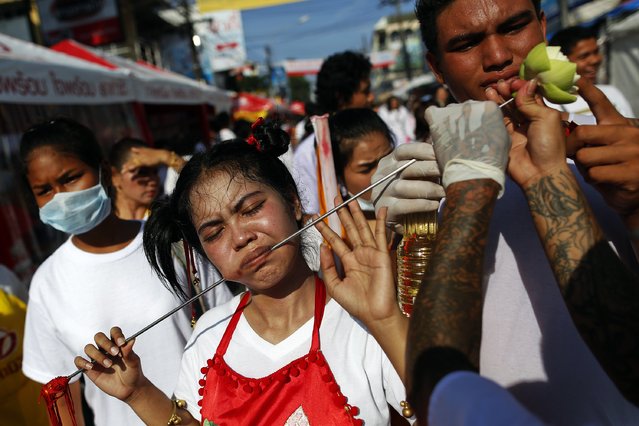
A devotee of the Ban Tha Rua Chinese shrine is helped with a spike pierced through her cheeks during a street procession celebrating the annual vegetarian festival in Phuket September 28, 2014. (Photo by Damir Sagolj/Reuters)

A devotee of the Ban Tha Rua Chinese shrine is helped with a spike pierced through her cheeks during a street procession celebrating the annual vegetarian festival in Phuket September 28, 2014. The festival, featuring face-piercing, spirit mediums and strict vegetarianism celebrates the local Chinese community's belief that abstinence from meat and various stimulants during the ninth lunar month of the Chinese calendar will help them obtain good health and peace of mind. (Photo by Damir Sagolj/Reuters)
Details
28 Sep 2014 11:34:00
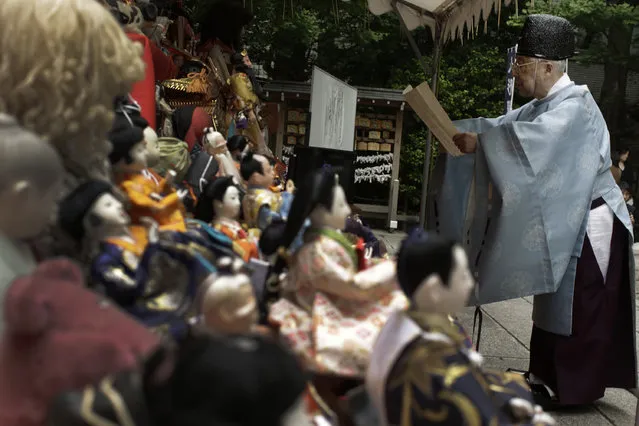
A Shinto priest prays to the dedicated dolls during the Festival of Repayment of Kindness at Dairoku-tensakaki Shrine in Tokyo, Saturday, May 16, 2015. (Photo by Eugene Hoshiko/AP Photo)

A Shinto priest prays to the dedicated dolls during the Festival of Repayment of Kindness at Dairoku-tensakaki Shrine in Tokyo, Saturday, May 16, 2015. Traditionally, it is believed that the dolls can give good health and happiness to children by absorbing sickness and ill fate. The dolls are then sacrificed during the festival after they have protected their young owners. (Photo by Eugene Hoshiko/AP Photo)
Details
18 May 2015 12:33:00
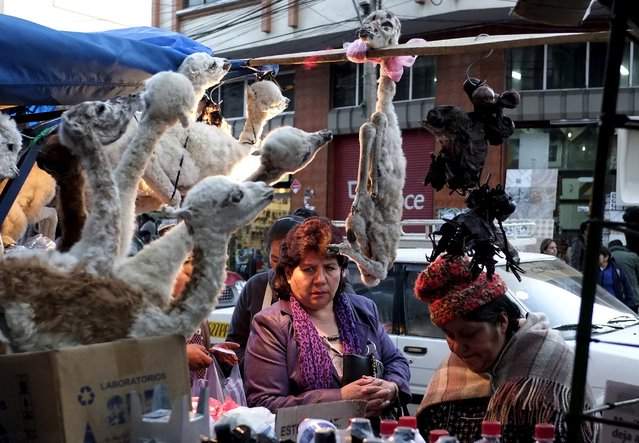
A woman (C) shops for an offering at the witch doctor's street in La Paz, July 31, 2015. (Photo by David Mercado/Reuters)

A woman (C) shops for an offering at the witch doctor's street in La Paz, July 31, 2015. According to Andean culture, the all the month of August is a time to give offerings to “Pachamama” to give thanks for their farms and health. The Aymaras use coca leaves, candies, animal fat, llama fetuses, some dried fruits, powdered minerals and alcohol during these rituals. (Photo by David Mercado/Reuters)
Details
02 Aug 2015 12:27:00
A devotee of the Chinese Samkong Shrine walks with flowers pierced through his cheeks during a procession celebrating the annual vegetarian festival in Phuket, Thailand, October 16, 2015. (Photo by Jorge Silva/Reuters)

A devotee of the Chinese Samkong Shrine walks with flowers pierced through his cheeks during a procession celebrating the annual vegetarian festival in Phuket, Thailand, October 16, 2015. The festival, featuring face-piercing, spirit mediums and strict vegetarianism celebrates the local Chinese community's belief that abstinence from meat and various stimulants during the ninth lunar month of the Chinese calendar will help them obtain good health and peace of mind. (Photo by Jorge Silva/Reuters)
Details
19 Oct 2015 08:06:00
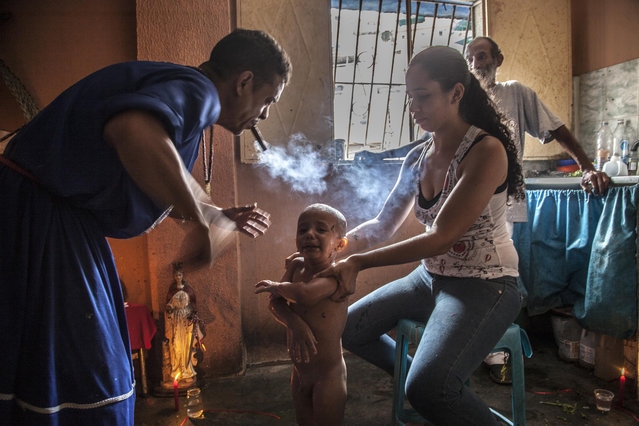
The known as “callejón de los brujos” has become an alternative for the sick in Venezuela. (Photo by Alvaro Fuente/NurPhoto via Getty Images)

The known as “callejón de los brujos” has become an alternative for the sick in Venezuela. The health crisis that affects hundreds of Venezuelans who face every day the serious shortage of medicines, lack of medical supplies and the high costs of medicines that are unattainable for the population. However, many Venezuelans have resorted to alternative methods to science in recent years. (Photo by Alvaro Fuente/NurPhoto via Getty Images)
Details
25 Dec 2017 05:57:00
Inna Vladimirskaya, 32, from Kiev, Ukraine running in the snow in Kiev, Ukraine in minus temperatures as she believes it will improve her health. (Photo by David Tesinsky/Caters News Agency)

This brave swimmer certainly has a brrracing workout each weekend she skinny dips in one of the coldest rivers in Europe which regularly plummets to temperaturess of –9C. Inna Vladimirskaya, 32, strips off on the banks of the Dnieper river, in Kiev, Ukraine, every Sunday morning, and takes a swim after jogging along the snowy banks of the river in the nip. (Photo by David Tesinsky/Caters News Agency)
Details
17 Mar 2018 00:05:00
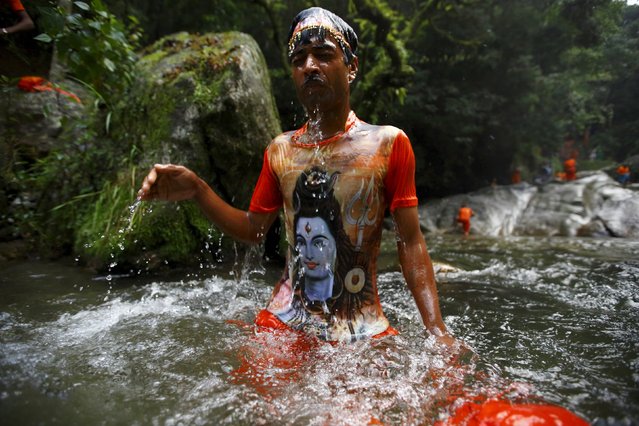
A Hindu devotee wearing a t-shirt printed with a portrait of Lord Shiva takes a holy dip while participating in the “Bol Bom” pilgrimage in Kathmandu August 10, 2015. (Photo by Navesh Chitrakar/Reuters)

A Hindu devotee wearing a t-shirt printed with a portrait of Lord Shiva takes a holy dip while participating in the “Bol Bom” pilgrimage in Kathmandu August 10, 2015. The faithful, chanting the name of Lord Shiva, run about 15 km (9 miles) barefooted toward Pashupatinath temple seeking good health, wealth and happiness. (Photo by Navesh Chitrakar/Reuters)
Details
11 Aug 2015 13:34:00