Loading...
Done
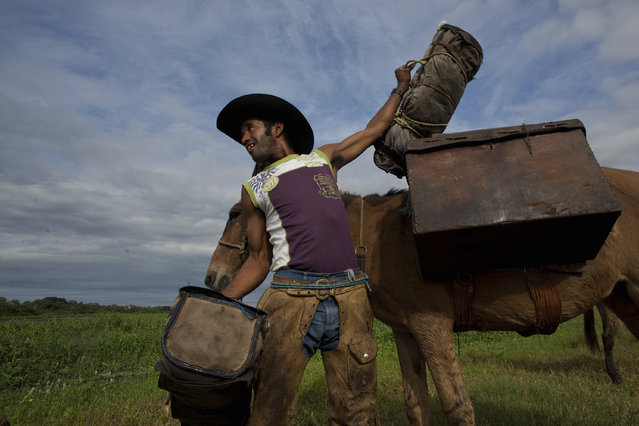
In this May 17, 2017 photo, cowboy cook Odair Batista carries a case with food in Corumba, the Pantanal wetlands of Mato Grosso do Sul state, Brazil. Dressed with leather chaps on top of their jeans, stetson hats and a machete attached to their waists, before setting off, the men finish their breakfast with Terere, an herbal “mate” beverage served ice cold in an ox drinking horn. (Photo by Eraldo Peres/AP Photo)

In this May 17, 2017 photo, cowboy cook Odair Batista carries a case with food in Corumba, the Pantanal wetlands of Mato Grosso do Sul state, Brazil. Dressed with leather chaps on top of their jeans, stetson hats and a machete attached to their waists, before setting off, the men finish their breakfast with Terere, an herbal “mate” beverage served ice cold in an ox drinking horn. (Photo by Eraldo Peres/AP Photo)
Details
12 Jun 2017 09:00:00
French-Swiss street artist Saype poses as he works on his artwork on a floating barge over the Golden Horn in Istanbul, Turkey on October 23, 2020, as part of the “Beyond Walls” project to create a spray-painted “human chain” across the world to encourage humanity and equality. (Photo by Murad Sezer/Reuters)

French-Swiss street artist Saype poses as he works on his artwork on a floating barge over the Golden Horn in Istanbul, Turkey on October 23, 2020, as part of the “Beyond Walls” project to create a spray-painted “human chain” across the world to encourage humanity and equality. (Photo by Murad Sezer/Reuters)
Details
06 Nov 2020 00:05:00
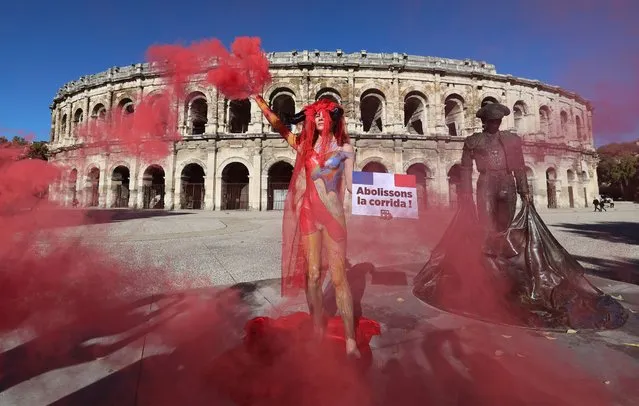
French actress Marie Cornillon wearing body paint and a headgear with bull horns, poses in front of the Nimes arena with a sign inscribed “Abolissons la corrida” (Abolish corrida bullfighting) as part of a protest by the People for the Ethical Treatment of Animals (PETA) animal rights group to ban bullfighting in France, on November 16, 2022. (Photo by Pascal Guyot/AFP Photo)

French actress Marie Cornillon wearing body paint and a headgear with bull horns, poses in front of the Nimes arena with a sign inscribed “Abolissons la corrida” (Abolish corrida bullfighting) as part of a protest by the People for the Ethical Treatment of Animals (PETA) animal rights group to ban bullfighting in France, on November 16, 2022. (Photo by Pascal Guyot/AFP Photo)
Details
17 Nov 2022 05:04:00
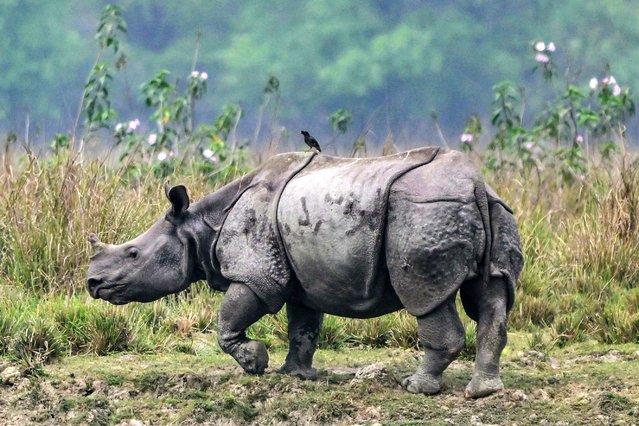
An Indian one-horned rhinoceros grazes on a dry wetland at the Pobitora Wildlife Sanctuary on the southern bank of the Brahmaputra River in Morigaon district of India's Assam state on April 4, 2025. (Photo by Biju Boro/AFP Photo)

An Indian one-horned rhinoceros grazes on a dry wetland at the Pobitora Wildlife Sanctuary on the southern bank of the Brahmaputra River in Morigaon district of India's Assam state on April 4, 2025. (Photo by Biju Boro/AFP Photo)
Details
20 Apr 2025 02:59:00
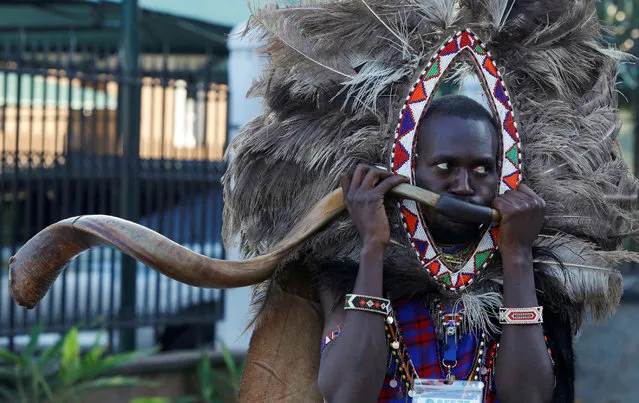
A delegate from the indigenous Maasai community blows a horn and wears an ostrich feathers headgear as he arrives for the Africa Climate Summit (ACS) 2023 at the Kenyatta International Convention Centre (KICC) in Nairobi, Kenya on September 6, 2023. (Photo by Monicah Mwangi/Reuters)

A delegate from the indigenous Maasai community blows a horn and wears an ostrich feathers headgear as he arrives for the Africa Climate Summit (ACS) 2023 at the Kenyatta International Convention Centre (KICC) in Nairobi, Kenya on September 6, 2023. (Photo by Monicah Mwangi/Reuters)
Details
14 Sep 2023 02:27:00
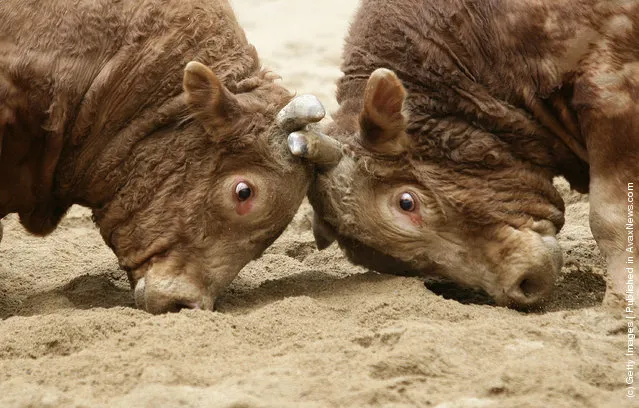
Cheongdo Bullfighting Festival

Bulls fight during the annual Bullfighting Festival on March 17, 2010 in Cheongdo, South Korea. More than 130 bulls from South Korea and abroad charge and lock horns in the annual festival which was run March 21, 2010. The bulls are grouped into three weight categories and fight head on until one of the bulls turns its head and runs away. (Photo by Chung Sung-Jun/Getty Images)
Details
21 Dec 2011 13:10:00
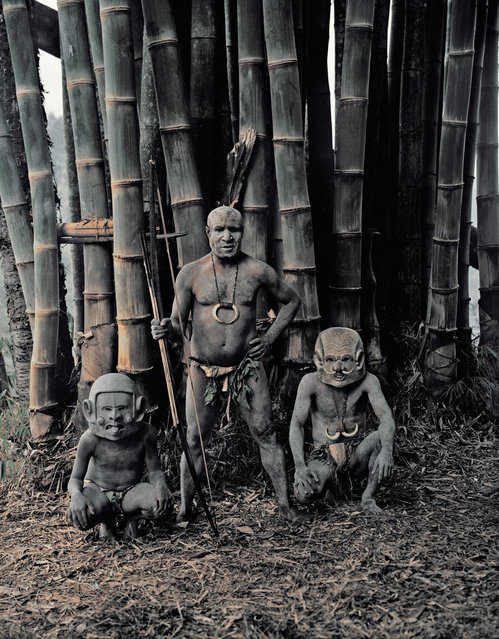
“Asaro from the Eastern Highlands”. The mudmen could not cover their faces with mud because the people of Papua New Guinea thought that the mud from the Asaro river was poisonous. So instead of covering their faces with this alleged poison, they made masks from pebbles that they heated and water from the waterfall, with unusual designs such as long or very short ears either going down to the chin or sticking up at the top, long joined eyebrows attached to the top of the ears, horns and sideways mouths. (Jimmy Nelson)

“Asaro from the Eastern Highlands”. The mudmen could not cover their faces with mud because the people of Papua New Guinea thought that the mud from the Asaro river was poisonous. So instead of covering their faces with this alleged poison, they made masks from pebbles that they heated and water from the waterfall, with unusual designs such as long or very short ears either going down to the chin or sticking up at the top, long joined eyebrows attached to the top of the ears, horns and sideways mouths. (Photo and caption by Jimmy Nelson)
Details
20 Oct 2013 08:54:00
In this picture made available Thursday July 11, 2013 a  zoo-keeper presents three of twelve ferret babies at Eekholt Zoo in Grossenaspe, Germany,  Wednesday July 10, 2013. The ferret babies were born May 25, 2013. (Photo by Markus Scholz/AP Photo/Dpa)

In this picture made available Thursday July 11, 2013 a zoo-keeper presents three of twelve ferret babies at Eekholt Zoo in Grossenaspe, Germany, Wednesday July 10, 2013. The ferret babies were born May 25, 2013. (Photo by Markus Scholz/AP Photo/Dpa)
Details
14 Jul 2013 08:16:00