Loading...
Done
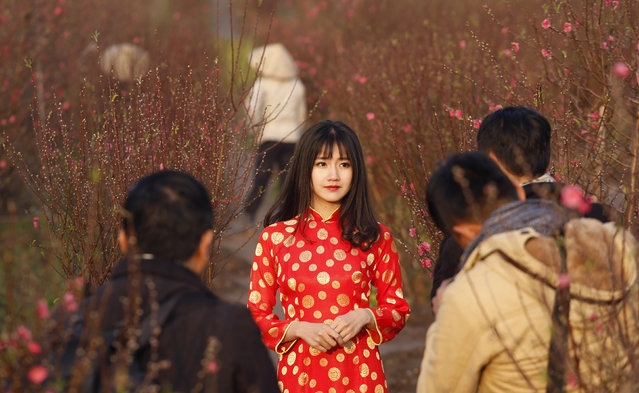
VIETNAM: A Vietnamese woman, wearing the traditional “ao dai” long dress, poses for photos along peach blossom flowers ahead of the Vietnamese “Tet” (Lunar New Year festival), in a field in Hanoi, Vietnam, February 2, 2016. (Photo by Reuters/Kham)

VIETNAM: A Vietnamese woman, wearing the traditional “ao dai” long dress, poses for photos along peach blossom flowers ahead of the Vietnamese “Tet” (Lunar New Year festival), in a field in Hanoi, Vietnam, February 2, 2016. (Photo by Reuters/Kham)
Details
26 Dec 2016 07:22:00
A 3-month-old ethnic Tujia baby girl is pictured next to her father as they wait for a traditional ethnic Tujia wedding feast during celebrations marking the Lunar New Year in Ziqiu town, Changyang county of China’s Hubei province, February 15, 2016. (Photo by Jason Lee/Reuters)

A 3-month-old ethnic Tujia baby girl is pictured next to her father as they wait for a traditional ethnic Tujia wedding feast during celebrations marking the Lunar New Year in Ziqiu town, Changyang county of China’s Hubei province, February 15, 2016. (Photo by Jason Lee/Reuters)
Details
16 Feb 2016 13:31:00
A woman prepares to release carps to Hoan Kiem lake on Kitchen God's Day as part of the traditional Vietnamese Lunar New Year celebrations, the biggest festival of the year in Hanoi, Vietnam on February 4, 2021. (Photo by Kham via Reuters)

A woman prepares to release carps to Hoan Kiem lake on Kitchen God's Day as part of the traditional Vietnamese Lunar New Year celebrations, the biggest festival of the year in Hanoi, Vietnam on February 4, 2021. (Photo by Kham via Reuters)
Details
17 Mar 2021 10:17:00
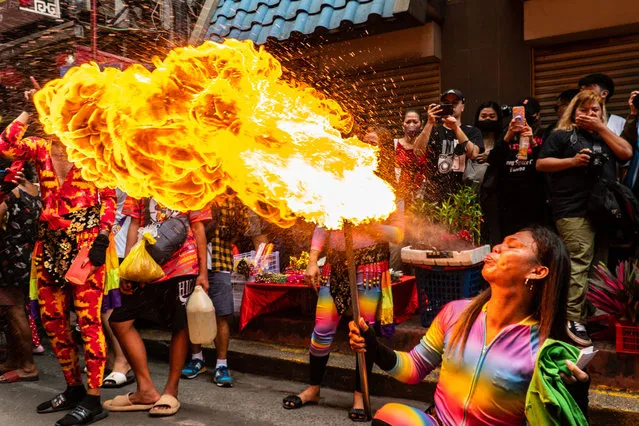
A fire-eater performs on the street of China Town during the celebration of Chinese New Year in Manila, Philippines on January 22, 2023. This year is the year of the Rabbit in the Chinese lunar calendar. (Photo by Dante Diosina Jr/Anadolu Agency via Getty Images)

A fire-eater performs on the street of China Town during the celebration of Chinese New Year in Manila, Philippines on January 22, 2023. This year is the year of the Rabbit in the Chinese lunar calendar. (Photo by Dante Diosina Jr/Anadolu Agency via Getty Images)
Details
02 Feb 2023 00:44:00
A visitor poses next to Chinese charms and ornaments that are seen on display for sale at a shop in the Chinatown district of Manila on February 7, 2024, ahead of the Lunar New Year of the Dragon which falls on February 10. (Photo by Ted Aljibe/AFP Photo)

A visitor poses next to Chinese charms and ornaments that are seen on display for sale at a shop in the Chinatown district of Manila on February 7, 2024, ahead of the Lunar New Year of the Dragon which falls on February 10. (Photo by Ted Aljibe/AFP Photo)
Details
17 Feb 2024 06:42:00
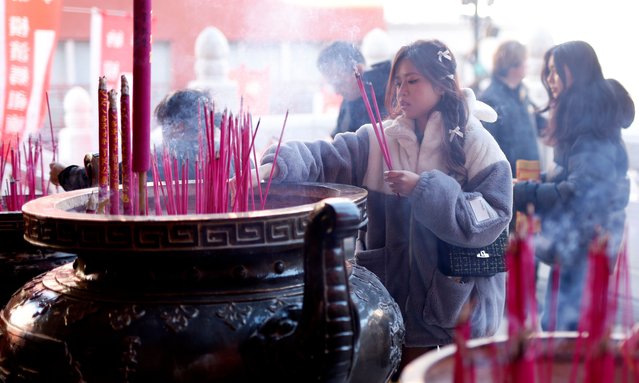
A woman offers prayers at a temple during the Chinese New Year celebrations in Yokohama Chinatown, near Tokyo, Japan, 29 January 2025. The celebrations of the Chinese Lunar New Year, or Spring Festival, which falls on 29 January 2025, are held in Yokohama Chinatown, Japan's largest Chinatown. (Photo by Franck Robichon/EPA/EFE)

A woman offers prayers at a temple during the Chinese New Year celebrations in Yokohama Chinatown, near Tokyo, Japan, 29 January 2025. The celebrations of the Chinese Lunar New Year, or Spring Festival, which falls on 29 January 2025, are held in Yokohama Chinatown, Japan's largest Chinatown. (Photo by Franck Robichon/EPA/EFE)
Details
10 Feb 2025 04:36:00
Moon jellyfish and cross jellies. (Photo by David Hall)

David Hall’s photographs of scenery and creatures off the coast of Canada in the Pacific Northwest portray serenity under the water, which belie the extreme challenges he faces to get his images. For each shoot, Hall wears a dry suit, a neoprene body suit that covers all of his body but his head and traps air inside to keep him warm. Water temperature in Canada’s British Columbia typically ranges between 45 and 50 degrees Fahrenheit. Photo: Moon jellyfish and cross jellies. (Photo by David Hall)
Details
16 Sep 2014 12:57:00
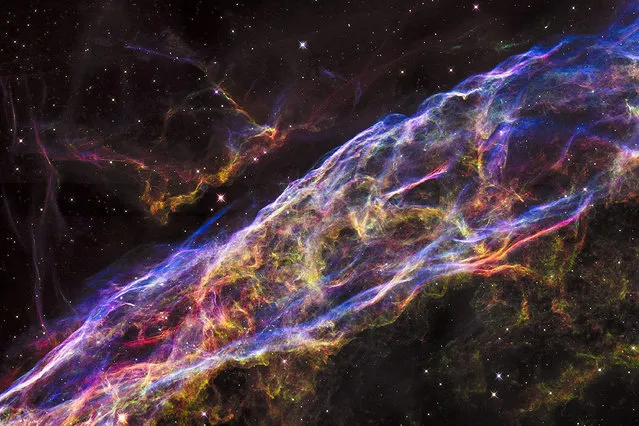
A small section of the expanding remains of the Veil Nebula, a massive star that exploded about 8,000 years ago. The entire nebula is 110 light-years across, covering six full moons on the sky as seen from Earth, and resides about 2,100 light-years away in the constellation Cygnus, the Swan. (Photo by Reuters/NASA/ESA/Hubble)

A small section of the expanding remains of the Veil Nebula, a massive star that exploded about 8,000 years ago. The entire nebula is 110 light-years across, covering six full moons on the sky as seen from Earth, and resides about 2,100 light-years away in the constellation Cygnus, the Swan. (Photo by Reuters/NASA/ESA/Hubble)
Details
29 Feb 2016 11:30:00