Loading...
Done
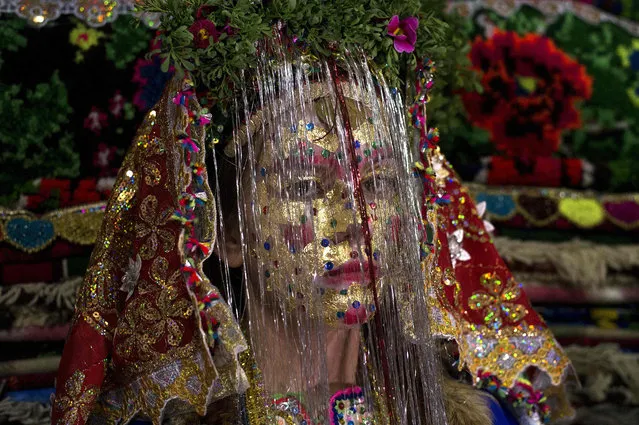
Emilia Pechinkova, a 24-years-old Bulgarian Pomak (Bulgarian speaking Muslims) bride poses for a photograph following the “gelina” or face painting ceremony carried out by female guests and relatives in preparation for her three-day wedding ceremony in the village of Draginovo, 100 kms southeast of Sofia on April 22, 2016. Bulgaria's Muslim population is one of the highest in the European Union. (Photo by Nikolay Doychinov/AFP Photo)

Emilia Pechinkova, a 24-years-old Bulgarian Pomak (Bulgarian speaking Muslims) bride poses for a photograph following the “gelina” or face painting ceremony carried out by female guests and relatives in preparation for her three-day wedding ceremony in the village of Draginovo, 100 kms southeast of Sofia on April 22, 2016. Bulgaria's Muslim population is one of the highest in the European Union. During the Communist regime religious rituals were not tolerated, and Muslims were forced to abandon wearing their traditional wedding outfits. Recently, more young Pomak women want to include traditional wedding customs that were forbidden during the regime, regardless of their secular lifestyles and the high cost of such a wedding. (Photo by Nikolay Doychinov/AFP Photo)
Details
25 Apr 2016 09:55:00
Deers walk past Indonesia's honour guard as they wait for the arrival of Saudi Arabia's King Salman bin Abdul Aziz at the presidential palace in Bogor on March 1, 2017. Cheering crowds welcomed King Salman on March 1 as he began the first visit by a Saudi monarch to Indonesia for almost 50 years, seeking stronger economic ties with the world's most populous Muslim-majority country. (Photo by Adek Berry/AFP Photo)

Deers walk past Indonesia's honour guard as they wait for the arrival of Saudi Arabia's King Salman bin Abdul Aziz at the presidential palace in Bogor on March 1, 2017. Cheering crowds welcomed King Salman on March 1 as he began the first visit by a Saudi monarch to Indonesia for almost 50 years, seeking stronger economic ties with the world's most populous Muslim-majority country. (Photo by Adek Berry/AFP Photo)
Details
05 Mar 2017 00:00:00
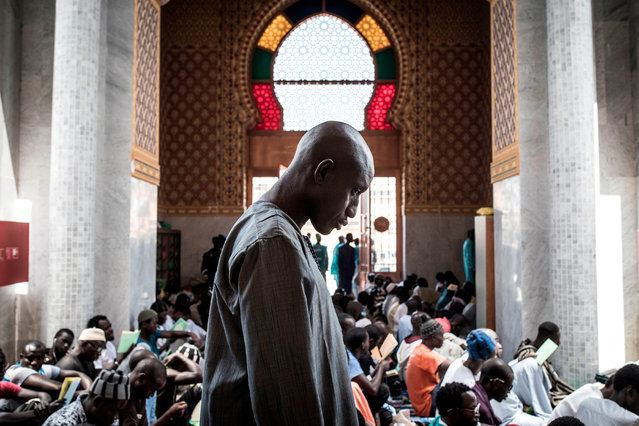
A Muslim worshipper attends a  mass prayer against COVID-19, the new coronavirus, in Dakar on March 4, 2020, after two cases were confirmed in Senegal in the previous days. Across the world, 3,155 people have died from the virus. More than 92,723 have been infected in 78 countries and territories, according to AFP's latest toll based on official sources at 1700 GMT on March 3, 2020. (Photo by John Wessels/AFP Photo)

A Muslim worshipper attends a mass prayer against COVID-19, the new coronavirus, in Dakar on March 4, 2020, after two cases were confirmed in Senegal in the previous days. Across the world, 3,155 people have died from the virus. More than 92,723 have been infected in 78 countries and territories, according to AFP's latest toll based on official sources at 1700 GMT on March 3, 2020. (Photo by John Wessels/AFP Photo)
Details
26 Mar 2020 00:01:00
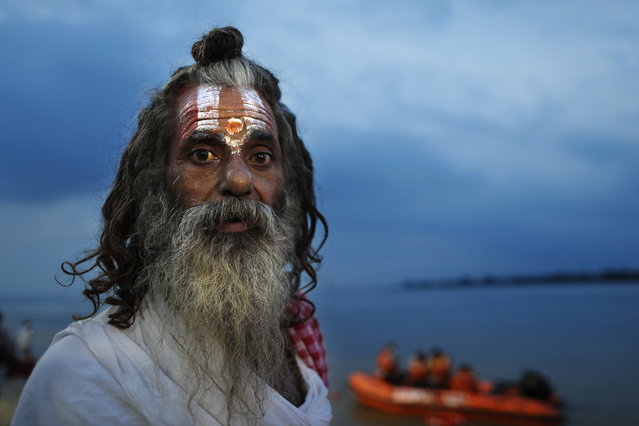
A Hindu holy man looks at a decoration on the ghats of the river Saryu as part of preparations for the groundbreaking ceremony of a temple to the Hindu god Ram in Ayodhya, in the Indian state of Uttar Pradesh, Monday, August 3, 2020. As Hindus prepare to celebrate the groundbreaking of a long-awaited temple at a disputed ground in northern India, Muslims say they have no firm plans yet to build a new mosque at an alternative site they were granted to replace the one torn down by Hindu hard-liners decades ago. (Photo by Rajesh Kumar Singh/AP Photo)

A Hindu holy man looks at a decoration on the ghats of the river Saryu as part of preparations for the groundbreaking ceremony of a temple to the Hindu god Ram in Ayodhya, in the Indian state of Uttar Pradesh, Monday, August 3, 2020. As Hindus prepare to celebrate the groundbreaking of a long-awaited temple at a disputed ground in northern India, Muslims say they have no firm plans yet to build a new mosque at an alternative site they were granted to replace the one torn down by Hindu hard-liners decades ago. (Photo by Rajesh Kumar Singh/AP Photo)
Details
13 Aug 2020 00:01:00
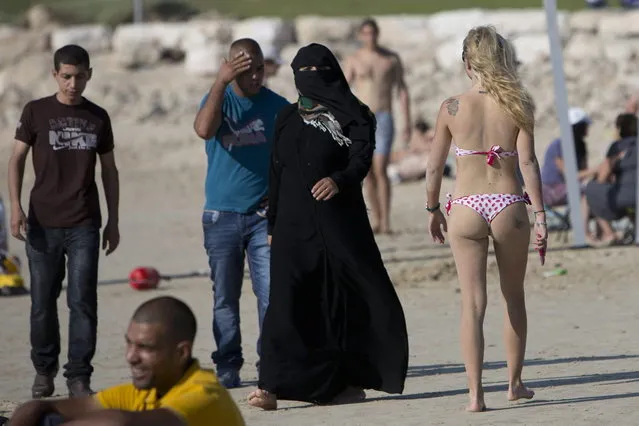
Palestinians and Israelis enjoy the Mediterranean sea during the first day of the Eid al-Fitr holiday in Tel Aviv, Israel, Thursday, August 8, 2013. The three-day Eid al-Fitr holiday marks the end of the holy fasting month of Ramadan. One of the most important holidays in the Muslim world, Eid al-Fitr, is marked with prayers, family reunions and other festivities. (Photo by Oded Balilty/AP Photo)

Palestinians and Israelis enjoy the Mediterranean sea during the first day of the Eid al-Fitr holiday in Tel Aviv, Israel, Thursday, August 8, 2013. The three-day Eid al-Fitr holiday marks the end of the holy fasting month of Ramadan. One of the most important holidays in the Muslim world, Eid al-Fitr, is marked with prayers, family reunions and other festivities. (Photo by Oded Balilty/AP Photo)
Details
13 Aug 2013 11:02:00
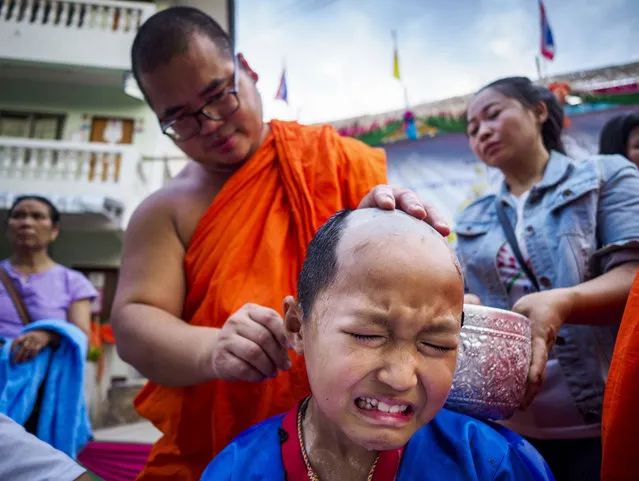
Shan boys pray before they have their heads shaved in anticipation of their ordination in the Poy Song Long Ceremony at Wat Pa Pao in Chiang Mai, Thailand on April 3, 2018. Poy Sang Long (“The Festival of the Crystal Sons”) is a ceremony that marks a rite of passage among the Buddhist Shan people in Myanmar and northern Thailand. Boys between seven and fourteen years of age are ordained as Buddhist novices during a three day ceremony. Before the ceremony starts the boys have their heads shaved. (Photo by Jack Kurtz/ZUMA Wire/Rex Features/Shutterstock)

Shan boys pray before they have their heads shaved in anticipation of their ordination in the Poy Song Long Ceremony at Wat Pa Pao in Chiang Mai, Thailand on April 3, 2018. Poy Sang Long (“The Festival of the Crystal Sons”) is a ceremony that marks a rite of passage among the Buddhist Shan people in Myanmar and northern Thailand. Boys between seven and fourteen years of age are ordained as Buddhist novices during a three day ceremony. Before the ceremony starts the boys have their heads shaved. (Photo by Jack Kurtz/ZUMA Wire/Rex Features/Shutterstock)
Details
06 Apr 2018 07:59:00
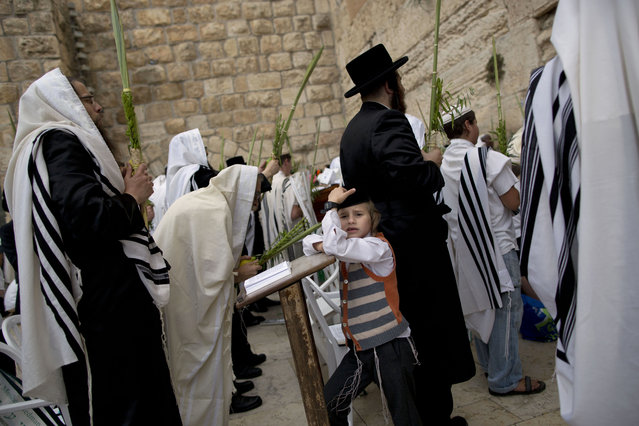
Covered in prayer shawls, Ultra-Orthodox Jewish men participate in a blessing during the holiday of Sukkot, in front of the Western Wall, the holiest site where Jews can pray in Jerusalem's Old City, Wednesday, September 30, 2015. The Cohanim, believed to be descendants of priests who served God in the Jewish Temple before it was destroyed, perform a blessing ceremony of the Jewish people three times a year during the festivals of Passover, Shavuot and Sukkot. (Photo by Oded Balilty/AP Photo)

Covered in prayer shawls, Ultra-Orthodox Jewish men participate in a blessing during the holiday of Sukkot, in front of the Western Wall, the holiest site where Jews can pray in Jerusalem's Old City, Wednesday, September 30, 2015. The Cohanim, believed to be descendants of priests who served God in the Jewish Temple before it was destroyed, perform a blessing ceremony of the Jewish people three times a year during the festivals of Passover, Shavuot and Sukkot. (Photo by Oded Balilty/AP Photo)
Details
03 Oct 2015 08:00:00
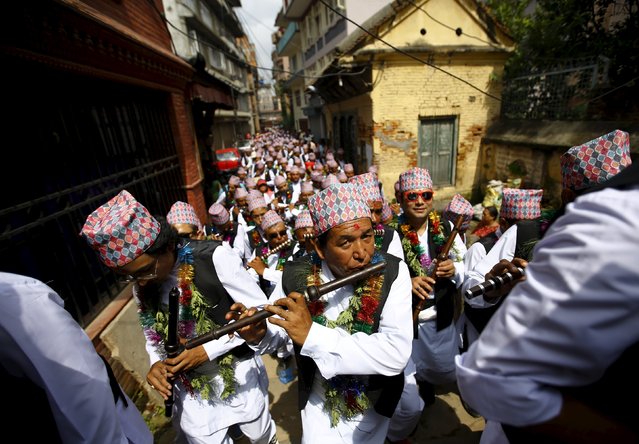
Devotees in traditional attire play flutes as they take part in a parade commemorating the Neku Jatra-Mataya festival, the Festival of Lights, in Lalitpur, Nepal August 31, 2015. Devotees celebrate the Buddhist festival which marks the victory of Sakyamuni Buddha over Mara, by praying for the souls of departed family members and holding parades throughout the city. (Photo by Navesh Chitrakar/Reuters)

Devotees in traditional attire play flutes as they take part in a parade commemorating the Neku Jatra-Mataya festival, the Festival of Lights, in Lalitpur, Nepal August 31, 2015. Devotees celebrate the Buddhist festival which marks the victory of Sakyamuni Buddha over Mara, by praying for the souls of departed family members and holding parades throughout the city. (Photo by Navesh Chitrakar/Reuters)
Details
18 Nov 2015 08:01:00