Loading...
Done
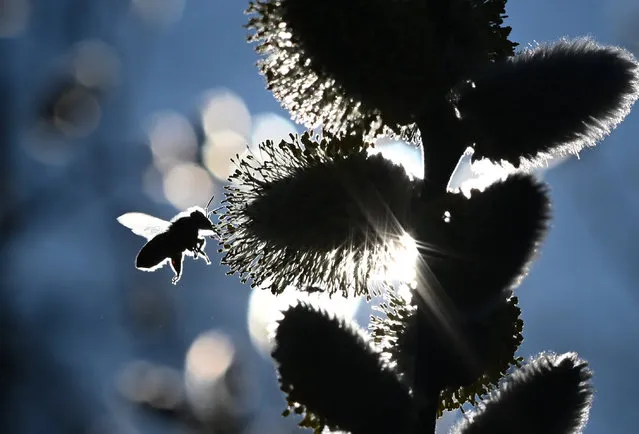
A bee approaching the flowers of a willow in Otzberg, Germany on February 28, 2021. Willow catkins are a protected species and one of the first sources of food for insects in early spring. (Photo by Arne Dedert/DPA)

A bee approaching the flowers of a willow in Otzberg, Germany on February 28, 2021. Willow catkins are a protected species and one of the first sources of food for insects in early spring. (Photo by Arne Dedert/DPA)
Details
10 Apr 2021 05:48:00
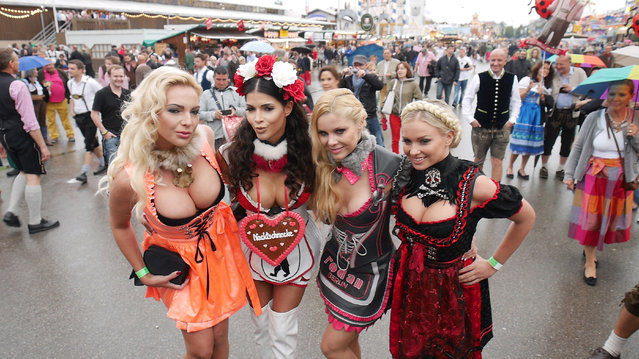
Micaela Schaefer (2nd from Left) and Yvonne Woelke (2nd from right) sighted during Oktoberfest at Theresienwiese on September 21, 2014 in Munich, Germany. (Photo by Chad Buchanan/Getty Images)

German model Micaela Schaefer (2nd from Left) and German actor Yvonne Woelke (2nd from right) sighted during Oktoberfest at Theresienwiese on September 21, 2014 in Munich, Germany. (Photo by Chad Buchanan/Getty Images)
Details
23 May 2021 07:52:00
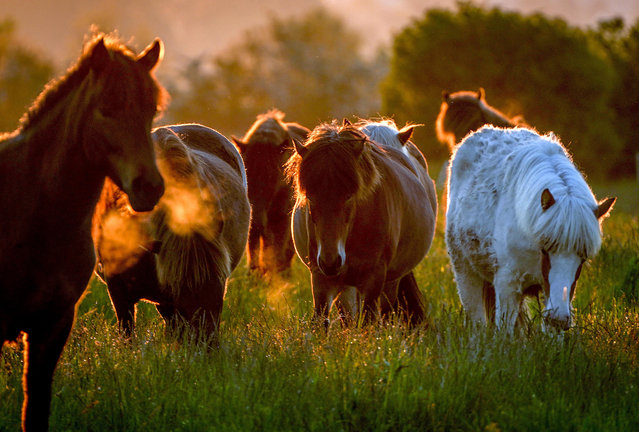
Icelandic horses walk in their paddock at a stud farm in Wehrheim near Frankfurt, Germany, as the sun rises Tuesday, June 1, 2021. (Photo by Michael Probst/AP Photo)

Icelandic horses walk in their paddock at a stud farm in Wehrheim near Frankfurt, Germany, as the sun rises Tuesday, June 1, 2021. (Photo by Michael Probst/AP Photo)
Details
09 Jul 2021 09:07:00
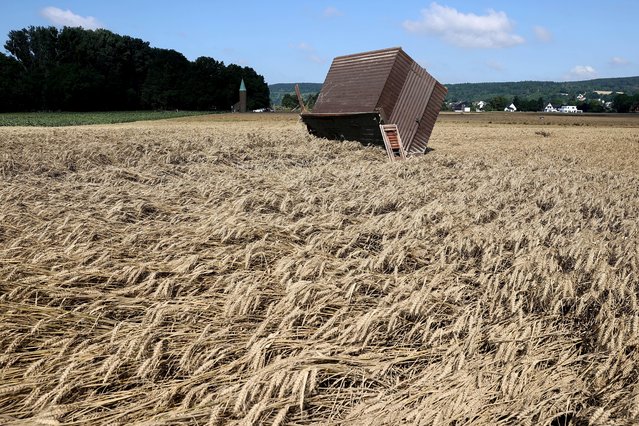
A damaged wooden garden house is seen amid a field of wheat following floods caused by heavy rainfalls, in Bad Bodendorf, Germany, July 18, 2021. (Photo by Wolfgang Rattay/Reuters)

A damaged wooden garden house is seen amid a field of wheat following floods caused by heavy rainfalls, in Bad Bodendorf, Germany, July 18, 2021. (Photo by Wolfgang Rattay/Reuters)
Details
19 Jul 2021 09:05:00
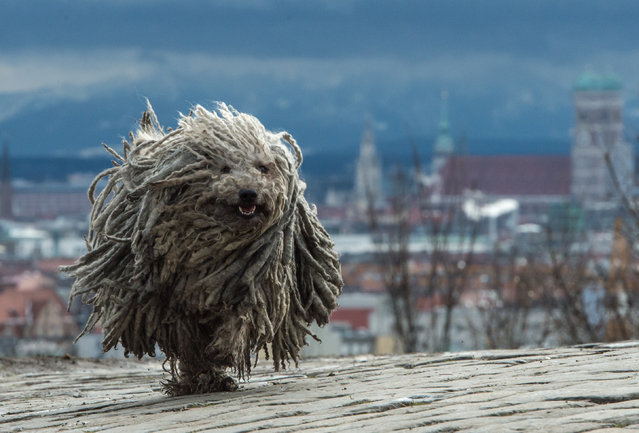
Seven year old Hungarian herding dog Derci runs along the Olympiaberg hill during stormy weather in Munich, southern Germany, Monday, January 4, 2016. (Photo by Matthias Balk/DPA via AP Photo)

Seven year old Hungarian herding dog Derci runs along the Olympiaberg hill during stormy weather in Munich, southern Germany, Monday, January 4, 2016. (Photo by Matthias Balk/DPA via AP Photo)
Details
09 Jan 2016 08:01:00


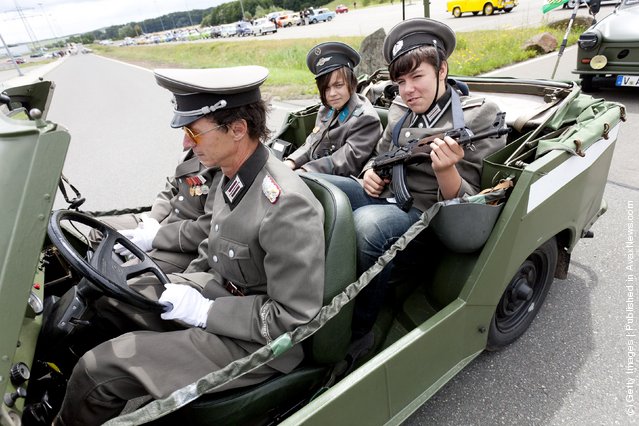
“The Trabant is a car that was produced by former East German auto maker VEB Sachsenring Automobilwerke Zwickau in Zwickau, Sachsen. It was the most common vehicle in East Germany, and was also exported to countries both inside and outside the communist bloc. The main selling points was that it had room for four adults and luggage in a compact, light and durable shell and that it was fast (when introduced) and durable. With its mediocre performance, smoky two-stroke engine, and production shortages, the Trabant is often cited as an example of the disadvantages of centralized planning; on the other hand, it is regarded with derisive affection as a symbol of the failed former East Germany and of the fall of communism (in former West Germany, as many East Germans streamed into West Berlin and West Germany in their Trabants after the opening of the Berlin Wall in 1989). It was in production without any significant changes for nearly 30 years with 3,096,099 Trabants produced in total”. – Wikipedia

Photo: Enthusiasts weared in uniforms of the former eastern german army trive in a military Trabant car as fans and owners of East German-era Trabant cars gather at the 2011 International Trabantfahrer Treffen (International Trabant Drivers Meeting) on June 26, 2011 in Zwickau, Germany. The Trabant, also known as the Trabi, was among the main cars produced in communist East Germany and built by VEB Sachsenring Automobilwerke in Zwickau for 30 years until 1989. Today the car has cult status for many followers and one company, IndiKar, is even seeking to revive the brand in a modern, electric version. (Photo by Carsten Koall/Getty Images)

Details
27 Jun 2011 12:21:00
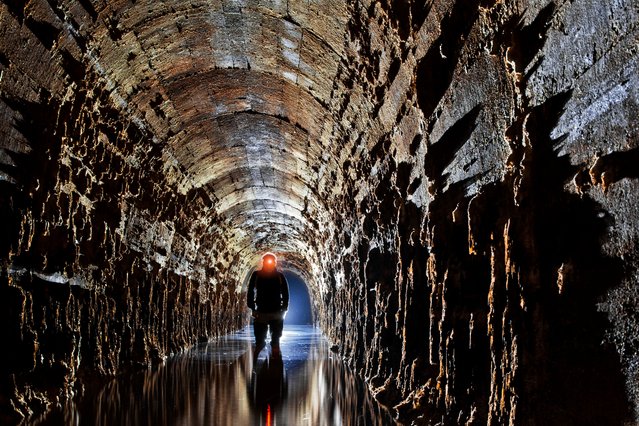
Regenwurmlager, Poland. The Regenwurmlager is an extensive underground fortification area constructed by Germany in 1920s-1940s, now in western Poland, near the city of Międzyrzecz. (Photo by Anna Arinova/Caters News)

Stunning silhouettes under European cities reveal the size and splendor of the continent’s urban foundations. Photographer and content-manager Anna Arinova, 28, from Moscow, captured the awe-inspiring labyrinths in Russia and Germany. Here: Regenwurmlager, Poland. The Regenwurmlager is an extensive underground fortification area constructed by Germany in 1920s-1940s, now in western Poland, near the city of Międzyrzecz. (Photo by Anna Arinova/Caters News)
Details
29 Dec 2016 07:53:00
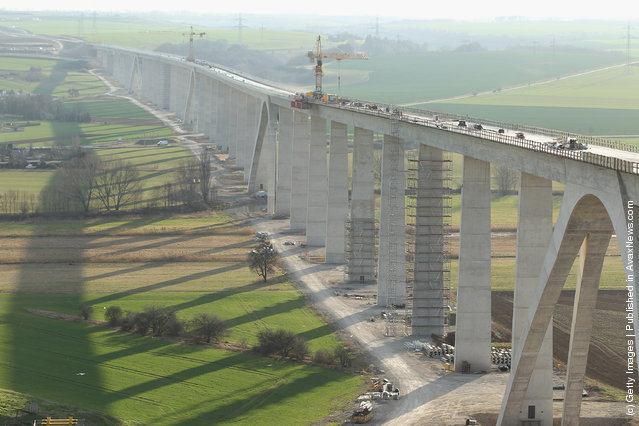
Unstrut Valley high-speed railway bridge near Karsdorf, Germany

Construction cranes stand on the Unstrut Valley high-speed railway bridge on March 19, 2012 near Karsdorf, Germany. The Unstrut bridge, which is 2,668m long (about 1.6 miles), is among 38 bridges and 26 tunnels German state rail carrier Deutsche Bahn is building along a new ICE high-speed railroad connection between Nuremberg, Erfurt, Halle, Leipzig and Berlin in a multi-billion Euro project across eastern Germany called the German Unity Transportation Project (Verkehrsprojekt der Deutschen Einheit). (Photo by Sean Gallup/Getty Images)
Details
22 Mar 2012 10:53:00