Loading...
Done
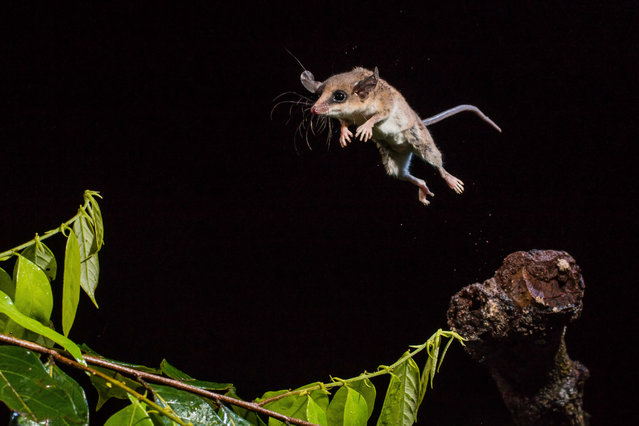
Tropical acrobatics by Adrià López Baucells in Manaus, Brazil. An unidentified South American marsupial, although the characteristic black markings on its face indicate it may be a mouse opossum. These small creatures are nocturnal and feed on bugs, fruit and bird eggs. (Photo by Adrià López Baucells/2019 Royal Society of Biology Photography Competition)

Tropical acrobatics by Adrià López Baucells in Manaus, Brazil. An unidentified South American marsupial, although the characteristic black markings on its face indicate it may be a mouse opossum. These small creatures are nocturnal and feed on bugs, fruit and bird eggs. (Photo by Adrià López Baucells/2019 Royal Society of Biology Photography Competition)
Details
10 Oct 2019 00:03:00
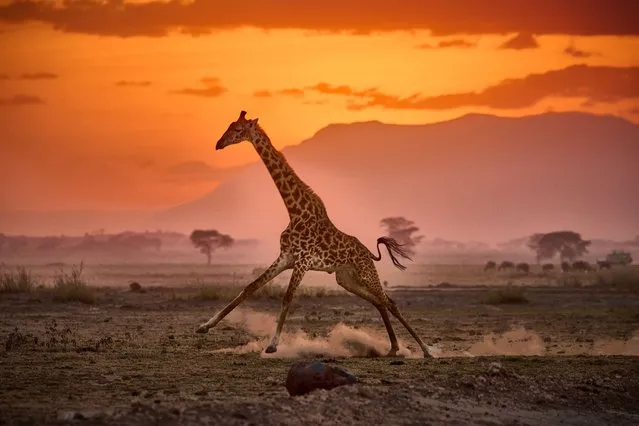
A giraffe was captured creating a dust cloud while running in front of a perfect African sunset in Amboseli National Park, Kenya in the first decade of November 2022. (Photo by Edgard Berben/Media Drum Images)

A giraffe was captured creating a dust cloud while running in front of a perfect African sunset in Amboseli National Park, Kenya in the first decade of November 2022. (Photo by Edgard Berben/Media Drum Images)
Details
11 Jan 2023 05:31:00
Nyah and Thea watch as the top end storms roll in across Nightcliff beach and Jetty in Darwin, Australia on Wednesday, January 17, 2024. (Photo by Neve Brissenden/AAP Image)

Nyah and Thea watch as the top end storms roll in across Nightcliff beach and Jetty in Darwin, Australia on Wednesday, January 17, 2024. (Photo by Neve Brissenden/AAP Image)
Details
01 Feb 2024 07:44:00
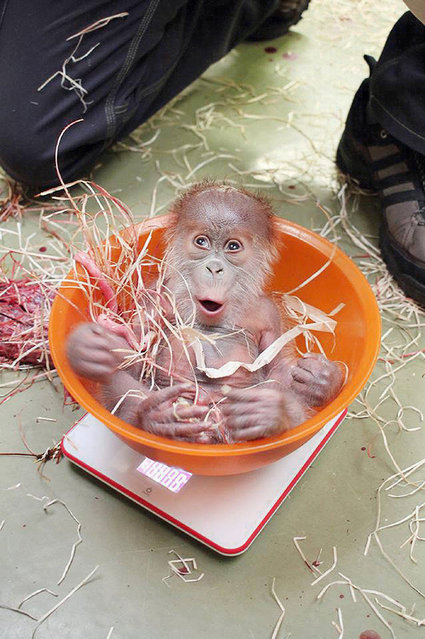
This female orangutan was born at the zoo in the German capital of Berlin.  German online users have fallen in love with Berlin Zoo's most recent addition – this newborn orangutan. (Photo by Europics/Zoo Berlin)

This female orangutan was born at the zoo in the German capital of Berlin. German online users have fallen in love with Berlin Zoo's most recent addition – this newborn orangutan. The female orangutan was born in the early hours of 12th January at the zoo in the German capital of Berlin and weighed a tiny 1.8 kilograms, normally regarded as small for an orangutan baby but nevertheless the infant is healthy and strong. (Photo by Europics/Zoo Berlin)
Details
23 Jan 2015 13:39:00
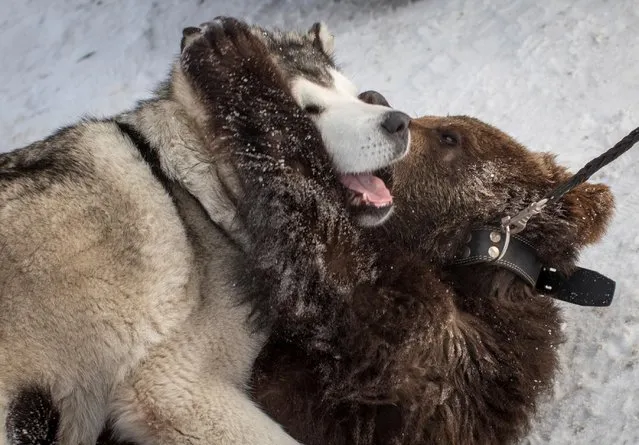
Andreyka, a 10-month-old female bear cub, plays with Rommi, an Alaskan malamute, at the Siberian Zoo in the settlement of Listvyanka, Irkutsk Region, Russia on December 9, 2020. The bear cub, which was found in a weak condition earlier this year, now play-fights with the Alaskan malamute, who adopted her and has seen three generations of bear cubs brought up in the Siberian zoo and released back into the wild. (Photo by Yuri Novikov/Reuters)

Andreyka, a 10-month-old female bear cub, plays with Rommi, an Alaskan malamute, at the Siberian Zoo in the settlement of Listvyanka, Irkutsk Region, Russia on December 9, 2020. The bear cub, which was found in a weak condition earlier this year, now play-fights with the Alaskan malamute, who adopted her and has seen three generations of bear cubs brought up in the Siberian zoo and released back into the wild. (Photo by Yuri Novikov/Reuters)
Details
17 Dec 2020 00:05:00
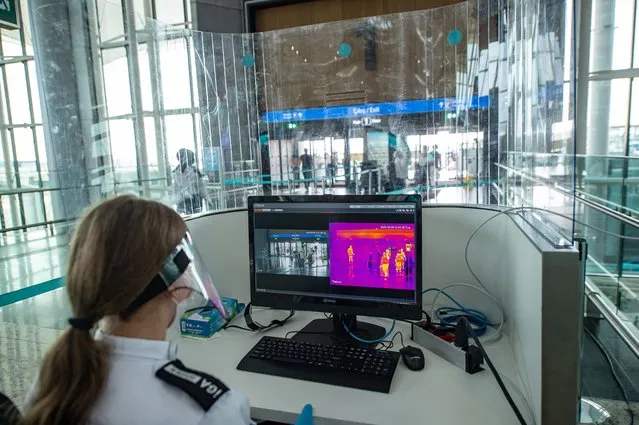
A security officer looks at a scanning screen for checking passengers' temperature at the Istanbul Airport in Istanbul, Turkey, on June 9, 2020. Technology and innovation will top the precautions of Turkey's biggest airport Istanbul Airport against the COVID-19 in the post-pandemic era, according to the management of the airport. The management on June 9 presented their final preparations and measures taken against coronavirus while Turkish airline companies are preparing to resume their international operations the next day. (Photo by Yasin Akgul/Xinhua News Agency via Getty Images)

A security officer looks at a scanning screen for checking passengers' temperature at the Istanbul Airport in Istanbul, Turkey, on June 9, 2020. Technology and innovation will top the precautions of Turkey's biggest airport Istanbul Airport against the COVID-19 in the post-pandemic era, according to the management of the airport. The management on June 9 presented their final preparations and measures taken against coronavirus while Turkish airline companies are preparing to resume their international operations the next day. (Photo by Yasin Akgul/Xinhua News Agency via Getty Images)
Details
11 Jun 2020 00:03:00
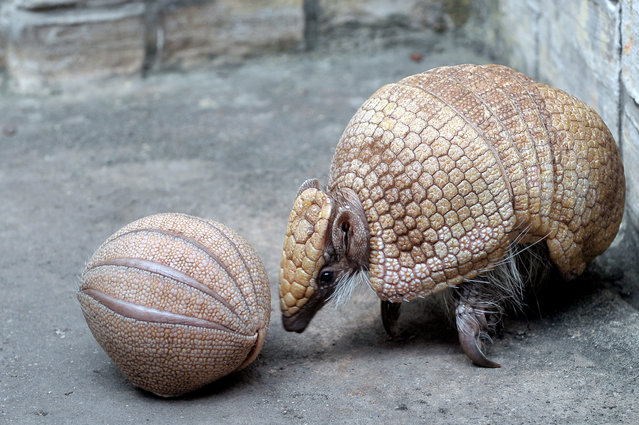
A four-week old southern three-banded armadillo (Tolypeutes matacus) is rolled up into a ball next to its mother in the tropical house of Budapest Zoo in Budapest, Hungary on May 3, 2019. The South American insect-eating mammal and its close relative, the Brasilian three-banded armadillo (Tolypeutes tricinctus) are the only two species of armadillos capable of rolling into a complete ball to defend themselves when feeling threatened. (Photo by Attila Kovács/EPA/EFE)

A four-week old southern three-banded armadillo (Tolypeutes matacus) is rolled up into a ball next to its mother in the tropical house of Budapest Zoo in Budapest, Hungary on May 3, 2019. The South American insect-eating mammal and its close relative, the Brasilian three-banded armadillo (Tolypeutes tricinctus) are the only two species of armadillos capable of rolling into a complete ball to defend themselves when feeling threatened. (Photo by Attila Kovács/EPA/EFE)
Details
05 May 2019 00:03:00
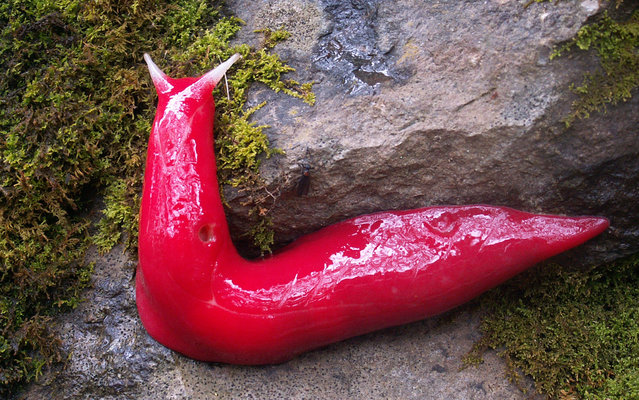
It would seem to be something you'd see only in a cartoon or at a Phish concert, but according to park rangers in New South Wales, Australia, dozens of giant, fluorescent pink slugs have been popping up on a mountaintop there. (Photo by Michael Murphy/AFP Photo/NSW Environment Office)

It would seem to be something you'd see only in a cartoon or at a Phish concert, but according to park rangers in New South Wales, Australia, dozens of giant, fluorescent pink slugs have been popping up on a mountaintop there. The eight-inch creatures have been spotted only on Mount Kaputar, a 5,000-foot peak in the Nandewar Range in northern New South Wales. Scientists believe the eye-catching organisms are survivors from an era when Australia was home to rainforests. A series of volcanoes, millions of years of erosion and other geological changes “have carved a dramatic landscape at Mount Kaputar”, the park service wrote on its Facebook page, and unique arid conditions spared the slugs from extinction. (Photo by Michael Murphy/AFP Photo/NSW Environment Office)
Details
01 Jun 2013 14:09:00