Loading...
Done
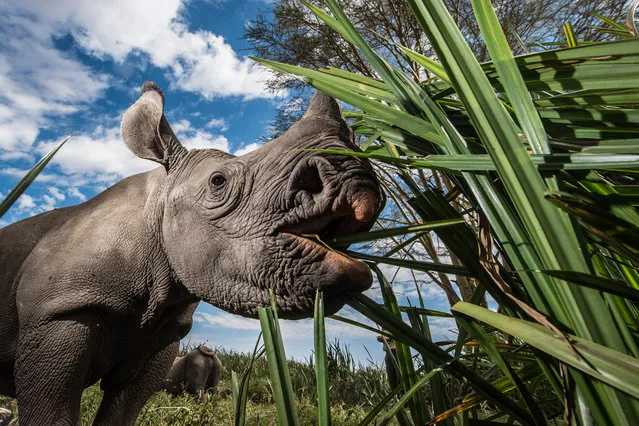
Orphaned baby rhinos seen on August 28, 2014 in Lewa Wildlife Conservancy, Ngare Ndare Forest, Kenya. (Photo by Luca Ghidoni/Barcroft Media)

Orphaned baby rhinos seen on August 28, 2014 in Lewa Wildlife Conservancy, Ngare Ndare Forest, Kenya. Lewa Wildlife Conservancy in Kenya is hand-raising three orphaned baby rhinos; Nicky, Hope and Kilifi. Baby rhino Hope was rescued by rangers when the poachers killed his mother – now he is been taken care off 24 hours-a-day at Lewa Wildlife Conservancy. The wildlife reserve hit the headlines when Prince William proposed to Kate Middleton there in 2010. Rhinos around the world are becoming extinct as a result of the brutal poaching fuelled by an illegal international market for their horns. (Photo by Luca Ghidoni/Barcroft Media)
Details
14 Sep 2014 10:27:00
Portal To Hell

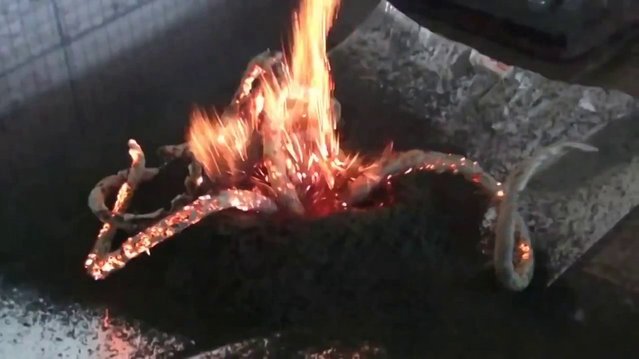
If we were to burn NH4Cr2O7 with HgSCN in the Dark Ages in Europe and show it to anyone, it is us who would be burning next on a fiery cross of Inquisition. And it’s no wonder, since this experiment produces a truly marvelous result. At first, as you ignite the mixture of NH4Cr2O7 and HgSCN, all you can see is that it is slowly burning with a reddish flame. After a while, however, a crater is formed in the middle of the burning pile, and then, suddenly, tentacle-like appendages start sprouting from the burning mixture. And you can almost hear the scream of the mad occultist – “Come forth, Kraken! Come forth!” But of course, this is simply a chemical reaction that is called the "Pharoah's Serpent". It was also often sold in firework stores until people realized that it was toxic.
Details
01 Dec 2014 13:51:00
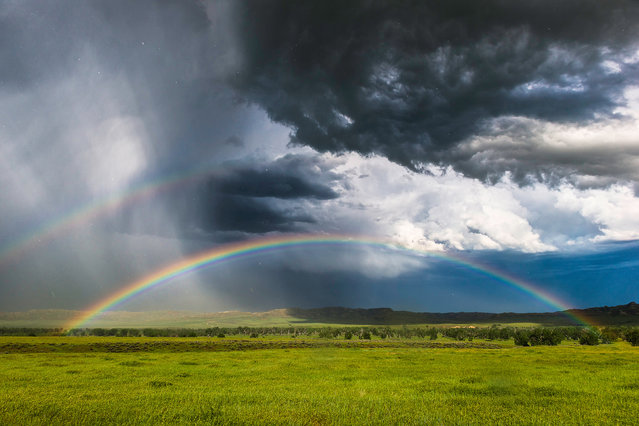
A photographer has weathered some of Americas most violent storms to capture these stunning snaps. (Photo by Caters News)

A photographer has weathered some of Americas most violent storms to capture these stunning snaps. Storm chaser Mike Mezeul II, 30, has travelled all over the US to shoot the likes of mammoth thunderstorms and surreal cloud patterns. His incredible collection of storm images are the result of more than 15 years of photography and thousands of miles of travel. The photographer, from Frisco in Texas, USA, became interested in storm chasing aged 16 when he got his first car. He has since shot ferocious storms as far north as the Canadian border and as far south as Mexico. (Photo by Caters News)
Details
04 Dec 2014 12:16:00
Magical Contamination By Antoine Bridier-Nahmias

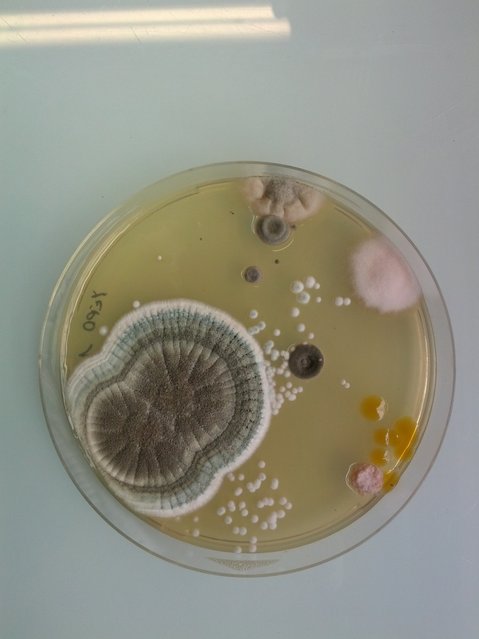
Modern art is truly fascinating. Not in a way that it produces some novel things that will fascinate future generations for decades and even centuries to come. No, that is very far from the truth. On the contrary, modern art is essentially anything (yes, any little thing) that is a bit unusual and was created by a famous person. Let’s take the creation of Antoine Bridier-Nahmias for example. His brainchild is a set of pictures of petri dishes that were contaminated by various cultures of fungi. If this is art, I missed my chance of becoming famous when I accidentally left a piece of bread in a bag in a cupboard for about six months, and didn’t take a picture of the rather shocking results that awaited me when I finally discovered it. (Photo by Antoine Bridier-Nahmias)
Details
12 Dec 2014 13:03:00
Wooden Churches - Travelling In The Russian North By Richard Davies Part 2

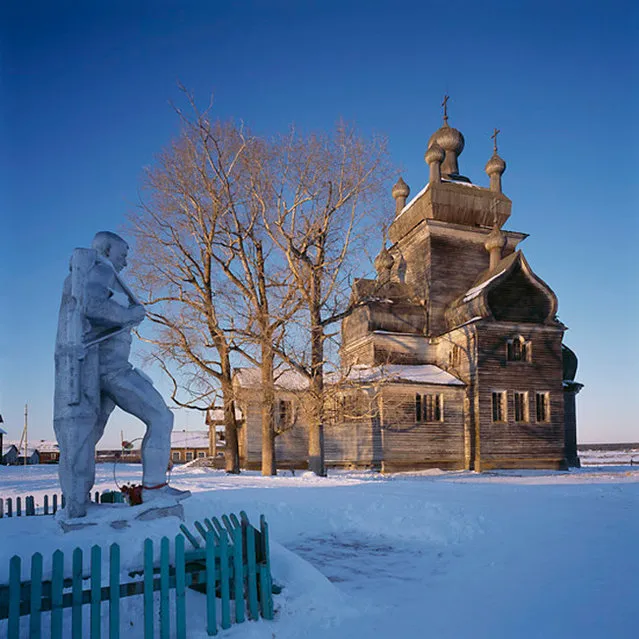
While communism, collectivism, worms, dry rot and casual looting failed to destroy the majestic wooden churches of Russia, it may be ordinary neglect that finally does them in. Dwindled now to several hundred remaining examples, these glories of vernacular architecture lie scattered amid the vastness of the world’s largest country. Just over a decade ago, Richard Davies, a British architectural photographer, struck out on a mission to record the fragile and poetic structures. Austerely beautiful and haunting, “Wooden Churches: Traveling in the Russian North” (White Sea Publishing; $132) is the result. Covering thousands of miles, Mr. Davies described how he and the writer Matilda Moreton tracked down the survivors from among the thousands of onion-domed structures built after Prince Vladimir converted to Christianity in 988.

See also: Wooden Churches Part1
Details
28 Nov 2013 12:13:00
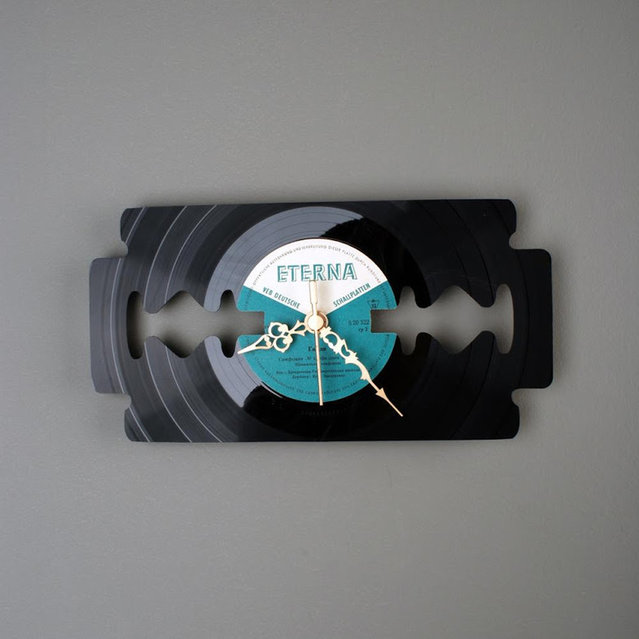
Vinyl Clock By Pavel Sidorenko Part 1

Pavel Sidorenko is an award winning Estonian designer who was born in 1980 in Tallinn and studied product design at Estonian Academy of Arts and Graduated in 2006. Not only does he incorporate pragmatic necessity, but also transmits an emotional qualities within the everyday environment. His fantastic collection of Re Vinyl designs are a result of upcycling a product fashioned from old vinyl records. Beautifully crafted and working with a range of themes from scenography to animal creatures, there is sure to be something for everyone with these stylish selection of recycled vinyl clocks!


See also:Part 2
Details
28 Feb 2014 08:55:00
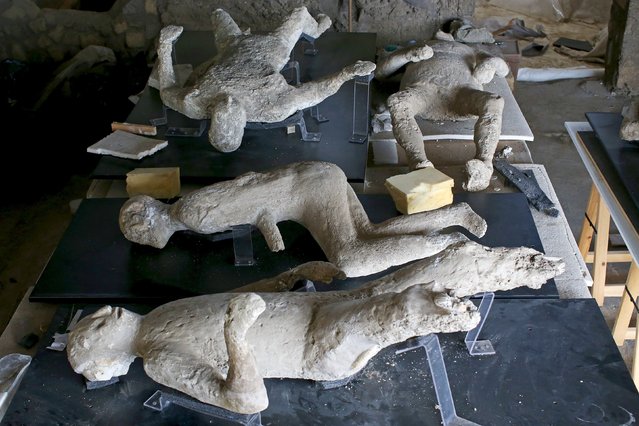
Plaster cast moulds of victims of the Mount Vesuvius eruption lie on a display table in a laboratory at Pompeii October 13, 2015. An expert team made up of archaeologists, radiologists, orthodontists and anthropologists began on September 2015 to use CAT scan technology (computerised axial tomography) to peer inside the plaster cast moulds of Pompeii's victims, in a study that has added more detail to previous findings. (Photo by Alessandro Bianchi/Reuters)

Plaster cast moulds of victims of the Mount Vesuvius eruption lie on a display table in a laboratory at Pompeii October 13, 2015. An expert team made up of archaeologists, radiologists, orthodontists and anthropologists began on September 2015 to use CAT scan technology (computerised axial tomography) to peer inside the plaster cast moulds of Pompeii's victims, in a study that has added more detail to previous findings. A 16-layer scan had to be used in order to penetrate the hardened plaster but the results showed up impressive skeletal remains and near perfect teeth. (Photo by Alessandro Bianchi/Reuters)
Details
22 Oct 2015 08:02:00
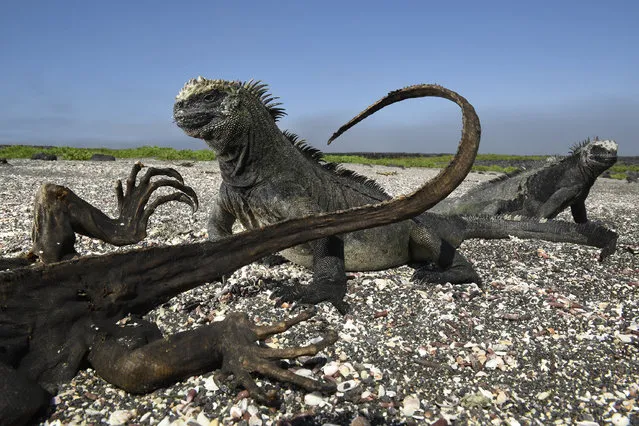
Galapagos – Rocking the Cradle: Four major ocean currents converge along the Galapagos archipelago, creating the conditions for an extraordinary diversity of animal life, April 25, 2016. The islands are home to at least 7,000 flora and fauna species, of which 97 percent of the reptiles, 80 percent of the land birds, 50 percent of the insects and 30 percent of the plants are endemic. The local ecosystem is highly sensitive to the changes in temperature, rainfall and ocean currents that characterize the climatic events known as El Niño and La Niña. These changes cause marked fluctuations in weather and food availability. Many scientists expect the frequency of El Niño and La Niña to increase as a result of climate change, making the Galapagos a possible early-warning location for its effects. (Photo by Thomas P. Peschak for National Geographic/World Press Photo)

Galapagos – Rocking the Cradle: Four major ocean currents converge along the Galapagos archipelago, creating the conditions for an extraordinary diversity of animal life, April 25, 2016. The islands are home to at least 7,000 flora and fauna species, of which 97 percent of the reptiles, 80 percent of the land birds, 50 percent of the insects and 30 percent of the plants are endemic. (Photo by Thomas P. Peschak for National Geographic/World Press Photo)
Details
16 Apr 2018 00:01:00