Loading...
Done
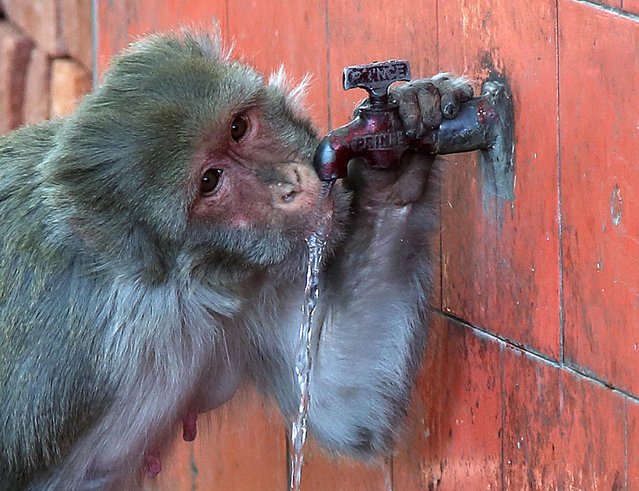
A monkey drinks water from a tap on a hot afternoon in Jammu, the winter capital Kashmir, India, 17 May 2016. Temperatures of around 42 degrees Celsius were forecast in the region. According to the news reports the Indian government decided to divert water by its river interlinking plans from rivers like Brahmaputra and the Ganges towards those rivers facing the drought likesituation . Many Indian states have been affected by drought and have been hit hard by water scarcity. (Photo by Jaipal Singh/EPA)

A monkey drinks water from a tap on a hot afternoon in Jammu, the winter capital Kashmir, India, 17 May 2016. Temperatures of around 42 degrees Celsius were forecast in the region. According to the news reports the Indian government decided to divert water by its river interlinking plans from rivers like Brahmaputra and the Ganges towards those rivers facing the drought likesituation . Many Indian states have been affected by drought and have been hit hard by water scarcity. (Photo by Jaipal Singh/EPA)
Details
22 May 2016 07:00:00
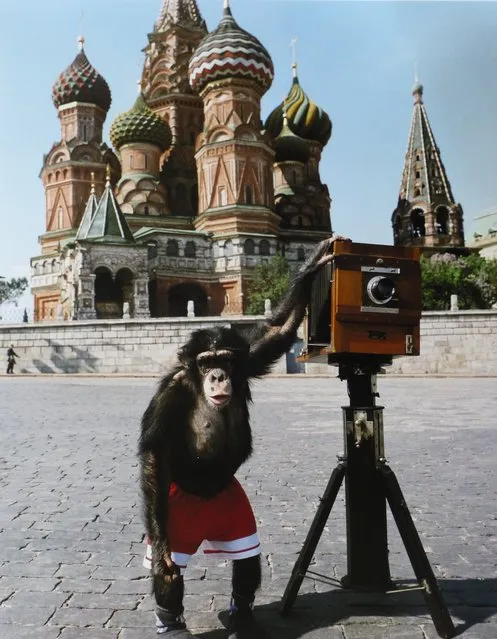
Picture by Guzelian GUZELIAN: SAY BANANAS! COLLECTION OF PHOTOGRAPHS TAKEN BY A MONKEY GO UNDER THE HAMMER. A collection of one-of-a-kind photographs is set to go under the hammer - so unique because the set was taken by a CHIMPANZEE. The pictures, which will be sold at Sotheby's Auction House, London, on June 5, are expected to fetch between £50,000 - £70,000.

“As is probably stated somewhere in the theory of infinity, if you give an infinite amount of monkeys an infinite number of old-timey Polaroid cameras, one will eventually take “artistic” blurry photos of historical sites in Moscow which will then be auctioned at Sotheby's for an estimated $75,000 – $100,000. Fortunately for every simian art fan with a spare $100k, we are currently living in the very universe in which that concept is reality. Eighteen photographs by – and of – Mikki The Chimpanzee are going to auction on June 5, 2013”. – Callie Beusman via Jezebel.com. (Photo by Guzelian)
Details
21 May 2013 09:31:00
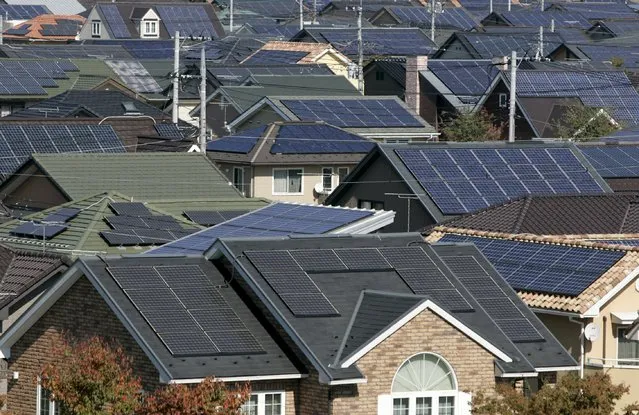
Rooftops of solar powered houses are pictured in Ota, 80 km northwest of Tokyo in this October 28, 2008 file photo. One by one, Japan is turning off the lights at the giant oil-fired power plants that propelled it to the ranks of the world's top industrialised nations. With nuclear power in the doldrums after the Fukushima disaster, it's solar energy that is becoming the alternative. (Photo by Yuriko Nakao/Reuters)

Rooftops of solar powered houses are pictured in Ota, 80 km northwest of Tokyo in this October 28, 2008 file photo. One by one, Japan is turning off the lights at the giant oil-fired power plants that propelled it to the ranks of the world's top industrialised nations. With nuclear power in the doldrums after the Fukushima disaster, it's solar energy that is becoming the alternative. Solar power is set to become profitable in Japan as early as this quarter, according to the Japan Renewable Energy Foundation (JREF), freeing it from the need for government subsidies and making it the last of the G7 economies where the technology has become economically viable. (Photo by Yuriko Nakao/Reuters)
Details
24 Nov 2015 08:04:00
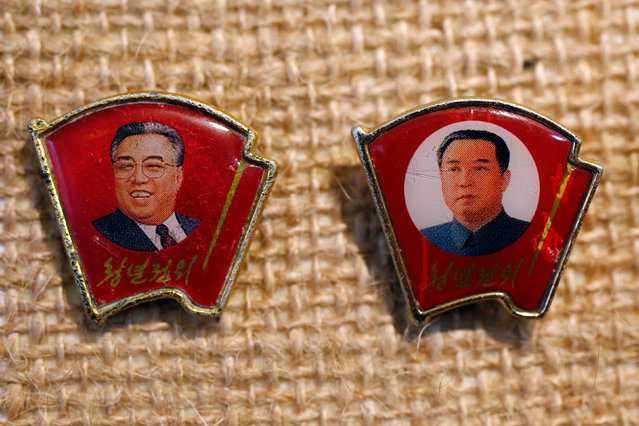
Two pins featuring former North Korean leader Kim Il Sung wearing different facial expressions are displayed in a glass case of Thomas Hui at his apartment in Hong Kong, China April 11, 2016. Collector Thomas Hui, 37, a former bank employee in Hong Kong, who is fascinated by North Korean pins and badges, has gathered over 100 featuring former leaders Kim Il Sung and Kim Jong Il, and has been buying and trading these Communist accessories since 2008. (Photo by Bobby Yip/Reuters)

Two pins featuring former North Korean leader Kim Il Sung wearing different facial expressions are displayed in a glass case of Thomas Hui at his apartment in Hong Kong, China April 11, 2016. Collector Thomas Hui, 37, a former bank employee in Hong Kong, who is fascinated by North Korean pins and badges, has gathered over 100 featuring former leaders Kim Il Sung and Kim Jong Il, and has been buying and trading these Communist accessories since 2008. (Photo by Bobby Yip/Reuters)
Details
13 Apr 2016 09:25:00


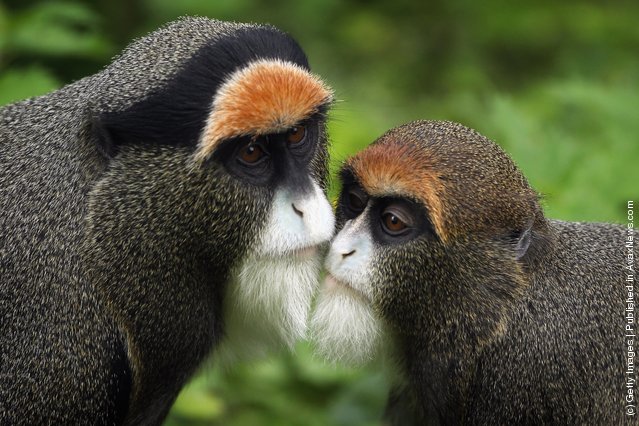
Two De Brazza's monkeys stand together at Port Lympne Wild Animal Park on June 21, 2011 in Hythe, England. Port Lympne has welcomed a host of new arrivals this year with wildebeest, colobus monkeys, gorillas and rhinos all adding to the current stock. Port Lympne and Howletts Wild Animal parks were set up by the late John Aspinall to protect and breed rare and endangered species and, where possible, return them to safe areas in the wild. The Aspinall Foundation which runs the parks also manages two gorilla rescue and rehabilitation projects in the central African countries of Gabon and Congo where they have successfully reintroduced over 50 gorillas to the wild. (Photo by Dan Kitwood/Getty Images)
Details
24 Jun 2011 10:12:00
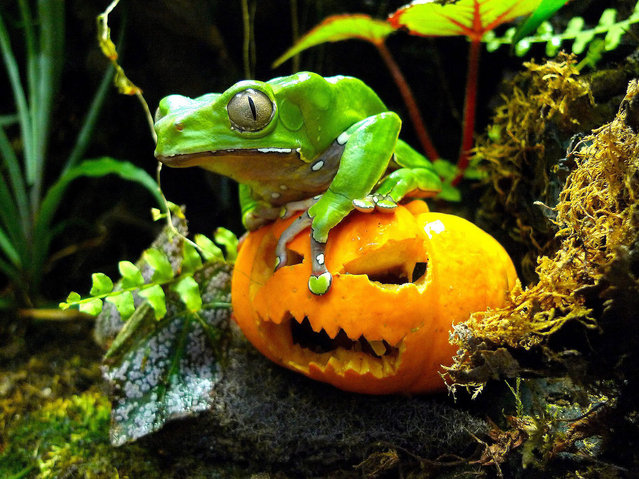
Alfred the frog looks almost as scary as the pumpkin he is perched on at London Zoo 26 October 2011. Keepers at the zoo have joined in the Halloween tradition by supplying pumpkin lunches to some of their animals, including the giant waxy monkey frog.  However Alfred is not quite the giant figure his species name suggests. (Photo by EPA/Zoological Society of London)

Alfred the frog looks almost as scary as the pumpkin he is perched on at London Zoo 26 October 2011. Keepers at the zoo have joined in the Halloween tradition by supplying pumpkin lunches to some of their animals, including the giant waxy monkey frog. However Alfred is not quite the giant figure his species name suggests – he actually measures up at around 4 inches (10 centimeters). (Photo by EPA/Zoological Society of London)
Details
31 Oct 2014 11:54:00
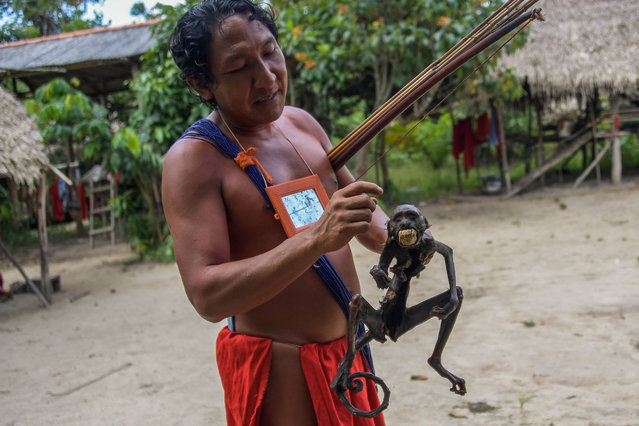
Chieftain Japarupi Waiapi shows a roasted monkey -part of Waiapi's diet, also based in Manioc and fruits- at the reserve in Amapa state in Brazil on October 13, 2017. When Waiapis walks into the Amazon forest surrounding their village, they do not see trees, but a kind of shopping mall providing medicine, food, shelter, tools and weapons  all under the eye of multiple spirits. (Photo by Apu Gomes/AFP Photo)

Chieftain Japarupi Waiapi shows a roasted monkey -part of Waiapi's diet, also based in Manioc and fruits- at the reserve in Amapa state in Brazil on October 13, 2017. When Waiapis walks into the Amazon forest surrounding their village, they do not see trees, but a kind of shopping mall providing medicine, food, shelter, tools and weapons all under the eye of multiple spirits. (Photo by Apu Gomes/AFP Photo)
Details
27 Oct 2017 08:39:00
The three pals dressed to the nines enjoyed a boozy night out in Leeds, United Kingdom on August 27, 2021. (Photo by Nb press ltd)

The three pals dressed to the nines enjoyed a boozy night out in Leeds, United Kingdom on August 27, 2021. Boozed-up Brits flocked to bars across the country to enjoy the start of the three-day break. (Photo by Nb press ltd)
Details
29 Aug 2021 06:58:00