Loading...
Done
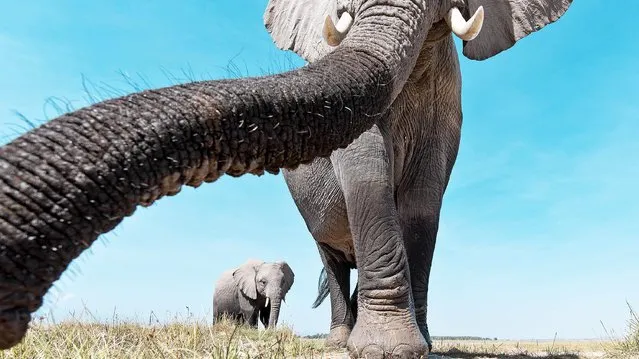
An elephant in Amboseli National Park in Kenya, June 2021. Gurcharan Roopra, 42, a Nairobi-born engineer-turned-wildlife photographer, has dedicated the past four years of his career to photographing these animals. He spends hours in his workshop camouflaging and encasing his equipment with protective gear before laying his camera in the path of lions, elephants, rhino, zebra and buffalo. (Photo by Gurcharan Roopra/Mercury Press)

An elephant in Amboseli National Park in Kenya, June 2021. Gurcharan Roopra, 42, a Nairobi-born engineer-turned-wildlife photographer, has dedicated the past four years of his career to photographing these animals. He spends hours in his workshop camouflaging and encasing his equipment with protective gear before laying his camera in the path of lions, elephants, rhino, zebra and buffalo. (Photo by Gurcharan Roopra/Mercury Press)
Details
24 Feb 2024 08:48:00
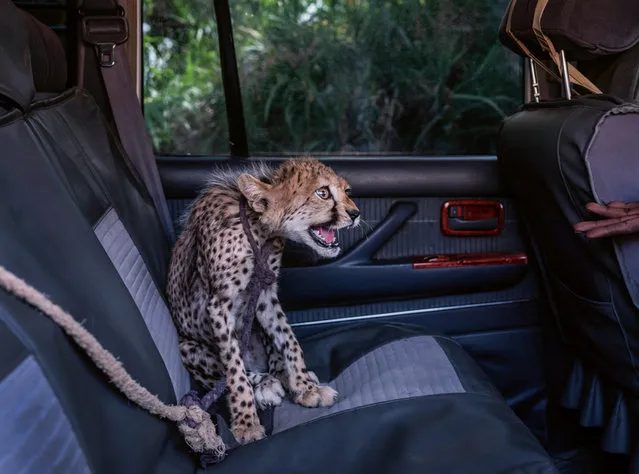
A five-month-old cheetah seated in the back of a Land Cruiser growls at an outstretched hand after being taken from traffickers in Ethiopia and driven to Harirad, Somaliland, in 2020. This photo is part of the work of more than 100 artists in Why We Photograph Animals, a new collection of wildlife photography that aims to help understand why people have photographed animals at different points in history and what it means in the present. (Photo by Nichole Sobecki/Thames & Hudson)

A five-month-old cheetah seated in the back of a Land Cruiser growls at an outstretched hand after being taken from traffickers in Ethiopia and driven to Harirad, Somaliland, in 2020. This photo is part of the work of more than 100 artists in Why We Photograph Animals, a new collection of wildlife photography that aims to help understand why people have photographed animals at different points in history and what it means in the present. (Photo by Nichole Sobecki/Thames & Hudson)
Details
28 Apr 2024 03:15:00
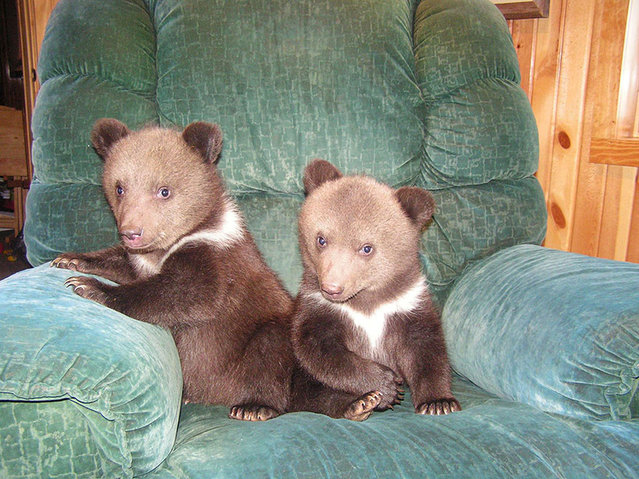
Couple Adopts Twin Bear Cubs Rejected By Their Mother

David and Lana Fechter have recently adopted two adorable Siberian bear cubs that were rejected by their mother at a Chicago zoo. The two nine-week-old male cubs, Lewis and Clark, are being kept in an inside closure and are being bottle fed. When the twins get bigger and more independent, they’ll be be given a large natural enclosure with ponds and ridges to live in at Shalom Wildlife Sanctuary.
Details
13 Apr 2014 07:25:00
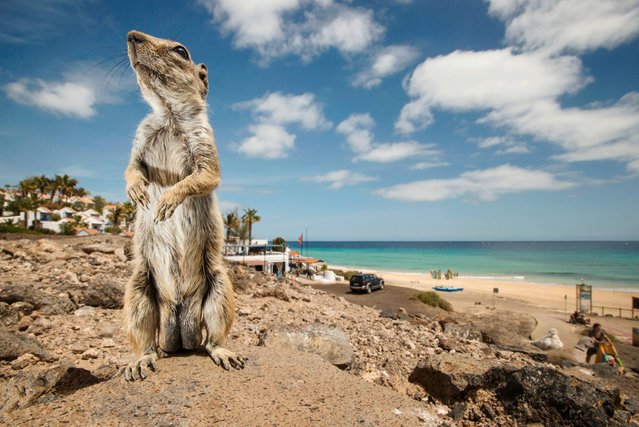
A ground squirrel. (Photo by Sam Hobson/Wildscreen Photography Festival 2014)

From towering elephants to tiny insects, photographers will be offering a rare insight into the natural world at this year’s Wildscreen Photography Festival 2014. The festival, formerly known as WildPhotos, is the UK’s largest wildlife photography show. The Wildscreen Photography Festival 2014 will be taking place between 24-26 October at London’s Royal Geographical Society. (Photo by Sam Hobson/Wildscreen Photography Festival 2014)
Details
25 Sep 2014 13:21:00
A Kenya Wildlife Services (KWS) veterinarian and security personnel back away from a tranquilised black-Rhino calf August 30, 2017 after she appeared to prematurely overcome the sedative at the Nairobi National Park, during an identification-tagging excercise to ease quick identification of resident rhino during anti-poaching patrols. (Photo by Tony Karumba/AFP Photo)

A Kenya Wildlife Services (KWS) veterinarian and security personnel back away from a tranquilised black-Rhino calf August 30, 2017 after she appeared to prematurely overcome the sedative at the Nairobi National Park, during an identification-tagging excercise to ease quick identification of resident rhino during anti-poaching patrols. (Photo by Tony Karumba/AFP Photo)
Details
31 Aug 2017 11:03:00
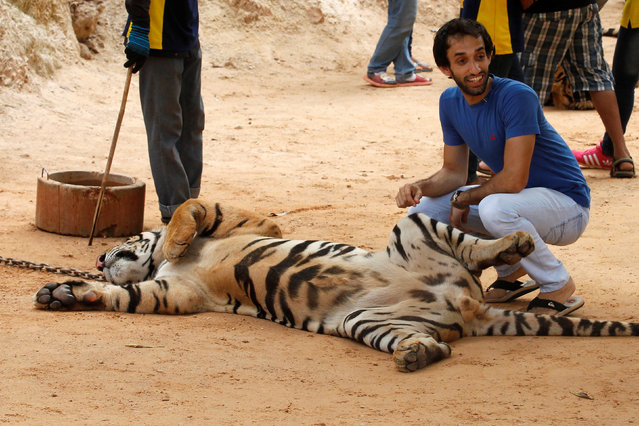
A tourist poses next to a tiger before officials start moving tigers from Thailand's controversial Tiger Temple, a popular tourist destination which has come under fire in recent years over the welfare of its big cats in Kanchanaburi province, west of Bangkok, Thailand, May 30, 2016. (Photo by Chaiwat Subprasom/Reuters)

A tourist poses next to a tiger before officials start moving tigers from Thailand's controversial Tiger Temple, a popular tourist destination which has come under fire in recent years over the welfare of its big cats in Kanchanaburi province, west of Bangkok, Thailand, May 30, 2016. Wildlife authorities raid a Buddhist temple that has more than 100 tigers, taking away three cats and vowing to confiscate scores more in response to global pressure over wildlife trafficking. (Photo by Chaiwat Subprasom/Reuters)
Details
31 May 2016 11:51:00
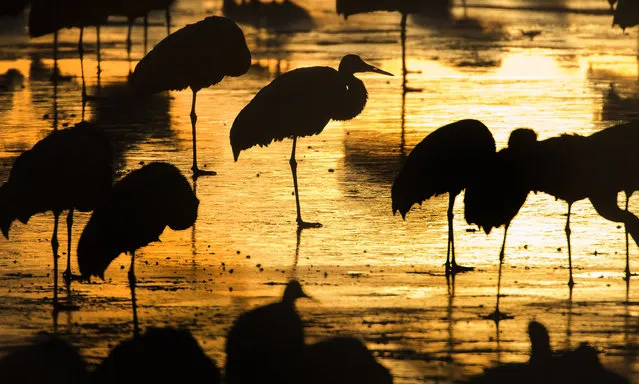
In this Friday, February 6, 2015 photo, sandhill cranes begin to stir after resting for the night at a roosting location along their winter migration route in Cecilia, Ky. According to counts made by biologists with the Kentucky Fish and Wildlife Resources, about 12,000 of the birds have stopped in Cecilia this week during their winter northward migration on their way to their nesting grounds in the Great Lakes region. (Photo by David Stephenson/AP Photo)

In this Friday, February 6, 2015 photo, sandhill cranes begin to stir after resting for the night at a roosting location along their winter migration route in Cecilia, Ky. According to counts made by biologists with the Kentucky Fish and Wildlife Resources, about 12,000 of the birds have stopped in Cecilia this week during their winter northward migration on their way to their nesting grounds in the Great Lakes region. (Photo by David Stephenson/AP Photo)
Details
23 Feb 2015 13:07:00
A sick California sea lion with possible domoic acid poisoning is rescued to be evaluated by volunteers from CIMWI (Channel Islands Marine & Wildlife Institute) in Santa Barbara, California, on March 25, 2025. Over a hundred sea lions, dolphins and other marine mammals, including birds, have been sickened by domoic acid poisoning from algal blooms in Southern California since February, US media reported. (Photo by David Swanson/AFP Photo)

A sick California sea lion with possible domoic acid poisoning is rescued to be evaluated by volunteers from CIMWI (Channel Islands Marine & Wildlife Institute) in Santa Barbara, California, on March 25, 2025. Over a hundred sea lions, dolphins and other marine mammals, including birds, have been sickened by domoic acid poisoning from algal blooms in Southern California since February, US media reported. (Photo by David Swanson/AFP Photo)
Details
02 Apr 2025 04:29:00