Loading...
Done
File photo dated 21/04/66 of Pattie Boyd in London's West End wearing a mini skirt, as the British designer Mary Quant, widely credited with popularising the mini skirt has recalled its “feeling of freedom and liberation” 50 years after she took the fashion world by storm. (Photo by PA Wire)

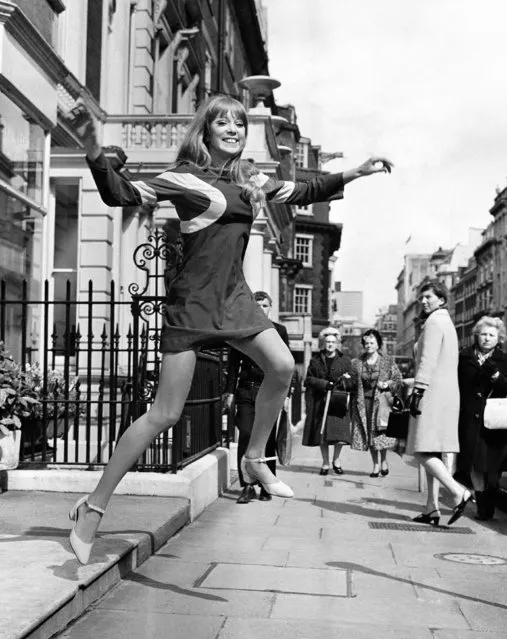
File photo dated 21/04/66 of Pattie Boyd in London's West End wearing a mini skirt, as the British designer Mary Quant, widely credited with popularising the mini skirt has recalled its “feeling of freedom and liberation” 50 years after she took the fashion world by storm. Quant, who named the skirt after her favourite make of car, said she “couldn't have imagined” in 1964 that it would become a staple of women's clothing, but added: “It seemed then to be obvious, and so right”. (Photo by PA Wire)
Details
29 Jan 2015 11:33:00
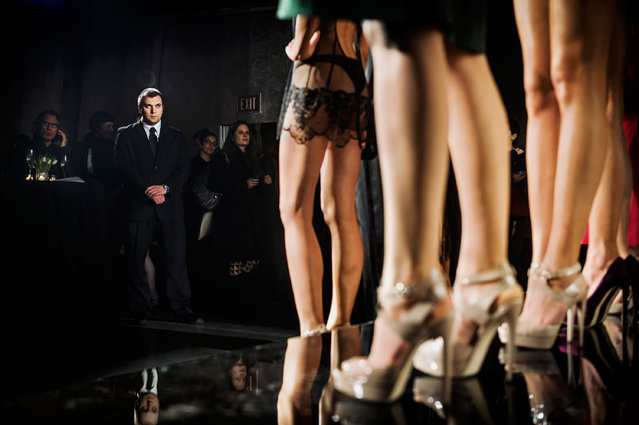
A security guard looks at the models during La Perla’s presentation at the Dream Hotel. Mercedes-Benz Fashion Week, New York City, Spring 2014. From the series “Fashion Lust”. (Photo by Dina Litovsky)

A security guard looks at the models during La Perla’s presentation at the Dream Hotel. Mercedes-Benz Fashion Week, New York City, Spring 2014. From the series “Fashion Lust”. (Photo by Dina Litovsky)
Details
09 Feb 2015 12:25:00
Bikini-clad women ski as they are led by a car during a performance on the frozen Yenisei River outside Krasnoyarsk, Siberia, Russia, March 20, 2016. The performance, entitled “Siberian Spring's Strings” and created with the participation of artist Vasily Slonov, marked the day of spring equinox (vernal equinox), according to organizers. (Photo by Ilya Naymushin/Reuters)

Bikini-clad women ski as they are led by a car during a performance on the frozen Yenisei River outside Krasnoyarsk, Siberia, Russia, March 20, 2016. The performance, entitled “Siberian Spring's Strings” and created with the participation of artist Vasily Slonov, marked the day of spring equinox (vernal equinox), according to organizers. (Photo by Ilya Naymushin/Reuters)
Details
21 Mar 2016 13:07:00
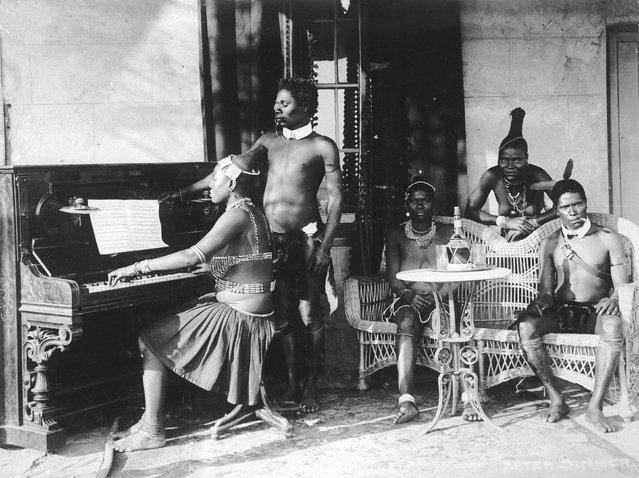
circa 1925:  A Zulu woman playing the piano while a group of others sit and listen.  (Photo by General Photographic Agency/Getty Images)

“The Zulu are the largest South African ethnic group, with an estimated 10–11 million people living mainly in the province of KwaZulu-Natal. Small numbers also live in Zimbabwe, Zambia, and Mozambique. Their language, Zulu, is a Bantu language; more specifically, part of the Nguni subgroup. The Zulu Kingdom played a major role in South African history during the 19th and 20th centuries. Under apartheid, Zulu people were classed as third-class citizens and suffered from state-sanctioned discrimination. They remain today the most numerous ethnic group in South Africa, and now have equal rights along with all other citizens”. – Wikipedia.

Photo: A Zulu woman playing the piano while a group of others sit and listen (to put it briefly, Englishmen scoff over Zulu). South Africa, circa 1925. (Photo by General Photographic Agency)

Details
03 Feb 2014 09:40:00
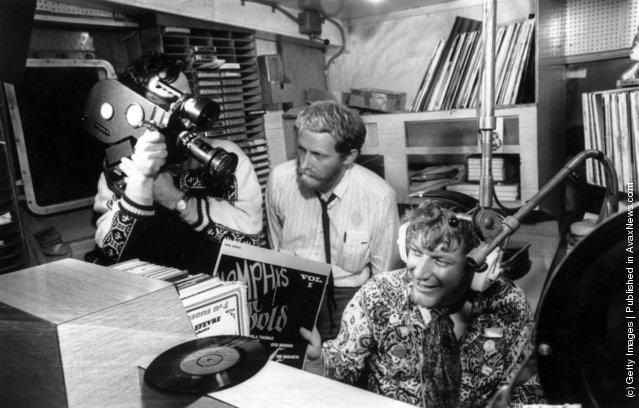
The World in Action team making a program about the pirate radio ship Caroline, filmed by Paddy Searle, and produced by Mike Hodges. The DJ being filmed is Robbie Dale, and Hodges is standing behind him

“«Pirate radio» in the UK first became widespread in the early 1960s when pop music stations such as Radio Caroline and Radio London started to broadcast on medium wave to the UK from offshore ships or disused sea forts. At the time these stations were not illegal because they were broadcasting from international waters. The stations were set up by entrepreneurs and music enthusiasts to meet the growing demand for pop and rock music, which was not catered for by the legal BBC Radio services”. – Wikipedia

Photo: The “World in Action” team making a program about the pirate radio ship Caroline, filmed by Paddy Searle, and produced by Mike Hodges. The DJ being filmed is Robbie Dale, and Hodges is standing behind him. (Photo by James Jackson/Evening Standard/Getty Images). 6th September 1967
Details
09 Sep 2011 08:54:00
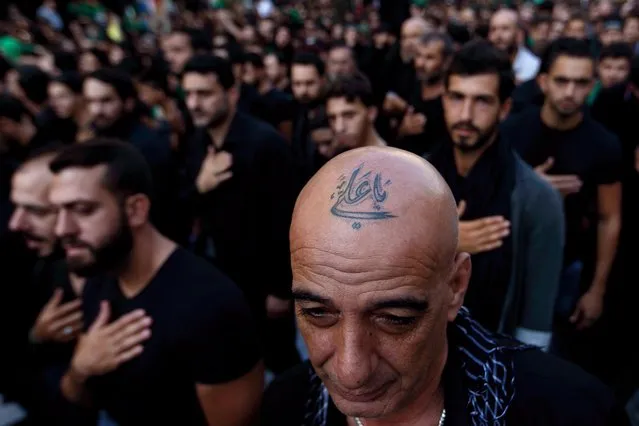
In this Saturday, Oct. 24, 2015 photo, a Lebanese Shiite supporter of Hezbollah with a tattoo on his head that reads in Arabic, “Oh Ali”, beats his chest during the holy day of Ashoura, in the southern suburb of Beirut, Lebanon. A growing number of Shiite Muslims in Lebanon are getting tattoos with religious and other Shiite symbols since the civil war in neighboring Syria broke out five years ago, fanning sectarian flames across the region. (Photo by Hassan Ammar/AP Photo)

In this Saturday, Oct. 24, 2015 photo, a Lebanese Shiite supporter of Hezbollah with a tattoo on his head that reads in Arabic, “Oh Ali”, beats his chest during the holy day of Ashoura, in the southern suburb of Beirut, Lebanon. A growing number of Shiite Muslims in Lebanon are getting tattoos with religious and other Shiite symbols since the civil war in neighboring Syria broke out five years ago, fanning sectarian flames across the region. (Photo by Hassan Ammar/AP Photo)
Details
30 Jul 2016 11:02:00
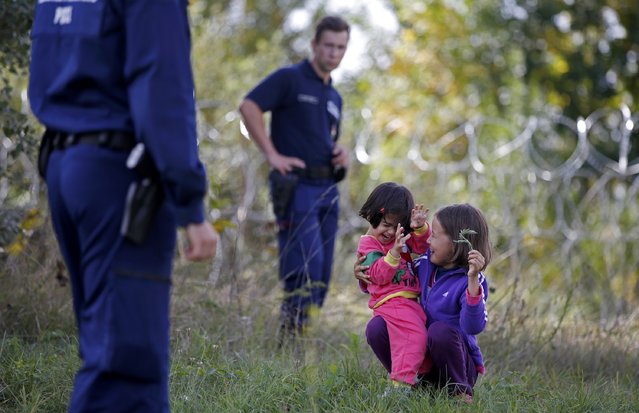
Children guarded by Hungarian police play on the ground after being detained along with other migrants who illegally crossed from Serbia to Hungary near the village of Asotthalom, Hungary, September 16, 2015. (Photo by Dado Ruvic/Reuters)

Children guarded by Hungarian police play on the ground after being detained along with other migrants who illegally crossed from Serbia to Hungary near the village of Asotthalom, Hungary, September 16, 2015. (Photo by Dado Ruvic/Reuters)
Details
17 Sep 2015 11:01:00
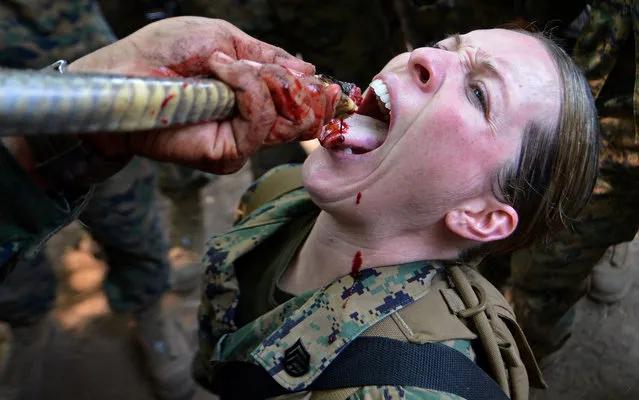
In a military base in the Thai province of Chon Buri February 20 U.S. Marines Navy with Thailand began their studies in jungle survival. The event is held in joint military exercises “Cobra Gold 2013”. During a jungle survival program February 20, 2013 taught by Royal Thai Special Forces in Sannapit, Thailand, U.S. Marines learned to catch cobras and drink their fresh blood, not to mention eat forest insects and pull the heads off of chicken. The training was part of Operation Cobra Gold 13, the 32nd edition of international military exercises hosted by the Thai. According to a U.S. Marines press release, Cobra Gold is the largest exercise of its kind in Asia and incorporates troops from five other nations in addition to the U.S. and Thailand. The Daily Mail reports that the Marines were invited to experience the local custom of drinking cobra blood after being taught to catch and kill cobras in the wild. As CNN notes, Cobra blood is believed to be a panacea and aphrodiasic in parts of Southeast Asia. In Jakarta, vendors can earn over $100 a night selling shots of cobra blood mixed with liquor. (Photo by Pornchai Kittiwongsakul/AFP Photo)

During a jungle survival program February 20, 2013 taught by Royal Thai Special Forces in Sannapit, Thailand, U.S. Marines learned to catch cobras and drink their fresh blood, not to mention eat forest insects and pull the heads off of chicken. The training was part of Operation Cobra Gold 13, the 32nd edition of international military exercises hosted by the Thai. According to a U.S. Marines press release, Cobra Gold is the largest exercise of its kind in Asia and incorporates troops from five other nations in addition to the U.S. and Thailand. The Daily Mail reports that the Marines were invited to experience the local custom of drinking cobra blood after being taught to catch and kill cobras in the wild. As CNN notes, Cobra blood is believed to be a panacea and aphrodiasic in parts of Southeast Asia. In Jakarta, vendors can earn over $100 a night selling shots of cobra blood mixed with liquor. (Photo by Pornchai Kittiwongsakul/AFP Photo)
Details
23 Feb 2013 11:52:00