Loading...
Done
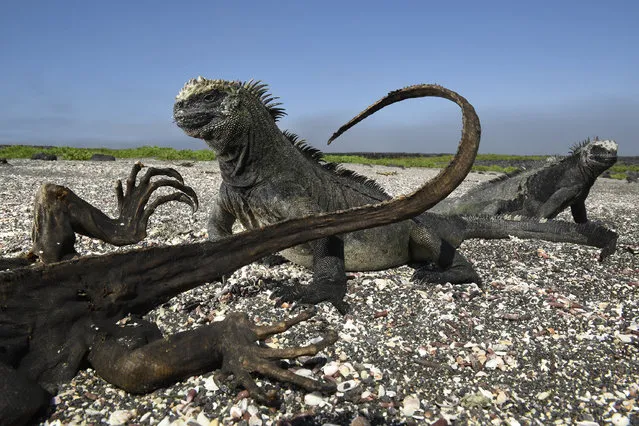
Galapagos – Rocking the Cradle: Four major ocean currents converge along the Galapagos archipelago, creating the conditions for an extraordinary diversity of animal life, April 25, 2016. The islands are home to at least 7,000 flora and fauna species, of which 97 percent of the reptiles, 80 percent of the land birds, 50 percent of the insects and 30 percent of the plants are endemic. The local ecosystem is highly sensitive to the changes in temperature, rainfall and ocean currents that characterize the climatic events known as El Niño and La Niña. These changes cause marked fluctuations in weather and food availability. Many scientists expect the frequency of El Niño and La Niña to increase as a result of climate change, making the Galapagos a possible early-warning location for its effects. (Photo by Thomas P. Peschak for National Geographic/World Press Photo)

Galapagos – Rocking the Cradle: Four major ocean currents converge along the Galapagos archipelago, creating the conditions for an extraordinary diversity of animal life, April 25, 2016. The islands are home to at least 7,000 flora and fauna species, of which 97 percent of the reptiles, 80 percent of the land birds, 50 percent of the insects and 30 percent of the plants are endemic. (Photo by Thomas P. Peschak for National Geographic/World Press Photo)
Details
16 Apr 2018 00:01:00
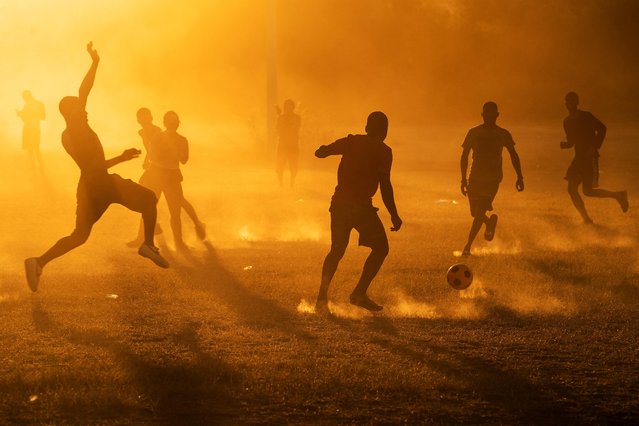
Migrants seeking asylum in the U.S., who returned to the Mexican side of the border to avoid deportation, play soccer in a makeshift migrant camp in Braulio Fernandez Ecological Park in Ciudad Acuna, Mexico, September 22, 2021. (Photo by Go Nakamura/Reuters)

Migrants seeking asylum in the U.S., who returned to the Mexican side of the border to avoid deportation, play soccer in a makeshift migrant camp in Braulio Fernandez Ecological Park in Ciudad Acuna, Mexico, September 22, 2021. (Photo by Go Nakamura/Reuters)
Details
23 Oct 2021 08:38:00
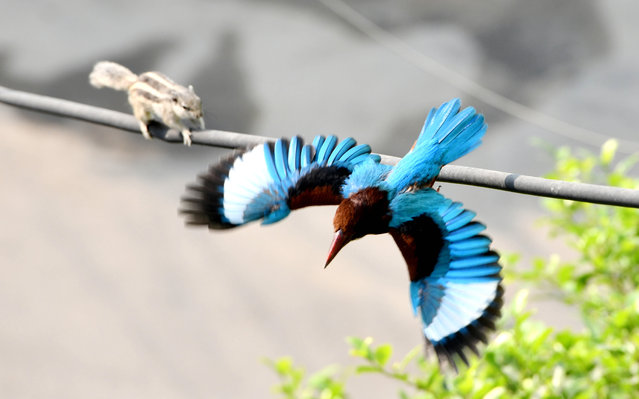
A squirrel crawls along an electrical cable as a kingfisher takes off from it in New Delhi, India, October 24, 2020. (Photo by Chine Nouvelle/SIPA Press/Rex Features/Shutterstock)

A squirrel crawls along an electrical cable as a kingfisher takes off from it in New Delhi, India, October 24, 2020. (Photo by Chine Nouvelle/SIPA Press/Rex Features/Shutterstock)
Details
03 Nov 2020 00:01:00
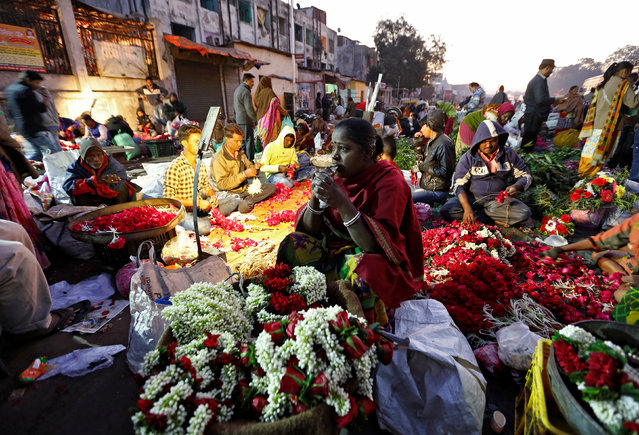
A vendor drinks water as she waits for customers at a roadside flower market in Ahmedabad, India, February 8, 2017. (Photo by Amit Dave/Reuters)

A vendor drinks water as she waits for customers at a roadside flower market in Ahmedabad, India, February 8, 2017. (Photo by Amit Dave/Reuters)
Details
10 Feb 2017 00:05:00
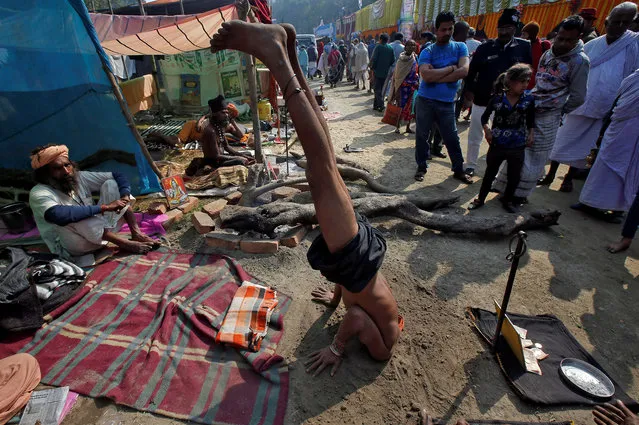
A Sadhu or a Hindu holy man performs to receive money from pilgrims at a makeshift shelter, before heading for an annual trip to Sagar Island for the one-day festival of “Makar Sankranti”, in Kolkata, India, January 10, 2018. (Photo by Rupak De Chowdhuri/Reuters)

A Sadhu or a Hindu holy man performs to receive money from pilgrims at a makeshift shelter, before heading for an annual trip to Sagar Island for the one-day festival of “Makar Sankranti”, in Kolkata, India, January 10, 2018. (Photo by Rupak De Chowdhuri/Reuters)
Details
22 Jan 2018 06:46:00
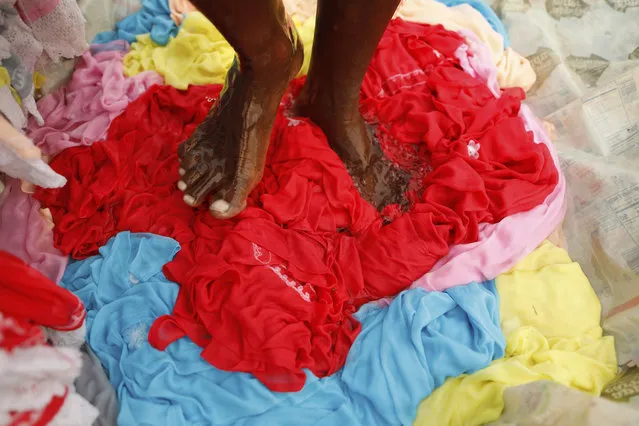
A dhobi, or a washerman washes cloths on the banks of the River Gomti in Lucknow, India, Saturday, September 12, 2020. Dhobis are traditional laundry workers who wash clothes by hand and dry them in the sun, an occupation which has been in existence for generations. Most cities in India have a Dhobi Ghat, or washermen's area, where the city's pile of clothes is laundered. This practice is still popular in India, despite of modern technology. Around 1,000 families work in Lucknow's Dhobi Ghat. However, in light of the novel coronavirus, their wages have decreased drastically. With each family earning around US$100-200 per month. (Photo by Rajesh Kumar Singh/AP Photo)

A dhobi, or a washerman washes cloths on the banks of the River Gomti in Lucknow, India, Saturday, September 12, 2020. Dhobis are traditional laundry workers who wash clothes by hand and dry them in the sun, an occupation which has been in existence for generations. Most cities in India have a Dhobi Ghat, or washermen's area, where the city's pile of clothes is laundered. This practice is still popular in India, despite of modern technology. Around 1,000 families work in Lucknow's Dhobi Ghat. However, in light of the novel coronavirus, their wages have decreased drastically. With each family earning around US$100-200 per month. (Photo by Rajesh Kumar Singh/AP Photo)
Details
25 Sep 2020 00:03:00
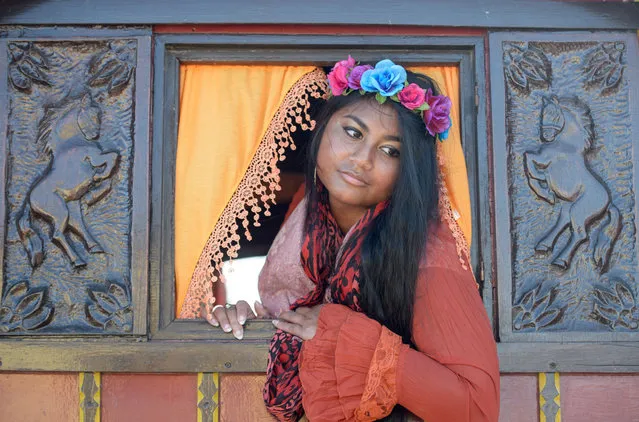
Marie Lou looks out of the window of gypsy folklore wagon on May 24, 2016 in Staintes Maries de la Mere near Arles, France. (Photo by Thomas Lohnes/Getty Images)

Marie Lou looks out of the window of gypsy folklore wagon on May 24, 2016 in Staintes Maries de la Mere near Arles, France. Gypsies from all over Europe worship “Sara the Black”, their Saint and patroness, for one week. Sara's statue is situated in the crypt of the church. She wears a multicoloured dress and will carried by the gypsies to the sea at this afternoon. (Photo by Thomas Lohnes/Getty Images)
Details
25 May 2016 13:06:00
A newly hatched chick cuddles up to its mother at Santee Lakes near San Diego, California in May 2023. (Photo by Tammy Kokjohn/Solent News)

A newly hatched chick cuddles up to its mother at Santee Lakes near San Diego, California in May 2023. (Photo by Tammy Kokjohn/Solent News)
Details
18 Jun 2023 04:14:00