Loading...
Done
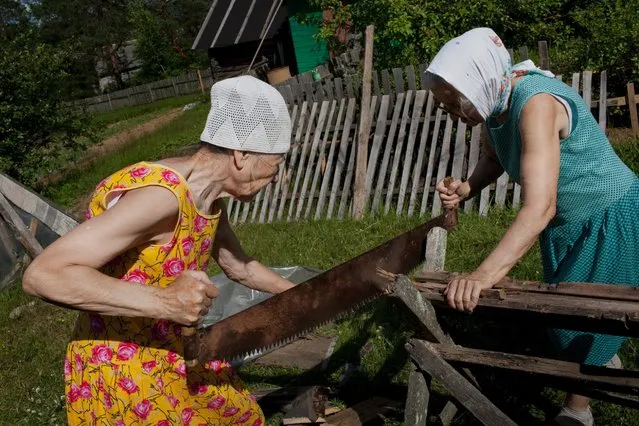
“Two-Handed Saw, 2014”. “Most of the neighbors have switched to power tools to run their households, the buzz of chain saws and weed-whackers overpowering the quieter sounds of country life, but my aunts hold on to the two-handed saw that's decades old, the sickle and scythe that need to be sharpened and polished after each use, the old axe that's becoming heavier each year. Each of these objects is familiar, holding memories of their brother, who succumbed to cancer a few years ago, of days before my grandfather lost his vision in the 50's, of busier days and longer futures”, Sablin told. (Photo by Nadia Sablin)

In northwest Russia, in a small village called Alekhovshchina, Nadia Sablin's aunts spend the warmer months together in the family home and live as the family has always lived, chopping wood to heat the house and making their own clothes. Sablin's book of photographs, “Aunties: The Seven Summers of Alevtina and Ludmila”, is published by Duke University Press. Here: “Two-Handed Saw, 2014”. (Photo by Nadia Sablin)
Details
25 Feb 2016 12:12:00
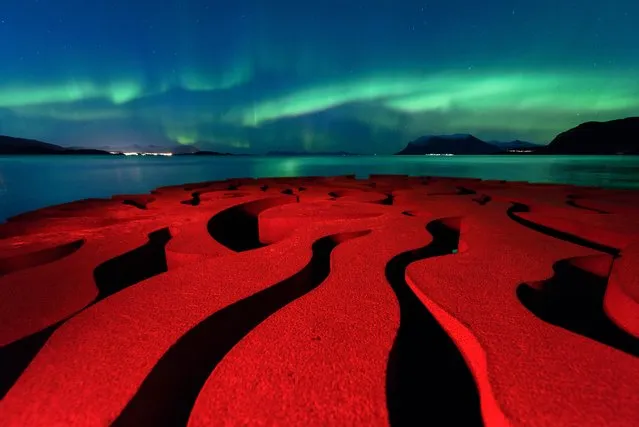
“Seven Magic Points”. The rusty red swirls of the circular, iron sculpture Seven Magic Points in Brattebergan, Norway mirror the rippling aurora above. (Photo by Rune Engebø/Royal Observatory Greenwich’s Astronomy Photographer of the Year 2016/National Maritime Museum)

Gorgeous galaxies and stunning stars make up this selection of pictures from the shortlisted entries for this year’s Insight Astronomy Photographer of the Year award. The winners will be announced on 15 September, and an exhibition of the winning images will be will be displayed in a free exhibition at the Royal Observatory Greenwich’s Astronomy Centre from 17 September. Here: “Seven Magic Points”. The rusty red swirls of the circular, iron sculpture Seven Magic Points in Brattebergan, Norway mirror the rippling aurora above. (Photo by Rune Engebø/Royal Observatory Greenwich’s Astronomy Photographer of the Year 2016/National Maritime Museum)
Details
28 Jul 2016 13:51:00
A view of traditional bolinhos de bacalhau (fried codfish balls) in Rio de Janeiro, Brazil, May 7, 2016. (Photo by Sergio Moraes/Reuters)

If the most popular foods of Rio de Janeiro have one thing in common, it is their informality. You can find fine restaurants in the city, but they do not set Rio apart from other places. What does set it apart, and what invariably brings its residents, known as "Cariocas," together is the unpretentious food they eat in bright, loud, crowded bars and restaurants, on busy street corners, or after a day at the beach. Here: A view of traditional bolinhos de bacalhau (fried codfish balls) in Rio de Janeiro, Brazil, May 7, 2016. (Photo by Sergio Moraes/Reuters)
Details
05 Aug 2016 13:20:00
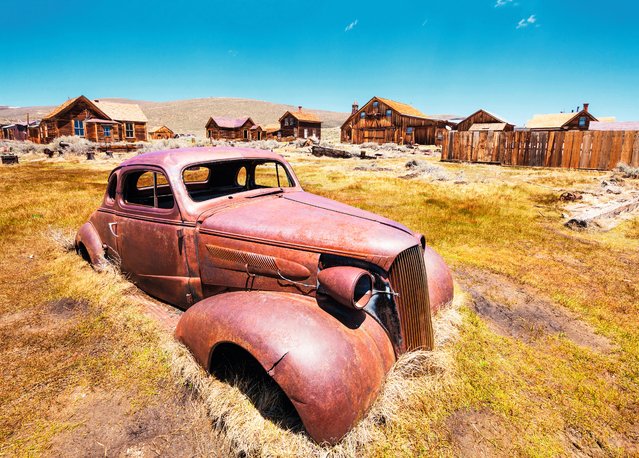
Bodie, Mono County, California. Gold was discovered at Bodie in 1859 (just after the initial California gold rush) and it went from mining camp to boomtown. Its decline began in 1880, when word spread of new boomtowns elsewhere. The Standard Consolidated Mine closed in 1913, and four years later the Bodie Railway was abandoned. By 1940 the population was down to 40. Today, Bodie is maintained in a state of arrested decay as a visitor attraction. (Photo by Alamy Stock Photo)

Kieron Connolly’s new book of photographs of more than 100 once-busy and often elegant buildings gives an idea of how the world might look if humankind disappeared. Here: Bodie, Mono County, California. Gold was discovered at Bodie in 1859 (just after the initial California gold rush) and it went from mining camp to boomtown. Its decline began in 1880, when word spread of new boomtowns elsewhere. The Standard Consolidated Mine closed in 1913, and four years later the Bodie Railway was abandoned. By 1940 the population was down to 40. Today, Bodie is maintained in a state of arrested decay as a visitor attraction. (Photo by Alamy Stock Photo)
Details
07 Sep 2016 09:50:00
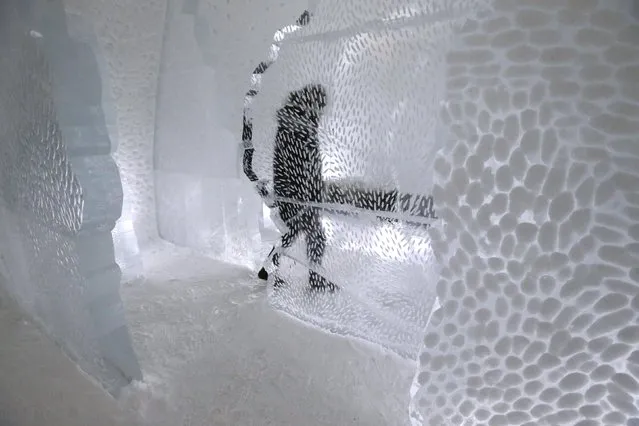
A man walks into a room in the Ice hotel in Jukkasjarvi, Sweden, December 16, 2015. (Photo by Ints Kalnins/Reuters)

In Jukkasjärvi, a village a few miles east of Kiruna, the proprietors of one hotel begin planning for a winter ice festival in March. That’s when they begin collecting some 5,000 tons of ice from the River Torne in order to prepare the Icehotel, the world’s coolest place to stay. Options for overnight stay include snow rooms, ice rooms, art suites, and the Northern Lights room, all of which range from about $300 to $900 per night. But the deluxe suite’s the only way to go. These rooms come with a critical amenity: heated ensuite bathrooms and saunas. Here: A man walks into a room in the Ice hotel in Jukkasjarvi, Sweden, December 16, 2015. (Photo by Ints Kalnins/Reuters)
Details
18 Dec 2015 08:02:00
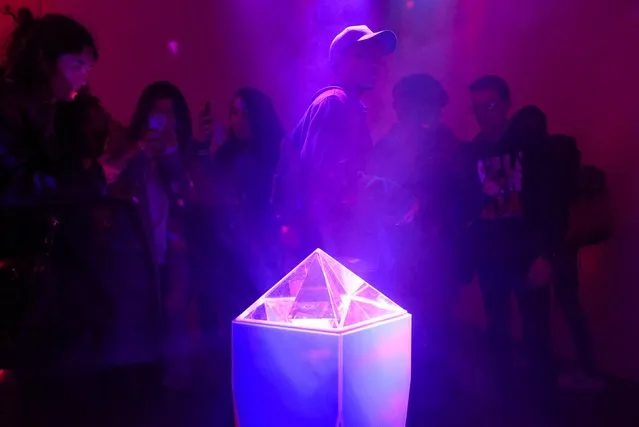
The Museum of Feelings doesn't really have “exhibits" in the conventional sense; rather, visitors move from one themed alcove to another, five in total, each with its own distinctive aroma.  (Photo by Stephanie Keith/Reuters)

The Museum of Feelings doesn't really have “exhibits" in the conventional sense; rather, visitors move from one themed alcove to another, five in total, each with its own distinctive aroma. The “Optimistic Room," bathed in vivid pink and purple light, is little more than a lightshow, with patrons using small reflective panels to bounce light around the room. Here: People interact in the “optimistic” room at the Museum of Feelings, a pop-up installation in New York, December 15, 2015. (Photo by Stephanie Keith/Reuters)
Details
19 Dec 2015 08:00:00
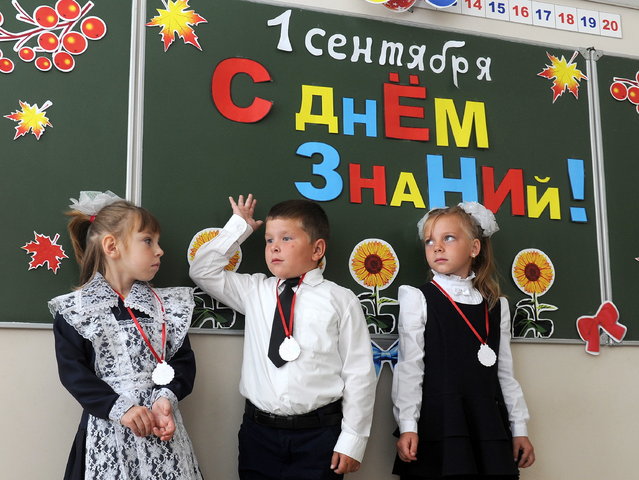
Schoolchildren attend their first lesson on Knowledge Day in the town of Turov, Zhytkavichy District, Gomel Region, Belarus on September 1, 2017. Knowledge Day marks the beginning of a new school year in Belarus and is celebrated on September 1. (Photo by Viktor Drachev/TASS via Getty Images)

Though schools around the globe have different start dates, calendars and traditions, the first day of a new term is an exciting time filled with the prospects of gaining more knowledge, making new friends and building community. Here: Schoolchildren attend their first lesson on Knowledge Day in the town of Turov, Zhytkavichy District, Gomel Region, Belarus on September 1, 2017. Knowledge Day marks the beginning of a new school year in Belarus and is celebrated on September 1. (Photo by Viktor Drachev/TASS via Getty Images)
Details
20 Sep 2017 08:00:00
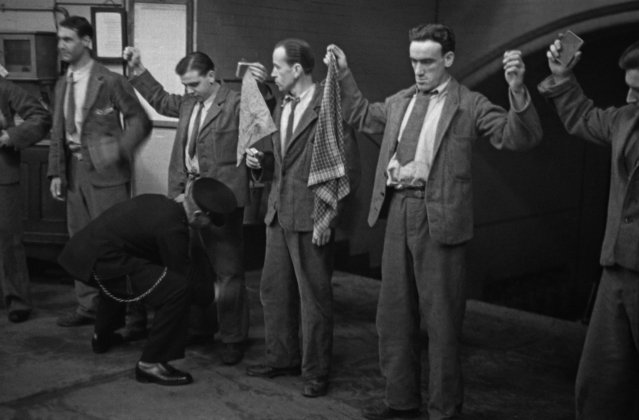
A prison officer frisking prisoners during the “rub-down” at Strangeways Prison in Manchester, UK on November 1948. (Photo by Bert Hardy/Picture Post/Hulton Archive/Getty Images)

Shot by Bert Hardy, the black and white images show prisoners carrying out remedial tasks such as untying knots in post office string and sewing mail bags. Other intriguing shots show lags doing their daily one hour outdoor exercise, being frisked for contraband items by officers during a routine “rub down” and serving evening meals. Strangeways was designed by Alfred Waterhouse and cost £170,000 ($207,910) to build. The prison, famed for its prominent ventilation tower and imposing design, has become a local landmark. Here: A prison officer frisking prisoners during the “rub-down” at Strangeways Prison in Manchester, UK on November 1948. (Photo by Bert Hardy/Picture Post/Hulton Archive/Getty Images)
Details
08 Mar 2017 00:01:00