Loading...
Done
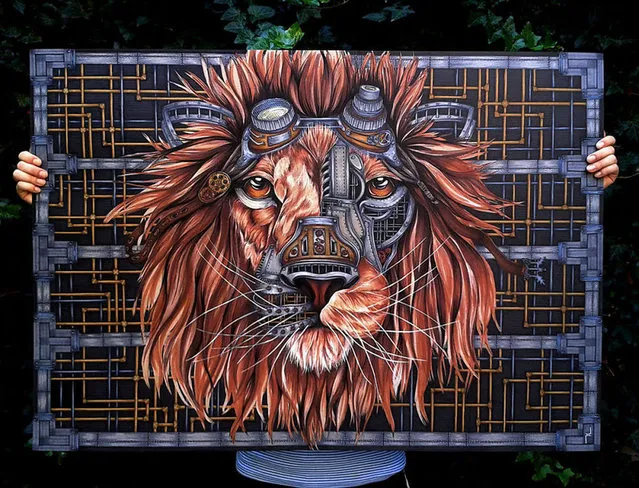
Steampunk Lion By Paula Duta

Paula Duta is a Romanian illustrator who loves creating her artworks using pens, markers, and watercolors. This set of pictures shows the process through which she went to draw her most beloved creation – The Steampunk Lion. The picture came alive piece by piece, starting with the eyes, goggles, nose, and then the mane. All the little details of the lion were drawn with outmost precision, which clearly shows that Paula has poured all her soul into this piece of art. (Photo by Paula Duta)
Details
14 Dec 2014 11:20:00
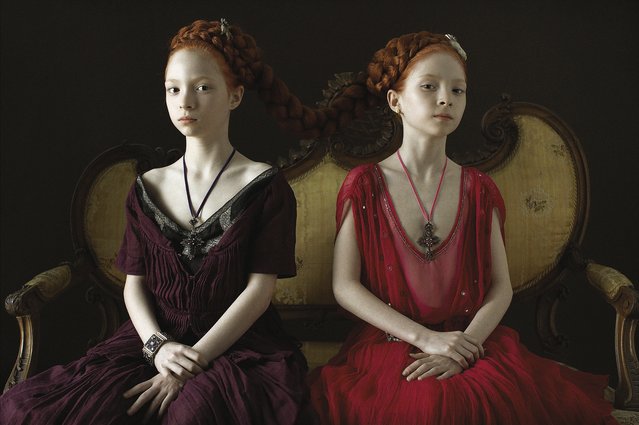
Photograph: Sandrine Kerfante.

Sandrine Kerfante has had a fascination with “doubles” ever since meeting her mother’s twin as a child. In 2012, this lifelong captivation inspired her to create a blog called twin-niwt, which celebrates photographs of doubles in all their forms. “I’m fascinated by the idea of the duo, repetition, symmetry, reflection, mirror games and all the symbolism associated with it”, she says. “I think it’s a topic often present in photography, more or less consciously”. (Photo by Sandrine Kerfante/The Guardian)
Details
21 Aug 2016 11:01:00


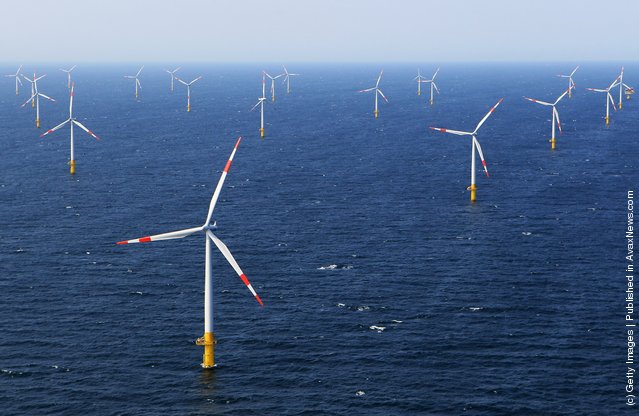
Wind turbines stand in the Baltic 1 offshore wind farm on April 29, 2011 in the Baltic Sea near Zingst, Germany. Baltic 1, a project of German energy utility EnBW that includes 21 turbines rated at 2.3 megawatts each, will be Germany's first commercial offshore wind farm once it officially begins operation on May 2. Germany has thus far lagged in offshore wind farm construction when compared to neighbors like Great Britain and Denmark, though German Chancellor Angela Merkel has vowed to invest heavily into offshore wind farms as part of an overall policy to encourage renewable energy production. (Photo by Joern Pollex/Getty Images)
Details
30 Apr 2011 12:54:00


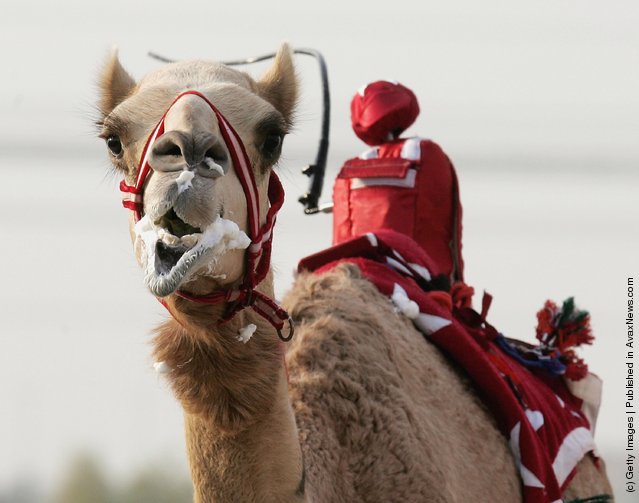
A camel foams at the mouth as he is whipped by a robot jockey during a race at Nad al-Sheba on December 6, 2006 in Dubai, United Arab Emirates. This is the first season that robotic jockeys have been used to race camels in Dubai. Controversially children from India were used to ride the camels in past seasons. These robot jockeys costing 15000GBP and up, were designed in Geneva and include shock absorbers and GPS tracking systems. The camel's owners control them from their speeding four wheel drives at the side of the track. (Photo by Chris Jackson/Getty Images)
Details
01 May 2011 09:01:00


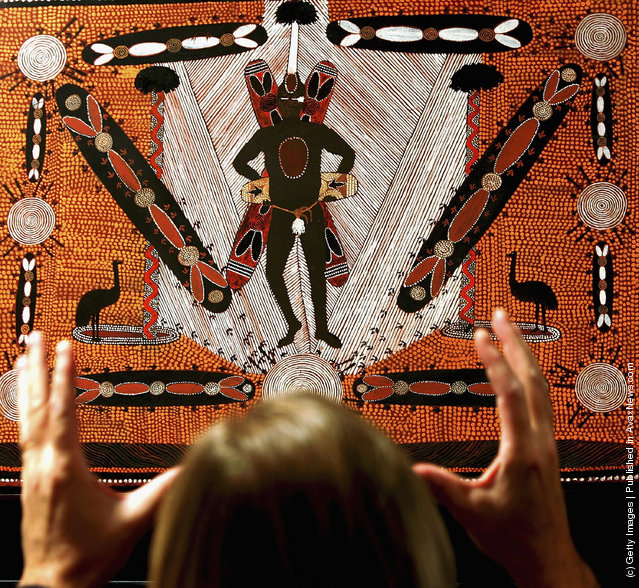
Tim Klingender, Director of Aboriginal Art at Sotheby's hangs the painting “Emu Corroboree Man” by Clifford Possum Tjapaltjarri before a record auction of Aboriginal Art July 14, 2005 in Sydney, Australia. The painting is expected to fetch AUD 150,000 – 250,000 (USD 120,000 – 200,000). Sotheby's unveiled a selection of Aboriginal art and artifacts after a tour of New York and London, which will go to auction in Melbourne July 25 2005. The total pre-sales estimate of the collection is AUD 6 million – 8.5 million (USD 5 million – 7 million). (Photo by Ian Waldie/Getty Images)
Details
01 Apr 2011 09:09:00


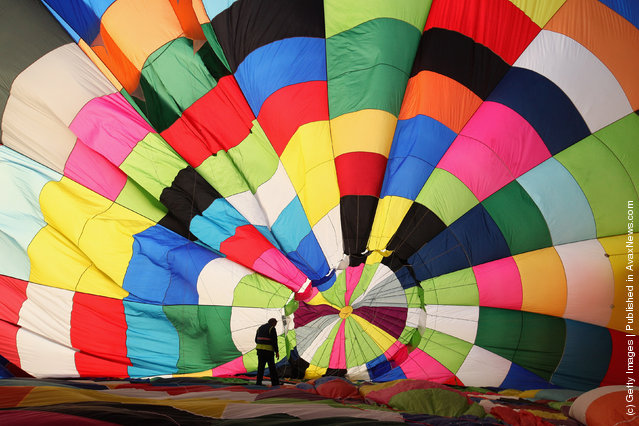
WOOTTON, UNITED KINGDOM - APRIL 07: Hot air balloons prepare to depart from Lydden Hill race circuit near Canterbury to take part in mass crossing of the Channel on April 7, 2011 in Wootton, England. 51 balloonists of various nationalities from across Europe took off from Kent making for Calais, France at about 7am. It is the first time a Guinness World Record bid has been made for "the largest group of hot air balloons to make the Channel crossing". (Photo by Oli Scarff/Getty Images)
Details
07 Apr 2011 10:15:00


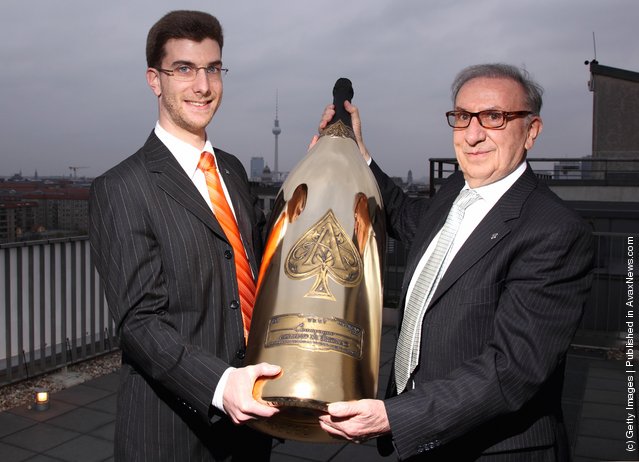
(R-L) Jean-Jacques Cattier and his son Alexandre Cattier pose with the world largest bottle of Champagne “The Midas” by Armand de Brignac on April 6, 2011 in Berlin, Germany. The Midas is a massive 30-liter vessel and weights exactly 100 pounds. It's like having 40 pieces of the 750ml in one. Number one champagne brand in the world, Armand de Brignac is the luxury Champagne from the award-winning Champagne Cattier chateau of Chigny-les-Roses, France. (Photo by Andreas Rentz/Getty Images)
Details
09 Apr 2011 06:50:00


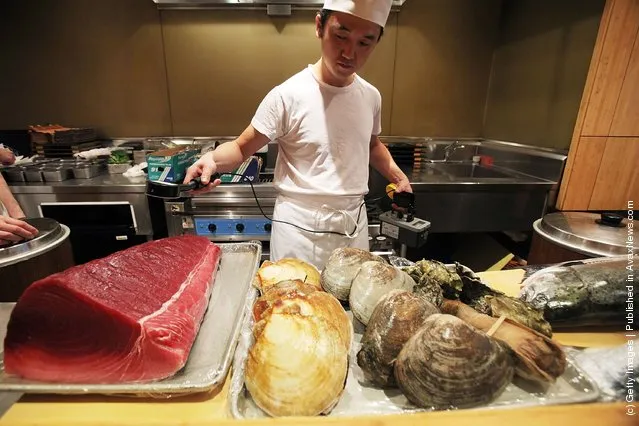
Sushi chef Mitsuru Tamura uses a radiation detector on seafood before it is prepared in Manhattan's Sushi Yasuda restaurant April 8, 2011 in New York City. The restaurant has begun using the detector as a precautionary measure due to consumer concerns over possible radiation contamination in seafood from the nuclear emergency in Japan. Health officials believe contamination is unlikely to threaten the food supply chain and none has been found in this restaurant. (Photo by Mario Tama/Getty Images)
Details
09 Apr 2011 08:52:00