Loading...
Done
Visitors dressed in superhero costumes attend the Paris Comics Expo at the Parc Floral in Paris, France, April 15, 2016. (Photo by Charles Platiau/Reuters)

Visitors dressed in superhero costumes attend the Paris Comics Expo at the Parc Floral in Paris, France, April 15, 2016. (Photo by Charles Platiau/Reuters)
Details
16 Apr 2016 12:37:00
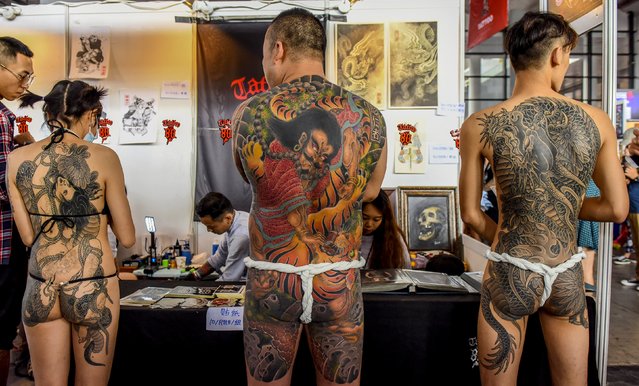
Contestants of a tattoo competition pose for photographs at the China TATTOO convention in Nanning, Guangxi Zhuang Autonomous Region, China, October 24, 2015. (Photo by Reuters/Stringer)

Contestants of a tattoo competition pose for photographs at the China TATTOO convention in Nanning, Guangxi Zhuang Autonomous Region, China, October 24, 2015. The annual convention was held in Nanning from October 23 to 25 this year. (Photo by Reuters/Stringer)
Details
27 Oct 2015 08:07:00
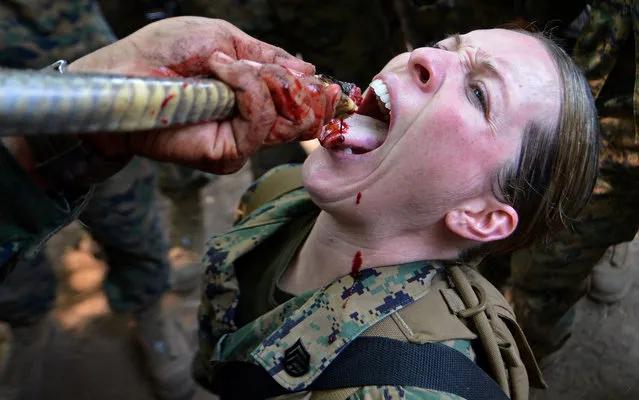
In a military base in the Thai province of Chon Buri February 20 U.S. Marines Navy with Thailand began their studies in jungle survival. The event is held in joint military exercises “Cobra Gold 2013”. During a jungle survival program February 20, 2013 taught by Royal Thai Special Forces in Sannapit, Thailand, U.S. Marines learned to catch cobras and drink their fresh blood, not to mention eat forest insects and pull the heads off of chicken. The training was part of Operation Cobra Gold 13, the 32nd edition of international military exercises hosted by the Thai. According to a U.S. Marines press release, Cobra Gold is the largest exercise of its kind in Asia and incorporates troops from five other nations in addition to the U.S. and Thailand. The Daily Mail reports that the Marines were invited to experience the local custom of drinking cobra blood after being taught to catch and kill cobras in the wild. As CNN notes, Cobra blood is believed to be a panacea and aphrodiasic in parts of Southeast Asia. In Jakarta, vendors can earn over $100 a night selling shots of cobra blood mixed with liquor. (Photo by Pornchai Kittiwongsakul/AFP Photo)

During a jungle survival program February 20, 2013 taught by Royal Thai Special Forces in Sannapit, Thailand, U.S. Marines learned to catch cobras and drink their fresh blood, not to mention eat forest insects and pull the heads off of chicken. The training was part of Operation Cobra Gold 13, the 32nd edition of international military exercises hosted by the Thai. According to a U.S. Marines press release, Cobra Gold is the largest exercise of its kind in Asia and incorporates troops from five other nations in addition to the U.S. and Thailand. The Daily Mail reports that the Marines were invited to experience the local custom of drinking cobra blood after being taught to catch and kill cobras in the wild. As CNN notes, Cobra blood is believed to be a panacea and aphrodiasic in parts of Southeast Asia. In Jakarta, vendors can earn over $100 a night selling shots of cobra blood mixed with liquor. (Photo by Pornchai Kittiwongsakul/AFP Photo)
Details
23 Feb 2013 11:52:00
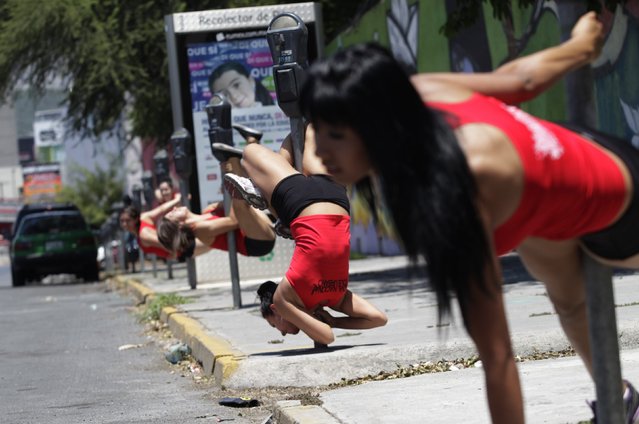
Women perform a pole dancing routine during the national day celebration of “Urban Pole” dance along a street in Monterrey, Mexico, on June 9, 2013. (Photo by Daniel Becerril/Reuters)

Women perform a pole dancing routine during the national day celebration of “Urban Pole” dance along a street in Monterrey, Mexico, on June 9, 2013. (Photo by Daniel Becerril/Reuters)
Details
15 Jun 2013 11:21:00
A model poses backstage ahead of the NLP show at Mercedes-Benz Fashion Week Australia 2014 at Carriageworks on April 7, 2014 in Sydney, Australia.  (Photo by Brendon Thorne/Getty Images)

A model poses backstage ahead of the NLP show at Mercedes-Benz Fashion Week Australia 2014 at Carriageworks on April 7, 2014 in Sydney, Australia. (Photo by Brendon Thorne/Getty Images)
Details
12 Apr 2014 13:06:00
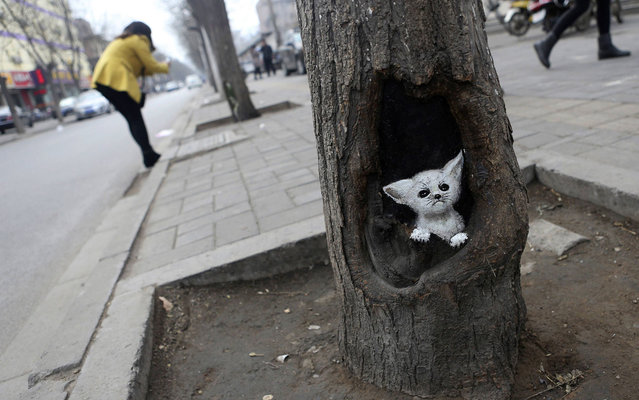
An image of a Fennec fox painted on a tree hole by Wang Yue is seen in Shijiazhuang, on March 13, 2013. Wang Yue, a senior at Dalian Industry University, uses her paintbrush to turn ugly tree holes into lovely views in Shijiazhuang, capital city of Hebei Province, China. Wang and her companions call the tree-hole paintings “meitu”, which means “beautiful journey”. The paintings on the trees have brightened the city during the dull, grey winter. (Photo by Pillar Lee/Reuters)

An image of a Fennec fox painted on a tree hole by Wang Yue is seen in Shijiazhuang, on March 13, 2013. Wang Yue, a senior at Dalian Industry University, uses her paintbrush to turn ugly tree holes into lovely views in Shijiazhuang, capital city of Hebei Province, China. Wang and her companions call the tree-hole paintings “meitu”, which means “beautiful journey”. The paintings on the trees have brightened the city during the dull, grey winter. (Photo by Pillar Lee/Reuters)

P.S. All pictures are presented in high resolution. To see Hi-Res images – just TWICE click on any picture. In other words, click small picture – opens the BIG picture. Click BIG picture – opens VERY BIG picture (if available; this principle works anywhere on the site AvaxNews).
Details
16 Mar 2013 11:27:00
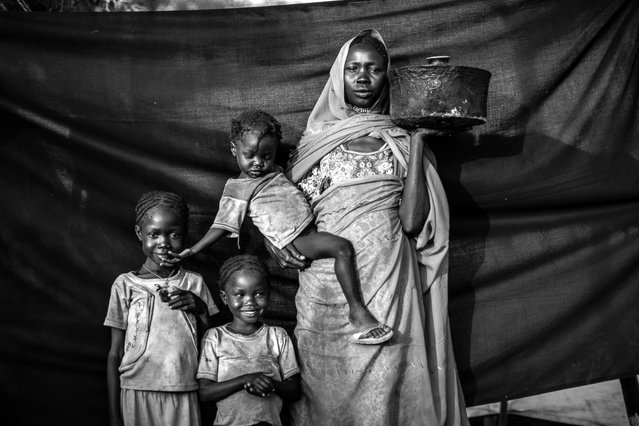
Magbola Alhadi, 20, and her three children pose for a portrait in Jamam refugee camp in Maban County, South Sudan on August 11th, 2012. Magboola and her family weathered aerial bombing raids for several months, but decided it was time to leave their village of Bofe the night that soldiers arrived and opened fire. (Photo by Brian Sokol/Panos Pictures)

Magbola Alhadi, 20, and her three children pose for a portrait in Jamam refugee camp in Maban County, South Sudan on August 11th, 2012. Magboola and her family weathered aerial bombing raids for several months, but decided it was time to leave their village of Bofe the night that soldiers arrived and opened fire. With her three children, she travelled for 12 days from Bofe to the town of El Fudj, on the South Sudanese border. The most important thing that Magboola was able to bring with her is the saucepan she holds in this photograph. It wasn't the largest pot that she had in Bofe, but it was small enough she could travel with it, yet big enough to cook sorghum for herself and her three daughters (from left: Aduna Omar, 6, Halima Omar, 4, and Arfa Omar, 2) during their journey. (Photo by Brian Sokol/Panos Pictures)

Details
18 Sep 2015 15:04:00
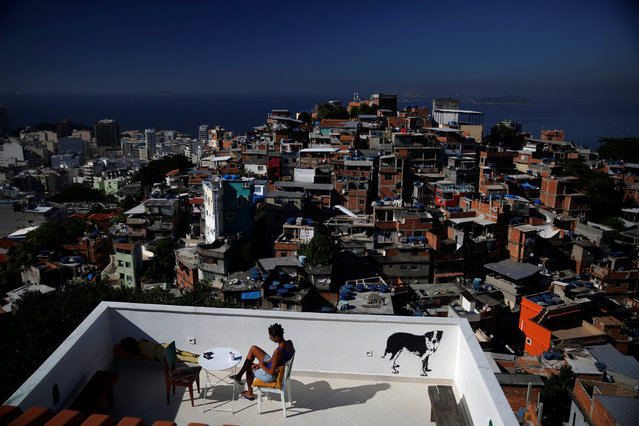
A woman sits on a terrace at Tiki hostel in Cantagalo favela, in Rio de Janeiro, Brazil, April 16, 2016. (Photo by Pilar Olivares/Reuters)

A woman sits on a terrace at Tiki hostel in Cantagalo favela, in Rio de Janeiro, Brazil, April 16, 2016. Hostels in a few of Rio's more than 1,000 slums serve not only as a cheap housing alternative for the more adventurous among the estimated 500,000 foreign tourists expected to arrive for the Olympics in August. The establishments also open up the rich culture of the city's shantytowns for travellers, giving them a glimpse into once “no-go” areas where about one-fifth of Rio's population lives. (Photo by Pilar Olivares/Reuters)
Details
04 May 2016 12:18:00