Loading...
Done
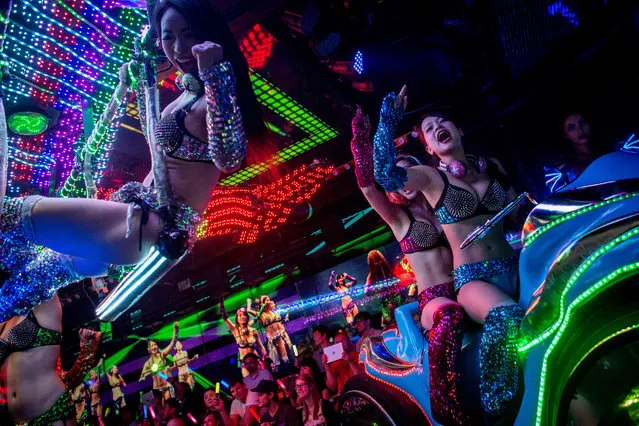
Dancers dressed as futuristic characters perform during a show at The Robot Restaurant on June 29, 2014 in Tokyo, Japan. The now famous Robot Restaurant opened two years ago in Kabukicho area of Shinjuku at an estimated cost of 10 million U.S. dollars. (Photo by Chris McGrath/Getty Images)

Dancers dressed as futuristic characters perform during a show at The Robot Restaurant on June 29, 2014 in Tokyo, Japan. The now famous Robot Restaurant opened two years ago in Kabukicho area of Shinjuku at an estimated cost of 10 million U.S. dollars. Performances are held three times a day and cater mostly to foreign tourists. The cabaret style shows include bikini clad futuristic dancers, performers dressed as robots and a host of large scale robots and vehicles controlled with remotes by stage hands dressed as Ninjas. (Photo by Chris McGrath/Getty Images)
Details
01 Jul 2014 13:16:00
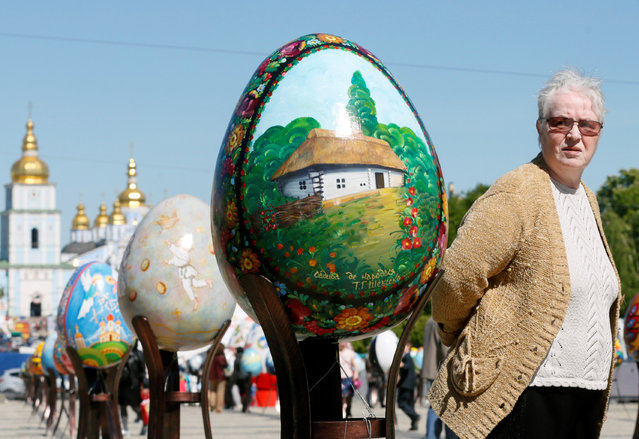
A woman looks at traditional Ukrainian Easter eggs “Pysanka”, installed as part of the upcoming celebrations of Easter, in central Kiev, Ukraine, April 29, 2016. A pysanka is a Ukrainian Easter egg, decorated with traditional Ukrainian folk designs using a wax-resist (batik) method. The word pysanka comes from the verb pysaty, “to write”, as the designs are not painted on, but written with beeswax. Many other eastern European ethnic groups decorate eggs using wax resist for Easter. These include the Belarusians, Bulgarians, Croats, Czechs, Hungarians, Lithuanians, Poles, Romanians, Serbs, Slovaks, Slovenes and Sorbs. (Photo by Valentyn Ogirenko/Reuters)

A woman looks at traditional Ukrainian Easter eggs “Pysanka”, installed as part of the upcoming celebrations of Easter, in central Kiev, Ukraine, April 29, 2016. A pysanka is a Ukrainian Easter egg, decorated with traditional Ukrainian folk designs using a wax-resist (batik) method. The word pysanka comes from the verb pysaty, “to write”, as the designs are not painted on, but written with beeswax. Many other eastern European ethnic groups decorate eggs using wax resist for Easter. These include the Belarusians, Bulgarians, Croats, Czechs, Hungarians, Lithuanians, Poles, Romanians, Serbs, Slovaks, Slovenes and Sorbs. (Photo by Valentyn Ogirenko/Reuters)
Details
30 Apr 2016 09:00:00
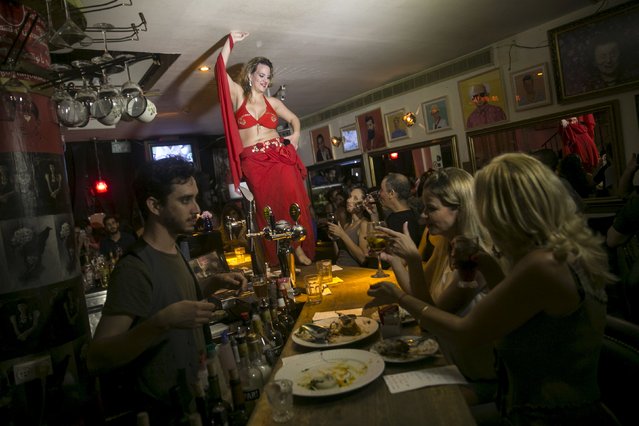
A belly dancer dances on the bar at Georgian restaurant Nanuchka in Tel Aviv, Israel July 15, 2015. (Photo by Baz Ratner/Reuters)

A belly dancer dances on the bar at Georgian restaurant Nanuchka in Tel Aviv, Israel July 15, 2015. Nana Shrier, owner of Nanuchka, shocked Israel's culinary world when she removed all animal-based products from the menu. Nanuchka is part of a growing trend that has transformed Israel's financial center into a haven for meatless cuisine. (Photo by Baz Ratner/Reuters)
Details
22 Jul 2015 11:40:00
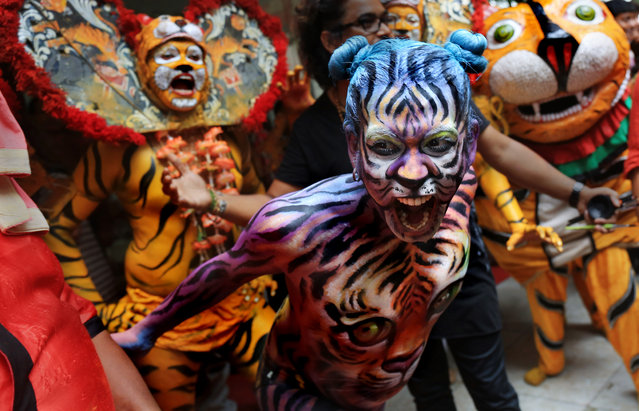
Indian dancers paint their body like tigers as they perform a Tiger dance during the International day of the Tiger in Calcutta, India, July 29, 2015. Students of Calcutta are taking part in an awareness campaign aiming to draw attention to the threats that tigers face due to habitat loss and poaching. (Photo by Piyal Adhikary/EPA)

Indian dancers paint their body like tigers as they perform a Tiger dance during the International day of the Tiger in Calcutta, India, July 29, 2015. Students of Calcutta are taking part in an awareness campaign aiming to draw attention to the threats that tigers face due to habitat loss and poaching. (Photo by Piyal Adhikary/EPA)
Details
30 Jul 2015 12:47:00
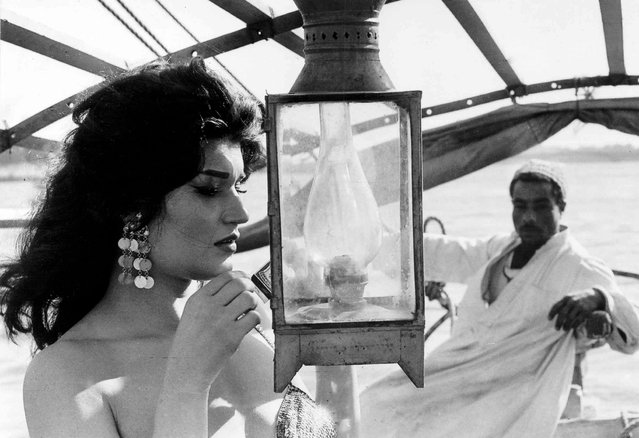
Belly dancer Nagwa Fouad sailing on the river Nile, 1972. Farouk Ibrahim was a society photographer, capturing Egyptian’s political and cultural elite, including presidents Nasser, Sadat and Mubarak. (Photo by Farouk Ibrahim)

Belly dancer Nagwa Fouad sailing on the river Nile, 1972. Egypt is one of 23 countries represented at the Dubai Photo Exhibition, showing off photography that dates to the 1920s. Dubai Photo Exhibition is in various venues of Dubai’s design district from 16-19 March. (Photo by Farouk Ibrahim)
Details
17 Mar 2016 15:09:00
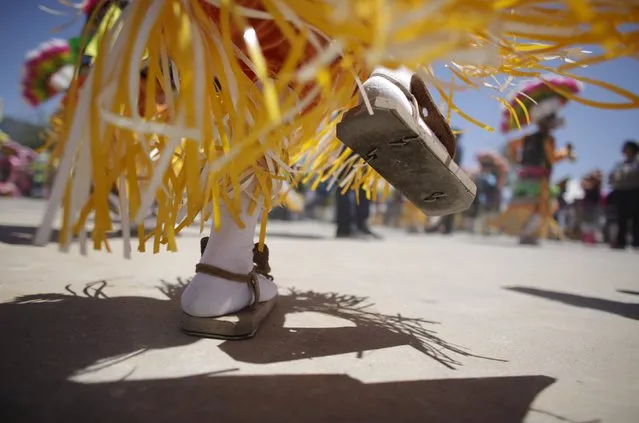
Matachines dancers participate in a religious festival in Saltillo, Mexico, April 17, 2016. Matachines dancing is a masked dance introduced by Spanish missionaries, and has been adopted by cultures from Peru to northern Mexico. It is performed to show respect to Mother Mary or the Guadalupe Virgin, a saint, or to simply worship God. (Photo by Daniel Becerril/Reuters)

Matachines dancers participate in a religious festival in Saltillo, Mexico, April 17, 2016. Matachines dancing is a masked dance introduced by Spanish missionaries, and has been adopted by cultures from Peru to northern Mexico. It is performed to show respect to Mother Mary or the Guadalupe Virgin, a saint, or to simply worship God. (Photo by Daniel Becerril/Reuters)
Details
19 Apr 2016 13:27:00
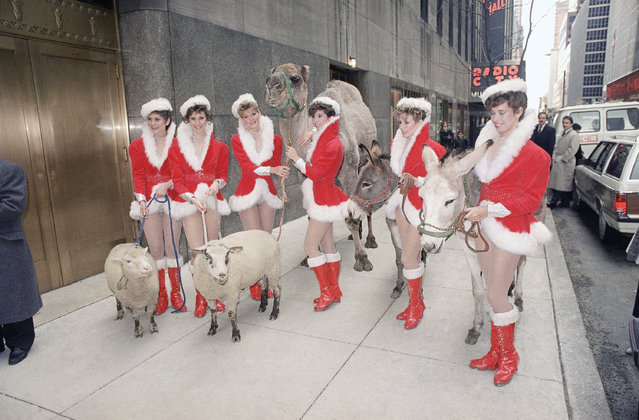
Animals destined for the stage of Radio City Music Hall in New York on November 13, 1986 are led to the stage door by their co-stars, the Rockettes dancers. A variety of animals, including camels, sheep and donkeys, will star in an annual Christmas production. (Photo by G. Paul Burnett/AP Photo)

Animals destined for the stage of Radio City Music Hall in New York on November 13, 1986 are led to the stage door by their co-stars, the Rockettes dancers. A variety of animals, including camels, sheep and donkeys, will star in an annual Christmas production. (Photo by G. Paul Burnett/AP Photo)
Details
22 Dec 2014 11:48:00
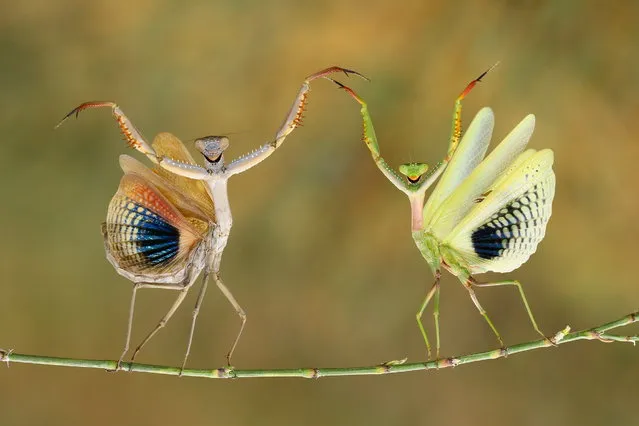
“Show Time”. It's a normal behavior of mantis. They're doing defence. When they're afraid of; raising their arms and spreading their wings. They looks like smiling dancer. Photo location: Nicosia, Cyprus. (Photo and caption by Hasan Baglar/National Geographic Photo Contest)

“Show Time”. It's a normal behavior of mantis. They're doing defence. When they're afraid of; raising their arms and spreading their wings. They looks like smiling dancer. Photo location: Nicosia, Cyprus. (Photo and caption by Hasan Baglar/National Geographic Photo Contest)
Details
28 Oct 2014 13:01:00