Loading...
Done
Yolaina Chavez Talavera, 31, a firefighter, poses for a photograph in front of a truck at a fire station in Managua, Nicaragua, February 22, 2017. “In my early days as a female firefighter, men, my team mates, thought that I would not last long in the organisation due to the hard training. However, in practice I showed them that I am able to take on tasks at the same level as men. I think women must fight to break through in all areas, in the midst of the machismo that still persists in Nicaragua and in Hispanic countries”, Talavera said. (Photo by Oswaldo Rivas/Reuters)

Wednesday March 8 marks International Women's Day, with festivals, concerts and exhibitions among the numerous events planned around the world to celebrate the achievements of women in society. The annual event has been held since the early 1900s and traditionally promotes a different theme each year, with this year's edition calling on people to #BeBoldForChange and push for a more gender-inclusive working world. Reuters photographers have been speaking with women in a range of professions around the world about their experiences of gender inequality. Here: Yolaina Chavez Talavera, 31, a firefighter, poses for a photograph in front of a truck at a fire station in Managua, Nicaragua, February 22, 2017. (Photo by Oswaldo Rivas/Reuters)
Details
04 Mar 2017 00:06:00
A model presents a creation by Japanese designer Yoshikazu Yamagata for his label writtenafterwards during the Mercedes-Benz Fashion Week in Tokyo, Japan, 16 March 2016. The presentation of the Autumn/Winter 2016 collections runs from 14 to 19 March. (Photo by Kiyoshi Ota/EPA)

A model presents a creation by Japanese designer Yoshikazu Yamagata for his label writtenafterwards during the Mercedes-Benz Fashion Week in Tokyo, Japan, 16 March 2016. The presentation of the Autumn/Winter 2016 collections runs from 14 to 19 March. (Photo by Kiyoshi Ota/EPA)
Details
17 Mar 2016 15:45:00
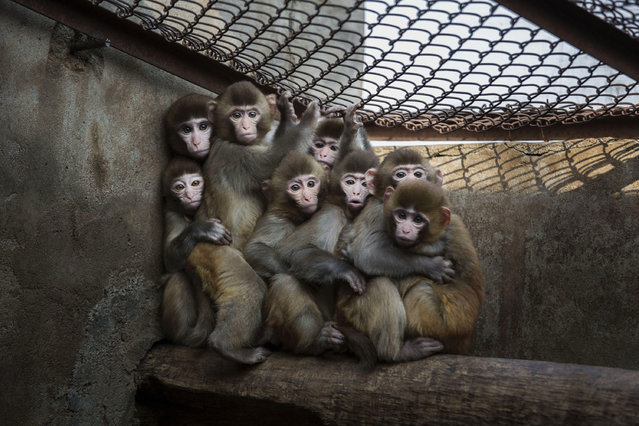
Macaque monkeys crowd together in their cage at a monkey farm on February 3, 2016 in Xinye county, Henan province, China. The area boasts a centuries-long and lucrative history of raising and training monkeys for performance. In Xinye, villagers are seeing an increase in business with the lunar calendar's “Year of the Monkey”. Farmers say most of the monkeys are bred and raised for domestic zoos, circuses, and performing groups, but add that some are also sold for medical research in China and the United States. Despite the popularity of the tradition, critics contend the training methods and conditions constitute animal cruelty. (Photo by Kevin Frayer/Getty Images)

Macaque monkeys crowd together in their cage at a monkey farm on February 3, 2016 in Xinye county, Henan province, China. The area boasts a centuries-long and lucrative history of raising and training monkeys for performance. In Xinye, villagers are seeing an increase in business with the lunar calendar's “Year of the Monkey”. Farmers say most of the monkeys are bred and raised for domestic zoos, circuses, and performing groups, but add that some are also sold for medical research in China and the United States. Despite the popularity of the tradition, critics contend the training methods and conditions constitute animal cruelty. (Photo by Kevin Frayer/Getty Images)
Details
31 Dec 2016 09:56:00
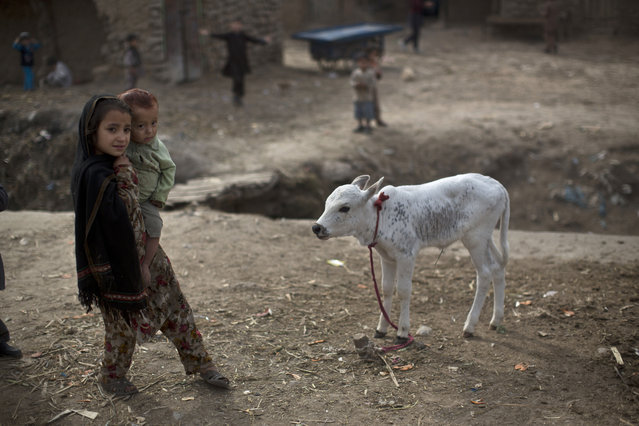
An Afghan refugee girl shows her younger brother a calf in a slum on the outskirts of Islamabad, Pakistan, Friday, February 6, 2015. (Photo by Muhammed Muheisen/AP Photo)

An Afghan refugee girl shows her younger brother a calf in a slum on the outskirts of Islamabad, Pakistan, Friday, February 6, 2015. (Photo by Muhammed Muheisen/AP Photo)
Details
12 Feb 2015 13:04:00
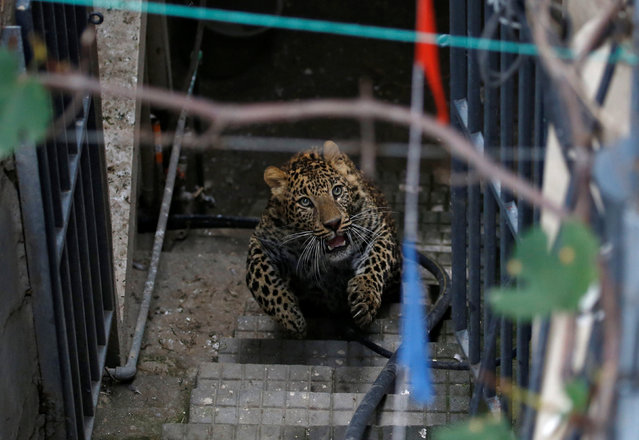
A wild leopard runs on the stairs as it tries to escape from a compound of a house in Kathmandu, Nepal June 1, 2016. (Photo by Navesh Chitrakar/Reuters)

A wild leopard runs on the stairs as it tries to escape from a compound of a house in Kathmandu, Nepal June 1, 2016. (Photo by Navesh Chitrakar/Reuters)
Details
04 Jun 2016 11:44:00
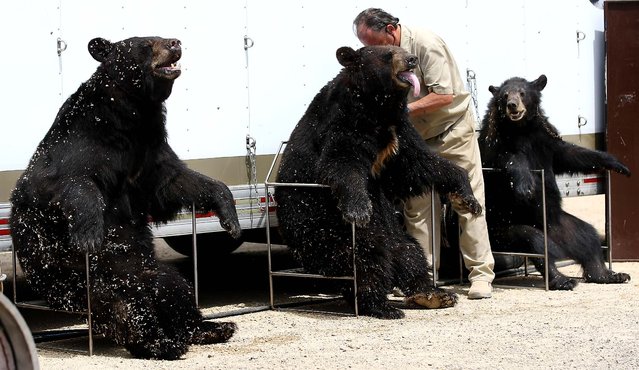
Bob Steele, of Jefferson, Texas, positions his bears during The Great Bear Show at the Dubuque (Iowa) County Fair on July 25, 2012. (Photo by Jessica Reilly/Telegraph Herald)

Bob Steele, of Jefferson, Texas, positions his bears during The Great Bear Show at the Dubuque (Iowa) County Fair on July 25, 2012. (Photo by Jessica Reilly/Telegraph Herald)
Details
28 Jul 2012 08:43:00
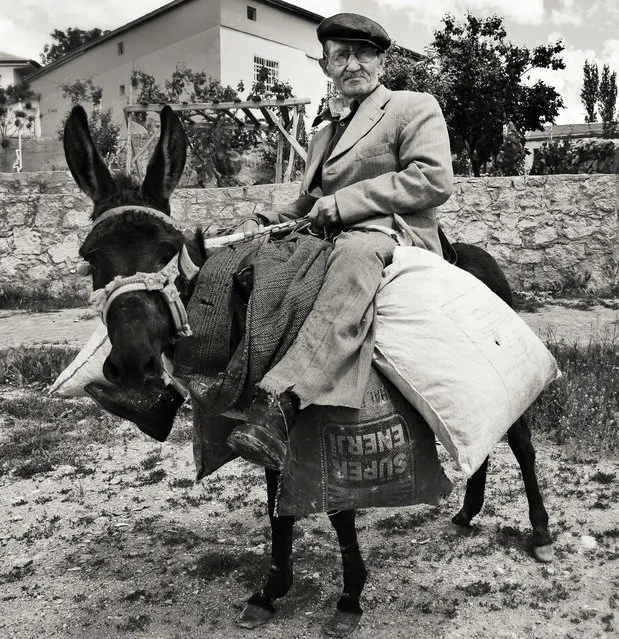
“Super Enerji”. Taken on my road trip through Turkey. (Photo and caption by Michelle Brandemuehl/National Geographic Traveler Photo Contest)

“Super Enerji”. Taken on my road trip through Turkey. (Photo and caption by Michelle Brandemuehl/National Geographic Traveler Photo Contest)

ATTENTION! All pictures are presented in high resolution. To see Hi-Res images – just TWICE click on any picture. In other words, click small picture – opens the BIG picture. Click BIG picture – opens VERY BIG picture.
Details
05 Jul 2013 11:17:00
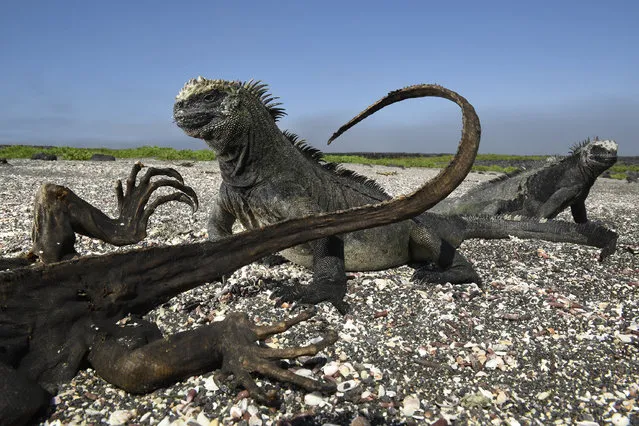
Galapagos – Rocking the Cradle: Four major ocean currents converge along the Galapagos archipelago, creating the conditions for an extraordinary diversity of animal life, April 25, 2016. The islands are home to at least 7,000 flora and fauna species, of which 97 percent of the reptiles, 80 percent of the land birds, 50 percent of the insects and 30 percent of the plants are endemic. The local ecosystem is highly sensitive to the changes in temperature, rainfall and ocean currents that characterize the climatic events known as El Niño and La Niña. These changes cause marked fluctuations in weather and food availability. Many scientists expect the frequency of El Niño and La Niña to increase as a result of climate change, making the Galapagos a possible early-warning location for its effects. (Photo by Thomas P. Peschak for National Geographic/World Press Photo)

Galapagos – Rocking the Cradle: Four major ocean currents converge along the Galapagos archipelago, creating the conditions for an extraordinary diversity of animal life, April 25, 2016. The islands are home to at least 7,000 flora and fauna species, of which 97 percent of the reptiles, 80 percent of the land birds, 50 percent of the insects and 30 percent of the plants are endemic. (Photo by Thomas P. Peschak for National Geographic/World Press Photo)
Details
16 Apr 2018 00:01:00