Loading...
Done
People help a dancer as he falls on stilts in honor of Saint Mary Magdalene in a street for the traditional “Danza de Los Zancos” (Los Zancos Dance), in the small town of Anguiano, northern Spain, Saturday, July 23, 2016. (Photo by Alvaro Barrientos/AP Photo)

People help a dancer as he falls on stilts in honor of Saint Mary Magdalene in a street for the traditional “Danza de Los Zancos” (Los Zancos Dance), in the small town of Anguiano, northern Spain, Saturday, July 23, 2016. As an ancient tradition for more than 4th centuries, eight young people from the town balance on stilts down the old street, turning to the sound of folk music played on a pipe and drum. (Photo by Alvaro Barrientos/AP Photo)
Details
25 Jul 2016 11:36:00
Workers prepare Koshary, a popular Egyptian dish, in an attempt to break the Guinness World Record for the world's biggest plate of Koshary, at a general garden in Zamalek, Cairo, January 17, 2015. (Photo by Mohamed Abd El Ghany/Reuters)

Workers prepare Koshary, a popular Egyptian dish, in an attempt to break the Guinness World Record for the world's biggest plate of Koshary, at a general garden in Zamalek, Cairo, January 17, 2015. Koshary is a traditional Egyptian dish dating to the 19th century in which rice, pasta and lentils are mixed together in one plate with a topping of spicey tomato sauce and some crispy fried onions. With a huge plate of koshary measuring 10 metres long and in width and of 1.2 metres in height, the plate weighed 7 tonnes, or about 7,000 kg. About 6,000 attendees turned up to the festival, earning it a place in the world record books. (Photo by Mohamed Abd El Ghany/Reuters)
Details
20 Jan 2015 12:43:00


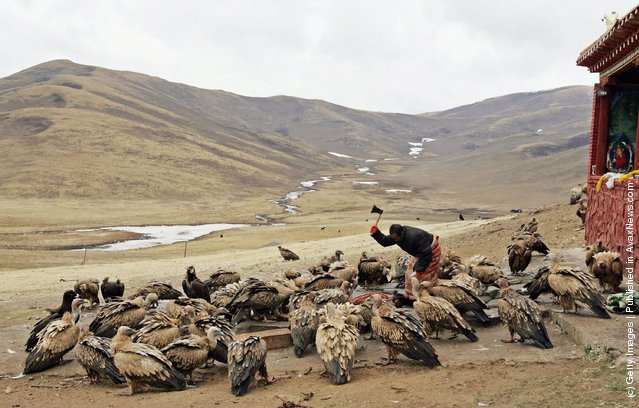
“Sky burial or ritual dissection was once a common funerary practice in Tibet wherein a human corpse is cut in specific locations and placed on a mountaintop, exposing it to the elements or the mahabhuta and animals – especially to birds of prey. The location of the sky burial preparation and place of execution are understood in the Vajrayana traditions as charnel grounds. In Tibet the practice is known as jhator, which literally means, «giving alms to the birds»”. – Wikipedia

Photo: A burial master chops bones of a body to feed vultures during a celestial burial ceremony on April 19, 2006 in Dari County of Guoluo Prefecture, Qinghai Province, northwest China. Celestial burial is a traditional funeral of Tibetan people, which began in the 7th century. (Photo by China Photos/Getty Images)
Details
18 Jun 2011 12:12:00
Red Bull Flying Bach

Gengis “Lil Ceng” Ademoski (L) and Khaled “KC” Chaabi (R) of the four time world champion Berlin dance troupe “Flying Steps” strike a freeze on a piano played by muscian Jia Lim (C) of Singapore at the 17th century waterfront area of Nyhavn in build up to the Red Bull Flying Bach European Tour, a show that features the cultural clash of break dancing with the classical music of Johann Sebastian Bach, on August 30, 2011 in Copenhagen, Denmark. (Photo by Dean Treml/Red Bull via Getty Images)
Details
01 Sep 2011 12:21:00
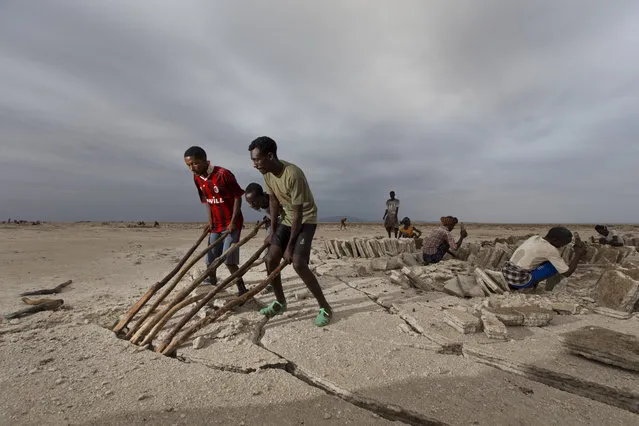
February 8, 2014 – Danakil Desert, Ethiopia: Workers mining salt at the quarry. (Photo by Ziv Koren/Polaris)

Inside the Afar Triangle in Ethiopia’s Danakil desert, camel caravans are used to carry salt. For centuries, the essential mineral has been mined by the Afar people, known for their ability to withstand extremes. The terrain is rugged, travelers are scarce and so are motor vehicles, where the average annual temperature is the highest in the world, and can rise to 122 degrees Fahrenheit, 50 degrees Celsius. (Photo by Ziv Koren/Polaris)
Details
30 Apr 2014 08:17:00
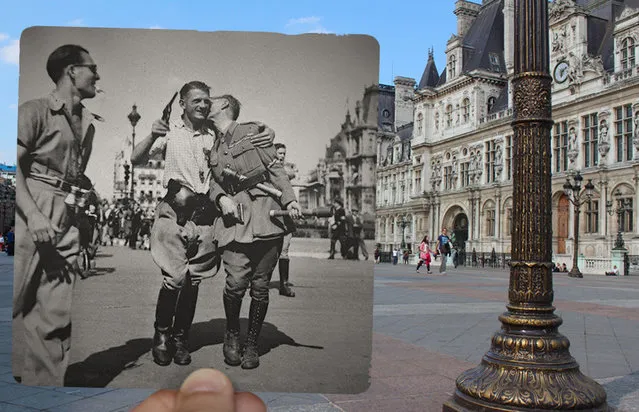
Soldiers outside the Hotel De Ville in the 1940s. (Photo by Julien Knez/Caters News)

It is already one of the world’s most iconic cities, but this incredible collection shows how much Paris has changed over the course of the past century. The collection, by French photographer Julien Knez, shows Paris in the 1940s against a backdrop of how the same places look today. Knez says he put the striking collection together to celebrate the 71st anniversary of the city’s liberation from Nazi control in August 1944. Here: Soldiers outside the Hotel De Ville in the 1940s. (Photo by Julien Knez/Caters News)
Details
07 May 2015 13:16:00
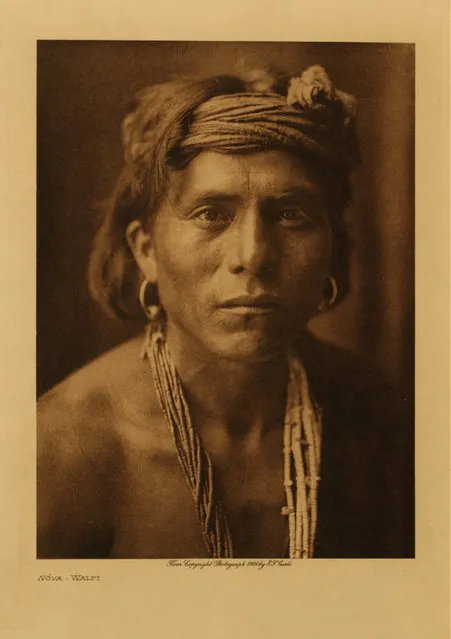
Nova, a Walpi, in 1906. (Photo by Edward S. Curtis)

At the beginning of the 20th century, Edward S. Curtis set out to document what he saw as a disappearing race: the Native American. From 1907 to 1930, Curtis took more than 2,000 photos of 80 tribes stretching from the Great Plains to the Pacific Northwest and Alaska. He then published and sold these photos, along with narrative text, in 20 volumes of work known as “The North American Indian”. It is one of the most significant collections of its kind, “probably the most important photographic document of its age and its topic,” said Jeffrey Garrett, associate university librarian for Special Libraries at Northwestern University. (Photo by Edward S. Curtis)
Details
07 Sep 2014 12:57:00
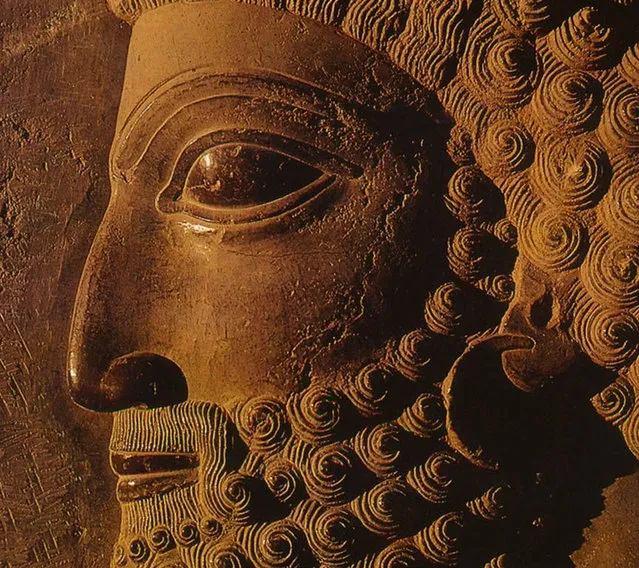
Persepolis, Takht-E-Jamshid Iran

Few people haven’t heard about the ancient city of Persepolis, which lies at the foot of the Mountain of Mercy (Kuh-I-Rahmat). In ancient times, Persepolis was the capital of the Achaemenid Empire. Regretfully, it was burned by the Greeks in 330 BC after they looted the immense treasure of this city. It is said that Greeks needed 5,000 camels and 20,000 mules to carry all the treasures from Persepolis. The only thing of Persepolis that has survived the wear of time is the ginormous stone terrace 530 by 330 meters adorned by elaborate stone sculptures. It is amazing how intricately detailed some of the sculptures are, despite the fact that they were created many centuries ago.
Details
26 Oct 2014 12:30:00