Loading...
Done
Revellers take part in an annual block party before Carnival in downtown Rio de Janeiro, Brazil, January 16, 2016. The Rio de Janeiro Carnival will be held from February 5 to February 9. (Photo by Pilar Olivares/Reuters)

Revellers take part in an annual block party before Carnival in downtown Rio de Janeiro, Brazil, January 16, 2016. The Rio de Janeiro Carnival will be held from February 5 to February 9. (Photo by Pilar Olivares/Reuters)
Details
19 Jan 2016 08:04:00
Carnival revellers take the metro in Rio de Janeiro, Brazil on February 19, 2023. Shaking the ground to the beat of their drums, Rio de Janeiro's famed carnival parades returned Sunday in a swirl of glitter, sequins and samba, the festival's first full-on edition since Covid-19 and Brazil's bitterly divisive elections. (Photo by Carl de Souza/AFP Photo)

Carnival revellers take the metro in Rio de Janeiro, Brazil on February 19, 2023. Shaking the ground to the beat of their drums, Rio de Janeiro's famed carnival parades returned Sunday in a swirl of glitter, sequins and samba, the festival's first full-on edition since Covid-19 and Brazil's bitterly divisive elections. (Photo by Carl de Souza/AFP Photo)
Details
29 Jun 2024 02:13:00
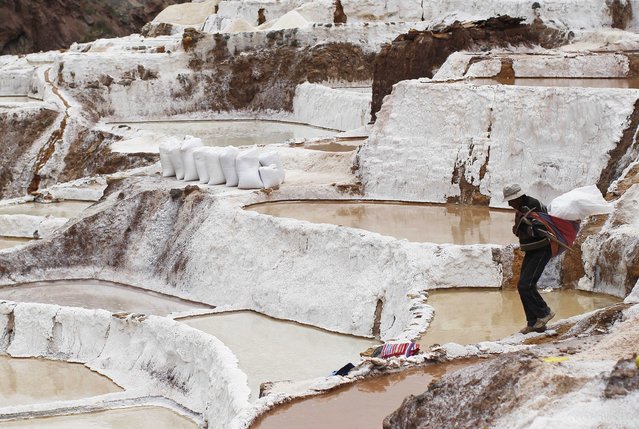
A worker carries a bag of salt after collecting it from a pond at the Maras mines in Cuzco December 3, 2014. Salt has been obtained in Maras since pre-Incan times by evaporating highly salty local subterranean stream water. The water is intricately channelled through constructions, flowing gradually down onto several hundred ancient terraced ponds. (Photo by Enrique Castro-Mendivil/Reuters)

A worker carries a bag of salt after collecting it from a pond at the Maras mines in Cuzco December 3, 2014. Salt has been obtained in Maras since pre-Incan times by evaporating highly salty local subterranean stream water. The water is intricately channelled through constructions, flowing gradually down onto several hundred ancient terraced ponds. From each pond, a local member of the mine cooperative can produce 150 to 200 kilos per month which can be sold in the markets at $0.34 per kilogram, according to miners. (Photo by Enrique Castro-Mendivil/Reuters)
Details
05 Dec 2014 13:36:00
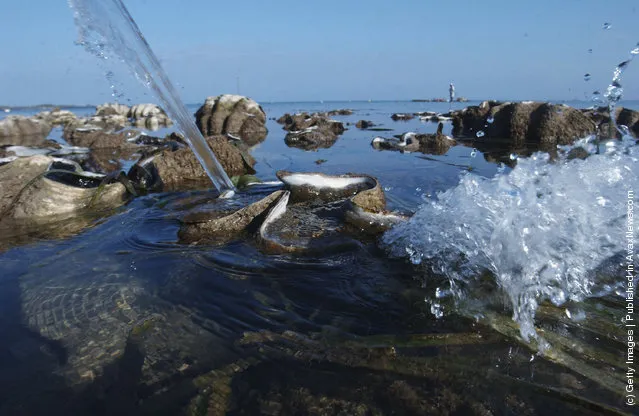
Tridacna Gigas, or Giant Clams

“The giant clam, Tridacna gigas (known as pā’ua in Cook Islands Māori), is the largest living bivalve mollusc. T. gigas is one of the most endangered clam species. It was mentioned as early as 1825 in scientific reports. One of a number of large clam species native to the shallow coral reefs of the South Pacific and Indian oceans, they can weigh more than 200 kilograms (440 lb) measure as much as 120 cm (47 in) across, and have an average lifespan in the wild of 100 years or more”. – Wikipedia

Photo: Tridacna Gigas, or Giant Clams spew water as a traditional fisherman passes by a small sanctuary on January 23, 2004 near Bolinao in the Northern Philippines. The clams, prime builders for coral reefs and providing shelter for spawning fish and other marine life, are exposed by low tides in the sanctuary. Overfishing and pollution throughout the country are not only threatening food security, but are also starting to choke one of the few working clam sanctuaries in the world. (Photo by David Greedy/Getty Images)

Details
01 Oct 2011 13:10:00
This February 7, 2018, photo shows João Lousada, a flight controller for the International Space Station, wearing an experimental space suit during a simulation of a future Mars mission in the Dhofar desert of southern Oman. (Photo by Sam McNeil/AP Photo)

This February 7, 2018, photo shows João Lousada, a flight controller for the International Space Station, wearing an experimental space suit during a simulation of a future Mars mission in the Dhofar desert of southern Oman. The desolate desert in southern Oman resembles Mars so much that more than 200 scientists from 25 nations organized by the Austrian Space Forum are using it for the next four weeks to field-test technology for a manned mission to Mars. (Photo by Sam McNeil/AP Photo)
Details
10 Feb 2018 07:02:00
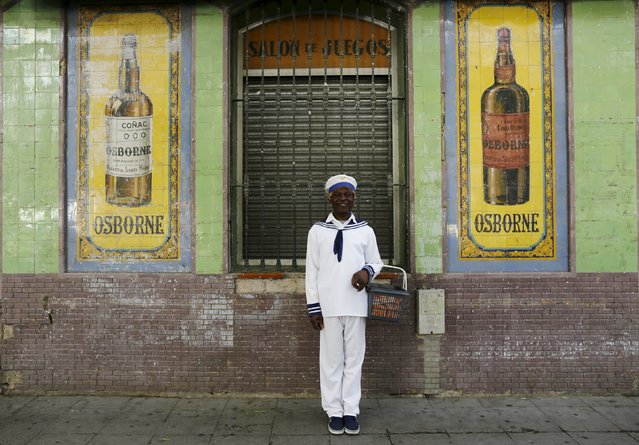
Howard Jackson, a Liberian migrant, poses for a portrait in the Andalusian capital of Seville, southern Spain March 7, 2016. (Photo by Marcelo del Pozo/Reuters)

Howard Jackson, a Liberian migrant, poses for a portrait in the Andalusian capital of Seville, southern Spain March 7, 2016. Jackson escaped civil war and spent three years crossing Africa before reaching Spain. Dressed up in one of his more than 200 costumes, from Peter Pan to Little Red Riding Hood, he is a well-known figure at an intersection entering the Spanish city of Seville where he has sold tissues to motorists for over a decade. Jackson is studying law and wants to become a judge. (Photo by Marcelo del Pozo/Reuters)
Details
24 Mar 2016 12:14:00
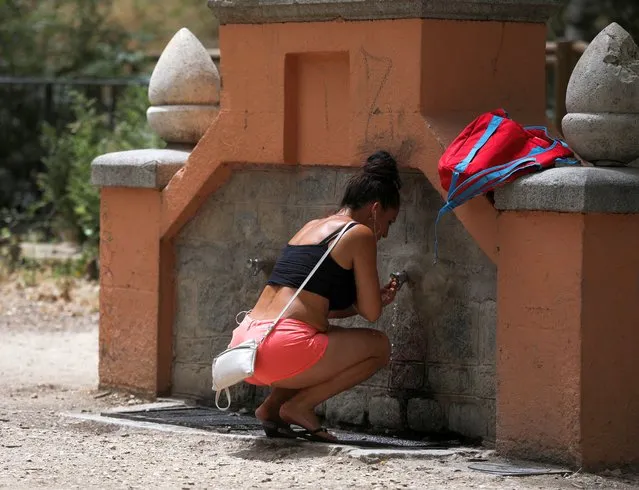
A woman refreshes at a fountain in Casa de Campo during a heatwave in Madrid, Spain on June 15, 2022. (Photo by Isabel Infantes/Reuters)

A woman refreshes at a fountain in Casa de Campo during a heatwave in Madrid, Spain on June 15, 2022. (Photo by Isabel Infantes/Reuters)
Details
20 Jun 2022 04:13:00
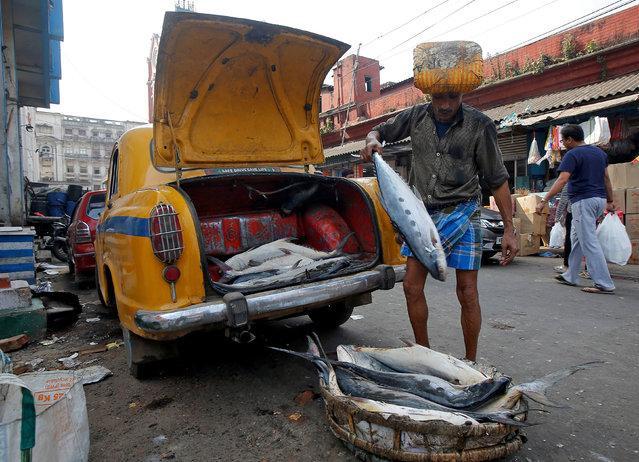
A worker unloads fish from a taxi boot at a fish market in Kolkata, India on February 5, 2018. (Photo by Rupak De Chowdhuri/Reuters)

A worker unloads fish from a taxi boot at a fish market in Kolkata, India on February 5, 2018. (Photo by Rupak De Chowdhuri/Reuters)
Details
06 Feb 2018 07:03:00